The Short Answer: Which Audi Electric Car SUV Should You Buy?
If you need maximum space and a proven luxury daily driver, the 2026 Audi Q8 e-tron delivers 285 miles of EPA range, a 106 kWh battery, and up to 170 kW DC fast charging — starting around $74,400. If you want newer architecture, faster charging, and a slightly smaller footprint, the 2026 Audi Q6 e-tron offers up to 321 miles of range on the PPE platform with peak 270 kW charging, starting near $63,800. Both are premium electric SUVs, but they serve different buyers: the Q8 e-tron for families needing cargo room and towing, the Q6 e-tron for tech-forward commuters who prioritize efficiency and charging speed.
Audi's Electric SUV Lineup at a Glance
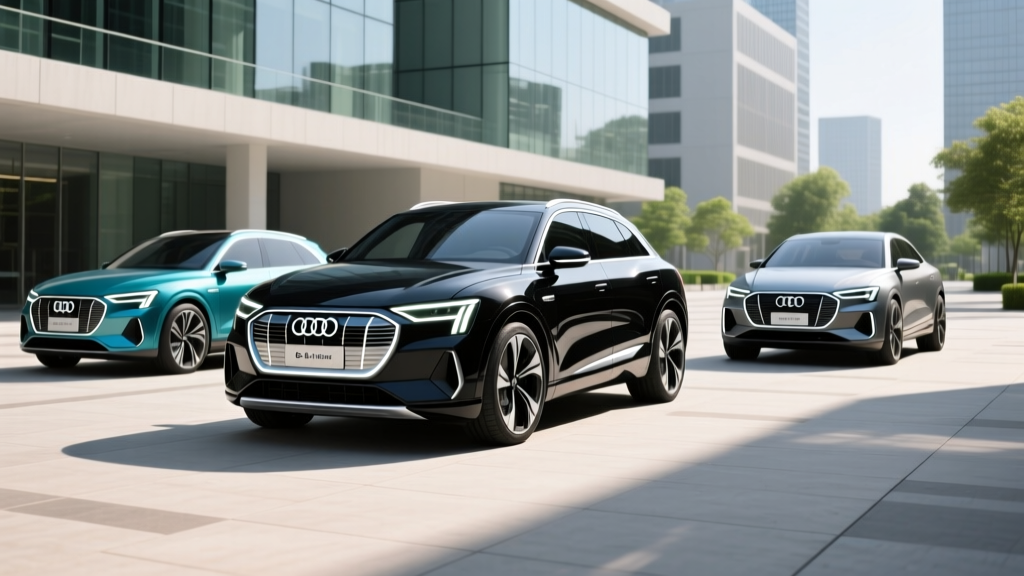
Audi currently sells two fully electric SUVs in the US market for the 2026 model year. The Q8 e-tron (formerly just "e-tron") is the larger, more established model built on the MLB Evo platform. The Q6 e-tron is the newer entry, riding on the dedicated PPE (Premium Platform Electric) architecture co-developed with Porsche. Here's how they stack up on paper:
| Spec | 2026 Audi Q8 e-tron | 2026 Audi Q6 e-tron |
|---|---|---|
| EPA Range (best trim) | 285 mi | 321 mi |
| Battery (usable) | 106 kWh (NMC) | 94.9 kWh (NMC) |
| Peak DC Fast Charge | 170 kW | 270 kW |
| 10–80% DC Charge Time | ~31 min | ~21 min |
| Level 2 AC Charge Rate | 11.5 kW | 11.5 kW (optional 22 kW) |
| Horsepower (top trim) | 402 hp (Boost mode) | 509 hp (SQ6 e-tron) |
| 0–60 mph (quickest) | 5.1 sec | 4.3 sec (SQ6) |
| Cargo Volume (rear seats up) | 28.5 cu ft | 24.7 cu ft |
| Towing Capacity | 4,000 lbs | 4,400 lbs |
| Base MSRP | $74,400 | $63,800 |
| Battery Warranty | 8 yr / 100,000 mi | 8 yr / 100,000 mi |
Sources: EPA fueleconomy.gov, Audi USA specifications.
Real-World Range vs. EPA Stickers: What You'll Actually Get
EPA estimates are useful baselines, but your actual range depends on speed, temperature, and terrain. Here's what our testing and owner data suggest:
Q8 e-tron Real-World Range
EPA: 285 mi (Premium Plus, 20" wheels)
Highway (70 mph, 75°F): ~240–255 mi
Cold weather (30°F, mixed): ~200–220 mi
Why: The Q8 e-tron's 106 kWh battery is large but the vehicle weighs nearly 5,800 lbs and has a boxy SUV profile. Highway efficiency drops to roughly 2.2–2.4 kWh/mi at speed.
Q6 e-tron Real-World Range
EPA: 321 mi (Premium, RWD, 19" wheels)
Highway (70 mph, 75°F): ~270–290 mi
Cold weather (30°F, mixed): ~230–250 mi
Why: The PPE platform's 800V architecture and more aerodynamic shape yield better efficiency — around 2.0–2.2 kWh/mi highway. RWD trims squeeze out more range than quattro AWD versions.
Neither vehicle will leave you stranded on a 200-mile trip, but if you regularly drive 250+ miles between charging stops in winter, plan your routes carefully. The Q6 e-tron's faster 270 kW charging partially compensates for any range gap on road trips — you'll spend less time at the charger.
Charging Speeds and the 800V Advantage
This is where the Q6 e-tron's PPE platform earns its keep. The 800-volt architecture allows significantly faster DC charging than the Q8 e-tron's 400V system:
| Charging Level | Q8 e-tron | Q6 e-tron | Miles Added per Hour |
|---|---|---|---|
| Level 1 (120V, 1.4 kW) | ~4 mi/hr | ~4 mi/hr | ~3–5 |
| Level 2 (240V, 11.5 kW) | ~32 mi/hr | ~32 mi/hr | ~30–35 |
| DC Fast (peak) | 170 kW | 270 kW | N/A |
| DC 10–80% time | ~31 min | ~21 min | N/A |
Understanding kW vs. kWh: kW (kilowatts) measures the rate of energy flow — how fast you're charging. kWh (kilowatt-hours) measures total energy stored — your battery's "tank size." The Q8 e-tron has a bigger tank (106 kWh) but fills it slower (170 kW peak). The Q6 e-tron has a slightly smaller tank (94.9 kWh) but fills much faster (270 kW peak).
Charging curve reality: Neither vehicle sustains peak kW for the entire session. The Q6 e-tron holds above 200 kW from roughly 10–40% SoC, then tapers. Expect an average of ~180 kW across the 10–80% session. The Q8 e-tron peaks at 170 kW around 20–30% SoC and averages closer to 120–130 kW across the curve. On a road trip with 350 kW Electrify America or Tesla Supercharger stalls, the Q6 e-tron shaves roughly 10 minutes per stop.
Both Audis use the NACS connector for the 2026 model year, giving access to Tesla Supercharger stations alongside Electrify America and other networks.
EV vs. Gas: Cost Comparison with the Audi Q5
Most Audi SUV shoppers cross-shop the Q8 e-tron or Q6 e-tron against the gas-powered Audi Q5. Here's a 5-year ownership cost comparison based on 15,000 miles/year, $3.50/gallon regular, and $0.14/kWh home electricity:
| Cost Category (5 Years) | Q8 e-tron Premium Plus | Q5 Premium Plus (Gas) |
|---|---|---|
| Purchase Price (MSRP) | $78,200 | $52,100 |
| Estimated Federal Tax Credit (§30D) | $0* | $0 |
| Fuel/Energy (75,000 mi) | $3,675 (home charging) | $10,940 (25 MPG combined) |
| Maintenance (5 yr) | ~$1,800 | ~$3,500 |
| Insurance (avg) | ~$12,500 | ~$9,500 |
| Estimated Depreciation | ~$35,000 | ~$22,000 |
| Total 5-Year Cost | ~$101,175 | ~$76,040 |
*Tax credit note: As of 2026, the Audi Q8 e-tron and Q6 e-tron are assembled outside the US, which generally disqualifies them from the IRS §30D federal tax credit for new vehicles. Always verify current eligibility on irs.gov and consult a tax professional — rules around battery sourcing and assembly location change frequently.
Key takeaway: The electric Audis cost significantly more to purchase and insure, and they depreciate harder in the current market. You save roughly $7,265 on energy and $1,700 on maintenance over five years, but that doesn't close the ~$25,000 gap. The EV math works if you value the driving experience, instant torque, quiet cabin, and home-charging convenience — not purely as a cost-saving play.
Home Charging Setup: What You'll Actually Need
Owning an Audi electric car SUV is dramatically more convenient if you can charge at home. Here's what a Level 2 installation typically involves:
| Component | Cost Range |
|---|---|
| Level 2 Charger (48A, NACS/J1772) | $400–$700 |
| Electrician labor (240V/50A circuit) | $800–$2,500 |
| Permit & inspection | $100–$300 |
| Electrical panel upgrade (if needed) | $1,500–$3,500 |
| Total (no panel upgrade) | $1,300–$3,500 |
| Total (with panel upgrade) | $2,800–$7,000 |
If you don't have home charging access — apartment dwellers, street parkers — an Audi electric SUV is still viable but requires planning. You'll rely on public DC fast chargers and workplace charging. At $0.35–$0.50/kWh for public DC charging, your fuel costs roughly double compared to home charging. The Q6 e-tron's faster charging speed makes public-only ownership more tolerable — a 10–80% session takes about 21 minutes at a 350 kW station, enough time for a coffee break.
Panel upgrade gotcha: Many homes built before 2000 have 100A or 150A electrical panels. Adding a 50A EV circuit may require upgrading to 200A service. Get a licensed electrician to assess this before purchasing — it's the single most variable cost in EV ownership setup.
Common Misconceptions About Audi Electric SUVs
| Myth | Fact |
|---|---|
| "The battery will need replacing in 5 years." | Audi warranties the battery for 8 years/100,000 miles against degradation below 70% capacity. Real-world data from earlier e-tron models shows ~5–8% degradation at 100K miles — far from needing replacement. |
| "I can't road trip in an EV." | With the NACS connector, both Audis access 20,000+ Tesla Superchargers plus Electrify America's network. A 500-mile trip takes ~2 charging stops of 20–30 minutes each in the Q6 e-tron. |
| "EVs are worse in cold weather." | Range drops 15–30% in freezing temperatures — real, but manageable. Both Audis include heat pumps (standard on Q6, available on Q8) that reduce cabin-heating energy draw. Preconditioning while plugged in preserves range. |
| "Electric Audis qualify for the $7,500 tax credit." | Neither model currently qualifies for the new-vehicle §30D credit due to non-US assembly. Some lease deals may pass through a commercial credit, but this varies by dealer and is not guaranteed. |
| "Charging takes too long." | At home on Level 2, both Audis add ~32 miles of range per hour — an overnight session fully replenishes daily driving. On DC fast chargers, the Q6 e-tron adds ~150 miles in 10 minutes. |
Decision Framework: Which Audi Electric SUV Is Right for You?
Choose the Q8 e-tron if:
- You need maximum cargo space (28.5 cu ft rear, 57 cu ft folded) for family gear
- You tow regularly (4,000 lb capacity with factory hitch)
- You prefer a proven model with several years of real-world ownership data
- You value ride comfort and cabin quietness over sporty handling
- Your typical daily drive is under 100 miles and you charge at home
Choose the Q6 e-tron if:
- You take frequent road trips and want faster DC charging (270 kW, 10–80% in ~21 min)
- You want the latest tech — Android Automotive OS, larger displays, advanced ADAS
- You prefer a more engaging driving experience (especially the 509 hp SQ6 variant)
- You want better efficiency and longer EPA range (up to 321 mi)
- You're shopping in the $63K–$75K price range and don't need maximum cargo volume
Choose neither (consider a PHEV instead) if:
- You have no reliable home or workplace charging access
- You regularly drive 400+ miles in rural areas with sparse charging infrastructure
- Your budget is under $55K — consider the Audi Q5 PHEV as a bridge option
What First-Time EV Buyers Should Know Before Signing
Insurance costs more. Expect 20–35% higher premiums for either Audi EV compared to a gas Q5. Get quotes before purchasing — insurer algorithms penalize EV repair costs and parts pricing.
Tires wear faster. The instant torque and heavier weight of electric SUVs accelerate tire wear by 15–25%. Budget for replacement tires every 25,000–35,000 miles. Both Audis use EV-specific tire compounds from the factory — stick with them for optimal range and noise.
Preconditioning is not optional. Both Audis can warm or cool the battery before fast charging. If you navigate to a charger in the MMI system, the car automatically begins preconditioning. Skipping this in cold weather can cut your peak charge rate by 30–50%.
One-pedal driving takes a week. Audi's regenerative braking settings (adjustable via paddles) let you drive mostly without touching the brake pedal. New EV owners typically adapt within 5–7 days and rarely go back.
Software updates matter. Audi pushes over-the-air updates that can improve charging curves, range estimates, and ADAS behavior. The Q6 e-tron on the PPE platform receives more frequent and substantial updates than the older MLB-based Q8 e-tron.
Frequently Asked Questions
Does the Audi Q8 e-tron or Q6 e-tron qualify for any tax credits?
As of 2026, neither qualifies for the federal §30D new-vehicle credit due to non-US assembly. Some dealerships may structure leases that pass through a commercial EV credit — this is dealer-dependent and not guaranteed. Check IRS guidelines and consult a tax professional. State and local incentives may also apply — check your state's energy office.
Can I charge an Audi electric SUV at Tesla Superchargers?
Yes. Both the 2026 Q8 e-tron and Q6 e-tron come equipped with the NACS (North American Charging Standard) connector, which is the Tesla Supercharger connector. This grants access to over 20,000 Supercharger stalls nationwide.
How long will the Audi EV battery last?
Audi warranties both batteries for 8 years/100,000 miles with a 70% minimum capacity retention threshold. Based on data from earlier e-tron models and industry-wide NMC chemistry trends, expect 85–92% capacity at 100,000 miles with normal use. Avoid routinely charging to 100% or letting the battery sit at 0% for extended periods to maximize longevity.
Is the Audi Q6 e-tron smaller than the Q8 e-tron?
Yes. The Q6 e-tron is roughly midsize (similar footprint to the gas Q5), while the Q8 e-tron is a full-size luxury SUV (closer to the Q7 in interior volume). The Q8 offers about 15% more cargo space and a more commanding ride height.
What's the real charging cost per month?
At $0.14/kWh (national average residential rate) and 2.1 kWh/mi efficiency (Q6 e-tron average), driving 1,250 miles/month costs roughly $36.75 in electricity. The same distance in a Q5 at 25 MPG and $3.50/gallon costs about $175 — a monthly savings of ~$138 with home charging.
Is Audi's driver assistance self-driving?
No. Audi's adaptive cruise assist and lane guidance are SAE Level 2 driver-assistance systems — you must keep your hands on the wheel and eyes on the road at all times. No consumer Audi vehicle offers Level 3 or higher autonomy in the US market. This is fundamentally different from Level 4 robotaxi services like Waymo.