Quick Verdict: Is the Audi e-tron GT Built to Last?
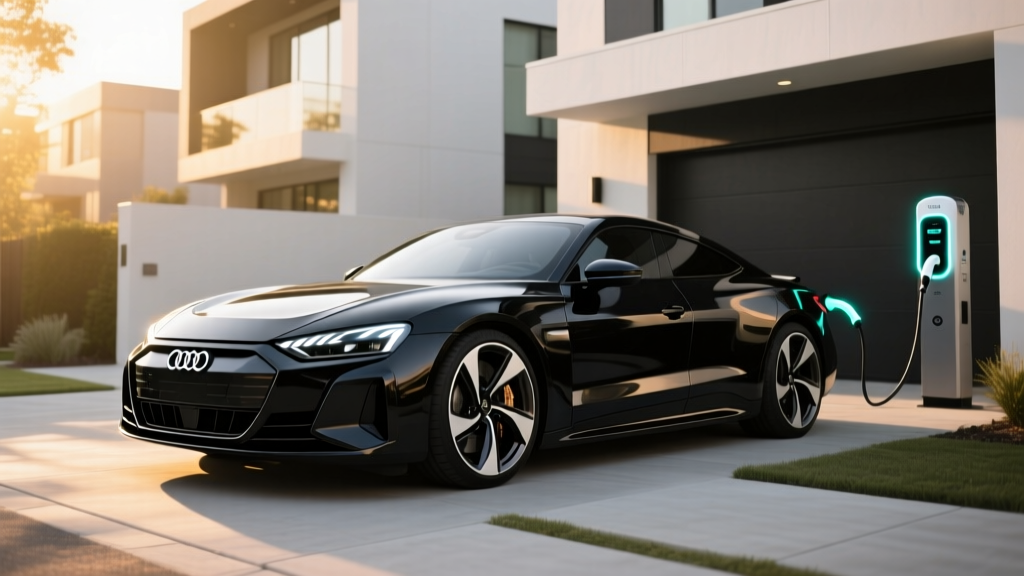
The Audi e-tron GT is a low-slung, dual-motor luxury grand tourer that shares its 800-volt J1 platform with the Porsche Taycan. For 2026, Audi has streamlined the lineup around the e-tron GT quattro and the high-performance RS e-tron GT, both receiving incremental software and battery-management updates. But for a vehicle starting above $107,000, Audi e-tron GT reliability is a legitimate concern — this is a complex, performance-oriented EV with an NMC battery pack, sophisticated thermal management, and air suspension. Let's break down what the data, warranty terms, and ownership experience actually tell us.
The short answer: the e-tron GT's powertrain architecture is proven (Porsche has been iterating on J1 since 2020), and Audi's 8-year/100,000-mile battery warranty provides a solid backstop. However, early-model-year build-quality issues, expensive out-of-warranty repairs, and the lack of a federal tax credit due to MSRP caps mean buyers should go in with eyes wide open.
Range, Battery & Efficiency
EPA Estimated: 238 miles (e-tron GT quattro) / 232 miles (RS e-tron GT)
Real-World Highway (70 mph, moderate temps): ~200–215 miles
Cold Weather (below 32°F, highway): ~165–185 miles
The 800V architecture and heat pump help mitigate cold-weather losses, but the GT's wide, sticky tires and aggressive aero profile hurt highway efficiency compared to more efficiency-focused sedans like the Lucid Air or Tesla Model S.
| Spec | e-tron GT quattro | RS e-tron GT |
|---|---|---|
| Battery (gross / usable) | 93.4 kWh / ~85 kWh | 93.4 kWh / ~85 kWh |
| Chemistry | NMC (Nickel Manganese Cobalt) | NMC |
| EPA Range | 238 miles | 232 miles |
| MPGe (combined) | 85 MPGe | 81 MPGe |
| Efficiency (kWh/100 mi) | 39 kWh/100 mi | 41 kWh/100 mi |
| Drivetrain | Dual-motor AWD | Dual-motor AWD |
The NMC chemistry in the e-tron GT prioritizes energy density and power delivery over the extended cycle life you'd get from an LFP (lithium iron phosphate) pack. NMC cells degrade slightly faster over time — typically 8–12% capacity loss over 8 years under normal use — but Audi's battery management system (BMS) maintains a generous top and bottom buffer to protect long-term health. The 800V architecture also means lower current and less heat generation during charging, which reduces cell stress.
According to fueleconomy.gov, the e-tron GT quattro achieves 85 MPGe combined. In real-world mixed driving, owners report averaging 35–40 kWh/100 mi, which aligns with the EPA figure. Expect highway-only trips at 75+ mph to push consumption closer to 44–48 kWh/100 mi, cutting range accordingly.
Charging Speed: DC Fast & Home Level 2
The e-tron GT's 800-volt platform is its biggest charging advantage. While most 400V EVs peak at 150–175 kW, the e-tron GT can sustain higher power for longer, thanks to lower current and better thermal management.
| Charging Level | Power / Rate | Time / Miles Added |
|---|---|---|
| Level 1 (120V, 12A) | ~1.4 kW | ~3–4 miles/hour |
| Level 2 (240V, 48A) | 11.5 kW (onboard charger max) | ~28–30 miles/hour; full charge ~9 hours |
| DC Fast Charge (peak) | 270 kW peak (CCS/NACS adapter) | 10–80% in ~22 minutes |
| DC Sustained (10–80%) | Avg ~170–190 kW | ~150 miles in 15 minutes |
Charge curve reality check: The e-tron GT peaks at 270 kW only between roughly 10–35% state of charge (SoC). From 35–60%, it sustains around 170–200 kW, then tapers to ~100 kW above 60% and drops further above 80%. This is why the 10–80% time of approximately 22 minutes is more meaningful than the peak kW figure alone. Preconditioning the battery (via the navigation-routed charging feature) is essential to hit these numbers — without it, expect peak rates closer to 150–180 kW, especially in cold weather.
For 2026, Audi provides a CCS-to-NACS adapter, giving e-tron GT owners access to Tesla Supercharger V3/V4 stations. This significantly expands the public charging network, though V3 Superchargers cap at 250 kW — you won't see the full 270 kW peak outside of Electrify America's 350 kW stalls or similar ultra-fast chargers.
Performance & Driving Dynamics
| Spec | e-tron GT quattro | RS e-tron GT |
|---|---|---|
| Horsepower | 522 hp (boost mode) | 637 hp (boost mode) |
| Torque | 472 lb-ft | 612 lb-ft |
| 0–60 mph | 3.9 seconds | 3.1 seconds |
| Top Speed | 152 mph | 155 mph |
| Drivetrain | Dual-motor AWD (2-speed rear) | Dual-motor AWD (2-speed rear) |
The e-tron GT uses a unique 2-speed transmission on the rear axle — first gear provides aggressive launch acceleration, while second gear optimizes highway efficiency. This is a mechanical complexity that aids performance but is one more component that could theoretically require service long-term.
Adaptive air suspension is standard across the lineup, providing a compliant ride that adjusts based on drive mode. The rear-axle steering (optional on GT quattro, standard on RS) tightens the turning circle and adds agility at low speeds while improving stability at highway speeds. These are sophisticated systems — excellent when they work, but historically, air suspension has been a common source of expensive repairs in German luxury vehicles at 60,000+ miles.
Interior, Cargo & Technology
The e-tron GT's cabin is undeniably premium — Audi's virtual cockpit digital gauge cluster, a 10.1-inch MMI touchscreen, and available head-up display create a driver-focused environment. The flat floor and low seating position give it a sports-car feel rather than an SUV-like command view.
Space and cargo reality: This is where the GT form factor exacts its toll.
- Rear trunk: 9.2 cu ft (shallow, wide load floor — fits two carry-on bags)
- Front trunk (frunk): 3.0 cu ft (barely fits a charging cable bag)
- Total cargo: ~12.2 cu ft — significantly less than a Tesla Model S (28 cu ft behind rear seats) or even a Porsche Taycan (14.3 cu ft rear + 3.0 frunk)
- Rear legroom: 32.6 inches — tight for adults over 6 feet on longer trips
- Front headroom: 38.0 inches — adequate but the panoramic glass roof (standard) reduces it slightly
Tech highlights:
- Audi MMI Navigation Plus with wireless Apple CarPlay and Android Auto
- Audi Adaptive Cruise Assist with lane guidance (SAE Level 2 — driver must remain engaged)
- Park assist with surround-view cameras
- Bang & Olufsen 3D premium audio (710W, 16 speakers, standard on RS, optional on GT quattro)
- Matrix-design LED headlights with dynamic turn signals
Pricing, Tax Credits & Ownership Costs
| Trim | Base MSRP | As-Tested (typical options) | Federal §30D Credit |
|---|---|---|---|
| e-tron GT quattro Premium Plus | $107,995 | $114,000–$120,000 | $0 — exceeds MSRP cap |
| RS e-tron GT | $148,695 | $155,000–$165,000 | $0 — exceeds MSRP cap |
Federal tax credit status: Under current IRS §30D rules, the new clean vehicle credit caps sedan MSRP eligibility at $55,000. Since the e-tron GT starts at $107,995, no trim qualifies for the federal $7,500 tax credit, regardless of buyer income or battery sourcing. This is a significant ownership-cost disadvantage versus EVs that do qualify.
- ❌ MSRP exceeds $55,000 sedan cap (starts at $107,995)
- ❌ Buyer income caps also apply ($150K single / $300K joint AGI)
- ❌ Battery critical-mineral and component sourcing requirements
- ✅ Point-of-sale transfer available — but moot since credit = $0
5-Year Ownership Cost Estimate:
| Category | Estimated Cost |
|---|---|
| Purchase (after typical incentives) | ~$112,000 |
| Electricity (home + public charging) | $5,500–$7,500 |
| Insurance (luxury EV premium) | $18,000–$24,000 |
| Maintenance (tires, cabin filter, fluid top-offs) | $3,000–$4,500 |
| Depreciation (estimated 55–60% over 5 years) | $62,000–$67,000 |
| Total 5-Year Cost | ~$200,000–$215,000 |
Depreciation is the single largest cost. Luxury EVs, particularly performance-oriented ones, have historically depreciated faster than luxury ICE vehicles. The e-tron GT is no exception — expect 45–50% value retention at 5 years if the EV market continues to normalize. Insurance is another premium: luxury EV insurance averages 20–35% higher than equivalent ICE luxury sedans due to repair costs and parts pricing.
Reliability, Warranty & Long-Term Durability
This is the crux of the Audi e-tron GT reliability question. Here's what we know from platform history, warranty coverage, and component complexity:
Platform maturity: The J1 platform (shared with Porsche Taycan) launched in 2020. By 2026, it has six model years of iterative refinement. The 800V electrical architecture, battery thermal management, and dual-motor powertrain have proven fundamentally sound. Porsche Taycan owners report high satisfaction with powertrain durability, though early 2020–2021 models had scattered 12V battery and software issues that have largely been resolved in subsequent updates.
Warranty coverage:
| Coverage | Term |
|---|---|
| New Vehicle Limited Warranty | 4 years / 50,000 miles |
| High-Voltage Battery | 8 years / 100,000 miles (min 70% capacity retention) |
| Powertrain (motors, inverters) | 8 years / 100,000 miles |
| Corrosion Perforation | 12 years / unlimited miles |
| Roadside Assistance | 4 years / unlimited miles |
The battery warranty guarantees at least 70% state of health (SoH) over 8 years or 100,000 miles. If the pack drops below that threshold, Audi will repair or replace it. For an NMC pack of this size, independent testing suggests most owners will see 88–92% SoH at the 8-year mark under normal charging habits (avoiding daily 100% charges, using preconditioning for DC fast charging).
Known reliability risk areas:
- Air suspension: Adaptive air struts are a known wear item in German luxury vehicles. Replacement cost: $2,000–$3,500 per corner out of warranty. Typical lifespan: 70,000–100,000 miles.
- 2-speed rear transmission: Mechanically more complex than the single-speed reducers in most EVs. No widespread failure pattern yet, but it's a component unique to the J1 platform.
- Infotainment/software: Audi's MMI system has received criticism for lag and occasional screen freezes. OTA updates have improved things, but it remains behind Tesla, Lucid, and even BMW's iDrive in responsiveness.
- 12V auxiliary battery: Like many EVs, the e-tron GT uses a conventional 12V battery for accessories and system wake-up. These can fail unexpectedly at 3–4 years, leaving the car unable to start even with a full high-voltage pack. Audi has improved the 12V charging logic in recent model years.
Battery replacement cost (out of warranty): A full 93.4 kWh NMC pack replacement would cost approximately $25,000–$35,000 at current pricing. However, individual module replacement (the more likely scenario for a localized cell failure) runs $3,000–$8,000 depending on how many modules need service.
Pros, Cons & Competitor Comparison
- Stunning design — arguably the best-looking EV sedan on the market
- 800V architecture enables 270 kW peak DC charging
- Refined ride quality with adaptive air suspension
- Proven J1 platform shared with Porsche Taycan
- Strong build quality and premium materials
- NACS adapter included for Supercharger access
- 8-year/100,000-mile battery and powertrain warranty
- No federal tax credit (MSRP exceeds $55K sedan cap)
- Cargo space is limited (12.2 cu ft total)
- Rear seat legroom is tight (32.6 inches)
- Real-world highway range drops to ~200 mi
- MMI infotainment feels dated vs. competitors
- Air suspension replacement is expensive out of warranty
- Heavy depreciation expected (55–60% over 5 years)
- Insurance costs 20–35% above ICE luxury sedans
Choose the e-tron GT if: You prioritize design, build quality, and driving refinement over maximum range and cargo space. You have reliable home Level 2 charging. You plan to keep the car within the 8-year/100,000-mile warranty window or budget for extended coverage.
Look elsewhere if: You need family-friendly cargo and rear-seat space (consider the Audi Q8 e-tron or BMW iX). You want maximum range per dollar (Lucid Air Pure delivers 419 miles EPA from $69,900). You rely on the federal tax credit to justify the purchase. You plan to keep the car 10+ years and want to minimize out-of-warranty repair risk.
Key competitors compared:
| Spec | Audi e-tron GT quattro | Porsche Taycan 4S | Tesla Model S LR | Lucid Air Pure |
|---|---|---|---|---|
| Base MSRP | $107,995 | $103,800 | $79,990 | $69,900 |
| EPA Range | 238 mi | 246 mi | 402 mi | 419 mi |
| Peak DC Charge | 270 kW | 270 kW | 250 kW | 200+ kW |
| 0–60 mph | 3.9 sec | 3.8 sec | 3.1 sec | 5.0 sec |
| Cargo (total) | 12.2 cu ft | 17.3 cu ft | 28.0 cu ft | 32.0 cu ft |
| Federal Tax Credit | $0 | $0 | $0 | $0* |
*Lucid Air Pure RWD base may qualify depending on current-year sourcing and MSRP adjustments. Verify with IRS §30D guidelines.
Frequently Asked Questions
What is the real-world range of the Audi e-tron GT?
The EPA rates the e-tron GT quattro at 238 miles and the RS at 232 miles. In real-world highway driving at 70 mph in moderate temperatures, expect approximately 200–215 miles. In cold weather (below freezing), highway range can drop to 165–185 miles due to increased battery resistance and cabin heating demands. City driving with regenerative braking typically yields results closer to the EPA estimate.
How fast does the e-tron GT charge at home and on the road?
At home on a Level 2 (240V, 48A) charger, the e-tron GT accepts up to 11.5 kW, adding roughly 28–30 miles of range per hour — a full charge takes about 9 hours. On DC fast chargers, it peaks at 270 kW and charges from 10–80% in approximately 22 minutes, provided the battery is preconditioned. At Tesla Superchargers (via included NACS adapter), expect peak rates around 250 kW on V3 stalls.
Does the Audi e-tron GT qualify for the federal EV tax credit?
No. Under current IRS §30D rules, new sedans must have an MSRP at or below $55,000 to qualify. The e-tron GT starts at $107,995, disqualifying all trims regardless of buyer income or battery sourcing. Some state-level incentives may still apply — check your local EV rebate programs.
Is the Audi e-tron GT reliable long-term?
The J1 platform shared with the Porsche Taycan has proven fundamentally sound since 2020. The high-voltage battery and electric motors carry an 8-year/100,000-mile warranty with a 70% capacity retention guarantee. The main long-term reliability concerns are air suspension components ($2,000–$3,500 per corner to replace), the 2-speed rear transmission (unique to this platform), and typical German-luxury electronics complexity. Budget for an extended warranty if you plan to keep the car past 50,000 miles.
Is the e-tron GT worth buying vs. the Porsche Taycan or Tesla Model S?
The e-tron GT makes sense if design, build quality, and brand prestige are your top priorities and you accept the range and cargo compromises. The Porsche Taycan is mechanically near-identical but offers slightly more cargo space and Porsche's brand cachet. The Tesla Model S delivers vastly more range (402 mi EPA) and cargo space at a lower price, but with less interior refinement. The Lucid Air Pure offers 419 miles of range from $69,900 — making it the efficiency and value leader in this segment.
How much does a battery replacement cost for the e-tron GT?
A full 93.4 kWh NMC battery pack replacement costs approximately $25,000–$35,000 out of warranty. However, most battery issues involve individual module failures rather than full-pack replacements, which run $3,000–$8,000 depending on scope. The 8-year/100,000-mile warranty covers any degradation below 70% state of health.
What are the biggest maintenance items for the e-tron GT?
EVs eliminate oil changes, spark plugs, and transmission fluid services. The main maintenance items for the e-tron GT are: tire rotation/replacement (high-performance tires wear at 15,000–25,000 miles; a set of four runs $1,200–$2,000), cabin air filter replacement ($100–$200), brake fluid flush every 2 years ($150–$250), and windshield washer fluid. The regenerative braking system significantly extends brake pad life — many owners report original pads at 60,000+ miles.