The 1969 Ford Mustang Mach 1: An American Muscle Legend Meets the EV Era
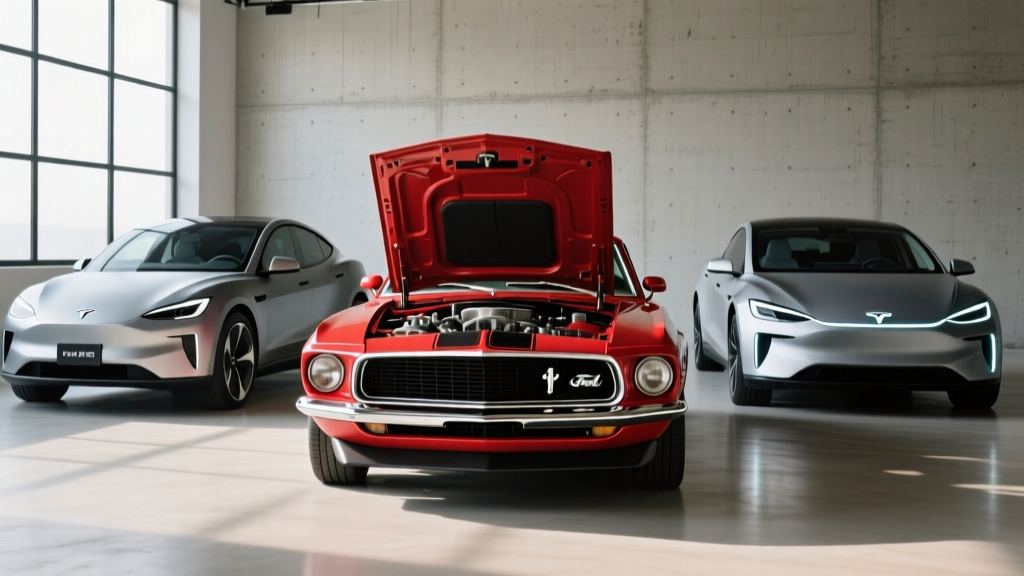
The 1969 Ford Mustang Mach 1 is one of the most iconic muscle cars ever built — a symbol of raw American V8 power, aggressive styling, and an era when 0-60 mph times were measured in optimism rather than precision. But in 2026, as electric vehicles dominate performance conversations and battery-electric conversions of classic cars grow increasingly viable, a compelling question emerges: what would it take to bring a '69 Mach 1 into the electric age, and how would it stack up against today's EVs?
This isn't a review of a factory electric Mustang — Ford's modern Mustang Mach-E already fills that role. Instead, we're dissecting the original 1969 Mach 1's performance DNA, exploring the real-world engineering and economics of an EV conversion, and comparing the result against modern electric performance benchmarks. Whether you're a classic car enthusiast weighing an electrification project or simply curious how vintage muscle translates to kilowatts, this deep-dive has the numbers.
Original 1969 Mach 1 Specs: The Baseline We're Electrifying
Before we talk batteries and motors, we need to understand what we're starting with. The 1969 Mustang Mach 1 came with multiple engine options, but the most desirable configurations defined its legacy.
| Specification | 351 Windsor V8 | 428 Cobra Jet V8 | 428 Super Cobra Jet |
|---|---|---|---|
| Horsepower (SAE gross) | 290 hp | 335 hp | 335 hp (rated), ~400+ actual |
| Torque (lb-ft) | 385 | 440 | 440 |
| 0-60 mph (estimated) | ~7.0 sec | ~5.5 sec | ~5.3 sec |
| Curb Weight | ~3,350 lbs | ~3,550 lbs | ~3,600 lbs |
| Fuel Economy | ~10-12 mpg | ~8-10 mpg | ~8-10 mpg |
| Fuel Tank | 20 gal | 20 gal | 20 gal |
| Drivetrain | RWD | RWD | RWD |
A few things jump out for the EV-minded reader: the Mach 1 was heavy by 1960s standards, thirsty at single-digit MPG, and its power figures were SAE gross (measured at the crank without accessories) — meaning real-world output was lower than the numbers suggest. These factors matter enormously when planning an electric conversion.
The Electric Conversion: What a Modern EV Powertrain Looks Like in a '69 Mach 1
EV conversions of classic muscle cars have matured significantly. Companies like EV West, Zero Labs, and Icon have established proven platforms, and DIY builders have access to salvaged Tesla drive units, Cascadia Motion controllers, and modular battery packs. Here's what a credible, performance-oriented conversion of a 1969 Mach 1 looks like in 2026.
Typical Conversion Architecture
| Component | Specification | Notes |
|---|---|---|
| Motor | Tesla Large Drive Unit (rear) or Cascadia iDM-140 | Single-motor RWD preserves original character |
| Power Output | 300-450 hp (wheel) | Depends on controller tuning and battery voltage |
| Battery Pack | 40-60 kWh usable (NMC modules) | Tesla Model S salvaged modules common; weight ~600-800 lbs |
| Battery Chemistry | NMC (Nickel Manganese Cobalt) | Higher energy density suits tight packaging; LFP too heavy for this application |
| Charger (onboard) | 6.6 kW or 11.5 kW Level 2 | Limited by available space and 240V circuit |
| DC Fast Charging | Typically NOT included | CCS/NACS integration requires BMS compatibility; adds $3,000-$8,000 |
| Weight (converted) | ~3,600-3,900 lbs | Batteries offset engine removal; weight distribution shifts rearward |
| 0-60 mph | 3.5-5.0 sec | Instant torque transforms the car's character |
Range Reality: The Hard Truth About Classic Car EV Conversions
EPA-Equivalent Range Estimate: 90-140 miles (depending on pack size and driving style)
Real-World Expectation: Plan for 70-110 miles of usable range in mixed driving. Highway speeds above 70 mph drain the pack quickly — the Mach 1's brick-like 0.45 drag coefficient and lack of modern aerodynamic optimization mean efficiency drops sharply at speed. Cold weather (below 40°F) can reduce range by 20-35%, especially without a heat pump or battery preconditioning system, which most conversions lack.
To put this in perspective: a 60 kWh NMC pack in a converted '69 Mach 1 yields roughly 2.0-2.5 kWh/mile efficiency (or 250-300 Wh/mile) in ideal conditions. That's comparable to a heavy modern EV like the Rivian R1T but without the benefit of regenerative braking optimization, heat pumps, or thermal management systems that OEMs spend millions engineering.
Charging a Converted Mach 1: What to Expect
Charging infrastructure compatibility is where classic EV conversions face their biggest practical limitation. Here's the breakdown:
| Charging Level | Power (kW) | Miles Added Per Hour | Full Charge Time |
|---|---|---|---|
| Level 1 (120V household) | 1.4 kW | ~3-4 mi/hr | ~40-45 hours |
| Level 2 (240V, 32A) | 7.7 kW | ~20-25 mi/hr | ~7-8 hours |
| Level 2 (240V, 48A) | 11.5 kW | ~30-38 mi/hr | ~5-6 hours |
| DC Fast Charge (if equipped) | 50 kW (typical max) | ~120-150 mi/hr | 10-80% in ~45 min |
Critical caveat: Most classic EV conversions do not include DC fast charging. Integrating CCS or NACS protocols requires a compatible Battery Management System (BMS), high-voltage contactors, and communication handshakes that aftermarket systems often don't support reliably. If DC fast charging matters for your use case, budget an additional $5,000-$8,000 for a system like the Quick Charge Power CCS retrofit, and expect 50 kW peak rates at best — far below the 150-250 kW rates modern OEM EVs achieve.
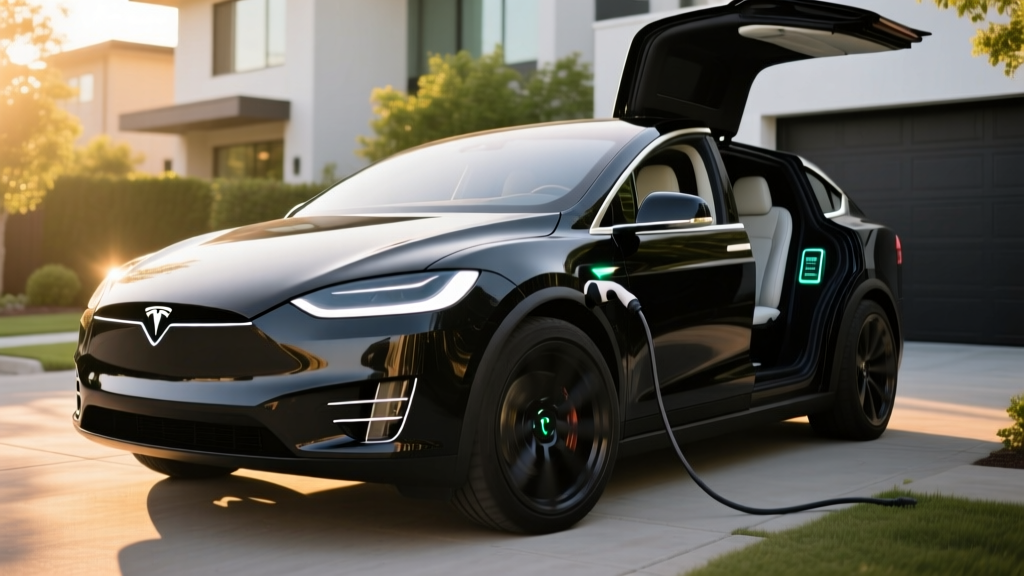
For most conversion owners, Level 2 home charging is the primary refueling method. A 48-amp Level 2 station on a dedicated 60-amp circuit adds roughly 30+ miles of range per hour, meaning an overnight charge easily replenishes the pack.
Cost Breakdown: Conversion vs. Buying a Modern Performance EV
This is where the math gets sobering. A proper EV conversion of a 1969 Mustang Mach 1 is not a budget project.
| Vehicle / Project | Approximate Cost | Range | 0-60 mph | DC Fast Charge |
|---|---|---|---|---|
| 1969 Mach 1 EV Conversion (parts + labor) | $50,000 - $100,000+ | 90-140 mi | 3.5-5.0 sec | Usually no |
| Donor 1969 Mach 1 (project condition) | $25,000 - $70,000 | N/A | N/A | N/A |
| Total Conversion Project | $75,000 - $170,000 | 90-140 mi | 3.5-5.0 sec | Rarely |
| 2026 Ford Mustang Mach-E GT | ~$58,000 MSRP | 290 mi (EPA) | 3.5 sec | 150 kW (CCS/NACS) |
| 2026 Tesla Model 3 Performance | ~$55,000 MSRP | 315 mi (EPA) | 2.9 sec | 250 kW (NACS) |
| 2026 Hyundai Ioniq 5 N | ~$68,000 MSRP | 260 mi (EPA) | 3.4 sec | 240 kW (NACS/CCS) |
The conversion route costs 2-3x what a factory performance EV delivers, with a fraction of the range, no fast charging, no warranty, and no ADAS safety features. This isn't a rational purchase — it's a passion project.
Federal Tax Credit Eligibility (§30D)
A critical question for cost-conscious builders: does an EV conversion qualify for the federal EV tax credit?
The short answer: No. Under current IRS §30D rules, the Clean Vehicle Credit applies only to new qualifying vehicles purchased from a licensed dealer that meet MSRP caps ($55,000 for sedans, $80,000 for SUVs/trucks), buyer income limits ($150,000 single / $300,000 joint AGI), and battery component/critical mineral sourcing requirements. A custom conversion of a 1969 vehicle does not meet any of these criteria.
Some states offer separate incentives for EV conversions (California's CC4A program has occasionally included conversion provisions), but these are limited, jurisdiction-specific, and change frequently. Consult your state's air quality or energy department for current programs.
Driving Experience: What Changes and What Doesn't
Those who've driven converted classic muscle cars consistently report a transformative experience — but with important trade-offs.
What Improves
- Instant torque: Electric motors deliver peak torque from 0 RPM. A 400-hp electric Mach 1 pulls harder off the line than the original 428 CJ ever did, with no wheelspin drama if traction control is calibrated.
- Drivability: No carburetor tuning, no choke, no warm-up. Turn the key (or press the button) and go — in any weather, at any altitude.
- Reliability: An electric powertrain has roughly 20 moving parts vs. 2,000+ in a V8. No oil changes, no timing chains, no exhaust system failures.
- Running costs: At $0.13/kWh national average electricity rate, "fuel" costs roughly 3-4 cents per mile vs. 25-35 cents per mile for a 10-mpg muscle car on premium fuel.
- Quiet operation: Neighborhood-friendly. No cold-start rumble waking the block at 7 AM.
What You Lose (or Compromise)
- Sound and soul: The 428 Cobra Jet's exhaust note is irreplaceable. Some conversions add synthetic V8 sound through speakers — it's a pale imitation.
- Range flexibility: 100 miles of range means planning every drive. No impromptu 300-mile road trips without a trailer and a destination charger confirmed in advance.
- Collector value impact: The classic car market is divided on conversions. Purists argue numbers-matching originality is paramount; others see electrification as preservation through usability. A converted Mach 1 typically sells for less than a well-restored, original-spec example to traditional collectors.
- Safety: A 1969 chassis lacks crumple zones, airbags, ABS, stability control, and every modern safety system. Adding 800 lbs of batteries to a 55-year-old unibody requires significant structural reinforcement.
- Heating: Without engine waste heat, cabin heating draws from the battery pack, further reducing already-limited range in cold weather.
Who Should (and Shouldn't) Electrify a 1969 Mach 1
✅ This Project Is For You If:
- You own a non-numbers-matching Mach 1 (or a replica body) and want to make it a daily-drivable weekend car
- You have a $75,000-$150,000+ budget and view this as a passion project, not an investment
- You have access to Level 2 home charging and your typical drives are under 80 miles round-trip
- You value instant torque, reliability, and modern drivability over originality
- You understand this is a custom engineering project requiring ongoing troubleshooting
❌ Look Elsewhere If:
- You want a cost-effective EV — a factory Mach-E GT delivers more performance, range, and warranty for half the cost
- You plan to drive more than 100 miles regularly or need DC fast charging for road trips
- You own a numbers-matching, high-value original and want to preserve collector value
- You expect OEM-level reliability, warranty coverage, or dealer service support
- You need back seats, cargo space, or family-friendly practicality
Modern Alternatives: Factory EVs That Capture the Mach 1 Spirit
If the goal is electric muscle car performance without the conversion complexity, several 2026 production EVs deliver the spirit of the Mach 1 with modern engineering:
| Spec | 2026 Mustang Mach-E GT | 2026 Tesla Model 3 Performance | 2026 Dodge Charger Daytona Scat Pack | 2026 Hyundai Ioniq 5 N |
|---|---|---|---|---|
| Horsepower | 480 hp | 510 hp | 670 hp | 641 hp (N Grin Boost) |
| 0-60 mph | 3.5 sec | 2.9 sec | 3.3 sec | 3.4 sec |
| EPA Range | 290 mi | 315 mi | 260 mi | 260 mi |
| Battery (usable) | 91 kWh (NMC) | 79 kWh (NMC) | 100.5 kWh (NMC) | 84 kWh (NMC) |
| Peak DC Charge | 150 kW | 250 kW | ~175 kW | 240 kW |
| 10-80% Charge Time | ~38 min | ~25 min | ~32 min | ~18 min |
| MSRP | ~$58,000 | ~$55,000 | ~$73,000 | ~$68,000 |
| Federal Tax Credit | Eligible (verify sourcing) | Eligible | Check MSRP cap | Eligible (verify sourcing) |
| Warranty (battery) | 8 yr / 100,000 mi | 8 yr / 120,000 mi | 8 yr / 100,000 mi | 10 yr / 100,000 mi |
The Dodge Charger Daytona Scat Pack deserves special mention: it's the closest thing to a factory electric muscle car, with 670 hp, a physical "exhaust" sound system (Fratzonic), and styling that directly references muscle car heritage. For someone who wants the Mach 1's spirit in a warrantied, fast-charging, 260-mile-range package, it's the most direct spiritual successor.
Frequently Asked Questions
What is the real-world range of a 1969 Mustang Mach 1 EV conversion?
Expect 70-110 miles of usable range with a 50-60 kWh NMC battery pack in mixed driving. Highway driving at 75+ mph and cold weather (below 40°F) will push range toward the lower end of that spectrum — potentially as low as 50-60 miles in worst-case conditions. The car's poor aerodynamics and added battery weight work against efficiency.
How fast does a converted Mach 1 charge at home and on DC fast chargers?
On a 48-amp Level 2 home charger (11.5 kW), expect roughly 30-38 miles of range added per hour, with a full charge taking 5-6 hours. Most conversions lack DC fast charging capability. If equipped with a CCS retrofit, peak rates typically max out around 50 kW, meaning a 10-80% charge takes approximately 45 minutes — far slower than any modern production EV.
How much does a 1969 Mach 1 EV conversion cost in total?
A credible, performance-oriented conversion runs $50,000-$100,000+ in parts and labor, on top of $25,000-$70,000 for the donor car itself. Total project costs of $75,000-$170,000 are typical for a well-executed build. Budget conversions using salvaged Tesla components can start lower (~$35,000 in parts) but require significant fabrication skill and compromise on range and charging.
Does a classic car EV conversion qualify for the federal EV tax credit?
No. The IRS §30D Clean Vehicle Credit applies only to new qualifying vehicles from licensed dealers meeting MSRP caps, buyer income limits, and battery sourcing requirements. Custom conversions of vintage vehicles do not qualify. Some state-level programs may offer limited incentives — check your state's energy or air quality agency.
Is converting a 1969 Mach 1 to electric worth it vs. buying a modern EV?
From a purely rational standpoint, no. A 2026 Mustang Mach-E GT or Tesla Model 3 Performance delivers more range, faster charging, full warranties, modern safety features, and federal tax credit eligibility for a fraction of the cost. The conversion makes sense only as a passion project — preserving a beloved classic's styling while gaining electric drivability for local drives. It's an emotional decision, not a financial one.
What battery chemistry is best for a classic car EV conversion?
NMC (Nickel Manganese Cobalt) is the standard choice for classic car conversions because its higher energy density keeps weight manageable in vehicles not designed for battery mass. LFP (Lithium Iron Phosphate) offers longer cycle life and greater thermal stability but is 20-30% heavier per kWh — a significant penalty in a 1969 unibody chassis already stressed by 600-800 lbs of battery modules.
Can I still register and insure a converted 1969 Mach 1?
Registration is generally straightforward — most states allow EV conversions with proper documentation of the powertrain change, and the vehicle retains its original VIN. Insurance is more complex: you'll need a specialty insurer (Hagerty, Grundy, or similar) willing to cover a modified classic, and agreed-value policies are strongly recommended given the investment. Expect premiums of $1,500-$3,000/year depending on stated value and usage limits.
Sources: EPA Fuel Economy for modern EV range and efficiency data; IRS §30D Clean Vehicle Credit for tax credit eligibility rules; manufacturer specification pages for 2026 model-year pricing and performance data.