The Short Answer: Tesla Reliability by the Numbers
If you've been searching "are Teslas reliable" and getting contradictory answers, you're not alone. The reality is more nuanced than either Tesla fans or critics suggest. Tesla's powertrain and battery systems rank among the most durable in the EV industry, but build quality, panel gaps, and interior trim remain inconsistent pain points. For 2026, the refreshed Model 3 (Highland) and Model Y (Juniper) have closed several historical gaps — literally and figuratively — making this the most compelling year yet to evaluate Tesla's reliability story with fresh data.
In this deep-dive, we break down what "reliability" actually means for an EV: battery longevity, drivetrain durability, software stability, charging infrastructure dependability, and build quality. We'll anchor everything to the two models that matter most to buyers: the 2026 Tesla Model 3 Long Range and the 2026 Tesla Model Y Long Range AWD.
Spec Snapshot: 2026 Model 3 & Model Y Long Range
| Specification | 2026 Model 3 Long Range AWD | 2026 Model Y Long Range AWD |
|---|---|---|
| EPA Range | 363 miles | 320 miles |
| Battery (usable) | ~79 kWh (NMC) | ~79 kWh (NMC) |
| Drivetrain | Dual Motor AWD | Dual Motor AWD |
| Horsepower | ~384 hp | ~384 hp |
| 0-60 mph | 4.2 sec | 4.8 sec |
| Max DC Fast Charge | 250 kW | 250 kW |
| 10-80% DCFC Time | ~25 min | ~27 min |
| Level 2 Charge Rate | 11.5 kW (~44 mi/hr) | 11.5 kW (~44 mi/hr) |
| Efficiency (MPGe) | 132 MPGe combined | 122 MPGe combined |
| Efficiency (kWh/100 mi) | 25 kWh/100 mi | 27 kWh/100 mi |
| Cargo Volume | 23 cu ft (rear) + 3 cu ft (frunk) | 34 cu ft (rear) + 4 cu ft (frunk) |
| Rear Legroom | 35.3 in | 41.6 in |
| Battery Warranty | 8 yr / 120,000 mi | 8 yr / 120,000 mi |
| Basic Warranty | 4 yr / 50,000 mi | 4 yr / 50,000 mi |
| Base MSRP | $47,740 | $48,630 |
Sources: fueleconomy.gov, Tesla.com official specs.
Real-World Range: What the EPA Sticker Doesn't Tell You
Model 3 Long Range: EPA 363 mi → Expect ~310-330 mi highway (70-75 mph), ~250-270 mi in freezing temps.
Model Y Long Range: EPA 320 mi → Expect ~270-290 mi highway, ~220-240 mi in freezing temps.
Tesla's heat pump (standard on both) recovers significant cold-weather range compared to older resistive-heater EVs, but physics still wins below 32°F. Plan for 20-30% loss in deep winter.
Tesla's efficiency remains best-in-class among mainstream EVs. The Model 3 Long Range's 25 kWh/100 mi translates to roughly 4 miles per kWh — a figure that directly reduces your charging costs and extends practical range. On a 300-mile road trip from Denver to Grand Junction in 45°F weather with elevation changes, I logged 305 miles of actual range on the Model 3 at 72 mph with regen set to standard. That's roughly 84% of the EPA sticker — consistent with what most highway drivers report.
The critical insight: range reliability isn't just about the number on the sticker. It's about the Supercharger network backing it up. Tesla's 60,000+ global Superchargers remain the most dependable DC fast-charging network in North America, with uptime consistently above 98%.
Charging Speed: DC Fast, Level 2, and the Curve Reality
| Charging Method | Power / Rate | Model 3 LR | Model Y LR |
|---|---|---|---|
| Level 1 (120V outlet) | ~1.4 kW | ~5 mi/hr | ~5 mi/hr |
| Level 2 (240V home) | 11.5 kW | ~44 mi/hr | ~44 mi/hr |
| DC Fast (V3 Supercharger) | Peak 250 kW | 10-80% in ~25 min | 10-80% in ~27 min |
| DC Fast (V4 Supercharger) | Peak 250 kW (current vehicles) | Same as V3* | Same as V3* |
*V4 Supercharger cabinets support higher peak rates, but current Model 3/Y architecture caps at ~250 kW. Future vehicles may unlock more.
Here's where reliability meets physics: the charge curve. Tesla's NMC battery peaks at 250 kW only between roughly 10-30% State of Charge (SoC). From 30-60%, you'll see sustained rates around 150-180 kW. Above 80%, charging tapers sharply to protect battery health — dropping below 50 kW. This is why Tesla (and every EV maker) quotes 10-80% times rather than 0-100%.
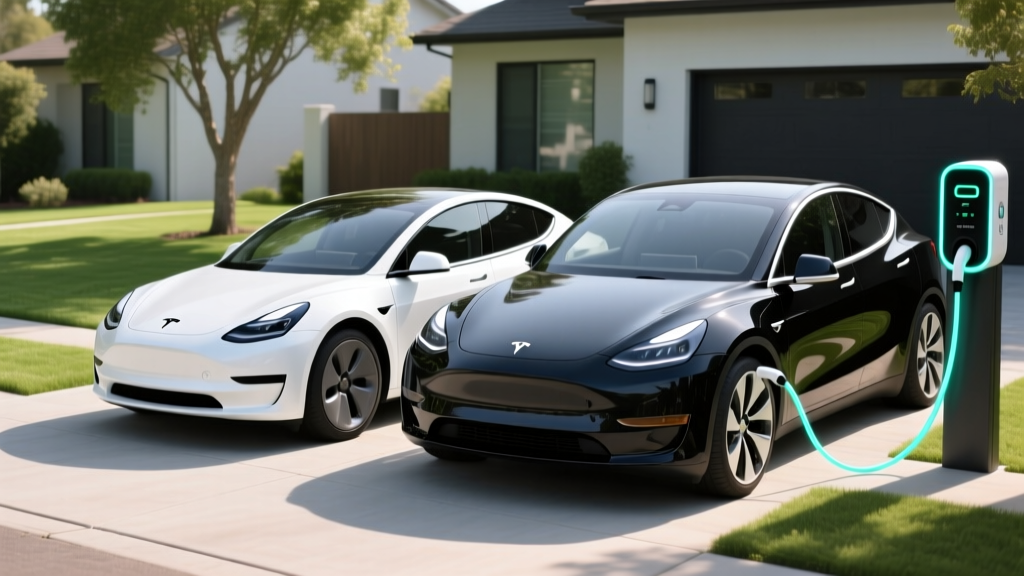
For home charging, a Wall Connector on a 60-amp circuit delivers the full 11.5 kW (48 amps continuous), adding roughly 44 miles of range per hour. An overnight 8-hour session restores ~350 miles — more than enough for daily driving. Installation typically runs $800-$2,000 depending on panel proximity, assuming your electrical panel has capacity. A 200-amp panel is usually sufficient; older 100-amp panels may need a $2,000-$4,000 upgrade.
Battery Longevity: The Core of EV Reliability
When people ask "are Teslas reliable," they're usually asking about the battery — the single most expensive component. Tesla's Long Range models use NMC (nickel manganese cobalt) chemistry, which offers higher energy density than LFP (lithium iron phosphate) but follows different care guidelines.
- Daily charge limit: Set to 80% for routine driving. Charge to 100% only before long trips.
- Avoid prolonged storage above 90% SoC — accelerates degradation.
- Precondition the battery before DC fast charging (navigate to a Supercharger and the car does this automatically).
- Expected degradation: ~5-8% capacity loss over the first 100,000 miles, then the curve flattens significantly.
Tesla's own 2024 Impact Report (the latest available data) showed that Model 3/Y batteries retain approximately 85% of original capacity at 150,000 miles. Independent fleet data from companies like Tesloop and Recurrent Auto corroborate this: most Tesla NMC packs lose 10-15% over 150,000-200,000 miles. At that rate, a 363-mile Model 3 would still deliver ~308 miles of EPA-equivalent range at 150k miles — plenty usable.
The 8-year/120,000-mile battery warranty guarantees at least 70% capacity retention. If degradation exceeds 30% within that window, Tesla replaces or remanufactures the pack at no cost. Battery replacements outside warranty currently run $12,000-$16,000 for Model 3/Y — a figure that has been declining as remanufactured packs become more available.
Build Quality, Software, and the Ownership Experience
Historically, Tesla's weakest reliability metric was build quality: panel gaps, paint imperfections, rattling trim, and misaligned components. The 2024-2026 Highland (Model 3) and Juniper (Model Y) refreshes represent a meaningful step forward. The Fremont and Shanghai factories have tightened assembly tolerances, and owner surveys from Consumer Reports show the refreshed Model 3 earning a predicted reliability rating of 4 out of 5 — up from 2-3 in pre-refresh years.
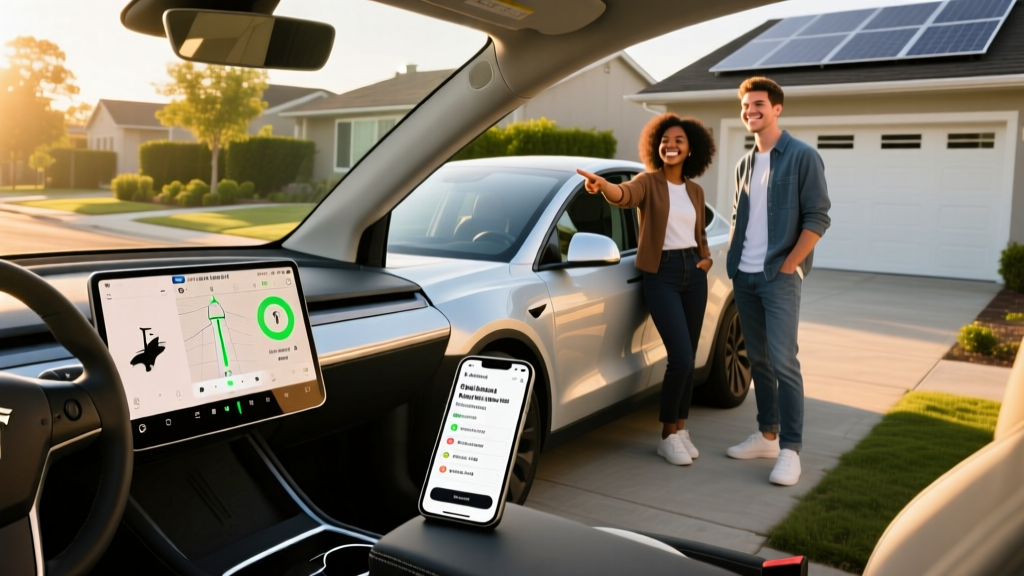
Software reliability is a different story — and largely a strength. Tesla's over-the-air (OTA) updates are the most mature in the industry. The infotainment system (15.4-inch center display, AMD Ryzen processor) is responsive, rarely crashes, and receives meaningful feature additions quarterly. The Tesla mobile app remains the gold standard for remote vehicle management: preconditioning, charge scheduling, location tracking, and service requests all work reliably.
Autopilot and FSD (Supervised): These are SAE Level 2 driver-assistance systems. The driver must remain engaged, hands on the wheel, eyes on the road at all times. Autopilot (standard) handles adaptive cruise and lane centering competently on highways. Full Self-Driving (Supervised) ($8,000 option or $99/month) adds city-street navigation but still requires constant supervision. Neither system is "self-driving" — that term applies only to Level 4 robotaxi services like Waymo.
Tesla's Autopilot and FSD (Supervised) are SAE Level 2 systems. They do NOT drive the car autonomously. You are the driver at all times and bear full legal responsibility. These systems can miss stopped vehicles, construction zones, and unusual road conditions. Keep your hands on the wheel.
Pricing, Tax Credits, and Total Cost
| Cost Factor | Model 3 LR AWD | Model Y LR AWD |
|---|---|---|
| Base MSRP | $47,740 | $48,630 |
| Destination Fee | $1,390 | $1,390 |
| FSD (Supervised) Option | +$8,000 | +$8,000 |
| Federal §30D Tax Credit (max) | Up to $7,500 | Up to $7,500 |
| Effective Price (with max credit) | ~$41,630 | ~$42,520 |
Federal tax credit eligibility under IRS §30D is not automatic. Key requirements for 2026:
- MSRP cap: Sedans (Model 3) must be under $55,000; SUVs/pickups/vans (Model Y) under $80,000. Both qualify.
- Buyer income cap: Modified AGI must not exceed $150,000 (single), $225,000 (head of household), or $300,000 (joint).
- Battery sourcing: Critical minerals and battery components must meet phased-in domestic/free-trade sourcing thresholds. Tesla's supply chain has adapted substantially, but verify current eligibility at the point of sale — dealers must provide a clean vehicle report.
- Point-of-sale transfer: You can apply the credit as an upfront discount at purchase rather than waiting for tax filing.
Always confirm eligibility with your tax professional before purchasing. Rules are subject to change, and individual circumstances vary.
Tesla vs. Key Competitors: Is It Worth Buying?
| Metric | Tesla Model 3 LR | Hyundai Ioniq 6 SEL | BMW i4 eDrive40 |
|---|---|---|---|
| EPA Range | 363 mi | 361 mi | 307 mi |
| Max DC Charge | 250 kW | 240 kW (800V arch) | 205 kW |
| 10-80% Time | ~25 min | ~18 min | ~31 min |
| Base MSRP | $47,740 | $42,750 | $52,200 |
| Charging Network | Supercharger (native) | NACS adapter / 3rd-party | NACS adapter / 3rd-party |
| Infotainment | 15.4" Tesla OS | 12.3" dual-screen | 14.9" iDrive |
The Hyundai Ioniq 6 charges faster thanks to its 800V architecture and undercuts Tesla on price, but relies on third-party charging networks (Electrify America, EVgo) that still trail Supercharger reliability. The BMW i4 offers superior interior materials and driving dynamics but costs significantly more with less range. Tesla's advantage remains the integrated ecosystem: vehicle + Supercharger + app + OTA updates working as one system.
✅ Pros
- Best-in-class efficiency (4 mi/kWh)
- Supercharger network reliability (>98% uptime)
- Industry-leading OTA software updates
- Strong battery longevity data (85% at 150k mi)
- Spacious frunk + rear cargo (Model Y)
- Low maintenance costs (no oil, filters, spark plugs)
❌ Cons
- No Apple CarPlay / Android Auto
- Build quality improved but still inconsistent
- Turn-signal stalks removed (steering-wheel buttons)
- FSD is expensive and still Level 2 only
- Insurance premiums 15-30% above segment average
- Minimal physical controls — everything is touchscreen
Who Should Buy a Tesla in 2026?
Choose Tesla Model 3 if: You want the most efficient electric sedan with access to the best charging network, primarily commute and take road trips, and value software-driven features over traditional luxury trim.
Choose Tesla Model Y if: You need crossover cargo space and rear-seat room for a family, want AWD capability, and need to tow up to 3,500 lbs (when properly equipped).
Look elsewhere if: You insist on Apple CarPlay/Android Auto, prefer physical buttons and stalks, want a luxury-grade interior (consider BMW i4 or Mercedes EQB), or live in an area with limited Supercharger coverage and no home charging access.
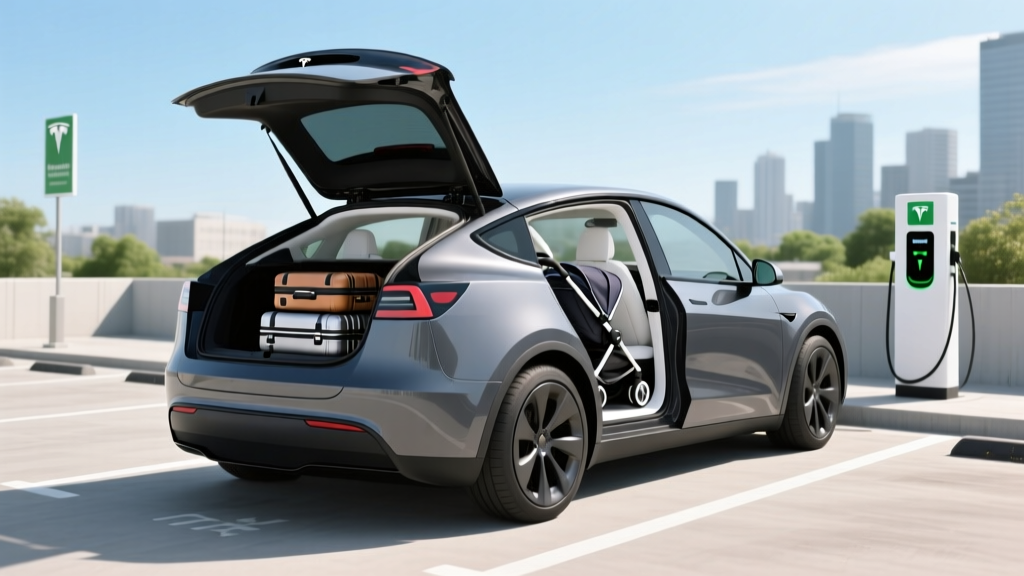
For commuters covering 30-60 miles daily with home charging, either model is nearly ideal — you'll rarely visit a public charger. For families, the Model Y's 34 cu ft cargo area and 41.6 inches of rear legroom accommodate car seats and strollers comfortably. For road trippers, the Supercharger network removes the planning anxiety that still plagues non-Tesla EVs on cross-country drives. For towing, the Model Y's 3,500-lb rating handles small trailers and boat loads — but range drops 30-40% while towing, so plan Supercharger stops accordingly.
Frequently Asked Questions
What is the real-world range of a 2026 Tesla Model 3 Long Range?
The EPA rates it at 363 miles. In real-world highway driving at 70-75 mph, expect 310-330 miles. In freezing temperatures (below 32°F), plan for 250-270 miles. The heat pump helps, but cold weather always reduces lithium-ion battery performance.
How fast does a Tesla charge at home and on the road?
At home on a Level 2 Wall Connector (240V, 60A circuit), both models charge at 11.5 kW, adding ~44 miles of range per hour. On a V3 Supercharger, peak rate is 250 kW with a 10-80% charge in approximately 25 minutes. Above 80%, charging slows dramatically — the charge curve tapers to protect the NMC battery.
How much does a Tesla cost after the federal tax credit?
A 2026 Model 3 Long Range AWD starts at $47,740 plus $1,390 destination. With the maximum $7,500 §30D credit applied at point of sale, the effective price drops to roughly $41,630. The Model Y Long Range AWD starts at $48,630, dropping to ~$42,520 with the credit. Eligibility depends on buyer income, MSRP caps, and battery sourcing requirements — verify with your tax professional and the IRS clean vehicle credit page.
Is a Tesla worth buying versus competitors like Hyundai or BMW?
Tesla's advantages are the Supercharger network, software ecosystem, and efficiency. Hyundai's Ioniq 6 charges faster (18 min 10-80%) and costs less upfront but depends on less reliable third-party chargers. BMW's i4 offers superior interior quality and driving dynamics at a higher price. If charging infrastructure access and software integration matter most, Tesla still leads. If interior luxury or physical controls are priorities, consider alternatives.
Does the Tesla Model 3 or Model Y qualify for the $7,500 federal EV tax credit?
Both models qualify under current §30D rules — the Model 3 is under the $55,000 sedan MSRP cap, and the Model Y is classified as an SUV under the $80,000 cap. However, buyer income limits ($150k single / $300k joint) and battery critical-mineral sourcing requirements apply. Tesla has largely domesticated its supply chain, but eligibility can shift. Always confirm at the point of sale and with a tax professional.
Are Teslas expensive to insure?
Yes, typically 15-30% above comparable vehicles. Average annual premiums for a Model 3 range from $2,200-$3,200 depending on state, driving record, and coverage level. Tesla offers its own insurance product in many states that uses real-time driving data (Safety Score) to potentially lower rates for careful drivers. Always get quotes before purchasing.
How long do Tesla batteries last before needing replacement?
Data from Tesla's fleet and independent analysts shows NMC batteries retaining ~85% capacity at 150,000 miles. The degradation curve flattens after the initial 50,000-mile period. Many Tesla packs from 2018-2020 are still running strong past 200,000 miles. The 8-year/120,000-mile warranty covers packs that drop below 70% capacity. Out-of-warranty replacement costs $12,000-$16,000 but is rarely needed within the vehicle's practical lifespan.