The Short Answer: Apple Titan Is Dead
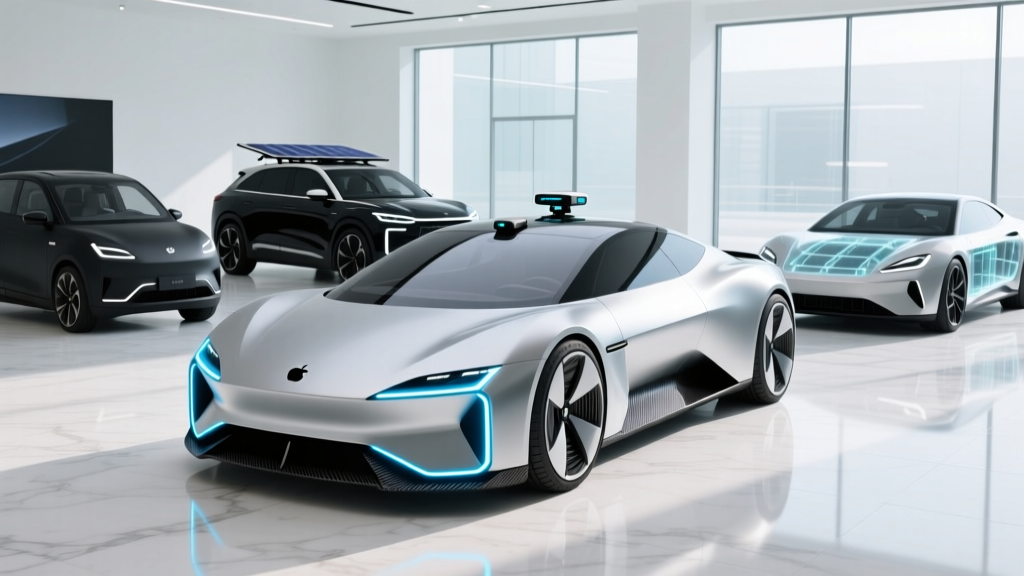
Apple officially canceled Project Titan — its secretive electric vehicle program — in February 2024, reassigning roughly 2,000 employees to generative AI initiatives. There is no Apple Titan electric car, no prototype in production, and no announced revival as of 2026. If you were holding out for an Apple-branded EV, it's time to look at what's actually on the market. The good news: several current EVs deliver the tech-forward, minimalist, software-defined experience that Titan promised — and they're available to order today.
What Was Project Titan and Why Did Apple Cancel It?
Project Titan began in 2014 as Apple's ambitious effort to build a fully autonomous electric vehicle from scratch. Over a decade, the project cycled through multiple leadership changes, strategic pivots (from a full vehicle to an autonomous driving platform and back again), and reported spending exceeding $10 billion. At various points, Apple explored partnerships with established automakers including BMW, Mercedes-Benz, and Hyundai-Kia, but none materialized into production agreements.
The core problem was scope. Apple reportedly struggled with the fundamental tension between its consumer-electronics development cycle and the 5-7 year timeline required to engineer, validate, and certify a vehicle for mass production. The autonomous driving component proved especially difficult — Apple's self-driving test fleet, operating under the subsidiary name Zoox-like testing permits in California, logged far fewer autonomous miles than competitors like Waymo and Cruise.
By early 2024, Apple's leadership concluded that the resources devoted to Titan would generate higher returns if redirected toward AI. The cancellation was total: no licensing deal, no technology spin-off to another automaker, and no timeline for reconsideration.
What Apple Titan Promised vs. What Today's EVs Actually Deliver
Before cancellation, leaked reports and analyst projections painted a picture of what the Apple car might have offered. Here's how those rumored specs compare to real EVs you can buy in 2026:
| Feature | Apple Titan (Rumored) | Tesla Model Y Long Range 2026 | Lucid Air Pure 2026 | BMW iX xDrive50 2026 |
|---|---|---|---|---|
| EPA Range | ~400-500 mi (unverified) | 320 mi | 419 mi | 324 mi |
| Battery Capacity | Unknown | ~75 kWh (NMC) | 88 kWh (NMC) | 105.2 kWh (NMC) |
| DC Fast Charge Peak | Unknown | 250 kW | 200+ kW | 150 kW |
| Autonomous Driving | Level 4/5 (aspired) | Level 2 (FSD Supervised) | Level 2 (DreamDrive Pro) | Level 2 (Driving Assistant Pro) |
| Software Ecosystem | Full Apple integration | Tesla OS / app ecosystem | Lucid UX with OTA | iDrive 8.5 + CarPlay |
| Starting MSRP | Estimated $100,000+ | $44,990 | $69,900 | $87,250 |
| Availability | Canceled | In production | In production | In production |
The reality: no consumer vehicle sold in the US in 2026 offers Level 4 or Level 5 autonomy. Every driver-assist system — including Tesla's Full Self-Driving (Supervised), GM's Super Cruise, and Ford's BlueCruise — remains SAE Level 2, meaning the driver must remain fully engaged and responsible at all times. Apple's aspiration to leapfrog directly to full autonomy was one of the factors that made Titan commercially unviable.
The Real Cost of Buying an EV in 2026: What You'll Actually Spend
If Titan had launched, it would have entered a market where EV economics have matured considerably. Here's what ownership actually costs for a typical mid-price EV compared to a comparable gas vehicle, based on 15,000 miles driven annually over five years:
| Cost Category | 2026 Tesla Model Y LR (EV) | 2026 Toyota RAV4 Gas (AWD) | 5-Year Difference |
|---|---|---|---|
| Purchase Price (MSRP) | $44,990 | $33,500 | +$11,490 (EV) |
| Federal Tax Credit (§30D) | Up to $7,500* | $0 | −$7,500 (EV savings) |
| Fuel / Electricity (5 yrs) | $4,125** | $9,750*** | −$5,625 (EV savings) |
| Maintenance (5 yrs) | $1,500 | $3,800 | −$2,300 (EV savings) |
| Insurance (5 yrs avg) | $10,500 | $7,200 | +$3,300 (EV) |
| Total 5-Year Cost | $53,615 | $54,250 | −$635 (EV savings) |
* §30D credit eligibility depends on buyer income caps ($150K single / $300K joint), vehicle MSRP caps ($55K sedans / $80K SUVs/trucks), and battery critical-mineral sourcing requirements per current IRS rules. Always verify eligibility with a tax professional.
** Based on national average electricity rate of $0.16/kWh and 28 kWh/100mi efficiency.
*** Based on national average gas price of $3.25/gallon and 30 MPG combined.
Real-World Range Reality Check
The Tesla Model Y Long Range carries an EPA range of 320 miles. In real-world highway driving at 70 mph, expect approximately 265-285 miles. In cold weather (below 32°F), range can drop 20-30%, yielding roughly 220-255 miles. Always plan road trips around 80% of EPA range to maintain a safety buffer.
First-Time EV Buyer Mistakes: Common Myths vs. Facts
Many buyers drawn to the Apple Titan concept were new to EVs. If you're entering the EV market for the first time, separate hype from reality:
| Myth | Fact |
|---|---|
| "EV batteries need replacing every 5 years" | Modern NMC and LFP batteries are warrantied for 8 years/100,000 miles with a minimum 70% capacity retention threshold. Real-world DOE data shows most EV batteries retain 85-90% capacity at 100,000 miles. |
| "I can't take road trips in an EV" | The US DC fast-charging network exceeded 50,000 stations in 2025. A 300-mile EV can road-trip anywhere with 15-25 minute charging stops every 2-3 hours. The key is route planning with apps like A Better Routeplanner. |
| "EVs are worse in cold weather" | Range drops 20-30% in freezing temps — real and significant. But EVs with heat pumps (standard on most 2026 models) mitigate cabin heating losses. Preconditioning while plugged in recovers most of the range penalty for daily commutes. |
| "Home charging is too expensive to install" | A Level 2 home charger installation ranges from $500-$2,500 depending on panel capacity and wiring distance. Most homes with a 200-amp panel and a nearby garage need only a $500-$800 install. A 240V/48A circuit adds ~30-40 miles of range per hour of charging. |
| "All EVs qualify for the $7,500 tax credit" | As of 2026, only vehicles meeting strict battery sourcing, MSRP, and buyer income thresholds qualify. Many popular EVs receive a partial credit or none at all. Check the IRS qualified vehicle list before purchasing. |
Who Should Buy What: A Decision Framework for Former Titan Watchers
If you were tracking Apple's EV ambitions because you wanted a tech-forward, premium electric vehicle, here's how to match your priorities to what's actually available:
Choose Based on Your Top Priority
If software experience and over-the-air updates matter most: Tesla Model Y or Model 3. Tesla's vertically integrated software stack, app ecosystem, and Supercharger network access remain the closest analog to what Apple would have built. The tradeoff is Tesla's polarizing brand and inconsistent panel-gap quality.
If range and luxury are non-negotiable: Lucid Air Pure (419 mi EPA, starting at $69,900). Lucid's powertrain efficiency is class-leading, and the interior quality rivals anything Apple's industrial design team might have produced. The tradeoff is a smaller service-center network and no Apple CarPlay.
If you want Apple ecosystem integration today: Any vehicle with wireless Apple CarPlay — which in 2026 includes most BMW, Mercedes, Hyundai, Kia, and Ford models. The BMW iX and Hyundai Ioniq 5 offer excellent EV platforms with seamless iPhone integration, even though Apple never built the car itself.
If autonomous driving is your primary interest: No consumer vehicle offers true self-driving in 2026. Tesla's FSD (Supervised) and GM's Super Cruise are the most capable Level 2 systems, but both require active driver supervision. For actual driverless rides, Waymo One operates Level 4 robotaxi service in select metros including Phoenix, San Francisco, and Los Angeles.
If budget is the primary constraint: The Chevrolet Equinox EV (315 mi EPA, ~$33,000 MSRP before credit) and Hyundai Kona Electric (261 mi EPA, ~$32,975) offer the best value-per-mile-of-range ratios in 2026, both potentially eligible for the full §30D credit.
Home Charging: The Make-or-Break Factor Most Titan Coverage Ignored
Apple's leaked plans suggested Titan would have included a proprietary home charging ecosystem. In reality, home charging in 2026 is standardized, widely available, and the single biggest factor in EV satisfaction. Here's what you need to know:
- Level 1 (120V standard outlet): Adds 3-5 miles of range per hour. Adequate only for PHEVs or drivers covering under 30 miles daily. No installation cost beyond the included charging cable.
- Level 2 (240V, 48A recommended): Adds 30-44 miles per hour. The standard for BEV owners. Requires a dedicated circuit installed by a licensed electrician. Expect $500-$2,500 total installed cost depending on your electrical panel's capacity and proximity to your parking spot.
- DC Fast Charging (public, 50-350 kW): Adds 150-300+ miles in 15-30 minutes. Essential for road trips but not for daily use — frequent DC fast charging can accelerate battery degradation slightly over time.
Critical note: If your home has a 100-amp electrical panel, you may need a panel upgrade ($1,500-$3,000) before installing a Level 2 charger. Always get a quote from a licensed electrician before purchasing an EV to avoid surprise costs. Some utilities offer rebates covering $250-$1,000 of installation — check with your local provider.
The connector landscape has largely settled around NACS (Tesla's North American Charging Standard) for 2026 model-year vehicles, with Ford, GM, Rivian, Hyundai, and others adopting the plug. CCS1 adapters are available for legacy vehicles. CHAdeMO is effectively discontinued outside of the Nissan Leaf.
Frequently Asked Questions
Will Apple ever make a car?
As of 2026, Apple has made no announcement reviving Project Titan or partnering with an automaker on a branded vehicle. The company has redirected its automotive team's talent toward AI and machine learning. Industry analysts consider an Apple car highly unlikely before 2030 at the earliest, and Apple has not applied for any manufacturing licenses or NHTSA certifications.
Did any Apple Titan technology make it into other products?
Apple has not publicly disclosed any technology transfers from Project Titan to shipping products. However, the advanced sensor and machine-learning work from Titan's autonomous driving team likely informs Apple's broader AI and spatial computing efforts, including Vision Pro's environment-mapping capabilities.
What's the best EV for someone who wanted the Apple car experience?
For the closest approximation of Apple's rumored design ethos — minimalist interior, premium materials, software-centric experience — the Lucid Air, BMW iX, and Polestar 2/3 are the strongest matches. For ecosystem integration, any 2026 vehicle with wireless Apple CarPlay and a well-executed companion app (BMW, Hyundai, Ford) provides the connected experience Apple likely envisioned.
How does EV ownership cost compare to a hybrid?
A plug-in hybrid (PHEV) like the Toyota RAV4 Prime offers 42 miles of electric-only range plus gas-engine flexibility, making it ideal for buyers without reliable home charging. Total 5-year cost typically falls between a pure EV and a gas car. PHEVs sacrifice the lowest per-mile energy cost of a BEV but eliminate range anxiety entirely. If you can charge at home daily and rarely drive more than 300 miles in a single day, a BEV saves more. If your situation is unpredictable, a PHEV is the pragmatic middle ground.
Is now a good time to buy an EV, or should I wait?
2026 offers the most competitive EV pricing and widest model selection in history, with federal tax credits still available for qualifying buyers and vehicles. Battery costs have declined roughly 50% since 2020, and that savings is reflected in MSRPs. Waiting for a hypothetical future product — whether it was Apple Titan or the next solid-state battery breakthrough — means continuing to pay gas prices and missing current incentives. The best EV is the one that fits your budget, driving pattern, and charging situation today.