The Audi R8 e-tron: An Electric Supercar That Never Quite Arrived
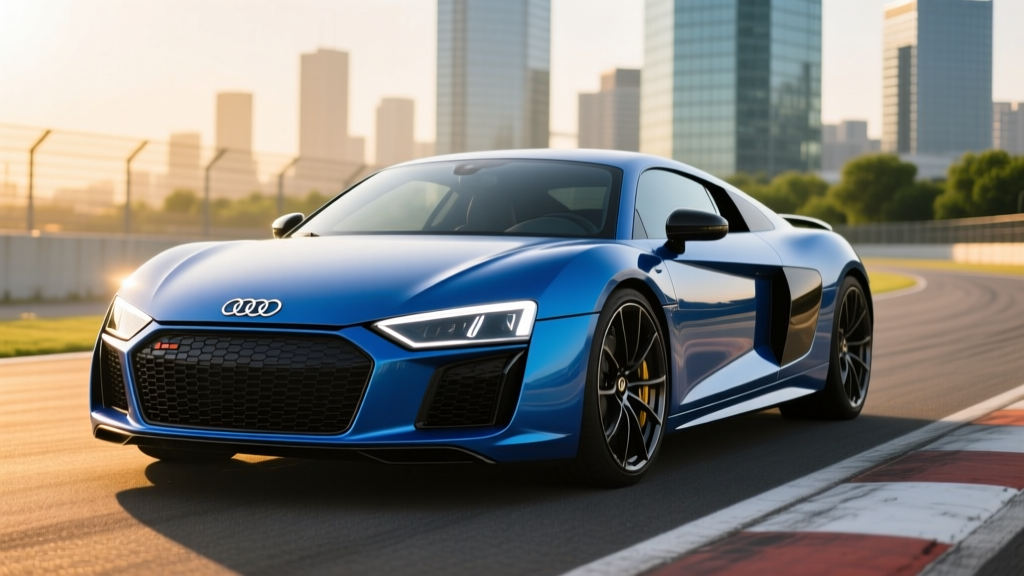
If you've been searching for "R8 e-tron," you're likely one of two people: someone who remembers Audi's bold but short-lived electric supercar experiment from the mid-2010s, or someone hoping Audi has revived the nameplate for the post-combustion era. As of 2026, the Audi R8 — in any form — is no longer in production. The V10-powered R8 ended its run after the 2023 model year, and the Audi R8 e-tron, which saw two limited production runs (2015–2016 being the most significant), remains a fascinating footnote in EV history rather than a car you can order new today.
This article covers what the R8 e-tron actually was, its real-world specs and limitations, and — critically — what Audi's next electric performance vehicle looks like for buyers who want supercar thrills with a battery pack.
R8 e-tron Specs: The Numbers Behind Audi's Electric Exotic
The 2015–2016 Audi R8 e-tron was a low-volume, hand-built electric supercar that Audi sold primarily in Europe. Only about 100 units were produced before the program was quietly shelved. Here's what the engineering looked like:
| Spec | Value |
|---|---|
| Powertrain | Dual-motor AWD (rear-biased) |
| Horsepower | 456 hp (340 kW) |
| Torque | 679 lb-ft (920 Nm) |
| 0–60 mph | 3.9 seconds |
| Top Speed | 130 mph (electronically limited; 155 mph available on request) |
| Battery Capacity | 92 kWh (usable: ~83 kWh) |
| Battery Chemistry | NMC (Nickel Manganese Cobalt) |
| EPA Range | Not EPA-rated (sold in Europe only) |
| NEDC Range | ~280 miles (451 km) |
| Estimated Real-World Range | ~180–210 miles |
| Efficiency | ~44 kWh/100 mi (estimated) |
| Max DC Fast Charge | 50 kW (CCS) |
| 10–80% DC Charge Time | ~95 minutes (estimated at 50 kW) |
| Level 2 AC Charge Rate | ~7.2 kW |
| Level 2 Miles Added per Hour | ~15–18 mi/hr |
| Curb Weight | ~3,950 lbs (1,790 kg) |
| Cargo Space | Minimal (small front trunk, ~3.5 cu ft estimated) |
| Seating | 2 passengers |
| Original MSRP (Europe, 2015) | €1,000,000 (~$1,100,000 at the time) |
| Battery Warranty | Not publicly disclosed (limited-production program) |
The R8 e-tron's NEDC rating of 280 miles was optimistic by modern standards. NEDC testing significantly overstates range compared to the EPA cycle or real-world driving. Expect roughly 180–210 miles in mixed driving, dropping to 140–160 miles at sustained highway speeds or in cold weather (below 40°F). The car's heavy weight and supercar aerodynamics work against efficiency at speed.
Charging Speed: The R8 e-tron's Biggest Limitation
By 2026 standards, the R8 e-tron's charging performance is its most dated characteristic. The car peaked at just 50 kW on DC fast charging — a rate that modern mass-market EVs like the Chevrolet Equinox EV have long surpassed. At that rate, replenishing the 92 kWh battery from 10% to 80% takes roughly 95 minutes, assuming the charger can sustain its rated output (many 50 kW stations cannot).
On a home Level 2 charger at 7.2 kW, a full charge from empty takes approximately 13 hours. This adds about 15–18 miles of range per hour of charging — acceptable for overnight replenishment but a poor match for a car designed for long-distance grand touring.
The charge curve is relatively flat (no dramatic peak-and-taper behavior like modern 800V architectures), which means you get a consistent but unspectacular rate throughout the session. There is no battery preconditioning for fast charging — a feature that didn't become standard in the industry until years later.
Performance and Driving Dynamics
Where the R8 e-tron still commands respect is straight-line performance. The dual-motor setup delivers 456 hp and a massive 679 lb-ft of torque to all four wheels, with a rear-biased torque distribution that preserves some of the R8's traditional handling character. The 3.9-second 0–60 mph time was impressive in 2015; today, a Tesla Model S Plaid (1.99 seconds) or even a Porsche Taycan Turbo S (2.4 seconds) make it look leisurely.
However, the R8 e-tron was never about drag-race numbers. Audi tuned the chassis for balanced, progressive handling — the car's torque vectoring and low center of gravity (battery pack mounted in a T-shape along the spine and rear axle) gave it cornering composure that early EVs rarely achieved. The tradeoff was weight: at nearly 4,000 pounds, it was roughly 400 pounds heavier than the contemporary V10 R8.
Driver assistance was minimal by today's standards: basic stability control, ABS, and Audi's drive-select modes. No adaptive cruise control, no lane-keeping assist, no Level 2 driver-assist system. This was a driver's car in the analog sense — which is exactly what supercar buyers expected in 2015.
Why the R8 e-tron Failed — and What Audi Learned
The R8 e-tron's story is a case study in how not to launch an electric performance car. Several factors converged to kill the program:
- Price: At over $1 million, it cost roughly 5–6 times more than a V10 R8, with less range, slower charging, and lower top speed.
- Limited market: Audi sold it only in select European markets, never homologating it for US sale (no EPA or NHTSA certification).
- Battery tech timing: The 92 kWh pack was large for 2015 but heavy and expensive. Energy density improvements in subsequent years would have made the car significantly lighter and cheaper to build.
- Low demand: Reports suggest fewer than 100 units were built before Audi paused and ultimately cancelled the program in late 2016.
Audi's subsequent electric performance strategy — the e-tron GT and RS e-tron GT — reflects the lessons learned: shared platforms (with the Porsche Taycan), 800V architecture for fast charging, realistic pricing ($106,000–$164,000), and proper US market availability with EPA certification.
The Spiritual Successor: Audi's Next Electric Supercar
For buyers who want an electric Audi with supercar aspirations in 2026, the current option is the Audi RS e-tron GT, and a more direct R8 successor is on the horizon.
| Model | HP | 0–60 mph | EPA Range | Max DC Charge | 10–80% Time | Starting MSRP |
|---|---|---|---|---|---|---|
| Audi e-tron GT | 522 hp | 3.9s | 238 mi | 270 kW | ~23 min | $106,295 |
| Audi RS e-tron GT | 637 hp | 3.1s | 232 mi | 270 kW | ~23 min | $147,595 |
| Audi RS e-tron GT Performance (2025+) | 912 hp | 2.5s | ~260 mi (est.) | 320 kW | ~18 min | $164,095 |
Audi has confirmed that a next-generation electric sports car — widely expected to wear a new nameplate rather than "R8" — is in development on the PPE (Premium Platform Electric) architecture, co-developed with Porsche. This vehicle, expected no earlier than 2027–2028, is anticipated to feature:
- 800V+ architecture with 350+ kW DC fast charging
- Solid-state or advanced NMC battery with 100+ kWh usable capacity
- Dual- or tri-motor AWD with 800+ hp
- Active aerodynamics and rear-wheel steering
- Level 2+ driver assist (adaptive cruise, lane centering, automated parking)
The next-generation Audi electric sports car described above is announced/in development as of 2026. Final specs, pricing, and availability are preliminary and subject to change. It is not currently available for purchase.
Federal Tax Credit and Ownership Economics
Because the R8 e-tron was never sold in the United States and is no longer in production, it does not qualify for the IRS §30D federal EV tax credit. For buyers considering the RS e-tron GT as an alternative, the tax credit situation is complex:
- MSRP cap: The §30D credit applies only to vehicles with an MSRP under $55,000 (sedans) or $80,000 (SUVs/trucks/vans). All e-tron GT variants exceed these caps.
- Income cap: Buyer AGI must not exceed $150,000 (single), $225,000 (head of household), or $300,000 (joint).
- Battery sourcing: Critical minerals and battery component sourcing requirements must be met — and European-built Audis with non-US battery supply chains often fail this test.
- Point-of-sale transfer: Eligible buyers can transfer the credit to the dealer at purchase for an immediate price reduction, but only if the vehicle qualifies.
In practice, no current Audi e-tron GT variant qualifies for the $7,500 federal credit as of 2026 due to MSRP and sourcing requirements. Buyers should consult a tax professional and check the latest fueleconomy.gov listings before making purchase decisions based on incentive eligibility.
Who Should Consider an Electric Audi Performance Car?
The R8 e-tron itself is a collector's curiosity — if you can find one of the ~100 examples on the European used market, expect to pay a premium and budget for limited service infrastructure. For everyone else, here's the decision framework:
- You want a 4-door electric grand tourer with supercar acceleration
- You need real-world range above 220 miles and fast DC charging under 25 minutes
- You value Audi build quality, interior materials, and dealer service network
- Budget is $150,000+ and you don't need the federal tax credit
- You want a true 2-seat mid-engine (or mid-battery) sports car — consider the Porsche 718 Cayman EV (expected 2025+) or wait for Audi's confirmed electric sports car
- Tax credit eligibility matters — the Tesla Model S ($74,990+) or Lucid Air Pure ($69,900) may qualify depending on sourcing updates
- You need cargo space, rear seats, or family practicality — the Audi Q8 e-tron SUV is a better fit
Frequently Asked Questions
Can I buy a new Audi R8 e-tron in 2026?
No. The Audi R8 e-tron was produced in limited numbers (approximately 100 units) during 2015–2016 and was sold only in select European markets. It was never certified for US sale. The entire R8 line (including the V10) ended production after the 2023 model year.
What was the real-world range of the R8 e-tron?
While the car was rated at ~280 miles under the generous NEDC cycle, real-world range was approximately 180–210 miles in mixed driving. Highway driving at 70+ mph reduced this to around 150–170 miles, and cold weather (below 40°F) could drop it further to 140–160 miles. The car's weight and aerodynamics penalized efficiency at speed.
How fast did the R8 e-tron charge?
Slowly by modern standards. It peaked at 50 kW on DC fast charging, meaning a 10–80% charge took approximately 95 minutes. Home Level 2 charging at 7.2 kW required about 13 hours for a full charge. Modern electric Audis like the RS e-tron GT charge at up to 270–320 kW, completing 10–80% in 18–23 minutes.
Did the R8 e-tron qualify for any tax credits?
No. It was never sold in the United States and therefore was never eligible for the IRS §30D federal EV tax credit. Even if it had been US-certified, its ~$1.1 million price would have far exceeded the current MSRP caps ($55,000 for sedans, $80,000 for SUVs/trucks/vans).
Is Audi making a new electric R8?
Audi has confirmed development of a next-generation electric sports car on the PPE platform, co-developed with Porsche. This vehicle is expected around 2027–2028 and may serve as a spiritual successor to the R8. However, Audi has not confirmed whether it will carry the R8 nameplate. Final specs and pricing are not yet available.
What's the best electric Audi performance car I can buy today?
The Audi RS e-tron GT Performance (introduced for 2025) is Audi's fastest and most powerful production EV, with 912 hp, a 2.5-second 0–60 time, and an estimated 260-mile EPA range. It starts at $164,095 and charges at up to 320 kW on DC fast chargers. It does not qualify for the federal tax credit due to its MSRP.
Sources: fueleconomy.gov, IRS §30D Clean Vehicle Credits, Audi AG press archives.