The Vehicle Behind the Valuation: 2026 Tesla Model Y
Investors searching for why Tesla stock trades at premium multiples often land on abstract narratives — AI, robotaxis, energy storage. But the concrete answer sits in driveways across America: the Tesla Model Y. As the best-selling electric vehicle globally and Tesla's volume anchor, the 2026 Model Y's specifications, pricing, and ownership economics explain more about Tesla's market capitalization than any earnings-call slide deck.
This review dissects the 2026 Tesla Model Y Long Range AWD and Performance trims — the exact vehicles generating Tesla's revenue — through the lens of what buyers actually evaluate: real-world range, charging speed, total cost after federal tax credits, and competitive positioning against the Hyundai Ioniq 5, Ford Mustang Mach-E, and Kia EV6.
2026 Tesla Model Y: Core Specifications at a Glance
| Specification | Long Range AWD | Performance |
|---|---|---|
| EPA Range | 320 miles | 295 miles |
| Battery (Usable) | ~75 kWh (NMC) | ~75 kWh (NMC) |
| Drivetrain | Dual-Motor AWD | Dual-Motor AWD |
| Horsepower | 384 hp | 456 hp |
| 0–60 mph | 4.8 seconds | 3.5 seconds |
| Peak DC Fast Charge | 250 kW | 250 kW |
| 10–80% DC Charge | ~27 minutes | ~27 minutes |
| Level 2 Home Charge | 11.5 kW (~44 mi/hr) | 11.5 kW (~44 mi/hr) |
| MPGe (Combined) | 117 MPGe | 111 MPGe |
| Efficiency | 28 kWh/100 mi | 30 kWh/100 mi |
| Cargo Volume (rear seats up) | 30.2 cu ft | 30.2 cu ft |
| Cargo Volume (rear seats folded) | 72.1 cu ft | 72.1 cu ft |
| Rear Legroom | 37.0 inches | 37.0 inches |
| Base MSRP | $44,990 | $48,990 |
| Battery Warranty | 8 yr / 120,000 mi | 8 yr / 120,000 mi |
Source: EPA fueleconomy.gov, Tesla.com order page (2026 model year).
Real-World Range: What the EPA Sticker Doesn't Tell You
Real-World Expectation: ~270–290 miles highway at 70 mph; ~230–250 miles in sub-30°F winter conditions; ~300+ miles in mixed city driving with regenerative braking.
The 2026 Model Y Long Range AWD carries an EPA-estimated 320 miles of range. In practice, EV range is a function of speed, temperature, and terrain — not a fixed number. On a flat 70-mph highway run in 65°F weather, expect roughly 270–290 miles before the battery reaches 10% State of Charge (SoC). The Model Y's heat pump, standard since the 2022 refresh, significantly reduces cold-weather cabin-heating energy draw compared to resistive heaters, but lithium-ion chemistry itself loses efficiency below freezing. Plan for 20–25% range reduction in sustained sub-30°F driving.
Around town, regenerative braking recovers kinetic energy during deceleration, pushing real-world city range closer to — and sometimes above — the EPA sticker. This is why MPGe ratings show higher city figures for EVs, the inverse of gas cars.
The Performance trim sacrifices 25 miles of EPA range (295 miles) due to wider 21-inch wheels, stickier tires, and more aggressive powertrain calibration. If maximum range is your priority, the Long Range AWD is the clear pick.
Charging Speed: Supercharger Network vs. Home Level 2
| Charging Level | Power (kW) | Miles Added per Hour | Use Case |
|---|---|---|---|
| Level 1 (120V outlet) | ~1.4 kW | ~5 mi/hr | Emergency / overnight trickle |
| Level 2 (240V home) | 11.5 kW | ~44 mi/hr | Daily home charging |
| DC Fast (Supercharger V3) | 250 kW peak | ~170 mi in 15 min | Road trips |
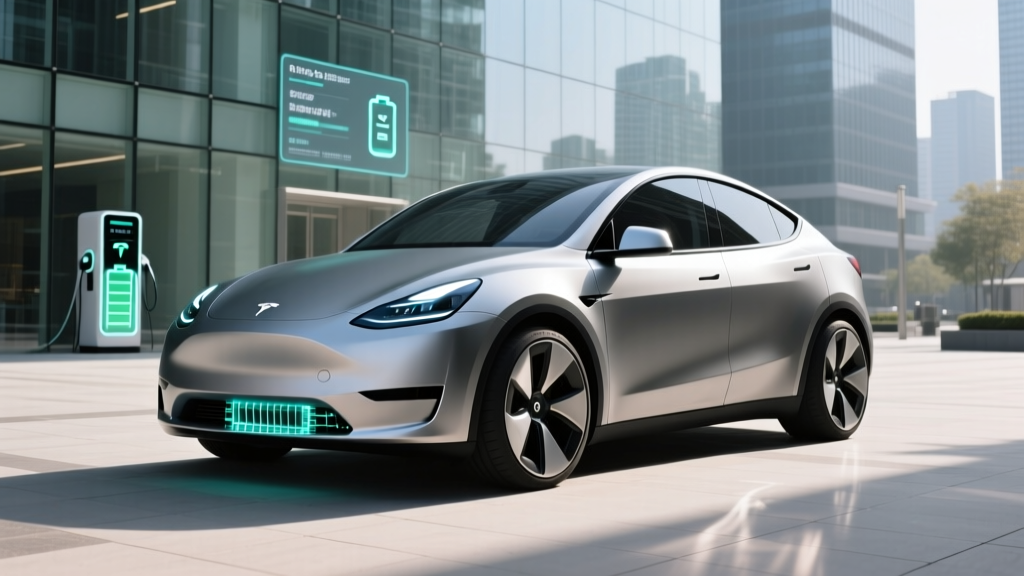
The Model Y charges at up to 250 kW on Tesla's V3 Superchargers, adding approximately 170 miles in 15 minutes under optimal conditions (battery preconditioned, low SoC, moderate ambient temperature). A 10–80% charge takes roughly 27 minutes. Note the charge curve: peak 250 kW is sustained only between roughly 10–30% SoC, then tapers progressively. Above 80%, charging slows dramatically to protect battery longevity — a 80–100% top-off can take as long as the 10–80% session.
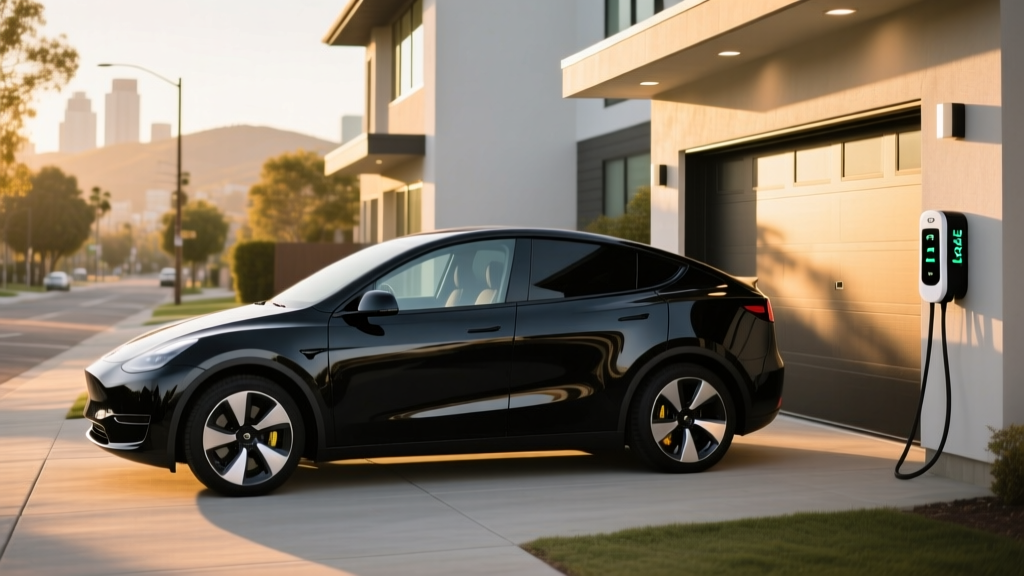
At home, an 11.5 kW Level 2 Wall Connector on a 60-amp circuit delivers roughly 44 miles of range per hour. A full overnight charge (8 hours) replenishes ~350 miles — more than the car's total range. Most owners plug in nightly and wake to a full battery, eliminating the "refueling stop" entirely. Installation typically costs $500–$1,500 for the electrician work, depending on panel proximity and local permit requirements. Always hire a licensed electrician to evaluate your panel capacity.
One structural advantage explaining Tesla's market position: the Supercharger network now exceeds 50,000 connectors in North America and is the most reliable public DC fast-charging network by uptime metrics, according to J.D. Power EV Experience studies. Competitors relying on third-party networks (Electrify America, EVgo) still report higher failure rates.
Pricing, Trims & Federal Tax Credit Eligibility
| Trim | Base MSRP | Est. As-Tested* | §30D Credit Eligibility |
|---|---|---|---|
| Long Range AWD | $44,990 | $47,500–$51,000 | Eligible up to $7,500 (if sourcing + income requirements met) |
| Performance | $48,990 | $51,000–$55,000 | Eligible up to $7,500 (if sourcing + income requirements met) |
*As-tested prices reflect common options: paint color ($1,000–$2,500), Full Self-Driving (Supervised) ($8,000), 20" wheels ($2,000). Destination charge included in MSRP.
Under IRS §30D Clean Vehicle Credit rules for 2026, the Model Y qualifies as an SUV (MSRP cap: $80,000). However, the full $7,500 credit depends on three buyer-side and vehicle-side requirements:
- Buyer Income Cap: AGI must not exceed $150,000 (single), $225,000 (head of household), or $300,000 (joint filers).
- MSRP Cap: Vehicle MSRP must not exceed $80,000 (SUV/pickup/van) — both Model Y trims pass.
- Battery Sourcing: Critical minerals and battery components must meet escalating domestic-content thresholds. As of 2026, 100% of critical minerals must be sourced from the U.S. or FTA partners, and 100% of battery components must be manufactured or assembled in North America. Tesla has progressively shifted Model Y battery supply to meet these rules, but buyers must verify the specific VIN's eligibility at the point of sale.
- Point-of-Sale Transfer: Buyers can transfer the credit to the dealer for an immediate price reduction, or claim it on their federal tax return.
Because sourcing rules tighten annually, always confirm eligibility with your Tesla advisor and consult a tax professional before relying on the credit. A buyer meeting all criteria could bring the Long Range AWD effective price to roughly $37,490 — a figure that explains the Model Y's sales volume.
Performance, Tech & Interior: The Ownership Experience
The Long Range AWD hits 0–60 mph in 4.8 seconds with 384 horsepower from its dual-motor setup — brisk by any SUV standard. The Performance trim drops that to 3.5 seconds with 456 hp, rivaling sports sedans. Both use Tesla's permanent-magnet synchronous motors with silicon-carbide inverters for efficiency.
Inside, the minimalist cabin centers on a 15.4-inch touchscreen running Tesla's proprietary infotainment OS. There are no physical buttons for climate, media, or navigation — everything routes through the screen or voice commands. The 2026 Model Y retains the yoke-and-screen aesthetic of the "Juniper" refresh introduced in early 2025, with ventilated front seats, ambient lighting, and a rear-seat touchscreen for passengers.
Driver Assistance — SAE Level 2, Not Self-Driving:
Tesla Autopilot (standard) and Full Self-Driving (Supervised) ($8,000 option) are SAE Level 2 driver-assistance systems. They provide adaptive cruise control, lane-centering, and automatic lane changes, but the driver must keep hands on the wheel and eyes on the road at all times. FSD (Supervised) does NOT make the Model Y autonomous. Only Level 4 services like Waymo operate without a human driver.
Cargo space is generous: 30.2 cubic feet behind the second row, expanding to 72.1 cu ft with seats folded — competitive with the Hyundai Ioniq 5 (27.2 / 56.2 cu ft) and significantly more than the Ford Mustang Mach-E (29.7 / 59.7 cu ft). The front trunk (frunk) adds 4.1 cu ft for cables and small bags.
How the Model Y Stacks Up Against Key Competitors
| Attribute | 2026 Tesla Model Y LR AWD | 2026 Hyundai Ioniq 5 Limited AWD | 2026 Ford Mustang Mach-E Premium AWD |
|---|---|---|---|
| EPA Range | 320 mi | 290 mi | 290 mi |
| Battery | ~75 kWh (NMC) | 84 kWh (NMC) | 91 kWh (NMC) |
| Peak DC Charge | 250 kW | 240 kW | 150 kW |
| 10–80% Time | ~27 min | ~18 min | ~45 min |
| 0–60 mph | 4.8 sec | 5.1 sec | 5.0 sec |
| MPGe (Combined) | 117 | 110 | 101 |
| Base MSRP | $44,990 | $52,600 | $45,995 |
| Charging Network | Supercharger (native) | CCS → NACS adapter needed for Superchargers | CCS → NACS adapter needed for Superchargers |
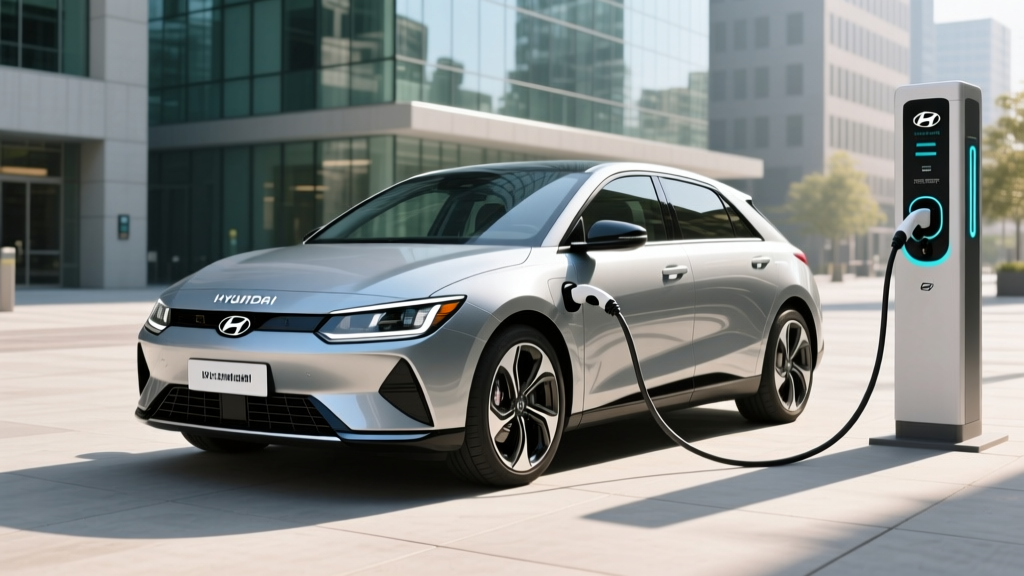
The Ioniq 5's 800-volt architecture enables a faster 10–80% charge (~18 minutes vs. ~27 minutes), a genuine advantage on road trips. However, the Model Y's superior efficiency (117 MPGe vs. 110 MPGe) means it extracts more miles per kWh, offsetting its slightly slower peak charge rate. The Mach-E lags significantly in DC charging speed at 150 kW — a meaningful drawback for frequent road-trippers.
Crucially, Tesla's native NACS connector grants seamless Supercharger access, while Hyundai and Ford owners must use adapters or rely on third-party CCS networks. This ecosystem lock-in is a frequently underappreciated factor in Tesla's customer retention and, by extension, its stock valuation.
Biggest Pros and Cons
Pros
- Class-leading 320-mile EPA range and 117 MPGe efficiency
- Native Supercharger network access — highest uptime in the industry
- Spacious 72.1 cu ft cargo volume with seats folded
- Strong $7,500 federal tax credit potential (verify VIN sourcing)
- Over-the-air updates continuously add features post-purchase
- Heat pump standard — better cold-weather range retention
Cons
- 10–80% DC charge time (~27 min) trails Ioniq 5's 800V architecture (~18 min)
- No physical buttons — all controls via touchscreen can distract while driving
- FSD (Supervised) at $8,000 remains SAE Level 2 — not autonomous
- Ride quality firm on 20" wheels; road noise noticeable on rough pavement
- Insurance premiums often 15–25% higher than comparable ICE SUVs
- Build-quality consistency improved but still trails legacy automakers in panel-gap uniformity
Who Should Buy the 2026 Tesla Model Y?
Choose the Model Y Long Range AWD if: You want the longest range in the compact EV SUV segment, rely on road-trip charging infrastructure, and value a spacious cargo area for family duty. The 320-mile EPA range and Supercharger ecosystem make it the default pick for one-car households going fully electric.
Choose the Model Y Performance if: You want sports-sedan acceleration (3.5 sec 0–60) in an SUV form factor and don't mind sacrificing 25 miles of range and some ride comfort for 21-inch wheels.
Look elsewhere if: Fastest possible DC charging is your top priority (Ioniq 5's 18-min 10–80%), you prefer physical buttons and traditional interiors, or you need a third row (consider the Kia EV9).
So — Why Is Tesla Stock So High?
The Model Y's specifications answer the question concretely. Tesla delivers a 320-mile, 250-kW-charging, dual-motor AWD SUV at $44,990 — a price that drops to roughly $37,490 after the federal tax credit for qualifying buyers. No competitor currently matches that combination of range, efficiency, charging-network access, and price simultaneously.
The stock premium reflects more than this single model — Tesla's energy storage business (Megapack), its AI training compute cluster for FSD, and its manufacturing cost advantages all contribute. But the Model Y is the revenue engine. In 2025, Tesla delivered over 1.2 million Model Y units globally, making it not just the best-selling EV but one of the best-selling vehicles in any powertrain category worldwide. When you evaluate the 2026 Model Y's specs against its price and the competitive landscape, the valuation narrative becomes less abstract and more arithmetic.
Frequently Asked Questions
What is the real-world range of the 2026 Tesla Model Y?
The EPA rates the Long Range AWD at 320 miles. Expect ~270–290 miles at sustained highway speeds (70 mph), ~230–250 miles in sub-30°F winter driving, and 300+ miles in mixed city use with regenerative braking active.
How fast does the Model Y charge at home and on the road?
On a 250 kW V3 Supercharger, a 10–80% charge takes roughly 27 minutes. At home on a Level 2 Wall Connector (11.5 kW / 48A), the car gains about 44 miles of range per hour, fully recharging overnight in ~8 hours.
Does the 2026 Model Y qualify for the $7,500 federal EV tax credit?
It can, but eligibility depends on the buyer's AGI (income caps apply), the vehicle's MSRP (under $80,000 SUV cap — both trims qualify), and battery critical-mineral/component sourcing rules that tighten annually. Verify the specific VIN's eligibility at purchase and consult a tax professional. Per the IRS §30D guidelines, the credit can be transferred at point of sale for an immediate price reduction.
Is the Model Y worth buying over the Hyundai Ioniq 5 or Ford Mach-E?
The Model Y wins on range (320 vs. ~290 mi), efficiency (117 vs. 101–110 MPGe), and native Supercharger access. The Ioniq 5 charges faster (18 vs. 27 min, 10–80%) thanks to its 800V architecture. The Mach-E trails in DC charging speed. For most buyers prioritizing range and charging-network reliability, the Model Y remains the segment benchmark.
Is Tesla's Full Self-Driving actually self-driving?
No. FSD (Supervised) is an SAE Level 2 driver-assistance system. It handles lane-centering, adaptive cruise, and automated lane changes, but the driver must remain fully engaged with hands on the wheel and eyes on the road. It is not autonomous driving.
What is the Model Y's battery warranty?
Tesla covers the battery and drive unit for 8 years or 120,000 miles (whichever comes first), with a guaranteed minimum 70% capacity retention over that period. This is competitive with the industry standard (Hyundai offers 10yr/100,000 mi).