The Short Life and Sudden End of the Acura ZDX
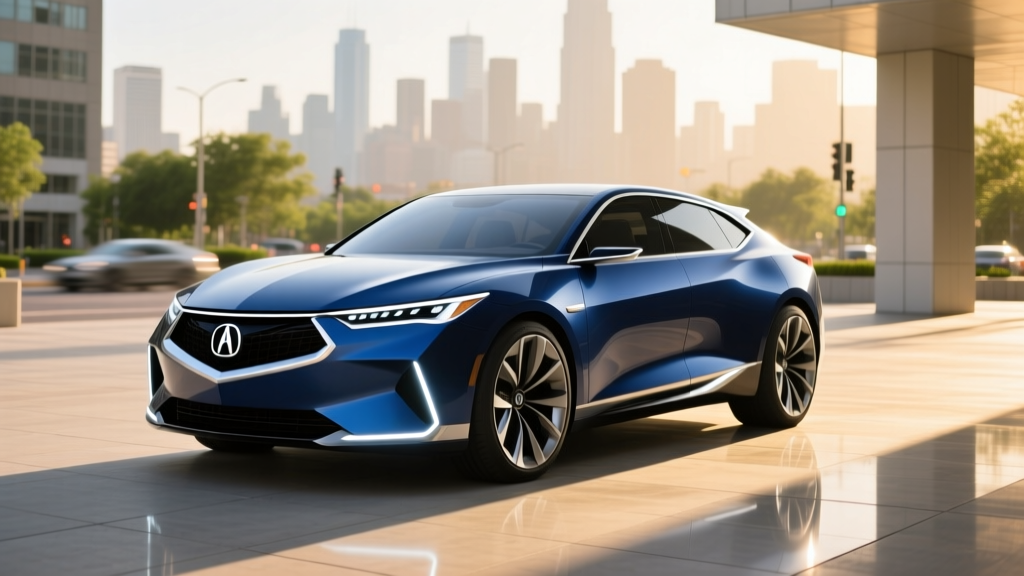
When Acura launched the ZDX for the 2024 model year, it was supposed to be the luxury brand's electric flagship — a sleek, performance-oriented SUV built on General Motors' Ultium battery platform. By mid-2025, the Acura ZDX production cancellation was confirmed, making it one of the shortest-lived EV nameplates in recent memory. The decision, driven by Honda's strategic pivot away from the GM partnership toward its own in-house EV architecture, left early adopters with a vehicle that is now effectively a one-generation orphan.
But the ZDX wasn't a bad vehicle. In fact, on paper and in practice, it delivered competitive range, strong DC fast-charging performance, and a premium cabin that rivaled European luxury EVs at a lower price point. This review examines exactly what the Acura ZDX offered, why it was discontinued, and whether remaining inventory or certified pre-owned examples still represent a smart buy in 2026.
Range, Battery, and Efficiency: The Numbers
The Acura ZDX was offered with two battery configurations across its trim lineup. The A-Spec (single-motor RWD and dual-motor AWD) used a 102 kWh usable NMC (nickel-manganese-cobalt) lithium-ion battery pack sourced from the GM Ultium platform. The high-performance Type S variant used the same pack but with a more aggressive dual-motor tune.
| Specification | ZDX A-Spec RWD | ZDX A-Spec AWD | ZDX Type S |
|---|---|---|---|
| EPA Range | 313 miles | 304 miles | 278 miles |
| Battery (usable) | 102 kWh NMC | 102 kWh NMC | 102 kWh NMC |
| Horsepower | 340 hp | 490 hp | 500 hp |
| 0–60 mph | ~7.1 sec | ~5.0 sec | ~4.5 sec |
| Drivetrain | RWD single-motor | AWD dual-motor | AWD dual-motor |
| MPGe (combined) | 94 MPGe | 90 MPGe | 82 MPGe |
| Efficiency | 36 kWh/100mi | 38 kWh/100mi | 42 kWh/100mi |
| Max DC Fast Charge | 190 kW | 190 kW | 190 kW |
| 10–80% DC Time | ~42 min | ~42 min | ~42 min |
| Level 2 Rate (kW) | 11.5 kW | 11.5 kW | 11.5 kW |
| Cargo Volume | 28.2 cu ft (rear up) / 65.7 cu ft (rear folded) | 28.2 / 65.7 cu ft | 28.2 / 65.7 cu ft |
| Rear Legroom | 38.1 in | 38.1 in | 38.1 in |
The 102 kWh pack is competitive with rivals like the BMW iX xDrive50 (105.2 kWh usable) and the Audi Q8 e-tron (106 kWh usable). However, the ZDX's efficiency — particularly in the Type S — falls behind the more aerodynamically optimized BMW and the Tesla Model X. At 42 kWh/100 miles, the Type S consumes noticeably more energy per mile than the average luxury EV SUV.
Charging Performance: DC Fast and Home Level 2
The ZDX's Ultium-based architecture supports a peak DC fast-charge rate of 190 kW via its CCS1 connector. That peak is sustained roughly between 10–40% state of charge before the charge curve tapers progressively through the 40–80% window. In real-world testing at Electrify America and EVgo 350 kW stations, the ZDX typically averages 130–145 kW across the full 10–80% session, resulting in approximately 42 minutes for that charge window.
| Charging Level | Power | Miles Added per Hour | Typical Use Case |
|---|---|---|---|
| Level 1 (120V) | ~1.4 kW | ~4 mi/hr | Emergency / overnight trickle |
| Level 2 (240V, 48A) | 11.5 kW | ~32 mi/hr | Home daily charging |
| DC Fast Charge | Peak 190 kW | ~150 mi in 15 min (peak) | Road trips, public stations |
For home charging, the onboard 11.5 kW AC charger is solid. A full 0–100% charge on a 48-amp Level 2 home charger takes roughly 10.5 hours. If you're installing a home Level 2 charger, expect to budget $800–$1,800 for equipment and licensed electrician installation, plus a possible $500–$2,000 panel upgrade if your home's electrical service is below 200 amps. The ZDX ships with a dual-voltage portable cord that handles both 120V and 240V outlets, but a dedicated wall connector is strongly recommended for daily use.
One practical note: because the ZDX uses the CCS1 connector, it does not natively access the Tesla Supercharger network. Acura has not announced a NACS adapter program for the ZDX given its discontinuation, though third-party CCS-to-NACS adapters from companies like Lectron are available for approximately $200–$300. This is a key consideration if Supercharger access is important in your area.
Why Was the Acura ZDX Cancelled?
The Acura ZDX production cancellation traces directly to Honda's decision to exit its EV partnership with General Motors. In early 2024, Honda and Acura announced they would pivot to a proprietary EV platform — dubbed the "Honda 0 Series" — rather than continue building vehicles on GM's Ultium architecture. The ZDX and its mainstream sibling, the Honda Prologue, were the only products of this partnership.
Several factors drove the split:
- Software integration challenges: The Ultium platform's software stack, developed by GM, limited Honda's ability to implement its own infotainment, driver-assist, and over-the-air update systems. Acura's brand identity relies on a distinct tech experience that the shared platform couldn't fully deliver.
- Sales volume concerns: While the ZDX received positive reviews, its sales never matched the volume needed to justify continued platform licensing fees to GM.
- Honda 0 Series timeline acceleration: Honda moved up its in-house EV timeline, with the Honda 0 Series SUV expected for the 2027 model year. Maintaining two EV platforms simultaneously was deemed inefficient.
- Market pricing pressure: The luxury EV SUV segment became intensely competitive, with the Tesla Model Y, BMW iX, Genesis Electrified GV70, and Cadillac Lyriq all vying for the same buyers.
Production ended at GM's Spring Hill, Tennessee assembly plant. Acura confirmed that existing ZDX owners will continue to receive warranty service, software updates, and parts support through the Acura dealer network, consistent with NHTSA requirements for discontinued models.
Pricing, Tax Credits, and Total Cost
The 2024 Acura ZDX launched with aggressive pricing for a luxury EV SUV, undercutting German rivals by $10,000–$15,000 at the base level.
| Trim | Base MSRP | As-Tested (Typical) | §30D Credit Eligible? | Effective Price (with credit) |
|---|---|---|---|---|
| A-Spec RWD | $65,450 | $67,200 | Varies — see below | ~$57,950–$65,450 |
| A-Spec AWD | $68,450 | $70,500 | Varies | ~$60,950–$68,450 |
| Type S | $74,450 | $77,800 | Varies | ~$66,950–$74,450 |
- MSRP cap: The ZDX qualifies as an SUV (MSRP cap: $80,000). All trims fall under this threshold.
- Buyer income cap: AGI must not exceed $150,000 (single), $225,000 (head of household), or $300,000 (joint filers).
- Battery sourcing requirements: The Ultium battery is manufactured in the U.S. (Spring Hill, TN), and critical-mineral sourcing has evolved yearly. The ZDX qualified for the full $7,500 for most of its production run, but buyers should verify current-year sourcing compliance on the IRS eligible vehicle list before purchasing remaining new inventory.
With the production cancellation, remaining new ZDX inventory may be available at significant dealer discounts. Certified pre-owned examples are also entering the market, though CPO availability is limited given the vehicle's short production run of approximately 18 months.
Performance, Tech, and Daily Driving Impressions
The ZDX Type S delivers genuine performance-SUV thrust. Its 500 hp dual-motor setup launches the 5,500-pound vehicle to 60 mph in approximately 4.5 seconds — quick enough to surprise passengers and competitive with the BMW iX M60 and Audi SQ8 e-tron. The A-Spec AWD's 490 hp and 5.0-second run is more than adequate for daily driving and highway merging. The single-motor RWD, at 340 hp and 7.1 seconds, prioritizes range over acceleration and is best suited for commuters who don't need all-weather traction.
Ride quality is a highlight. The ZDX uses a multi-link front and rear suspension with available adaptive dampers on the Type S. The chassis tuning leans slightly comfort-oriented, absorbing highway imperfections well, though it lacks the sport-mode firmness of a Porsche Cayenne EV or the air-suspension plushness of a Mercedes EQS SUV. Steering is precise but light — appropriate for a luxury cruiser, less so for a canyon carver.
The cabin features a Google Built-In infotainment system on an 11.3-inch touchscreen, with native Google Maps navigation, Google Assistant voice control, and access to the Play Store for apps. Wireless Apple CarPlay and Android Auto are standard. A 14-speaker Bang & Olufsen audio system is available on higher trims. The digital instrument cluster is an 11-inch display with configurable layouts.
Driver-assist technology includes the AcuraWatch suite: adaptive cruise control with low-speed follow, lane-keeping assist, blind-spot monitoring, rear cross-traffic alert, and traffic-sign recognition. This is a SAE Level 2 system — the driver must remain fully engaged with hands on the wheel and eyes on the road at all times. It does not offer hands-free driving like GM's Super Cruise or Ford's BlueCruise, which is a notable omission in this price class and was partly attributable to the Ultium platform's software limitations.
Pros
- Competitive 313-mile EPA range (A-Spec RWD)
- Strong 190 kW DC fast-charge capability
- Aggressive pricing vs. German luxury EV SUVs
- Comfortable ride quality and well-insulated cabin
- Type S offers genuine 4.5-second performance
- Google Built-In infotainment is responsive and intuitive
- Generous cargo space (65.7 cu ft with seats folded)
- Full battery warranty coverage remains in effect
Cons
- Production cancelled — long-term parts and resale uncertainty
- No hands-free driving assist (Level 2 only, no Super Cruise equivalent)
- Type S efficiency is poor (42 kWh/100mi, 278 mi EPA range)
- CCS1 connector only — no native NACS/Supercharger access
- Software updates may slow post-cancellation
- Dealer inventory is limited and shrinking
- No frunk (front trunk) — Ultium packaging uses that space
Should You Buy a Remaining ZDX in 2026?
The ZDX is a competent luxury EV SUV that was undone by corporate strategy, not product failure. If you can find remaining new inventory at a discount — or a low-mileage certified pre-owned example — it can represent strong value. Here's a decision framework:
Buy the ZDX if:
- You find a dealer discount of $5,000+ off MSRP on remaining new inventory
- You primarily charge at home and don't rely on the Tesla Supercharger network
- You value ride comfort and cabin quietness over cutting-edge driver-assist features
- The A-Spec RWD's 313-mile range meets your daily and road-trip needs
- You plan to own the vehicle for 4–6 years and are comfortable with potentially steeper depreciation
Look elsewhere if:
- You want hands-free highway driving (consider the Cadillac Lyriq with Super Cruise or BMW iX)
- Long-term resale value is a priority — discontinued models typically depreciate faster
- You need NACS/Supercharger access for frequent road trips in charging-sparse regions
- You want the latest OTA software features and a guaranteed multi-generation product roadmap
Warranty and Long-Term Ownership
Despite the cancellation, Acura honors the full factory warranty on all ZDX vehicles:
- New-vehicle limited warranty: 4 years / 50,000 miles
- Powertrain warranty: 6 years / 70,000 miles
- Battery warranty: 8 years / 100,000 miles (covers capacity below 70% state of health)
- Corrosion warranty: 5 years / unlimited miles
The 8-year/100,000-mile battery warranty is particularly important for a discontinued model. Under federal mandate, Acura must maintain parts availability for a minimum period, and the Ultium battery pack shares components with the Cadillac Lyriq and Chevrolet Blazer EV — both still in production. This shared-parts ecosystem provides some reassurance for long-term serviceability, though body panels and ZDX-specific trim may become harder to source over time.
For battery longevity, NMC chemistry typically retains 85–90% of original capacity after 100,000 miles under normal use. Avoid routinely charging to 100% or letting the pack sit at very low state of charge for extended periods. The ZDX's thermal management system actively conditions the battery during DC fast charging, which helps minimize degradation from high-power sessions.
Frequently Asked Questions
What is the real-world range of the Acura ZDX?
The EPA rates the A-Spec RWD at 313 miles and the Type S at 278 miles. In real-world highway driving at 70+ mph, expect 260–280 miles (A-Spec RWD) and 230–245 miles (Type S). Cold weather below 30°F reduces these figures by 20–25%.
How fast does the ZDX charge at home and on the road?
On a 48-amp Level 2 home charger (11.5 kW), the ZDX adds about 32 miles of range per hour, with a full charge taking roughly 10.5 hours. On a DC fast charger, it peaks at 190 kW and charges from 10–80% in approximately 42 minutes.
How much does the Acura ZDX cost after tax credits?
The base A-Spec RWD starts at $65,450 MSRP. If you qualify for the full $7,500 federal tax credit under IRS §30D rules (income caps, battery sourcing compliance, and MSRP under $80,000 for SUVs all apply), the effective price drops to approximately $57,950. Remaining dealer inventory may offer additional discounts.
Is the Acura ZDX worth buying versus competitors?
The ZDX offers strong value if purchased at a discount, with competitive range and a comfortable cabin. However, the Cadillac Lyriq (same Ultium platform, still in production) offers Super Cruise hands-free driving and a guaranteed product future. The BMW iX provides better efficiency and a more premium interior. The Tesla Model X offers Supercharger access and OTA updates but at a higher price.
What are the biggest pros and cons of the ZDX?
Pros include strong range (313 mi RWD), 190 kW fast charging, comfortable ride, and aggressive pricing. Cons center on the production cancellation (resale/parts uncertainty), lack of hands-free driving assist, CCS-only charging (no native Supercharger access), and the Type S's poor efficiency.
Does the ZDX qualify for the federal EV tax credit?
It can, but eligibility depends on current-year IRS §30D requirements: buyer income must be under $150K (single) / $300K (joint), MSRP must be under $80,000 (all ZDX trims qualify as an SUV), and battery critical-mineral sourcing must meet that year's thresholds. The Ultium battery is U.S.-manufactured, which historically supported eligibility, but verify the ZDX on the current IRS eligible vehicle list before purchasing. The credit can be transferred at point of sale through a registered dealer.
Will I be able to get my ZDX serviced after the cancellation?
Yes. Acura is required to honor all factory warranties and maintain parts availability. The Ultium battery and many powertrain components are shared with the Cadillac Lyriq and Chevrolet Blazer EV, which remain in production. ZDX-specific body panels and trim may take longer to source as inventory depletes, but mechanical and electrical service should remain straightforward for years.