The Short Answer on Acura Electric SUVs
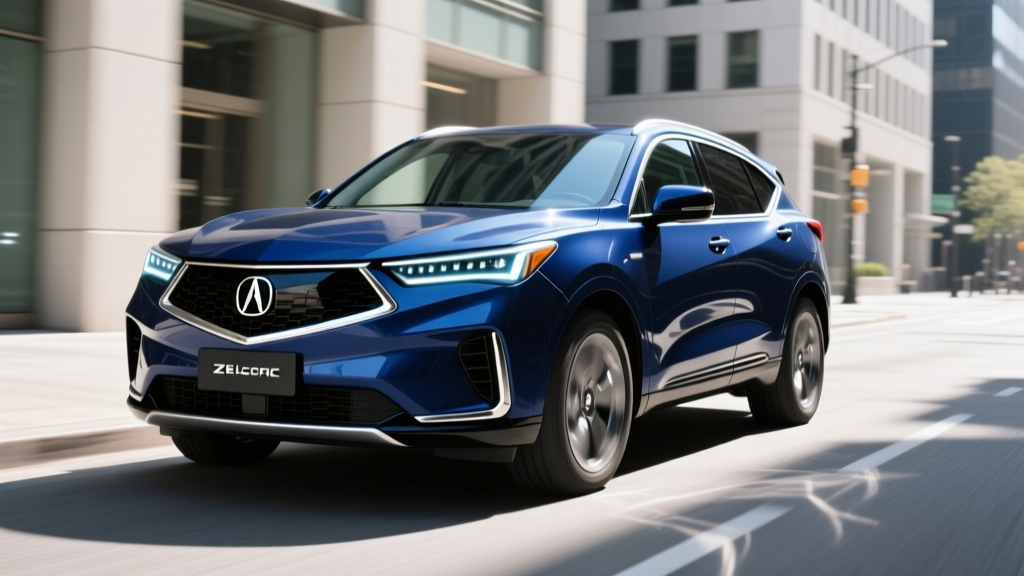
Acura's only fully electric SUV for 2026 is the ZDX, built on GM's Ultium platform and sharing its bones with the Cadillac Lyriq. The base ZDX A-Spec starts around $58,500 with an EPA-estimated 313 miles of range (RWD), while the performance-oriented Type S trims trade roughly 40 miles of range for 500 hp and a sport-tuned chassis. If you're cross-shopping Acura electric SUVs against the gas MDX or a hybrid competitor, the ZDX delivers lower per-mile energy costs and stronger instant torque, but you'll need reliable Level 2 home charging to make the economics work. Federal tax credit eligibility under IRS §30D is limited by battery-sourcing rules — verify your specific VIN on the IRS portal before counting on the full $7,500.
2026 Acura ZDX: Trim-by-Trim Specs
The ZDX is a midsize luxury crossover with seating for five and a 102 kWh (usable) Ultium battery pack using NMC (nickel-manganese-cobalt) chemistry. Here's how the lineup breaks down:
| Spec | ZDX A-Spec (RWD) | ZDX A-Spec (AWD) | ZDX Type S |
|---|---|---|---|
| Base MSRP | $58,500 | $62,500 | $70,500 |
| EPA Range | 313 mi | 289 mi | 274 mi |
| Battery (usable) | 102 kWh NMC | 102 kWh NMC | 102 kWh NMC |
| Horsepower | 340 hp | 340 hp (dual motor) | 500 hp (dual motor) |
| 0-60 mph | ~7.1 sec | ~6.5 sec | ~4.5 sec |
| Peak DC Fast Charge | 190 kW | 190 kW | 190 kW |
| 10-80% DC Charge | ~31 min | ~31 min | ~31 min |
| Level 2 Rate | 11.5 kW (77A) | 11.5 kW | 11.5 kW |
| MPGe (combined) | 87 MPGe | 83 MPGe | 79 MPGe |
| Cargo Volume | 28.4 cu ft (rear up) / 62.3 cu ft (folded) | Same | Same |
| Battery Warranty | 8 yr / 100,000 mi | Same | Same |
Real-World Range Expectations
The EPA sticker says 313 miles for the RWD A-Spec. In practice, expect 260–280 miles on sustained highway driving at 70+ mph, and as low as 220–240 miles in freezing temperatures (below 30°F) without preconditioning. The Type S, with its stickier tires and higher power draw, realistically delivers 230–250 miles in mixed driving. The ZDX supports battery preconditioning — activate it via the navigation system before arriving at a DC fast charger to hit peak charge rates.
Charging the ZDX: Home and Public Networks
The ZDX uses the CCS1 connector for DC fast charging and the J1772 standard for Level 2 AC. Acura does not currently include a NACS (Tesla-style) port, though adapters are available for Supercharger access where supported.
| Charging Level | Power | Miles Added per Hour | Best For |
|---|---|---|---|
| Level 1 (120V outlet) | ~1.4 kW | ~3-4 mi/hr | Emergency top-ups only |
| Level 2 (240V, 48A circuit) | 11.5 kW | ~28-32 mi/hr | Daily home charging (full charge in ~9.5 hrs) |
| DC Fast (190 kW peak) | 190 kW | ~200+ mi in 30 min | Road trips, 10-80% in ~31 min |
Charging curve reality: The ZDX peaks near 190 kW only between roughly 10-40% state of charge. Above 60%, the rate tapers significantly — by 80%, you're seeing closer to 50-60 kW. Plan road-trip stops around 10-80% windows; charging from 80-100% at a DC station is painfully slow and wastes time.
Home charging setup cost: A 240V/48A Level 2 home charger installation typically runs $800–$2,500 depending on whether your electrical panel needs upgrading from 100A to 200A service. The charger hardware itself (e.g., ChargePoint Home Flex, Emporia V2) costs $400–$700. If your panel is already 200A with spare breaker slots, expect the lower end.
ZDX vs. Gas MDX vs. Hybrid Competition: Cost Comparison
The natural cross-shop for ZDX buyers is the gas-powered Acura MDX or a plug-in hybrid alternative. Here's how five-year costs stack up, assuming 15,000 miles/year, $0.14/kWh home electricity, $3.60/gallon gas, and no tax credit applied (conservative estimate):
| Cost Category (5 Years) | ZDX A-Spec RWD | MDX A-Spec (Gas) | BMW X5 xDrive50e (PHEV) |
|---|---|---|---|
| Purchase Price (base) | $58,500 | $54,000 | $68,200 |
| Federal Tax Credit | $0–$7,500* | $0 | $0–$7,500* |
| Fuel / Energy (5 yr) | $4,200 | $11,250 | $6,800 |
| Maintenance (5 yr est.) | $1,800 | $4,500 | $3,800 |
| Insurance (5 yr est.) | $12,500 | $9,800 | $13,000 |
| Est. Depreciation | $24,000 | $20,000 | $28,000 |
| Total 5-Yr Cost | ~$97,000–$104,500 | ~$99,550 | ~$112,300–$119,800 |
*§30D credit eligibility depends on battery critical-mineral sourcing, buyer income caps ($150K single / $300K joint), and MSRP limits ($80K for SUVs). Check IRS §30D guidelines and verify per-VIN at fueleconomy.gov before purchasing.
The ZDX's energy cost advantage is substantial — roughly $7,000 less in fuel over five years versus the gas MDX. Maintenance savings add another $2,700 (no oil changes, fewer brake replacements thanks to regenerative braking). However, EV insurance premiums run 15–25% higher on average, and depreciation on luxury EVs remains steeper than established gas models. The math works best when you can claim the full tax credit and charge primarily at home.
What First-Time EV Buyers Must Know Before Choosing the ZDX
If this is your first electric vehicle, the ZDX is a capable but not uncomplicated entry point. Here's what catches new owners off guard:
| Common Misconception | Reality |
|---|---|
| "I'll get 313 miles no matter how I drive." | Highway speeds above 70 mph, cold weather, and hill climbs reduce range 15-30%. Plan for ~260 miles in real mixed driving. |
| "Public charging is as fast as the spec sheet says." | Peak 190 kW is a momentary rate, not sustained. Average session rate is closer to 90-110 kW over a 10-80% charge. |
| "I don't need home charging — public stations are everywhere." | Public DC charging costs 2-4x more than home ($0.35-$0.55/kWh vs. $0.14), and reliability varies. Daily public charging erases most fuel-cost savings. |
| "The battery will need replacing soon." | The Ultium pack carries an 8-year/100,000-mile warranty guaranteeing 70%+ capacity retention. Real-world NMC degradation averages 10-15% over 150,000 miles. |
| "The ZDX qualifies for the full $7,500 tax credit." | As of 2026, many Ultium-based vehicles face partial or full credit reduction due to critical-mineral and battery-component sourcing rules. Always verify current VIN eligibility. |
Home charging is non-negotiable for cost savings. Without a Level 2 home setup, you'll rely on public DC fast charging at $0.35-$0.55/kWh, which brings your per-mile energy cost close to a gas car's. Confirm your home's electrical capacity before committing — a 200A panel with two spare breaker slots is the minimum for a 48A charger circuit.
Climate matters. If you live where winters regularly drop below 25°F, budget for 20-30% winter range loss. The ZDX's heat pump (standard on all trims) mitigates cabin-heating energy draw, but the battery itself is less efficient at low temperatures. Preconditioning while plugged in recovers significant range.
Does Acura Have Other Electric SUVs Coming?
As of early 2026, the ZDX is Acura's sole battery-electric SUV. Honda (Acura's parent) has announced plans for additional Ultium-based models and its own in-house EV platform, but no second Acura electric SUV has been officially confirmed with a production timeline. Acura discontinued the earlier RDX-based EV concepts, and the brand's next electric model is expected to arrive no earlier than 2027. If you need a three-row electric SUV from the Honda family, you'd need to look at the Honda Prologue (which shares the ZDX's platform) or step outside the brand.
Decision Framework: Is the Acura ZDX the Right EV for You?
Choose the ZDX A-Spec RWD ($58,500) if:
- You want maximum range (313 mi EPA) and the lowest energy cost per mile
- You drive under 40 miles round-trip daily and charge at home overnight
- You don't need AWD and live in a mild-winter climate
- You value a quiet, torque-heavy luxury cruiser over sporty handling
Choose the ZDX A-Spec AWD ($62,500) if:
- You need all-wheel drive for snow/rain traction but still want strong range (289 mi)
- You're willing to sacrifice ~24 miles of range for dual-motor stability
Choose the ZDX Type S ($70,500) if:
- You prioritize 500 hp performance and adaptive suspension over range
- You accept ~274 miles EPA (realistically ~230-250) and higher tire wear costs
- You're cross-shopping the BMW iX M60 or Audi SQ8 e-tron
Look elsewhere if:
- You need three rows (the ZDX seats only five; consider the Kia EV9 or Rivian R1S)
- You lack home charging access and live in an area with sparse public DC infrastructure
- You need NACS native compatibility without an adapter (Tesla, Rivian, Ford, Hyundai/Kia 2025+ models)
- Your budget is under $50K (consider the Hyundai Ioniq 5, Chevrolet Equinox EV, or a used ZDX)
Frequently Asked Questions
Does the 2026 Acura ZDX qualify for the $7,500 federal EV tax credit?
Eligibility is VIN-specific and depends on battery-component and critical-mineral sourcing requirements under IRS §30D. Some ZDX configurations may qualify for the full credit, a partial credit, or none at all depending on the manufacturing batch. Additionally, you must meet income caps ($150,000 single / $300,000 joint filers) and the vehicle must stay under the $80,000 MSRP cap for SUVs. The credit can now be transferred to the dealer at point of sale as a down-payment reduction. Always confirm eligibility at fueleconomy.gov before signing paperwork.
How long does it take to charge the ZDX at home?
On a properly installed 240V/48A Level 2 charger delivering 11.5 kW, a full 0-100% charge takes approximately 9.5 hours. Most owners charge from 20-80% daily, which takes roughly 5-6 hours — easily accomplished overnight. A standard 120V outlet (Level 1) adds only 3-4 miles per hour and is impractical as a primary charging method.
Is the ZDX's Ultium battery reliable long-term?
GM's Ultium NMC packs are relatively new (introduced 2023), so multi-year degradation data is still accumulating. The battery warranty guarantees at least 70% capacity retention over 8 years/100,000 miles. Based on comparable NMC packs from other manufacturers, expect roughly 10-15% capacity loss over 150,000 miles with normal use. Avoid routinely charging to 100% or draining below 10% to maximize longevity — the 20-80% daily window is ideal.
Can the ZDX use Tesla Superchargers?
The ZDX has a CCS1 port, not a native NACS port. Acura has indicated Supercharger adapter compatibility, but availability and network access terms vary. As of 2026, check with your dealer for the approved adapter and confirm which Supercharger stations support non-Tesla vehicles via the Tesla app before relying on this for road trips.
How does the ZDX compare to the Cadillac Lyriq?
Both ride on the Ultium platform with the same 102 kWh battery, but the ZDX has unique suspension tuning, exterior styling, and interior materials. The Lyriq starts slightly lower (~$57,000) and offers similar range. The ZDX's Google Built-in infotainment and Acura-specific AcuraWatch ADAS suite (Level 2 driver assist — not self-driving) differentiate it. Drive both before deciding; the ZDX leans sportier, the Lyriq more comfort-oriented.
What does ZDX insurance cost compared to the gas MDX?
EV insurance premiums average 15-25% higher than equivalent gas vehicles due to higher repair costs and battery replacement risk. Expect annual premiums of $2,200–$2,800 for the ZDX versus roughly $1,800–$2,200 for the MDX, depending on your driving record, location, and coverage level. Get quotes from multiple insurers — some offer EV-specific discounts that narrow the gap.