Quick Answer: Is the Electric Mustang Car Right for You?
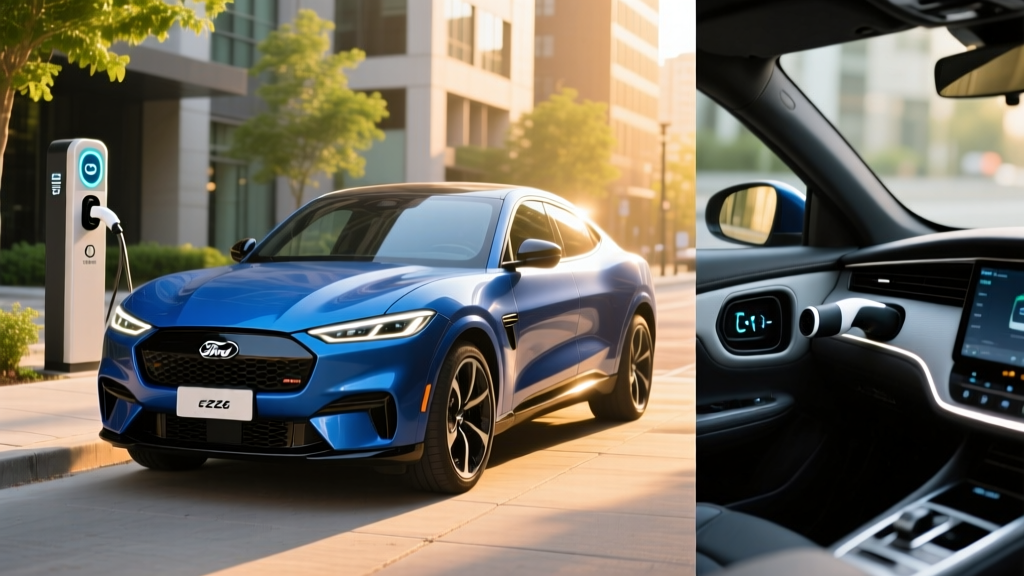
The 2026 Ford Mustang Mach-E is Ford's all-electric crossover that wears the Mustang badge. It offers up to an EPA-estimated 320 miles of range (Extended Range RWD), DC fast charging up to 150 kW (10–80% in roughly 36 minutes), and a starting MSRP around $39,995 before incentives. Compared to a gas Mustang EcoBoost, the Mach-E costs more upfront but can save $1,200–$1,800 annually in fuel and maintenance if you charge at home. It's best for buyers who want Mustang styling, daily-driver practicality, and have reliable Level 2 home charging access. If you regularly tow, drive 500+ miles between charging stops, or lack home charging, a gas Mustang or a PHEV alternative may fit better.
2026 Mustang Mach-E Lineup: Range, Battery, and Performance
Ford streamlined the Mach-E lineup for 2026 into Select, Premium, and GT trims, with Standard Range and Extended Range battery options. All models use a lithium-ion NMC (nickel manganese cobalt) battery pack with liquid thermal management. Here are the critical numbers by configuration:
| Trim / Battery | Battery (usable kWh) | EPA Range (mi) | Motor / HP | 0–60 mph (sec) | Base MSRP |
|---|---|---|---|---|---|
| Select SR RWD | 72 kWh | 250 | RWD / 266 hp | 6.1 | $39,995 |
| Select SR AWD | 72 kWh | 230 | Dual Motor / 312 hp | 5.1 | $42,995 |
| Premium ER RWD | 91 kWh | 320 | RWD / 290 hp | 5.6 | $46,495 |
| Premium ER AWD | 91 kWh | 290 | Dual Motor / 365 hp | 4.5 | $49,495 |
| GT ER AWD | 91 kWh | 280 | Dual Motor / 480 hp | 3.5 | $57,995 |
Real-World Range vs. EPA Sticker
The EPA numbers above assume mixed driving at moderate temperatures. In real-world highway testing at 70–75 mph, expect roughly 10–15% less range than the EPA estimate. The Premium ER RWD (EPA 320 mi) typically delivers 270–285 miles on a flat interstate run. In cold weather (below 30°F), range can drop an additional 15–25% due to cabin heating and reduced battery chemistry efficiency, bringing the Premium ER RWD to roughly 230–250 miles in winter conditions. The Mach-E's heat pump (standard on ER trims) helps mitigate this compared to resistive heating systems, but physics still applies.
Charging Speed and Infrastructure: What to Expect
Understanding charging speed is critical before you buy any electric Mustang car. The Mach-E supports three charging levels, and the difference in speed is dramatic:
| Level | Power (kW) | Miles Added per Hour | Typical Use Case |
|---|---|---|---|
| Level 1 (120V outlet) | ~1.4 kW | ~3–4 mi/hr | Overnight trickle; emergency top-off |
| Level 2 (240V home/public) | ~10.5 kW | ~28–32 mi/hr | Daily home charging; full charge in ~9 hr (ER) |
| DC Fast Charge | Peak 150 kW | ~190 mi in 30 min | Road trips; 10–80% in ~36 min |
Charging curve reality check: The Mach-E's 150 kW peak rate applies only between roughly 10–45% State of Charge (SoC). Above 60%, the rate tapers significantly — expect ~70 kW from 60–80% and under 30 kW above 80%. This means the advertised 10–80% time of 36 minutes is accurate, but charging from 80–100% at a DC fast charger can take an additional 30+ minutes. On road trips, plan to charge to 80% and move on rather than waiting for a full battery.
The Mach-E comes with Ford's Mobile Power Cord (Level 1/Level 2 capable with the right outlet) and has access to the BlueOval Charge Network, which aggregates over 60,000 public chargers including Tesla Superchargers (via the NACS adapter Ford provides with 2025+ models). The NACS transition is a significant advantage — Tesla's Supercharger network remains the most reliable DC fast-charging infrastructure in the U.S.
Mustang Mach-E vs. Gas Mustang: Cost and Ownership Comparison
Most shoppers cross-referencing the electric Mustang car are also considering the gas-powered Mustang EcoBoost or GT. Here's how the economics compare over five years of ownership (assuming 15,000 miles/year):
| Cost Category | Mach-E Premium ER RWD | Mustang EcoBoost (Gas) |
|---|---|---|
| Base MSRP | $46,495 | $32,515 |
| Est. Federal Tax Credit (§30D) | Up to $7,500* | $0 |
| Effective Purchase Price | ~$38,995 | $32,515 |
| Fuel/Energy (5 yr, 75K mi) | ~$4,200 (home charging @ $0.13/kWh) | ~$9,750 (gas @ $3.40/gal, 25 MPG combined) |
| Maintenance (5 yr) | ~$1,200 (tire rotations, cabin filter, fluid top-offs) | ~$3,800 (oil changes, brakes, spark plugs, transmission) |
| Insurance (5 yr avg) | ~$9,500 | ~$7,800 |
| Estimated Depreciation | ~$18,500 | ~$14,200 |
| Total 5-Year Cost | ~$72,395 | ~$68,065 |
*Federal EV tax credit eligibility under IRS §30D depends on buyer income caps ($150K single / $300K joint), vehicle MSRP caps ($80K for SUVs/crossovers), and battery critical-mineral and component sourcing requirements that change annually. The Mach-E qualifies as an SUV for MSRP-cap purposes. Always verify current-year eligibility with a tax professional or the IRS. The credit can be transferred to the dealer at point of sale for an immediate price reduction.
The bottom line: The Mach-E costs roughly $4,300 more over five years in this comparison, primarily due to higher depreciation and insurance. However, buyers who drive more than 15,000 miles/year, have access to cheap electricity (under $0.10/kWh), or live in states with additional EV rebates (California, Colorado, New York) can flip the math in the Mach-E's favor. The gas Mustang also wins on pure driving emotion — its exhaust note and manual transmission option deliver engagement no EV crossover replicates.
Real-World Ownership: What First-Time EV Buyers Must Know
Home Charging Is Non-Negotiable for Most Owners
If you cannot install a Level 2 (240V) home charger, owning any EV — including the Mach-E — becomes significantly less convenient. Relying solely on public DC fast charging costs 2–4× more per mile ($0.35–$0.50/kWh at Electrify America or EVgo vs. $0.10–$0.15/kWh at home) and requires 30–45 minutes of your time multiple times per week. A Level 2 home installation typically costs $800–$2,500 total (charger hardware: $400–$700; electrician labor + permit: $400–$1,800), and may require a panel upgrade ($1,500–$3,500) if your home has a 100-amp service panel. Budget for this before purchasing.
Battery Longevity and Warranty
Ford covers the Mach-E's high-voltage battery for 8 years or 100,000 miles against defects and capacity loss below 70% of original capacity. Real-world degradation data from early 2021–2023 Mach-E owners suggests roughly 5–8% capacity loss over the first 50,000 miles, with the curve flattening thereafter. NMC chemistry degrades faster if routinely charged to 100% and left sitting — Ford recommends setting a daily charge limit of 80–90% and using 100% only for road trips. A full battery replacement outside warranty currently runs $15,000–$22,000, though prices are declining as the supply chain matures.
Insurance Costs Are Higher
EV insurance premiums run 15–25% higher than comparable gas vehicles due to higher repair costs (specialized parts, high-voltage safety protocols, and fewer certified body shops). Expect $1,800–$2,200/year for the Mach-E depending on your profile. Get quotes before buying — the difference between insurers can be $500+/year.
Common Misconceptions About the Electric Mustang Car
| Myth | Fact |
|---|---|
| "The battery will need replacing in 5 years." | Liquid-cooled NMC packs routinely last 150,000–200,000+ miles with 10–15% degradation. Ford's 8-year/100K warranty backs this up. |
| "It's not a real Mustang." | It shares no platform with the gas Mustang (it's on Ford's GE1 EV platform), but the GT trim does 0–60 in 3.5 sec — faster than a Mustang GT V8. Whether the badge is justified is subjective; the performance is objective. |
| "Charging takes too long for road trips." | 10–80% in ~36 minutes at a 150 kW charger. Plan a 30-min stop every 2.5–3 hours — similar to gas-car rest stops for food and stretching. |
| "EVs are worse in winter." | Range drops 15–25% in sub-freezing temps — real, but manageable. The Mach-E's heat pump and battery preconditioning (for navigation-routed charging) mitigate this. AWD models handle snow well due to instant torque and low center of gravity. |
| "I'll save $10,000 in fuel immediately." | Annual fuel savings are $900–$1,400 for most drivers (15K mi/yr). The real savings compound over 5–10 years and depend on your electricity rate vs. local gas prices. |
Decision Framework: Should You Buy the Mach-E?
Buy the Mustang Mach-E If:
- You have Level 2 home charging (garage or driveway with 240V access) — this unlocks ~$1,000+/year in fuel savings and daily convenience.
- Your daily commute is under 80 miles round-trip — any Mach-E trim handles this easily, even in winter, without needing mid-day charging.
- You want a practical daily driver with Mustang performance cues — the Mach-E offers 27.8 cu ft of cargo space (65.5 cu ft with seats folded), a front trunk (frunk), and available BlueCruise hands-free highway driving (SAE Level 2 — you must remain attentive).
- You qualify for the §30D tax credit — the $7,500 point-of-sale credit effectively drops the Select SR RWD to ~$32,495, making it competitive with gas crossovers.
Consider an Alternative If:
- You lack home charging and your area has sparse public infrastructure — check AFDC's charging station locator before committing. If the nearest reliable DC fast charger is 20+ miles away, daily EV life becomes a chore.
- You regularly drive 400+ miles in a single day — the Mach-E's 150 kW peak charging and 36-min 10–80% time adds 1–1.5 hours to a long road trip vs. gas. Hybrids like the Ford Escape PHEV offer 37 miles of electric-only range for daily driving plus unlimited gas range for road trips.
- You want a traditional sports car experience — the Mach-E is a crossover, not a coupe. The gas Mustang GT with a manual transmission delivers analog engagement this EV cannot match.
- You tow frequently — the Mach-E is rated for only 1,500 lbs (SR) to 2,200 lbs (ER), far below truck-based EVs like the F-150 Lightning (7,700 lbs).
Frequently Asked Questions
Does the 2026 Mustang Mach-E qualify for the $7,500 federal tax credit?
It can, but eligibility depends on three factors under IRS §30D: (1) your modified adjusted gross income must be under $150,000 (single) or $300,000 (joint); (2) the vehicle MSRP must be under $80,000 (the Mach-E qualifies as an SUV); and (3) the battery must meet critical-mineral and component sourcing thresholds that tighten each year. For 2026, verify the Mach-E's specific battery sourcing compliance on the IRS clean vehicle credit list or with your Ford dealer. The credit can be applied at point of sale, reducing your out-of-pocket cost immediately.
How does the Mach-E compare to the Tesla Model Y?
The Model Y Long Range AWD offers ~310 miles EPA range, faster DC charging (250 kW peak, 10–80% in ~20 min), and a more mature software ecosystem, starting around $47,990. The Mach-E counters with more traditional driving dynamics, Ford dealer service network access, and BlueCruise (which many reviewers rate more smoothly than basic Autopilot for lane centering). Cargo space is comparable. If charging speed is your top priority, the Model Y wins. If build quality feel and dealer proximity matter more, the Mach-E has the edge.
What is BlueCruise, and is it self-driving?
No. BlueCruise is an SAE Level 2 driver-assistance system that enables hands-free driving on pre-mapped divided highways (over 130,000 miles of road in the U.S. and Canada). However, the driver must remain alert — a driver-facing camera monitors your eyes and will issue warnings and eventually slow the car if you look away. It does not navigate city streets, handle construction zones, or drive itself in all conditions. Think of it as an advanced cruise control, not a replacement for an attentive driver.
How much does it cost to charge a Mustang Mach-E at home?
Charging the 91 kWh Extended Range battery from 10% to 90% at home uses roughly 73 kWh of electricity. At the U.S. average residential rate of $0.16/kWh (2026), that's about $11.70 for roughly 255 miles of real-world range — or about $0.046 per mile. Compare that to a gas Mustang EcoBoost at 25 MPG combined with gas at $3.40/gallon: $0.136 per mile. Over 15,000 miles/year, home charging saves roughly $1,350 annually in fuel costs.
Will the Mach-E battery need to be replaced?
Based on current degradation data, a well-maintained Mach-E battery (daily charging limited to 80–90%, avoiding frequent DC fast charging above 80%) should retain 85–90% of its original capacity at 100,000 miles. Full replacement is unlikely within typical ownership periods. Ford's 8-year/100,000-mile battery warranty covers capacity loss below 70%, providing a safety net. If a replacement is needed out of warranty after 2030, industry projections suggest costs will have declined to $10,000–$15,000 as battery manufacturing scales.
Sources: EPA Fuel Economy (fueleconomy.gov) for range and MPGe data; Ford Mustang Mach-E official specifications; IRS §30D Clean Vehicle Credit eligibility rules.