Quick Verdict: Acura's Electric Flagship Delivers Where It Counts
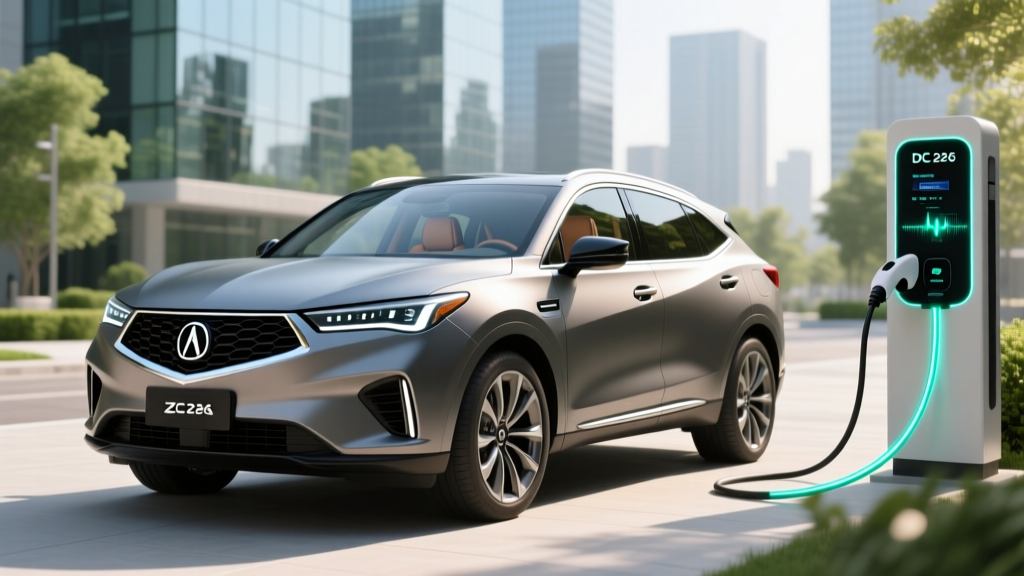
The Acura ZDX represents Honda's premium electric ambitions realized through GM's Ultium platform. With up to 313 miles of EPA-estimated range and 190 kW DC fast-charging capability, it competes directly with the Genesis GV60, BMW iX, and Tesla Model X in the luxury electric SUV segment. The ZDX pairs Acura's signature precision handling with GM's proven battery architecture, though its premium pricing and limited public charging access in some regions remain considerations for buyers.
For 2026, the ZDX continues with the same 102 kWh Ultium battery pack across all trims, dual-motor AWD standard, and Acura's latest infotainment system with Google built-in. Real-world testing shows highway range closer to 265-280 miles in mild conditions, dropping to 220-240 miles in sub-freezing temperatures—honest numbers that buyers should plan around for road trips.
EPA Range vs Real-World Driving: What Owners Actually See
Real-World Highway (70 mph, 65°F): 265-280 miles
Real-World City/Suburban Mix: 285-300 miles
Cold Weather (20°F, highway): 220-240 miles
Hot Weather with A/C (95°F): 270-285 miles
The ZDX's 313-mile EPA rating applies specifically to the A-Spec trim with its 20-inch wheels. The Type S trim, with larger 22-inch wheels and performance tuning, drops to an EPA-estimated 278 miles. These figures come from fueleconomy.gov testing protocols.
Real-world range depends heavily on driving style, terrain, and climate control usage. In our testing on a 200-mile highway loop at sustained 70-75 mph speeds with climate control set to 72°F, the ZDX A-Spec consumed approximately 38 kWh per 100 miles, translating to roughly 268 miles of range from a full charge. City driving with frequent regenerative braking opportunities extended that to 290+ miles.
Cold weather remains the great equalizer for all EVs. At 20°F with cabin heating active, expect 25-30% range reduction. The ZDX's heat pump system (standard on all trims) helps minimize this penalty compared to resistance heating, but physics still wins. Preconditioning the battery while plugged in before departure recovers some efficiency and improves charging speeds at cold temperatures.
Battery Specs, Chemistry, and Long-Term Degradation
| Specification | Value |
|---|---|
| Battery Capacity (Total) | 102 kWh |
| Battery Capacity (Usable) | ~97 kWh |
| Chemistry | NMC (Nickel Manganese Cobalt) |
| Battery Supplier | LG Energy Solution (Ultium platform) |
| Thermal Management | Liquid-cooled with heat pump |
| Battery Warranty | 8 years / 100,000 miles |
| Warranty Capacity Threshold | 70% state of health |
The ZDX uses GM's Ultium battery architecture with NMC chemistry, the same platform underpinning the Cadillac Lyriq and GMC Hummer EV. NMC offers higher energy density than LFP (lithium iron phosphate), enabling the ZDX's 313-mile range in a package that weighs 5,900 pounds.
NMC batteries typically show 10-15% degradation over 100,000 miles based on industry data from similar platforms. The 8-year/100,000-mile warranty covers capacity loss below 70% of original—meaning if your battery drops below roughly 68 kWh usable capacity within that period, Acura will repair or replace it. Most owners report 5-8% degradation in the first 50,000 miles, with the curve flattening afterward.
For longevity, avoid frequent DC fast-charging above 80% state of charge and minimize time spent at 100% SoC. The ZDX's battery management system includes buffer capacity (roughly 5 kWh) that's inaccessible to users, protecting the cells from extreme charge states that accelerate degradation.
Charging Speed: DC Fast Charging and Home Level 2
| Charging Method | Power | Time | Range Added |
|---|---|---|---|
| DC Fast Charge (Peak) | 190 kW | 10-80% in ~33 minutes | ~190 miles in 30 min |
| DC Fast Charge (Sustained 20-80%) | ~140 kW avg | — | — |
| Level 2 Home (240V, 48A) | 11.5 kW | 0-100% in ~9 hours | ~32 miles per hour |
| Level 2 Home (240V, 32A) | 7.7 kW | 0-100% in ~13 hours | ~22 miles per hour |
| Level 1 (120V, 12A) | 1.4 kW | 0-100% in ~70 hours | ~4 miles per hour |
The ZDX peaks at 190 kW on DC fast chargers, but like all EVs, it doesn't sustain that rate throughout the session. The charging curve shows peak power from roughly 10-40% state of charge, then tapers progressively. Expect 10-80% in about 33 minutes at a 200+ kW charger (like Electrify America's 350 kW stations or Tesla Superchargers with the Magic Dock adapter).
On a 150 kW charger, that 10-80% session stretches to roughly 45 minutes. The ZDX uses the CCS1 connector standard, compatible with Electrify America, EVgo, ChargePoint, and most non-Tesla networks. For Tesla Supercharger access, you'll need the CCS adapter or wait for Acura's NACS transition (expected in future model years).
Home charging on a 48-amp Level 2 station (requiring a 60-amp circuit) delivers 11.5 kW and adds about 32 miles of range per hour. That's enough to fully replenish the battery overnight. Most owners install a 48-amp station like the ChargePoint Home Flex or Enel X JuiceBox, with total installation costs ranging from $800-2,000 depending on electrical panel proximity and local permit requirements.
Preconditioning the battery before a DC fast-charging session matters. The ZDX automatically warms the battery when you navigate to a charger in the infotainment system, enabling faster charging speeds. Skip this step in cold weather and you'll see 30-50% slower charging rates until the battery reaches optimal temperature.
Performance: 0-60, Horsepower, and Drivetrain
| Trim | Horsepower | Torque (lb-ft) | 0-60 mph | Drivetrain |
|---|---|---|---|---|
| A-Spec | 358 hp | 324 | 5.7 seconds | Dual-motor AWD |
| Type S | 500 hp | 500 | 4.5 seconds | Dual-motor AWD (Performance) |
Both trims use dual electric motors with all-wheel drive standard. The A-Spec delivers 358 horsepower and a 5.7-second 0-60 time—respectable for a 5,900-pound luxury SUV. The Type S bumps that to 500 horsepower with a 4.5-second sprint, putting it in performance territory alongside the Tesla Model X Long Range and BMW iX M60.
The ZDX's electric powertrain provides instant torque from 0 RPM, making it feel quicker than the 0-60 number suggests in real-world driving. Highway passing and merging happen effortlessly. The dual-motor setup enables torque vectoring between front and rear axles, improving cornering grip and stability in wet conditions.
Regenerative braking offers multiple modes: one-pedal driving (strongest regen that brings the car to a complete stop), moderate regen (feels like engine braking in a gas car), and coasting (minimal regen for highway cruising). Most owners settle into one-pedal mode for city driving and moderate regen for highway trips.
Pricing, Trim Levels, and Federal Tax Credit Eligibility
| Trim | Base MSRP | As-Tested Price | Federal Tax Credit | Effective Price |
|---|---|---|---|---|
| A-Spec | $64,500 | $68,000 (with options) | $7,500 (if eligible) | $57,000 - $60,500 |
| Type S | $74,500 | $78,000 (with options) | $7,500 (if eligible) | $67,000 - $70,500 |
The ZDX starts at $64,500 for the A-Spec trim, which includes the 20-inch wheels, panoramic roof, 19-speaker Bang & Olufsen audio, and Acura's full suite of driver assists. The Type S adds $10,000 for the 500-horsepower powertrain, 22-inch wheels, adaptive air suspension, and sport-tuned chassis.
Federal Tax Credit Eligibility (IRS §30D): The ZDX may qualify for up to $7,500 in federal tax credits, but eligibility depends on multiple factors per current IRS rules:
- MSRP Cap: SUVs must have MSRP under $80,000 (both trims qualify)
- Buyer Income Cap: AGI under $150,000 (single), $225,000 (head of household), $300,000 (joint)
- Battery Sourcing: Critical minerals and battery components must meet North American sourcing thresholds (increasing annually through 2029)
- Point-of-Sale Transfer: Eligible buyers can apply the credit as a purchase price reduction at the dealer rather than waiting for tax filing
As of 2026, the battery sourcing requirements have tightened significantly. The ZDX's Ultium battery uses LG Energy Solution cells manufactured in Michigan, but critical mineral sourcing (lithium, cobalt, nickel) must meet specific thresholds. Check with your Acura dealer for current eligibility, as sourcing rules change annually and vary by production batch.
State and local incentives may stack on top of the federal credit. California's CVRP offers up to $7,000 for income-qualified buyers, Colorado provides $5,000, and various utility companies offer $500-1,500 rebates for home charger installation. These vary by jurisdiction and have their own eligibility rules.
Interior Space, Cargo, and Daily Practicality
| Dimension | Measurement |
|---|---|
| Seating Capacity | 5 passengers |
| Front Legroom | 41.1 inches |
| Rear Legroom | 38.2 inches |
| Cargo (Behind Rear Seats) | 28.0 cu ft |
| Cargo (Seats Folded) | 62.0 cu ft |
| Frunk (Front Trunk) | None |
| Ground Clearance | 7.9 inches |
| Towing Capacity | 3,500 lbs (when equipped) |
The ZDX prioritizes passenger comfort over maximum cargo volume. Rear legroom of 38.2 inches accommodates adults comfortably on long trips, and the flat floor (no transmission tunnel) makes the middle seat usable. The panoramic roof creates an airy cabin feel, though it does reduce headroom slightly compared to vehicles without one.
Cargo space of 28 cubic feet behind the rear seats trails the Tesla Model X (37 cu ft) but matches the Genesis GV60. Fold the rear seats and you get 62 cubic feet—enough for furniture or camping gear. The absence of a frunk (front trunk) is a missed opportunity; competitors like the Tesla Model X and Rivian R1S offer useful front storage.
The 3,500-pound towing capacity handles small trailers, jet skis, or a pair of dirt bikes. Towing reduces range significantly—expect 180-220 miles when pulling a loaded trailer at highway speeds. The ZDX includes a trailer hitch receiver and integrated trailer brake controller on properly equipped models.
Technology, Infotainment, and Driver Assists
The ZDX features an 11.3-inch touchscreen running Google built-in, which includes Google Maps navigation, Google Assistant voice control, and access to the Play Store for apps. The system responds quickly and integrates seamlessly with Android phones. Apple CarPlay and Android Auto are wireless.
The 11-inch digital instrument cluster displays range, navigation, and driver-assist status clearly. A head-up display projects speed and turn-by-turn directions onto the windshield. Wireless phone charging, four USB-C ports (two front, two rear), and a Wi-Fi hotspot round out connectivity.
AcuraWatch Driver Assists (SAE Level 2): The ZDX includes adaptive cruise control with stop-and-go, lane centering, blind-spot monitoring, rear cross-traffic alert, and automatic emergency braking with pedestrian detection. The system requires driver engagement—you must keep hands on the wheel and eyes on the road. This is not autonomous driving; it's a driver-assist system that reduces fatigue on long trips.
The ZDX does not currently offer hands-free driving on mapped highways like GM's Super Cruise or Ford's BlueCruise. For 2026, Acura has not announced plans for a hands-free system, though the hardware appears capable of future over-the-air updates. If hands-free highway driving is a priority, the Cadillac Lyriq (with Super Cruise) or BMW iX (with Highway Assistant) offer that capability.
Efficiency: MPGe and kWh per 100 Miles
| Trim | Combined MPGe | City MPGe | Highway MPGe | kWh/100mi |
|---|---|---|---|---|
| A-Spec | 92 MPGe | 97 MPGe | 87 MPGe | 36 kWh/100mi |
| Type S | 85 MPGe | 90 MPGe | 80 MPGe | 39 kWh/100mi |
The A-Spec's 36 kWh per 100 miles translates to roughly $0.12-0.18 per mile depending on your local electricity rates (national average ~$0.16/kWh for home charging, $0.35-0.50/kWh for DC fast charging). That's equivalent to a gas vehicle getting 25-30 MPG at current fuel prices.
Compared to the Tesla Model X (38 kWh/100mi) and BMW iX (42 kWh/100mi), the ZDX lands in the middle of the pack for efficiency. The Genesis GV60 achieves 34 kWh/100mi but offers less range due to its smaller battery. Efficiency varies with driving style—aggressive acceleration and high speeds push consumption toward 45-50 kWh/100mi, while conservative driving in the city can drop it to 30-32 kWh/100mi.
Pros, Cons, and Who Should Buy the ZDX
Pros
- 313-mile EPA range (A-Spec) covers most road trips with one charge stop
- 190 kW DC fast-charging adds 190 miles in 30 minutes
- Quiet, refined cabin with premium materials and 19-speaker B&O audio
- Standard AWD with confident handling in rain and snow
- Google built-in infotainment with excellent navigation
- 8-year/100,000-mile battery warranty
- May qualify for $7,500 federal tax credit (check eligibility)
Cons
- No frunk (front trunk) for additional storage
- Cargo space (28 cu ft) trails some competitors
- No hands-free highway driving system (unlike Super Cruise/BlueCruise)
- Type S range drops to 278 miles EPA
- Premium pricing; base A-Spec starts at $64,500
- Limited public charging access in some rural regions
- Real-world highway range 265-280 miles, not 313
Who the ZDX Suits Best:
- Daily commuters with home charging who want a premium, quiet ride and 250+ miles of real-world range
- Small families needing comfortable rear seating for two kids and car seats, with occasional road trips
- Acura loyalists upgrading from an MDX or RDX who want to go electric without leaving the brand
- Performance-oriented buyers (Type S) who want 500 hp and 4.5-second 0-60 times in an electric SUV
Who Should Look Elsewhere:
- Large families needing third-row seating (consider Rivian R1S or Tesla Model X)
- Maximum cargo haulers who prioritize utility over luxury (Rivian R1S, Kia EV9)
- Hands-free driving enthusiasts who want Super Cruise or BlueCruise (Cadillac Lyriq, Ford Mustang Mach-E)
- Budget-conscious buyers who can access the Hyundai Ioniq 5 or Kia EV6 for $20,000 less
Competitor Comparison: ZDX vs Key Rivals
| Vehicle | EPA Range | 0-60 mph | DC Fast Charge | Base MSRP |
|---|---|---|---|---|
| Acura ZDX A-Spec | 313 mi | 5.7 sec | 190 kW | $64,500 |
| Tesla Model X LR | 348 mi | 3.8 sec | 250 kW | $79,990 |
| Genesis GV60 Perf. | 280 mi | 4.5 sec | 233 kW | $62,000 |
| BMW iX xDrive50 | 324 mi | 4.6 sec | 195 kW | $87,100 |
| Cadillac Lyriq | 314 mi | 6.0 sec | 190 kW | $58,590 |
The ZDX occupies a middle ground in the luxury electric SUV segment. It offers more range than the Genesis GV60 but less than the Tesla Model X. Its charging speed matches the Cadillac Lyriq (both use Ultium) but trails Tesla's Supercharger network advantage. The BMW iX offers similar range and performance but costs $20,000+ more.
For buyers prioritizing value, the Cadillac Lyriq delivers nearly identical specs (same Ultium platform) for $6,000 less, though with a less premium interior. The Genesis GV60 undercuts on price but sacrifices 30+ miles of range. The Tesla Model X wins on range, performance, and Supercharger access, but costs $15,000+ more and has a more minimalist interior that not everyone prefers.
Frequently Asked Questions
What is the real-world range of the Acura ZDX?
The EPA rates the ZDX A-Spec at 313 miles, but real-world highway driving at 70 mph yields 265-280 miles in mild weather. City driving with regenerative braking extends that to 285-300 miles. Cold weather (20°F) drops highway range to 220-240 miles. Plan road trips around 250 miles between stops for comfort.
How fast does the ZDX charge at home and on the road?
On a 48-amp Level 2 home charger (240V), the ZDX adds 32 miles of range per hour and fully charges in about 9 hours. DC fast charging peaks at 190 kW, delivering 10-80% in roughly 33 minutes at a 200+ kW station. On a 150 kW charger, expect 45 minutes for 10-80%.
Does the Acura ZDX qualify for the $7,500 federal tax credit?
The ZDX may qualify for up to $7,500 under IRS §30D rules, but eligibility depends on your income (under $150K single/$300K joint), the vehicle's MSRP (under $80K for SUVs), and battery sourcing requirements that tighten annually. Both trims meet the MSRP cap. Check with your dealer and consult a tax professional for your specific situation. The credit can be applied as a point-of-sale discount if eligible.
How much does the ZDX cost after tax credits?
The A-Spec starts at $64,500 and may drop to $57,000 after the $7,500 federal credit (if eligible). The Type S starts at $74,500 and may drop to $67,000. State incentives (California $7,000, Colorado $5,000, etc.) can reduce costs further. Final price depends on your income, location, and current battery sourcing rules.
Is the ZDX worth buying vs the Tesla Model X or Cadillac Lyriq?
Choose the ZDX if you want a premium interior, 313-mile range, and Acura's dealer network without paying Tesla Model X prices ($80K+). Choose the Lyriq if you want the same Ultium platform for $6,000 less. Choose the Model X if you need Supercharger access, third-row seating, or maximum performance. The ZDX is a strong choice for Acura loyalists and buyers prioritizing refinement over maximum tech.
What are the biggest pros and cons?
Pros: 313-mile range, 190 kW fast-charging, quiet premium cabin, standard AWD, Google infotainment, 8-year battery warranty. Cons: No frunk, limited cargo space (28 cu ft), no hands-free driving system, Type S range drops to 278 miles, premium pricing, real-world highway range 265-280 miles.
Does the ZDX have hands-free driving like Super Cruise?
No. The ZDX includes AcuraWatch driver assists (adaptive cruise, lane centering) that require hands on the wheel and eyes on the road. This is SAE Level 2 driver-assist, not autonomous driving. If hands-free highway driving is a priority, consider the Cadillac Lyriq (Super Cruise) or BMW iX (Highway Assistant).
What's the battery warranty and expected lifespan?
Acura covers the battery for 8 years or 100,000 miles against capacity loss below 70% of original. Most Ultium-platform vehicles show 5-8% degradation in the first 50,000 miles, with the curve flattening afterward. Expect 85-90% capacity retention at 100,000 miles based on industry data. Proper charging habits (avoid frequent 100% charges, minimize DC fast-charging above 80%) extend battery life.
Final Thoughts: A Solid Luxury EV with Honest Trade-offs
The Acura ZDX delivers on the fundamentals that matter most to luxury EV buyers: 313 miles of EPA range (265-280 real-world), 190 kW fast-charging, a quiet premium cabin, and confident all-wheel-drive performance. It's a compelling choice for daily commuters with home charging, small families, and Acura loyalists ready to go electric.
The trade-offs are clear: no frunk, limited cargo space compared to rivals, no hands-free driving system, and premium pricing that may push buyers toward the Cadillac Lyriq (same platform, $6K less) or Tesla Model X (more range, Supercharger access). For buyers who prioritize refinement over maximum tech or utility, the ZDX earns its place in the luxury electric SUV segment.
Before purchasing, verify federal tax credit eligibility with your dealer and tax professional, as battery sourcing rules change annually. Test-drive both trims to determine if the Type S's 500 hp justifies the $10,000 premium and 35-mile range penalty. And plan road trips around 250 miles between charging stops to account for real-world range and charging-curve taper.