Quick Answer: Royal Enfield Electric Motorcycles in 2026
Royal Enfield has not yet released a production electric motorcycle as of early 2026. The company unveiled the Flying Flea C6 and Flying Flea S6 electric models at EICMA 2024 as part of its new "Flying Flea" electric sub-brand, with production targeted for 2026–2027. If you are searching for a Royal Enfield electric motorcycle today, you cannot purchase one yet. However, Royal Enfield's parent company Eicher Motors has confirmed the electric lineup is in advanced development, and specs are expected to include a ~5–8 kWh battery, 80–120 km (50–75 mile) real-world range, and pricing likely in the $5,000–$8,000 range for global markets. This guide covers what is known, what to expect, and how Royal Enfield's electric ambitions compare to existing electric two-wheelers and EV car ownership.
What We Know About Royal Enfield's Electric Plans
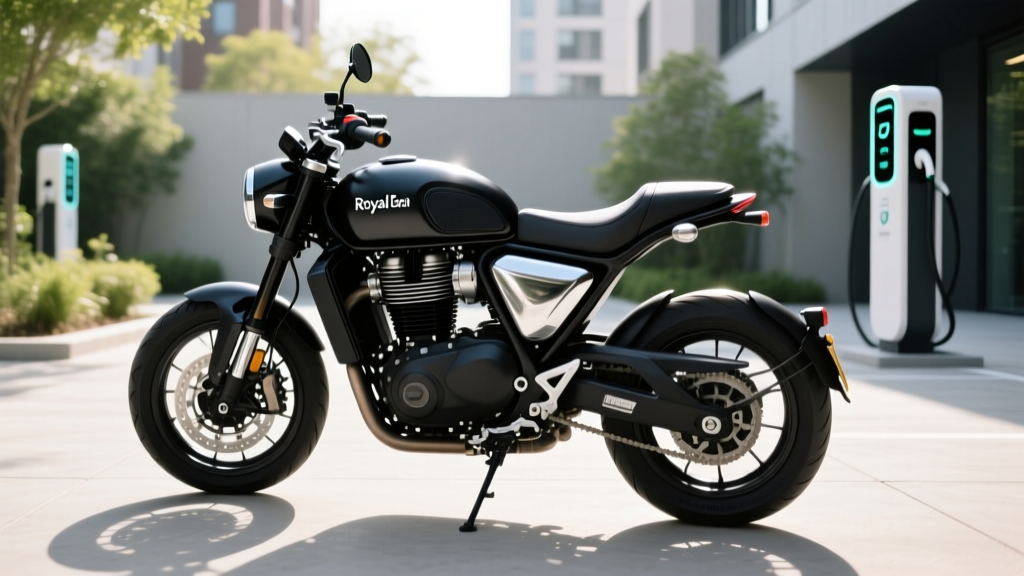
Royal Enfield, best known for its classic air-cooled single-cylinder motorcycles like the Bullet 350, Hunter 350, and the 650 Twin platform, entered the electric conversation with the launch of its Flying Flea sub-brand. Unlike the heavyweight touring and retro bikes the company is famous for, the Flying Flea line targets urban commuters with lightweight, stylish electric motorcycles.
Two models have been officially previewed:
- Flying Flea C6 — A cruiser-styled electric motorcycle with a relaxed riding position, targeting the heritage aesthetic Royal Enfield is known for.
- Flying Flea S6 — A roadster-styled variant with slightly sportier ergonomics and a more aggressive stance.
Both models share a common platform: a lightweight steel frame, a hub-mounted electric motor, and a removable battery pack designed for urban use. Royal Enfield CEO B. Govindarajan has stated publicly that the Flying Flea models are being developed specifically for city riders who want the brand's iconic design in a zero-tailpipe-emissions package.
Current status (early 2026): Pre-production prototypes have been shown at international motorcycle shows. No official MSRP, EPA-equivalent range certification, or retail availability date has been confirmed. Specs below are based on manufacturer previews and industry analysis, and should be treated as preliminary.
Preliminary Specs: What to Expect
Based on EICMA disclosures, patent filings, and statements from Royal Enfield executives, here is what the Flying Flea platform is expected to deliver:
| Specification | Estimated Value |
|---|---|
| Battery capacity | ~5–8 kWh (LFP chemistry expected) |
| Motor output | ~8–12 kW (11–16 hp) peak |
| Top speed | ~100–110 km/h (62–68 mph) |
| Real-world range | ~80–120 km (50–75 miles) |
| Charging (Level 1 / standard outlet) | ~4–6 hours (0–100%) |
| Removable battery | Yes — designed for indoor/swappable charging |
| Curb weight (est.) | ~150–170 kg (330–375 lbs) |
| Target price (global) | ~$5,000–$8,000 USD equivalent |
Chemistry note: Royal Enfield is expected to use LFP (lithium iron phosphate) cells rather than NMC. LFP is heavier per kWh but offers significantly longer cycle life (2,000+ cycles vs. ~800–1,200 for NMC), better thermal stability, and lower cost — ideal for a commuter motorcycle where energy density is less critical than longevity and safety.
Royal Enfield Electric vs. Gas Motorcycles: Cost Comparison
For buyers cross-shopping a Royal Enfield electric against the company's current gas lineup (e.g., the Hunter 350 or Bullet 350), here is how the economics stack up over a typical 5-year ownership period at 3,000 miles per year (urban commuter use):
| Cost Category | Flying Flea Electric (Est.) | Hunter 350 (Gas) |
|---|---|---|
| Purchase price | $6,500 | $4,200 |
| Fuel / electricity (15,000 mi total) | $180 (at $0.15/kWh) | $1,350 (at $3.80/gal, 75 MPG) |
| Maintenance (oil, filters, chain, valves) | $300 (tires, brakes, minimal) | $1,800 (oil changes, valve adjustments, chain) |
| Insurance (avg.) | $900 | $1,050 |
| Total 5-year cost | $7,880 | $8,400 |
Key takeaway: The electric Flying Flea is expected to cost more upfront (~$2,300 premium) but recoups the difference through dramatically lower fuel and maintenance costs. The breakeven point lands around year 4 for a typical urban commuter. If electricity rates are lower or annual mileage is higher, the breakeven comes sooner.
How It Compares to Existing Electric Two-Wheelers
Royal Enfield is entering a market where several established electric motorcycles and scooters already exist. Here is how the Flying Flea is expected to position itself:
| Model | Battery (kWh) | Range (mi) | Top Speed | Price (USD) |
|---|---|---|---|---|
| Royal Enfield Flying Flea C6 (est.) | ~6–8 | 50–75 | ~65 mph | $5,000–$8,000 |
| Zero S (2026) | 14.4 (Z-Force) | 89 (city) / 54 (hwy) | 98 mph | $20,495 |
| LiveWire ONE (2026) | 15.4 | 95 (city) / 70 (hwy) | 110 mph | $21,999 |
| NIU NQi GT (scooter) | 3.5 (dual battery) | 40–55 | 45 mph | $4,299 |
| Super73 S2 (e-bike) | 0.96 | 40–50 (pedal assist) | 28 mph | $3,995 |
Royal Enfield's positioning is clear: undercut premium brands like Zero and LiveWire by 60–70% on price while offering more motorcycle character (design, build quality, brand heritage) than scooter and e-bike alternatives. The trade-off is lower range and performance — this is a city bike, not a highway tourer.
Real-World Ownership Considerations
Charging Access
The Flying Flea's removable battery is its biggest practical advantage for riders who lack a garage or dedicated parking with an outlet. If you can carry the battery pack indoors (it is expected to weigh ~15–20 kg / 33–44 lbs), you can charge from any standard 120V household outlet. A full charge from empty is estimated at 4–6 hours on Level 1 power (~1.0–1.5 kW draw).
Important for apartment dwellers: Check your lease or HOA rules before bringing a lithium battery indoors. While LFP chemistry is significantly more thermally stable than NMC, some building policies restrict indoor charging of any large lithium battery. The removable-battery design is specifically intended to solve the "no garage" problem that plagues many urban EV buyers.
Range Reality Check
The estimated 50–75 mile real-world range assumes mixed urban riding at 25–45 mph. Expect this to decrease by:
- 15–25% in cold weather (below 40°F / 4°C) due to battery internal resistance and cabin-free heating demands on the cells
- 20–30% at sustained highway speeds (60+ mph) where aerodynamic drag dominates
- 10–15% with aggressive throttle use and frequent hard acceleration
For a commuter with a 15-mile round trip and access to charging at home or work, this range is more than adequate. For anyone regularly riding 50+ miles in a single trip, the Flying Flea is not the right tool.
Climate and Battery Longevity
LFP chemistry handles heat better than NMC and degrades more slowly over time. Royal Enfield is expected to offer a battery warranty of at least 3 years / 30,000 miles (or equivalent), with a capacity retention threshold of 70–80%. Real-world degradation for LFP packs in moderate climates typically runs 2–3% per year, meaning the battery should retain 85–90% capacity after five years of normal use.
Common Misconceptions About Electric Motorcycles
| Myth | Fact |
|---|---|
| "Electric motorcycles have no power" | Electric motors deliver peak torque from 0 RPM. Even a modest 12 kW motor on a lightweight bike feels punchy off the line — quicker than most 350cc gas singles in city traffic. |
| "The battery will need replacing in 3 years" | Modern LFP packs are rated for 2,000+ full charge cycles. At 50 miles per cycle, that's 100,000+ miles before significant degradation — far more than most riders will accumulate. |
| "You can't ride in the rain" | Production electric motorcycles are IP-rated for water ingress. Battery packs and motors are sealed. Riding in rain is no different than on a gas bike. |
| "Charging takes all day" | On a standard 120V outlet, a 6 kWh pack charges in ~4–6 hours — plug in when you get home, full by morning. No DC fast charging is expected on the Flying Flea, but for a commuter bike, overnight Level 1 is sufficient. |
| "There are no federal incentives for electric motorcycles" | The federal §30D tax credit does NOT apply to motorcycles. However, some states and utilities offer rebates for electric two-wheelers — check your local programs. The AFDC state incentives database is a good starting point. |
Decision Framework: Should You Wait for the Flying Flea?
Choose to WAIT for the Royal Enfield Flying Flea if:
- You want a stylish, heritage-design electric motorcycle for urban commuting
- Your daily round trip is under 40 miles
- You value brand character and build quality over raw performance
- You want a removable battery for apartment/indoor charging
- You're willing to wait until late 2026 or 2027 for retail availability
Choose an EXISTING electric two-wheeler NOW if:
- You need a motorcycle immediately for commuting
- You need 100+ miles of range or highway-speed capability (look at Zero S or LiveWire ONE)
- Your budget is under $4,500 (consider NIU scooters or Super73 e-bikes)
- You need DC fast charging for longer rides
Stick with a GAS Royal Enfield if:
- You regularly ride 100+ miles per trip
- You want the classic sound, feel, and mechanical engagement of a thumper engine
- You ride in rural areas with no charging access
- You want proven long-term reliability data and an established dealer/service network
What First-Time EV Buyers (Car or Motorcycle) Should Know
Whether you're considering the Flying Flea or any electric vehicle, these fundamentals apply:
kW vs. kWh — Know the Difference
This is the single most common source of confusion. kW (kilowatts) measures power — how fast energy flows, like water pressure in a hose. kWh (kilowatt-hours) measures energy — how much total energy is stored or consumed, like the total volume of water in a tank. A motorcycle with a 6 kWh battery and a 1.5 kW charger will take roughly 4 hours to fill from empty (6 kWh ÷ 1.5 kW = 4 hours). The same logic applies to EV cars with 80 kWh batteries charging at 150 kW.
No Federal Tax Credit for Motorcycles
The IRS §30D Clean Vehicle Credit applies to four-wheeled vehicles (cars, trucks, SUVs) that meet MSRP caps, buyer income limits, battery sourcing requirements, and final assembly rules. Motorcycles are not eligible under current federal law. Some states (notably California through its Clean Transportation Program) offer separate rebates for electric motorcycles, but these vary widely by jurisdiction and change frequently.
Charging Speed Tapers Above 80%
Like all lithium-ion batteries, the Flying Flea's pack will charge fastest between 10–80% State of Charge (SoC). Above 80%, the battery management system (BMS) reduces charge current to protect cell health. On a small battery charged at Level 1 rates, this taper is less dramatic than on a large EV car battery at a DC fast charger, but the principle is the same: don't expect linear charge times from 0–100%.
Insurance Can Be Higher
Electric vehicles often carry higher insurance premiums due to elevated repair costs (battery replacement is expensive) and higher purchase prices. For a $6,500 electric motorcycle, the premium differential vs. a $4,200 gas bike is typically modest — expect $100–$200 more per year. Get quotes before purchasing.
Frequently Asked Questions
When will the Royal Enfield Flying Flea be available to buy?
Royal Enfield has targeted a 2026–2027 production timeline for the Flying Flea C6 and S6. Exact retail availability varies by market. India (Royal Enfield's largest market) may see the bikes first, with US and European availability following. No firm date has been announced as of early 2026.
Will the Flying Flea be street-legal in the US?
Yes, assuming Royal Enfield homologates the Flying Flea for US DOT and EPA compliance, which the company is expected to do given its established US dealer network. US-market specs (lighting, mirrors, speedometer in mph) will differ slightly from global models.
Can I charge the Flying Flea at a public EV charging station?
No. Public Level 2 (J1772) and DC fast chargers (CCS/NACS) are designed for four-wheeled vehicles and use connectors incompatible with motorcycles. The Flying Flea is expected to charge via a standard household outlet (120V) using an onboard charger, and possibly via a dedicated Royal Enfield home dock. This is standard for electric motorcycles.
How does the Flying Flea compare to a Tesla Model 3 or Chevy Equinox EV for commuting?
Different tools for different jobs. A Tesla Model 3 (EPA range 341 mi, starting ~$38,990) or Chevy Equinox EV (EPA range 319 mi, starting ~$33,600) offers year-round, all-weather commuting with 300+ miles of range, climate control, and full safety equipment — but at 5–6x the price and with a full-size car's footprint. The Flying Flea is a fraction of the cost, splits traffic lanes where legal, and parks anywhere — but offers no weather protection, limited range, and zero cargo space. Many EV owners pair a car for long trips with an electric two-wheeler for daily urban miles.
Is Royal Enfield's dealer network ready to service electric motorcycles?
This is an open question. Royal Enfield has over 250 US dealerships, but most are staffed by mechanics trained on air-cooled and oil-cooled gas engines. The company will need to invest in EV-specific technician training, diagnostic tools, and high-voltage safety protocols before the Flying Flea reaches showrooms. Ask your local dealer about their electric service readiness before committing to a purchase.
What about the Royal Enfield electric scooter rumors?
Royal Enfield's parent company Eicher Motors has explored various electric two-wheeler concepts, but the Flying Flea C6 and S6 motorcycles are the only officially confirmed electric products from Royal Enfield as of 2026. Any scooter or additional model rumors remain unconfirmed.