The Short Answer: What a 60 MPH Electric Dirt Bike Actually Delivers
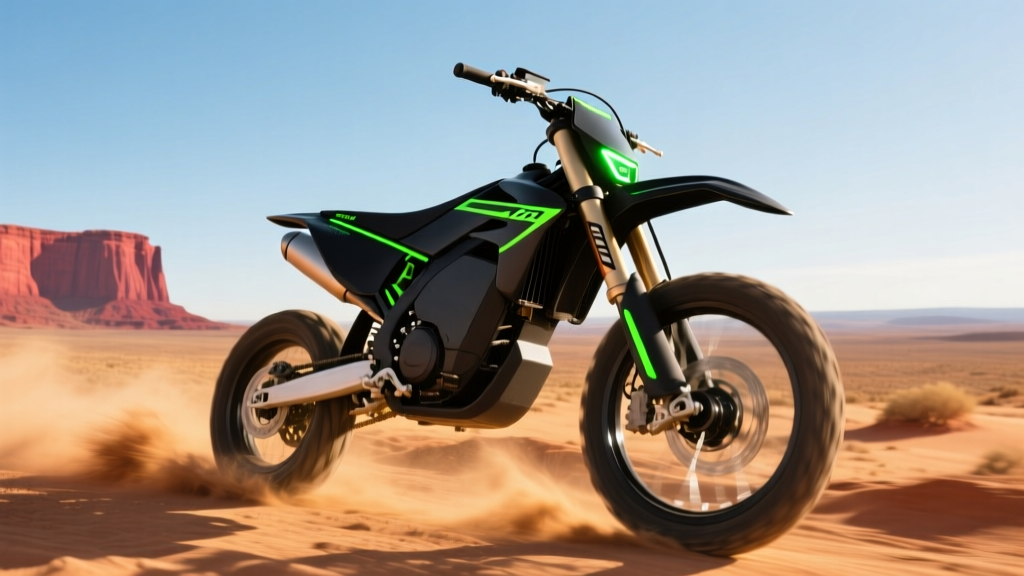
A 60 mph electric dirt bike in 2026 typically packs a 3–8 kWh lithium-ion battery, peaks at 6–15 kW of motor output, and delivers 25–50 miles of real-world trail range depending on throttle discipline and terrain. Models like the KTM SX-E 5 (targeted at youth/mid-size riders, ~$5,600 MSRP) and the Sur-Ron Light Bee X (~$4,500 MSRP, adult-capable) dominate this speed bracket. Expect 45–90 minutes on a standard 120V Level 1 outlet for a full charge, zero tailpipe emissions, and near-silent operation — a massive advantage for riding on noise-restricted trails. However, these bikes sacrifice the 100+ mile range and 5-minute refueling of a comparable 250cc gas dirt bike, and battery replacement after 800–1,500 charge cycles can cost $800–$2,000.
What You're Actually Buying: Specs That Matter
Before dropping thousands on an electric motocross or trail bike, understand the numbers that define daily usability. Unlike street-legal EVs tracked by the EPA on fueleconomy.gov, off-road electric dirt bikes don't carry EPA range stickers — so manufacturer claims must be verified against real-world riding data and independent tests.
| Specification | KTM SX-E 5 (Youth) | Sur-Ron Light Bee X | Segway XE4 (2026) |
|---|---|---|---|
| Top Speed | ~50 mph (restricted) / 60+ mph (unlocked) | ~50 mph (stock) / 60+ mph (modified) | ~60 mph |
| Motor Peak Output | ~5 kW (6.7 HP) | ~6 kW (8 HP) | ~10 kW (13.4 HP) |
| Battery Capacity | 1.9 kWh (NMC) | 2.0 kWh (NMC, 60V) | 3.6 kWh (NMC, removable) |
| Claimed Range | Up to 2 hrs riding (~25–35 mi) | Up to 50 mi (eco mode) | Up to 50 mi (mixed) |
| Real-World Trail Range | 15–25 mi (aggressive riding) | 25–40 mi (moderate trail) | 30–45 mi (mixed terrain) |
| Charge Time (120V) | ~60 min (0–100%) | ~90 min (0–100%) | ~75 min (0–100%) |
| Weight | ~105 lbs | ~110 lbs (with battery) | ~130 lbs |
| Base MSRP (2026) | $5,599 | $4,499 | $5,999 |
Key takeaway: Battery capacity in kWh directly determines your trail time. A 2 kWh battery at aggressive motocross pace (which can draw 4–6 kW sustained) will deplete in 20–30 minutes. Ride conservatively on trails at 1–2 kW average draw, and that same battery stretches to 60–90 minutes.
Electric vs Gas Dirt Bike: Head-to-Head Cost and Performance
The most common cross-shop for a 60 mph electric dirt bike is a 250cc four-stroke gas equivalent like the Honda CRF250R (~$8,299 MSRP) or Yamaha YZ250F (~$8,899 MSRP). Here's how the math works over three years of weekend riding (estimated 50 rides/year, 20 miles/ride):
| Factor | Electric (Sur-Ron Light Bee X) | Gas (Honda CRF250R) |
|---|---|---|
| Purchase Price | $4,499 | $8,299 |
| "Fuel" Cost Per Ride (20 mi) | $0.15–$0.40 (at $0.13/kWh avg) | $3.50–$5.00 (premium gas, ~1 gal/ride) |
| Annual Fuel/Energy Cost (50 rides) | $8–$20 | $175–$250 |
| 3-Year Energy Total | $24–$60 | $525–$750 |
| Oil Changes / Year | None | 2–4 ($15–$30 each) |
| Air Filter Service / Year | None | 2–4 ($20–$40 each) |
| Chain Maintenance | Same | Same |
| Noise Level | ~55–65 dB (trail-legal almost everywhere) | ~94–102 dB (restricted at many tracks) |
| 3-Year Total Cost of Ownership | ~$4,600–$4,800 | ~$9,100–$9,600 |
The verdict: Electric dirt bikes win on purchase price (often 40–50% less than a comparable gas race bike) and ongoing operating costs. Gas bikes win on range, refueling speed, and proven top-end power for competitive motocross. If you're riding trails where noise restrictions matter or want a low-maintenance weekend bike, electric makes strong financial sense. If you're racing AMA amateur nationals, gas still dominates.
Real-World Ownership: What First-Time Buyers Must Know
Home Charging Access Is Non-Negotiable
Unlike electric cars that can rely on public DC fast-charging networks, electric dirt bikes charge exclusively from standard 120V household outlets using included or optional chargers. You need a garage, shed, or covered area with a dedicated 15A or 20A circuit. Most bikes draw 0.5–1.5 kW during charging — well within a standard outlet's capacity — but avoid extension cords longer than 25 feet to prevent voltage drop and overheating.
Climate Kills Range (Just Like EVs)
NMC lithium-ion batteries lose 20–35% of usable capacity in temperatures below 40°F. A Sur-Ron rated for 40 miles of trail range in 70°F weather may deliver only 25–30 miles on a cold November morning. Store your battery indoors at room temperature and install it just before riding to mitigate this.
Battery Degradation Is Real — Budget for It
Most electric dirt bike batteries are rated for 800–1,500 full charge cycles before dropping to 80% of original capacity. If you ride 50 times per year and fully deplete the battery each ride, expect meaningful range loss after 16–30 years of use — or sooner if you consistently drain to 0% or store the battery at full charge in heat. Replacement batteries cost:
- Sur-Ron 60V battery: $800–$1,100
- KTM SX-E 5 battery: $1,200–$1,500
- Segway XE4 battery: $900–$1,300
Insurance and Registration
Most 60 mph electric dirt bikes are classified as off-road vehicles and do not require street registration or a motorcycle license for trail use. However, if you plan to ride on public land or BLM trails, check your state's OHV (Off-Highway Vehicle) registration requirements — typically $25–$55/year. Insurance for off-road electric bikes is optional but available through providers like Progressive or Dairyland for $100–$300/year depending on coverage.
Federal Tax Credit: Do Electric Dirt Bikes Qualify?
This is where many buyers get confused. Under IRS §30D clean vehicle credit rules, the federal EV tax credit of up to $7,500 applies only to on-road, four-wheeled vehicles that meet MSRP caps, buyer income limits, and battery-sourcing requirements. Electric dirt bikes — being two-wheeled off-road vehicles — do not qualify for the §30D credit.
However, some states offer separate incentives for off-road electric vehicles or e-mobility. California's Clean Off-Road Equipment Voucher Incentive Project (CORE) has historically offered rebates for certain zero-emission off-road equipment, though eligibility for dirt bikes specifically varies by year and funding availability. Check your state's energy office or air resources board for current programs.
Common Misconceptions — Myth vs. Fact
| Myth | Fact |
|---|---|
| "Electric dirt bikes have no power." | A 10 kW peak motor (like the Segway XE4) produces instant torque equivalent to a 250cc gas bike off the line. Top-end horsepower is lower, but low-speed tractability is superior. |
| "You can't ride them in the rain." | Most major models (KTM, Sur-Ron, Segway) carry IP67-rated battery enclosures and sealed motors. They handle rain, mud, and creek crossings — just don't submerge the battery compartment. |
| "The battery will die in 2 years." | With proper care (avoid 0% storage, don't charge above 80% for long-term storage, keep cool), NMC batteries retain 80%+ capacity after 800+ cycles — that's 15+ years of weekend riding. |
| "They're all made in China with no support." | KTM (Austria), Segway (global, US service network), and Sur-Ron (US distributors like Sur-Ron USA and Light Bee dealers) offer warranty and parts support domestically. |
| "Electric means zero maintenance." | You still service suspension, brakes, chain/sprockets, tires, and bearings. You eliminate oil, air filter, spark plug, and valve-adjustment service — a significant but not total reduction. |
Decision Framework: Should You Buy a 60 MPH Electric Dirt Bike?
Buy Electric If:
- You ride trails with noise restrictions — many public lands, private tracks, and residential-adjacent trails now ban or limit gas bikes above 94 dB. Electric bikes at 55–65 dB are almost universally accepted.
- You want lower upfront cost — a capable 60 mph electric bike starts at $4,000–$6,000 vs. $8,000–$9,500 for a competitive gas 250F.
- You ride 1–3 hours per session — within the real-world battery window for most models.
- You have home charging access — a standard 120V outlet in your garage or shed is all you need.
- You value simplicity — no clutch, no shifting, no jetting, no warm-up. Twist and go.
- You're buying for a younger or newer rider — electric power delivery is linear and predictable, with adjustable power modes to limit speed for beginners.
Buy Gas If:
- You race competitively — AMA and local motocross series still run gas classes, and 45–60 minute motos demand range and refueling speed that electric can't match yet.
- You ride all-day enduros or 80+ mile loops — a gas bike's 2.0–2.5 gallon tank covers 60–100 miles; you'd need 2–3 spare electric batteries (at $800–$1,500 each) for equivalent range.
- You ride in remote areas with no power access — carrying a spare gallon of gas is far simpler than hauling a portable generator or solar panel.
- You want maximum top-end horsepower — a 250cc gas bike produces 40+ HP; the best 60 mph electric bikes peak at 10–15 kW (13–20 HP).
Charging Logistics: What to Expect Day-to-Day
| Charging Scenario | Time to Full | Cost (at $0.13/kWh) | Notes |
|---|---|---|---|
| Standard 120V outlet (Level 1) | 60–90 min (2–3.6 kWh battery) | $0.26–$0.47 | Included charger; works everywhere |
| Optional fast charger (240V/Level 2) | 25–40 min | $0.26–$0.47 | $200–$400 accessory; requires 240V outlet |
| Spare battery swap | ~30 seconds | $800–$1,500 (battery purchase) | Best solution for all-day riding |
For most weekend riders, Level 1 charging between sessions is sufficient. Ride for 90 minutes, charge for 90 minutes while you eat lunch, and ride again. If you want faster turnaround, a 240V fast charger (where available from the manufacturer) cuts charge time to under 40 minutes — but requires a NEMA 14-50 or 6-20 outlet, which may need a $200–$500 electrician visit to install in your garage.
Frequently Asked Questions
Can a 60 mph electric dirt bike be made street-legal?
Most cannot, at least not easily. To be street-legal, a motorcycle needs DOT-approved lighting, mirrors, a horn, a speedometer, and an EPA emissions certification (or a 50-state exemption for zero-emission vehicles). The Zero FX and Sur-Ron Light Bee (road-legal variant) can be plated in some states, but the majority of 60 mph electric dirt bikes are sold as off-road only. Check your state DMV for conversion requirements — some states like Arizona and Montana have simpler OHV-to-street conversion paths.
How long do electric dirt bike batteries last before replacement?
NMC lithium-ion batteries in quality electric dirt bikes are rated for 800–1,500 charge cycles to 80% capacity retention. At one full cycle per weekend ride (50 rides/year), that translates to 16–30 years before you notice meaningful range loss. In practice, most riders will upgrade the bike before the battery needs replacement. Store batteries at 40–60% charge in a cool, dry place during off-seasons to maximize longevity.
Are electric dirt bikes powerful enough for adult riders?
Yes, but choose carefully. Youth-oriented models like the KTM SX-E 5 (5 kW peak) are best for riders under 150 lbs or younger teens. Adult riders wanting 60 mph performance should look at the Sur-Ron Light Bee X (6 kW, $4,499), Segway XE4 (10 kW, $5,999), or step up to the Zero FX (33 kW peak, 82 mph top speed, ~$11,995) for full-size motocross power. Weight capacity and suspension tuning matter as much as motor output.
What's the real range if I ride aggressively on a motocross track?
Aggressive motocross riding draws 4–8 kW continuously from the motor. On a 2 kWh battery (Sur-Ron), expect 15–25 minutes of hard moto pace before depletion. On a 3.6 kWh battery (Segway XE4), expect 25–40 minutes. This is adequate for one 20-minute moto with a charge break between sessions, but not for back-to-back racing without a spare battery.
Do I need a special electrical circuit at home to charge an electric dirt bike?
No, in most cases. Electric dirt bike chargers draw 0.5–1.5 kW — comparable to a space heater or microwave. A standard 15A household circuit (1.8 kW capacity) handles this fine. However, avoid charging on the same circuit as other high-draw appliances running simultaneously, and never use a damaged or undersized extension cord. If your garage outlets are old or on a shared circuit with a refrigerator or freezer, consider having an electrician install a dedicated 20A circuit for $150–$300.