What Is the 2nd Gen Cybertruck — and When Can You Actually Buy One?
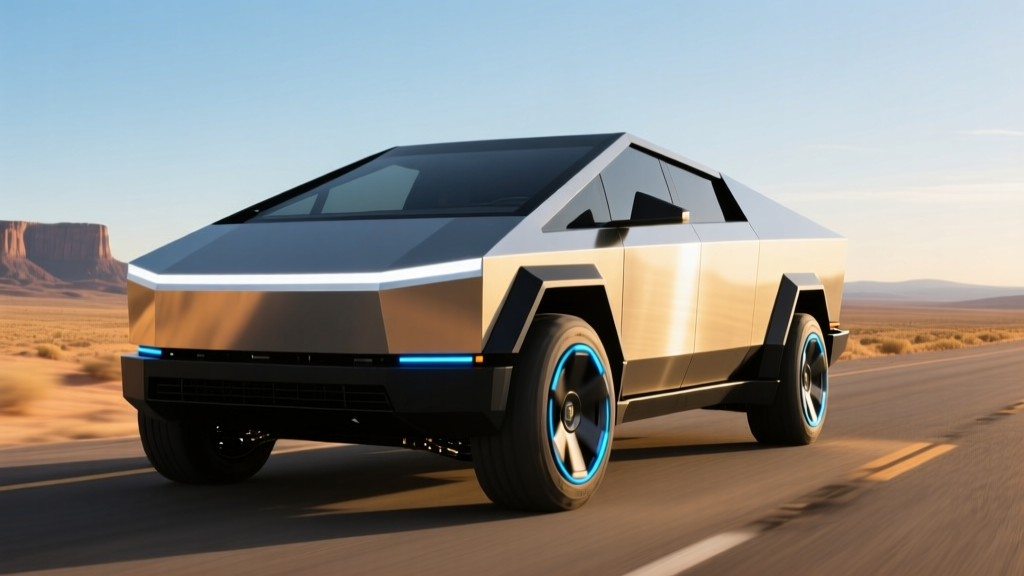
If you've been tracking Tesla's pickup truck roadmap, you've likely encountered the buzz around a 2nd gen Cybertruck. As of early 2026, Tesla has not officially unveiled a second-generation Cybertruck, nor has it listed one on its configurator or investor materials. What we do have are scattered statements from Tesla executives, supply-chain signals, and the ongoing evolution of the first-generation Cybertruck (introduced for the 2024 model year and updated through 2025 and into 2026).
This article separates confirmed facts from industry speculation. Where data is projected or rumored, we label it clearly as estimated or unconfirmed. If Tesla announces a true second-generation platform, we'll update this piece with verified specs from official channels.
| Specification | 2026 Cybertruck (Current) | 2nd Gen Cybertruck (Projected) |
|---|---|---|
| Status | On Sale | Not Announced / Rumored 2027–2028 |
| EPA Range (AWD) | 340 miles | Est. 370–420 miles |
| Battery Chemistry | NMC (4680 cells) | Likely improved 4680 NMC or dry-electrode variant |
| Battery Capacity (usable) | ~123 kWh | Est. 130–140 kWh |
| Max DC Fast Charge | 250 kW | Est. 300–350 kW |
| 10–80% DCFC Time | ~28 minutes | Est. 18–22 minutes |
| 0–60 mph (Cyberbeast) | 2.6 seconds | Est. sub-2.5 seconds |
| Base MSRP (AWD) | $79,990 | Est. $70,000–$80,000 |
| Federal Tax Credit (§30D) | Eligible up to $7,500 (see rules) | TBD — depends on sourcing at launch |
Projected Range and Battery: What a Next-Gen Platform Could Deliver
The current 2026 Cybertruck AWD carries an EPA-estimated 340 miles of range from its approximately 123 kWh (usable) NMC battery pack built around Tesla's 4680 structural cells. The single-motor RWD variant, reintroduced for 2025 at a lower price point, delivers roughly 250 miles EPA.
Real-World Range Reality Check (Current-Gen Baseline): On a 75°F highway cruise at 70 mph, expect approximately 280–300 miles from the AWD model — a 12–18% reduction from the EPA sticker. In freezing conditions (below 32°F), range can drop 25–35%, putting real-world winter highway range near 220–250 miles. The Cybertruck's angular stainless-steel exoskeleton creates a drag coefficient (~0.34 Cd) that penalizes highway efficiency more than sleeker EVs.
For a hypothetical 2nd gen Cybertruck, the most significant range gains would likely come from three areas:
- Dry-electrode 4680 cells: Tesla has been scaling dry-electrode cathode manufacturing at its Texas Gigafactory. This process improves energy density by an estimated 10–15%, allowing more kWh in the same physical pack volume.
- Aerodynamic refinements: Even modest reductions in drag coefficient (e.g., from 0.34 to 0.30) would yield meaningful highway range gains at speed.
- More efficient drive units: Next-gen permanent-magnet or induction motors with improved inverters could reduce energy consumption per mile.
Combined, these improvements could push a 2nd gen AWD variant toward 370–420 miles EPA — but these numbers remain speculative until Tesla publishes official specifications.
Charging Speed: Current Reality and Next-Gen Potential
Charging speed is the metric that matters most for road-trip viability. Here's where the current Cybertruck stands and where a 2nd gen could improve:
| Charging Level | 2026 Cybertruck | 2nd Gen (Estimated) |
|---|---|---|
| Level 1 (120V / 12A) | ~1.4 kW — ~3 mi/hr | Similar |
| Level 2 (240V / 48A) | 11.5 kW — ~28 mi/hr | ~15–19 kW — ~35–45 mi/hr |
| DC Fast Charge (Peak) | 250 kW | 300–350 kW (est.) |
| 10–80% DCFC Time | ~28 minutes | ~18–22 minutes (est.) |
| Connector | NACS (native Tesla) | NACS |
The current Cybertruck's 4680 battery pack charges at a peak of 250 kW on V3 Superchargers, but sustained charging rate matters more than peak. In real-world testing, the pack holds close to 200+ kW through roughly 50% State of Charge (SoC), then tapers progressively. A 10–80% session takes approximately 28 minutes at a V3 stall.
Tesla's V4 Supercharger architecture — already deploying at select locations — supports up to 350+ kW at the cabinet level. A 2nd gen Cybertruck with an improved 4680 pack could exploit this headroom, potentially cutting 10–80% time to under 22 minutes. That's the threshold where DC fast charging becomes genuinely competitive with a gas-station stop for most drivers.
Home charging note: The current Cybertruck's 11.5 kW onboard charger adds roughly 28 miles of range per hour on a 48A Level 2 circuit. For a 340-mile pack, a full 10–100% home charge takes approximately 11–12 hours. A 2nd gen with a larger battery and faster onboard charger could recover a full day's driving (40–50 miles) in under 90 minutes of Level 2 charging.
Performance, Powertrain, and Efficiency
The current Cybertruck lineup includes three configurations:
- RWD (Single Motor): ~315 hp, 0–60 in ~6.5 sec, 250 mi EPA, starting at $60,990
- AWD (Dual Motor): ~600 hp, 0–60 in ~4.1 sec, 340 mi EPA, starting at $79,990
- Cyberbeast (Tri-Motor): ~845 hp, 0–60 in 2.6 sec, 320 mi EPA, starting at $99,990
Efficiency for the AWD model sits at approximately 58 MPGe combined (per EPA data), translating to roughly 57 kWh per 100 miles. That's on the thirstier end of the EV spectrum — a consequence of the truck's 6,800+ lb curb weight and boxy aerodynamics. For comparison, the Rivian R1T Dual-Motor achieves roughly 70 MPGe combined, and the Ford F-150 Lightning Extended Range lands near 66 MPGe.
A 2nd gen Cybertruck would likely retain the tri-motor Cyberbeast halo variant but could see meaningful efficiency gains in the volume-selling AWD trim through weight reduction (Tesla has been working on thinner-gauge stainless steel stampings), improved motor efficiency, and the aerodynamic refinements mentioned earlier.
Pricing, Trims, and Federal Tax Credit Eligibility
Tesla has repeatedly adjusted Cybertruck pricing since its 2024 launch. As of early 2026, the lineup stands at:
| Trim | Base MSRP | §30D Credit Potential | Effective Price (if eligible) |
|---|---|---|---|
| RWD | $60,990 | Up to $7,500 | ~$53,490 |
| AWD | $79,990 | Up to $7,500 | ~$72,490 |
| Cyberbeast | $99,990 | Up to $7,500 | ~$92,490 |
Federal tax credit rules are not automatic. Under IRS §30D, eligibility for the full $7,500 credit requires meeting all of the following:
- MSRP cap: Trucks/vans/SUVs must have an MSRP at or below $80,000. This means the Cyberbeast ($99,990) does not qualify, while the RWD and AWD trims do.
- Buyer income limits: Modified adjusted gross income must not exceed $150,000 (single), $225,000 (head of household), or $300,000 (joint).
- Battery sourcing requirements: Increasing percentages of critical minerals and battery components must be sourced from the U.S. or free-trade-agreement countries. Tesla's U.S.-built 4680 cells generally satisfy current-year thresholds, but this should be verified at point of sale.
- Point-of-sale transfer: As of 2024+, buyers can transfer the credit to the dealer at purchase, reducing the purchase price directly rather than waiting for a tax refund.
For a 2nd gen Cybertruck, pricing is entirely speculative. Industry analysts project Tesla may target a lower entry price (~$55,000–$65,000) to compete with the Ford F-150 Lightning and Chevrolet Silverado EV, especially if battery costs continue declining. However, Tesla's pricing history is unpredictable — expect confirmation only when the configurator goes live.
Cargo, Interior, and Daily Usability
The current Cybertruck offers the following dimensions, which a 2nd gen would likely match or modestly improve:
- Bed length: 6 feet (with tailgate closed); extends to ~8 feet with tailgate down
- Cargo bed volume: ~67 cu ft (bed) + additional under-bed storage
- Front trunk (frunk): ~7 cu ft
- Seating: 5 passengers (3-across front bench, 2-across rear)
- Rear legroom: ~38.4 inches
- Towing capacity: Up to 11,000 lbs (AWD/Cyberbeast)
- Payload: ~2,500 lbs
The Cybertruck's 18.5-inch front touchscreen and 9.4-inch rear screen run Tesla's latest infotainment software, which includes navigation with real-time Supercharger routing, streaming apps, and a customizable instrument cluster. The steer-by-wire system (no mechanical connection between yoke and wheels) remains a polarizing feature — some drivers adapt quickly, while others find the variable ratio unpredictable at parking speeds.
Notable drawback: The Cybertruck's width (over 80 inches excluding mirrors) makes it a tight fit in standard parking spaces and older garage designs. Owners in urban environments should measure their parking situation carefully before committing.
Driver Assistance and Autonomous Capability
The Cybertruck ships with Tesla's Autopilot suite and offers Full Self-Driving (Supervised) as a $8,000 add-on or $99/month subscription. As of 2026, FSD Supervised remains a SAE Level 2 driver-assistance system — the driver must remain attentive, keep hands available, and be prepared to take over at any moment.
SAE Level 2 — Not Self-Driving: Tesla's Autopilot and FSD (Supervised) require continuous driver engagement. They can manage steering, acceleration, and braking on highways and some city streets, but they do not replace the driver. Only Level 4 services like Waymo's robotaxi operate without a human driver in defined geographic areas. Do not treat any current Tesla system as autonomous.
Tesla's vision-only approach (no LiDAR or radar on current Cybertrucks) continues to draw scrutiny from safety researchers. NHTSA has opened and closed several investigations into Autopilot behavior, and the agency continues to monitor crash data involving Tesla vehicles operating under driver-assist features. A 2nd gen platform could potentially incorporate additional sensor modalities, but Tesla has shown no indication of reversing its camera-only strategy.
Warranty and Long-Term Ownership
The current Cybertruck carries Tesla's standard EV warranty:
- Vehicle limited warranty: 4 years / 50,000 miles
- Battery and drive unit warranty: 8 years / 120,000 miles (minimum 70% capacity retention)
The 70% retention threshold is consistent with industry norms, though some competitors (notably Hyundai/Kia at 70% over 10 years/100,000 miles) offer longer coverage periods. Tesla's warranty does not cover battery degradation below 70% from normal use — only premature failure.
For a 2nd gen Cybertruck, warranty terms will depend on Tesla's confidence in the next iteration of 4680 cells. If dry-electrode manufacturing proves more consistent, Tesla might extend coverage to compete with Rivian's 8-year/175,000-mile battery warranty on the R1T.
Competition: How Would a 2nd Gen Cybertruck Stack Up?
By the time a 2nd gen Cybertruck might reach production (2027–2028 at the earliest), the electric truck landscape will be crowded:
- Ford F-150 Lightning (2nd gen expected ~2027): Ford's volume leader benefits from an existing truck-buyer loyal audience and dealer network. Current-gen offers up to 320 mi EPA, 775 lb-ft torque, and starts near $55,000.
- Rivian R1T (Gen 2 platform): Rivian's updated R1T features improved motors, a more efficient pack, and a quad-motor variant. Strong in build quality and adventure credibility.
- Chevrolet Silverado EV: GM's Ultium-based Silverado EV offers up to 400+ mi EPA (top trim) and aggressive fleet pricing.
- Ram 1500 REV: Stellantis' entry with up to 500 mi EPA (with optional range extender pack) and a more traditional truck aesthetic.
The Cybertruck's advantages remain its polarizing design (which drives visibility and brand cachet), Supercharger network access (though NACS adoption is opening this to competitors), and Tesla's software/OTA update cadence. Its disadvantages include limited service center capacity, polarizing ergonomics (yoke, steer-by-wire), and a price point that sits above the F-150 Lightning and Silverado EV base trims.
Pros (Projected 2nd Gen)
- Potentially 370–420 mi EPA range with improved 4680 cells
- Faster DC charging (300+ kW) if V4 Supercharger compatible
- Native NACS connector — broadest fast-charging network access
- Tri-motor Cyberbeast performance variant likely retained
- 11,000-lb towing capability with integrated trailer tech
- OTA software updates add features post-purchase
Cons (Projected 2nd Gen)
- Not yet announced — availability timeline uncertain
- Steer-by-wire and yoke remain polarizing for traditional truck buyers
- Stainless-steel body limits repair options (specialized shops only)
- High curb weight reduces efficiency vs. lighter EV trucks
- Tesla service center wait times remain a concern in many markets
- Base pricing likely above $60,000 even for entry trim
Who Should Wait for a 2nd Gen Cybertruck — and Who Should Buy Now?
Buy the current-gen Cybertruck now if: You need an electric truck today, want Supercharger network access, value the Cybertruck's design and performance, and are comfortable with the known range and charging profile. The AWD trim at $79,990 (potentially ~$72,490 after the federal credit) is a compelling package for tech-forward truck buyers who tow occasionally and road-trip regularly.
Wait for a 2nd gen if: Your purchase timeline extends to 2027–2028, you prioritize maximum range and fastest possible charging, you want a more traditional steering interface, or you're hoping for a sub-$60,000 entry price. Also wait if you're considering the Ford F-150 Lightning Gen 2 or Rivian R1T refresh, both of which may arrive in a similar timeframe.
Is the 2nd gen Cybertruck officially announced by Tesla?
No. As of early 2026, Tesla has not officially announced a second-generation Cybertruck. The current-generation model continues to receive incremental updates (new trims, software features, and manufacturing refinements). Any specs attributed to a "2nd gen" model are projections based on industry analysis and Tesla's technology roadmap.
What will the 2nd gen Cybertruck cost?
Pricing is unconfirmed. Industry projections suggest Tesla may target a starting MSRP of $55,000–$65,000 for a base RWD variant to compete with the Ford F-150 Lightning, with AWD trims in the $70,000–$80,000 range. Federal §30D tax credit eligibility (up to $7,500) will depend on MSRP caps, buyer income, and battery-sourcing requirements at the time of sale.
Will the 2nd gen Cybertruck charge faster than the current model?
Likely yes. The current Cybertruck peaks at 250 kW DC fast charging. Tesla's V4 Supercharger architecture supports 350+ kW, and next-generation 4680 cells with dry-electrode manufacturing are expected to accept higher charge rates. A 10–80% time of 18–22 minutes is a reasonable projection, down from ~28 minutes currently.
Does the current Cybertruck qualify for the $7,500 federal tax credit?
The RWD ($60,990) and AWD ($79,990) trims fall under the $80,000 MSRP cap for trucks and are potentially eligible for up to $7,500 under IRS §30D, provided the buyer meets income limits ($150K single / $300K joint) and the vehicle's battery satisfies critical-mineral and component-sourcing requirements. The Cyberbeast ($99,990) exceeds the MSRP cap and does not qualify. Always verify eligibility with a tax professional and the IRS clean vehicle credit page before purchasing.
How does the Cybertruck's efficiency compare to other electric trucks?
The current AWD Cybertruck achieves approximately 58 MPGe combined (57 kWh/100 mi), which is less efficient than the Rivian R1T Dual-Motor (~70 MPGe) and Ford F-150 Lightning Extended Range (~66 MPGe). The Cybertruck's weight (6,800+ lbs) and angular aerodynamics are the primary factors. A 2nd gen with improved aero and lighter construction could close this gap.
What's the real-world towing range for the Cybertruck?
When towing near its 11,000-lb maximum, expect range to drop by 40–55%. A current-gen AWD Cybertruck with 340 mi EPA range will deliver approximately 150–190 real-world miles while towing a heavy trailer in mixed conditions. Plan charging stops accordingly — towing is where EV trucks still lag diesel counterparts significantly.