The Real Cost of Leasing a Tesla in 2026
If you've been searching for how much to lease a Tesla per month, the answer depends on which model you choose, your down payment, and whether you can capture the $7,500 federal EV tax credit — which Tesla now passes through as a lease incentive. As of early 2026, Tesla's lease pricing has shifted aggressively to compete with a wave of new EVs from Hyundai, BMW, and Ford. Here's what you'll actually pay, what you'll actually drive, and whether leasing beats buying.
2026 Tesla Monthly Lease Estimates (36-Month, $4,500 Down)
| Model / Trim | Base MSRP | Est. Monthly Lease | Lease w/ $7,500 Credit Applied |
|---|---|---|---|
| Model 3 RWD | $38,990 | ~$449/mo | ~$299/mo |
| Model 3 Long Range AWD | $45,990 | ~$539/mo | ~$389/mo |
| Model 3 Performance | $52,990 | ~$619/mo | ~$469/mo |
| Model Y Long Range AWD | $46,990 | ~$549/mo | ~$399/mo |
| Model Y Performance | $53,990 | ~$639/mo | ~$489/mo |
Note: Lease payments vary by money factor, residual value, mileage allowance (typically 10,000 mi/yr), and regional incentives. Tesla applies the §30D credit directly to the lease as a capitalized-cost reduction, since the leasing company (the legal owner) claims the credit and passes savings to the lessee. Confirm current terms at Tesla.com.
2026 Tesla Model 3: Range, Battery, and Efficiency
The refreshed Model 3 (internally called "Highland" and now in its second full model year) remains Tesla's volume sedan. The RWD base model uses a lithium iron phosphate (LFP) battery, while the Long Range and Performance trims use nickel-manganese-cobalt (NMC) chemistry for higher energy density.
| Spec | Model 3 RWD | Model 3 Long Range AWD | Model 3 Performance |
|---|---|---|---|
| EPA Range | 272 mi | 341 mi | 315 mi |
| Battery (usable) | ~57.5 kWh (LFP) | ~75 kWh (NMC) | ~75 kWh (NMC) |
| Efficiency | 132 MPGe / 25 kWh/100mi | 134 MPGe / 25 kWh/100mi | 121 MPGe / 28 kWh/100mi |
| 0-60 mph | 5.8 sec | 4.2 sec | 2.9 sec |
| Horsepower | 271 hp | 346 hp | 510 hp |
| Drivetrain | RWD | Dual-Motor AWD | Dual-Motor AWD |
| Cargo (trunk + frunk) | 23.1 cu ft | 23.1 cu ft | 23.1 cu ft |
| Rear Legroom | 35.2 in | 35.2 in | 35.2 in |
Real-World Range: What to Actually Expect
EPA sticker: 272 mi (RWD) / 341 mi (Long Range)
Highway at 75 mph: Expect ~230-245 mi (RWD) and ~290-310 mi (Long Range). The Model 3's efficiency drops noticeably above 70 mph due to aerodynamic drag.
Cold weather (below 32°F): Range can fall 20-30%, bringing the RWD down to ~190-215 mi and the Long Range to ~240-270 mi. The Model 3's heat pump helps, but LFP batteries in the RWD model lose more capacity in extreme cold than NMC packs.
City / mixed driving: You'll closely match or even exceed EPA numbers thanks to regenerative braking. Source: fueleconomy.gov
Charging Speed: DC Fast, Level 2, and Home Setup
Charging speed is where the Model 3's architecture shows its maturity. The RWD model peaks at a more modest DC rate due to its smaller LFP pack, while the Long Range and Performance trims accept faster charging.
| Charging Level | Model 3 RWD (LFP) | Model 3 LR / Perf (NMC) |
|---|---|---|
| DC Fast Charge (peak) | 170 kW | 250 kW |
| 10-80% DCFC Time | ~28 min | ~25 min |
| Sustained DCFC (avg) | ~110 kW | ~155 kW |
| Level 2 Home (240V/48A) | 11.5 kW / ~44 mi/hr | 11.5 kW / ~44 mi/hr |
| Level 1 (120V outlet) | ~1.4 kW / ~5 mi/hr | ~1.4 kW / ~5 mi/hr |
| Connector | NACS (native) | NACS (native) |
Charging curve reality: The 250 kW peak on Long Range models holds only between roughly 10-30% State of Charge (SoC). Above 50%, the rate tapers significantly — by 80%, you're seeing ~50-60 kW. This is normal lithium-ion behavior, not a flaw. Plan road-trip stops to charge from 10-80% for the best time efficiency.
Home charging cost: At the US average of $0.16/kWh, a full charge of the Long Range pack costs roughly $12, or about $0.035/mile — versus ~$0.12/mile for a 30 MPG gas car at $3.50/gal. A Level 2 home charger installation (Tesla Wall Connector or equivalent) typically runs $800-$1,500 including electrician labor, assuming your panel has capacity for a 60A circuit.
2026 Tesla Model Y: The Family SUV Option
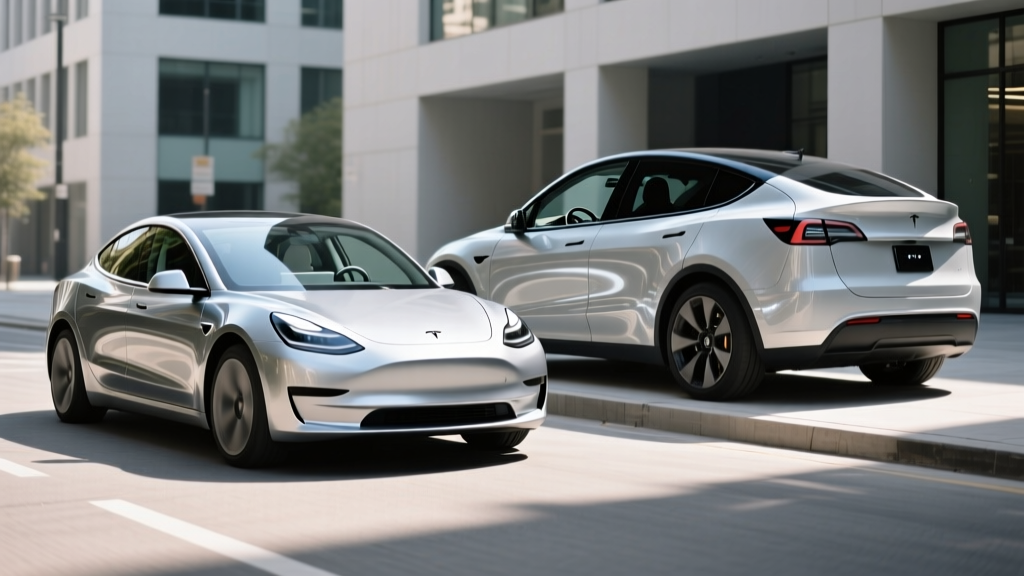
The Model Y remains America's best-selling EV, and its 2025 "Juniper" refresh carries into 2026 with a quieter cabin, revised suspension, and a slightly updated interior. It shares the same powertrain architecture as the Model 3 but in a taller, more practical crossover body.
| Spec | Model Y Long Range AWD | Model Y Performance |
|---|---|---|
| EPA Range | 320 mi | 285 mi |
| Battery (usable) | ~75 kWh (NMC) | ~75 kWh (NMC) |
| Efficiency | 122 MPGe / 28 kWh/100mi | 111 MPGe / 30 kWh/100mi |
| 0-60 mph | 4.8 sec | 3.5 sec |
| Horsepower | 384 hp | 456 hp |
| Drivetrain | Dual-Motor AWD | Dual-Motor AWD |
| Cargo (rear seats up) | 30.2 cu ft | 30.2 cu ft |
| Cargo (rear seats folded) | 72.1 cu ft | 72.1 cu ft |
| Rear Legroom | 37.0 in | 37.0 in |
| Towing Capacity | 3,500 lbs | 3,500 lbs |
The Model Y's 30.2 cu ft of cargo space behind the second row (72.1 cu ft folded) makes it a genuine family hauler — more practical than the Model 3 for road trips, strollers, and Costco runs. The 3,500-lb towing capacity covers light trailers and small boats, though towing will cut range by roughly 40-50%.
Tech, Driver Assistance, and the FSD Question
Every 2026 Tesla ships with a 15.4-inch center touchscreen running Tesla's proprietary infotainment OS — no Apple CarPlay or Android Auto, but native Spotify, Netflix, YouTube (while parked), and a capable navigation system with real-time Supercharger routing.
Autopilot (standard): Includes adaptive cruise control, lane-centering, automatic emergency braking, and blind-spot monitoring. This is a solid SAE Level 2 driver-assistance system, meaning you must keep your hands on the wheel and eyes on the road at all times.
Full Self-Driving (Supervised) — What It Actually Is
Tesla's optional FSD package ($8,000 one-time or $99/month) adds automated lane changes, traffic-light recognition, and city-street navigation. Despite the name, FSD is still SAE Level 2 — not autonomous. You are the driver, legally and practically. Tesla requires continuous supervision and will issue escalating warnings if your attention drifts. Only Level 4 services like Waymo operate without a human driver in geofenced areas. Do not confuse marketing terms with automation levels.
Standout tech: Over-the-air updates that add features post-purchase, Sentry Mode (360° parked surveillance), Dog Mode (climate control for pets), and the Tesla Supercharger network — now open to other brands via NACS adapters, but still the most reliable DC fast-charging network in the US.
Notable drawbacks: No physical buttons or stalks (turn signals are on the steering wheel in the refreshed Model 3), no Apple CarPlay, minimal dealer-service infrastructure compared to legacy brands, and panel-gap quality that still varies unit to unit.
Federal Tax Credit: Does Leasing a Tesla Qualify?
This is where leasing a Tesla gets interesting — and where it diverges from buying.
§30D Federal EV Tax Credit Rules (2026)
- Vehicle MSRP cap: $55,000 for sedans (Model 3); $80,000 for SUVs/trucks (Model Y)
- Buyer income cap (AGI): $150,000 single / $225,000 head of household / $300,000 married filing jointly
- Battery sourcing: Critical minerals and battery components must meet escalating domestic-content thresholds per IRS rules
- Point-of-sale transfer: Buyers can apply the $7,500 credit as an instant discount at purchase
- Lease loophole: Under IRC §30D, the leasing company (legal owner) claims the credit — and Tesla passes it through as a cap-cost reduction. No buyer income or MSRP caps apply on the lease side, because technically it's a commercial credit (§45W) claimed by the lessor.
Source: IRS.gov — Clean Vehicle Credits. Rules are subject to change. Consult a tax professional for your specific situation.
Bottom line: If you don't qualify for the $7,500 credit when buying (because your income is too high, or battery-sourcing rules disqualify a specific trim), leasing through Tesla often still nets you the full $7,500 reduction. This makes leasing unexpectedly attractive for high-income buyers who would otherwise be excluded.
Warranty, Depreciation, and Long-Term Ownership
| Warranty Component | Coverage |
|---|---|
| Basic Vehicle | 4 years / 50,000 miles |
| Battery & Drive Unit | 8 years / 100,000 mi (RWD) or 120,000 mi (LR/Perf) |
| Battery Retention Threshold | 70% capacity during warranty period |
Tesla's battery warranty guarantees at least 70% capacity retention over 8 years. Real-world degradation data from fleet analyses suggests Model 3/Y packs typically retain 88-92% capacity after 100,000 miles, with the steepest drop in the first 10,000-20,000 miles before leveling off.
Lease-specific note: A 36-month lease puts you well within the warranty period. You won't face battery replacement risk. However, you also build no equity — at lease end, you return the car (or buy it at the predetermined residual). Tesla's lease-end residual values have been volatile; some lessees in 2023-2024 faced buyout prices well above market value. Check the residual percentage before signing.
Model 3 vs. Model Y vs. Key Competitors: Is It Worth Leasing?
Choose Model 3 If:
- You want the lowest monthly payment (from ~$299/mo with credit)
- Efficiency is your priority (132-134 MPGe)
- You commute solo or with one passenger
- You prefer sedan driving dynamics
Choose Model Y If:
- You need cargo space for a family (72.1 cu ft)
- You tow occasionally (3,500 lbs)
- You want AWD standard
- You take frequent road trips with gear
| Spec | Tesla Model 3 LR | Hyundai Ioniq 6 SEL | BMW i4 eDrive40 |
|---|---|---|---|
| EPA Range | 341 mi | 361 mi | 307 mi |
| Base MSRP | $45,990 | $42,600 | $57,975 |
| DC Fast Charge (peak) | 250 kW | 235 kW | 205 kW |
| 0-60 mph | 4.2 sec | 5.1 sec | 5.5 sec |
| Apple CarPlay | No | Yes | Yes |
| Charging Network | Supercharger (native) | NACS adapter needed | NACS adapter needed |
The Ioniq 6 edges out the Model 3 on EPA range and offers CarPlay, but its charging network access is less seamless. The BMW i4 delivers luxury refinement but at a steep premium. The Model 3's combination of Supercharger access, performance, and price — especially after the lease credit — remains hard to beat.
Pros
- Supercharger network — still the gold standard for road-trip reliability
- Class-leading efficiency and real-world range
- Lease structures that bypass §30D income caps
- OTA updates add features over time
- Strong performance even in base RWD trim
Cons
- No Apple CarPlay or Android Auto
- Turn-signal buttons on steering wheel take adaptation
- Service center availability limited in rural areas
- Insurance costs 15-25% higher than comparable gas sedans
- Lease-end buyout residual may exceed market value
Frequently Asked Questions
What is the cheapest Tesla to lease per month in 2026?
The Model 3 RWD, starting around $299/month on a 36-month lease with $4,500 down when the $7,500 federal credit is applied as a cap-cost reduction. Without the credit, expect roughly $449/month.
Does leasing a Tesla qualify for the $7,500 tax credit?
Technically, the leasing company claims the credit under commercial vehicle rules (§45W) and passes it to you as a lease incentive. This means you benefit even if your income exceeds the §30D buyer caps. Confirm with Tesla that the credit is reflected in your lease terms before signing.
How much does it cost to charge a Tesla at home per month?
At the US average electricity rate of $0.16/kWh and 1,000 miles/month of driving, a Model 3 Long Range owner spends roughly $40-$45/month on home charging. Compare that to ~$115-$120/month for a 30 MPG gas car at $3.50/gallon.
Is it better to lease or buy a Tesla in 2026?
Leasing makes sense if you want lower monthly payments, plan to upgrade in 3 years, or can't qualify for the tax credit when buying due to income limits. Buying makes more sense if you drive high annual mileage (lease penalties apply above 10,000-12,000 mi/yr), want to build equity, or plan to keep the car 5+ years.
What happens to the Tesla battery after a 3-year lease?
You return the car. Battery degradation over 36 months and ~30,000-36,000 miles is typically minimal (3-6%), well within the 8-year/100,000+ mile warranty. You bear no battery replacement risk on a standard lease.
Can I negotiate a Tesla lease?
Tesla uses fixed pricing — there's no negotiation on MSRP, money factor, or residual. What you can adjust is your down payment, mileage allowance (10K/12K/15K mi/yr), and whether to add FSD. Third-party leasing through a credit union or bank may occasionally offer a better money factor.