Quick Verdict: The 2027 Mach-E in a Crowded EV Field
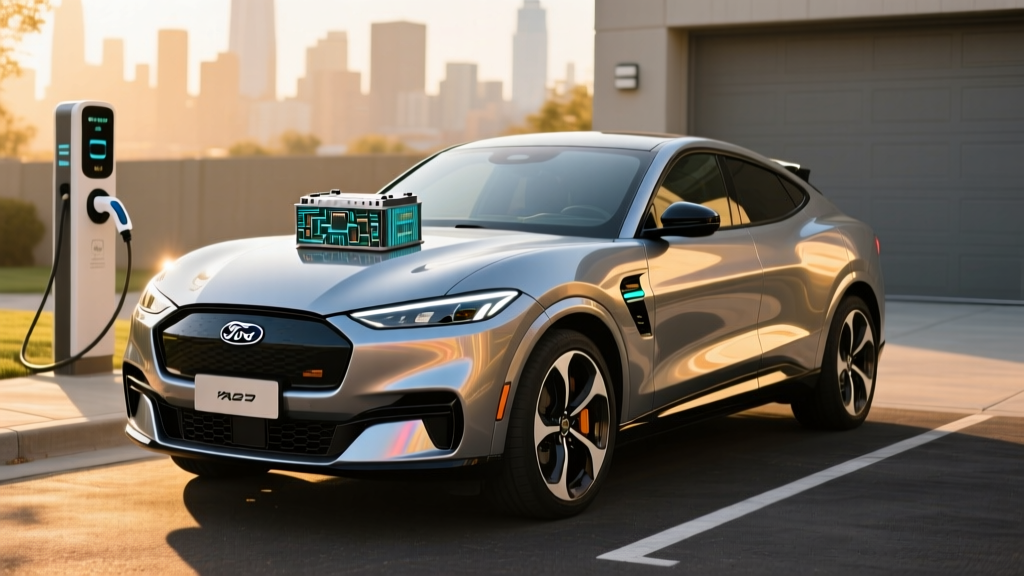
The 2027 Ford Mustang Mach-E enters a midsize electric SUV market that has never been more competitive. With the Hyundai Ioniq 5, Tesla Model Y, and Chevrolet Equinox EV all fighting for the same buyer, Ford has kept the Mach-E relevant by refining what already worked: a comfortable ride, practical cargo space, and a usable fast-charging architecture — while addressing prior criticisms around charging speed and infotainment responsiveness.
The 2027 model year brings incremental but meaningful updates: a slightly revised battery pack on Extended Range trims, a reworked thermal management system that improves sustained DC fast-charging performance, and Ford's latest Sync 5 infotainment software. The Mach-E is not the longest-range or fastest-charging SUV in its class, but it remains one of the most well-rounded packages — especially when federal tax credits apply.
Range, Battery, and Efficiency
The 2027 Mach-E is offered with two battery options. The Standard Range pack is a 70 kWh usable lithium-ion unit (NMC chemistry), while the Extended Range uses a larger 91 kWh usable pack, also NMC. Ford has not shifted to LFP (lithium iron phosphate) for the Mach-E, opting to reserve that chemistry for lower-cost, lower-range applications in its broader lineup.
| Trim | Battery (kWh usable) | Drivetrain | EPA Range | MPGe (combined) | kWh/100 mi |
|---|---|---|---|---|---|
| Select SR RWD | 70 | RWD | 250 mi | 101 MPGe | 33 |
| Premium ER RWD | 91 | RWD | 320 mi | 103 MPGe | 32 |
| Premium ER AWD | 91 | Dual-motor AWD | 295 mi | 96 MPGe | 35 |
| GT ER AWD | 91 | Dual-motor AWD | 280 mi | 91 MPGe | 37 |
Real-World Range: What to Actually Expect
The EPA estimates are useful baselines, but real-world results vary. In mixed driving at moderate temperatures (60–75°F), the Extended Range RWD consistently delivers 290–305 miles on a full charge. Highway-heavy driving at 75+ mph drops that to roughly 255–270 miles. In cold weather (below 30°F), expect a 15–25% reduction — meaning the ER AWD may return as little as 220–240 miles in winter conditions. The Mach-E's heat pump, now standard on all trims, helps mitigate cabin-heating energy draw but does not eliminate cold-weather range loss. Source: fueleconomy.gov
Efficiency-wise, the Mach-E ER RWD at 32 kWh/100 miles is competitive with the Ioniq 5 (30 kWh/100 mi) and slightly behind the Model Y Long Range (28 kWh/100 mi). It is a meaningful difference on paper, but in practice, the cost-per-mile gap is measured in fractions of a cent at typical residential electricity rates.
Charging Speed: DC Fast Charging and Home Level 2
Charging speed remains one of the most important ownership factors, and the 2027 Mach-E's revised thermal management pays dividends here. The Extended Range models peak at 150 kW on a DC fast charger — unchanged from prior years in peak rate, but the sustained charge curve is noticeably improved. Where earlier Mach-E models tapered sharply above 60% state of charge (SoC), the 2027 holds closer to peak rate longer, resulting in a 10–80% charge in approximately 36 minutes. That is an improvement over the 2025 model's ~40-minute 10–80% time, though it still trails the Hyundai Ioniq 5's 18-minute 10–80% on 800V architecture.
| Charging Level | Max Power | Speed / Time | Connector |
|---|---|---|---|
| Level 1 (120V household) | ~1.4 kW | ~3–4 miles per hour | J1772 / NACS |
| Level 2 (240V home) | 10.5 kW | ~27 miles per hour / ~10 hr (0–100%, ER) | J1772 / NACS |
| DC Fast Charge | 150 kW peak | 10–80% in ~36 min (ER) | CCS1 / NACS (adapter or native) |
For home charging, the onboard charger accepts up to 10.5 kW on Level 2, which means a full overnight replenishment from 10% on the Extended Range pack takes roughly 9–10 hours on a 48-amp circuit. Most owners will plug in nightly and rarely deplete below 30%, making a 4–5 hour top-up the norm. Ford includes a mobile charge cord with every Mach-E; a dedicated Level 2 home station (such as the Ford Charge Station Pro or a third-party unit like the Emporia Vue or ChargePoint Home Flex) is recommended for daily use. Installation on a 240V/60A circuit typically costs $800–$2,000 depending on panel proximity and local permitting.
The 2027 Mach-E ships with a NACS (Tesla-style) charge port on all trims, giving native access to Tesla Supercharger stalls — a significant advantage over CCS-only competitors that still require adapters. Ford's agreement with Tesla provides access to over 20,000 Supercharger V3 stalls across the U.S., though peak charge rate on V3 stalls is limited to the Mach-E's 150 kW ceiling regardless of the stall's higher capability.
Performance and Driving Dynamics
The Mach-E has always prioritized comfort over sportiness despite its Mustang badge, and the 2027 continues that trend. The GT trim remains the performance outlier.
| Trim | Horsepower | Torque (lb-ft) | 0–60 mph | Drivetrain |
|---|---|---|---|---|
| Select SR RWD | 266 hp | 317 | 6.1 sec | RWD |
| Premium ER RWD | 290 hp | 317 | 5.5 sec | RWD |
| Premium ER AWD | 346 hp | 428 | 4.8 sec | Dual-motor AWD |
| GT ER AWD | 480 hp | 634 | 3.5 sec | Dual-motor AWD |
The GT's 3.5-second 0–60 time places it firmly in performance territory, rivaling the Tesla Model Y Performance. However, the GT sacrifices roughly 40 miles of range compared to the Premium ER AWD and commands a significant price premium. For most buyers, the Premium ER AWD offers the best balance — confident passing power, dual-motor traction in snow, and nearly 300 miles of range.
Ride quality is a Mach-E strength. The suspension tuning absorbs road imperfections well, and cabin noise levels are low at highway speeds. The steering is precise but light — this is a cruiser, not a corner carver. Regenerative braking offers two modes: a mild setting that mimics conventional coasting and a stronger one-pedal mode that brings the car to a complete stop. The transition between regen and friction braking is smooth, a common complaint in earlier model years that Ford has addressed.
Interior, Cargo, and Technology
The 2027 Mach-E's cabin uses a mix of soft-touch materials and harder plastics. It is not as premium-feeling as a Genesis Electrified GV70, but it is well-assembled and functional. The 15.5-inch portrait touchscreen dominates the dash and runs Ford's Sync 5 software — an improvement over Sync 4A with faster response times, a cleaner menu hierarchy, and wireless Apple CarPlay and Android Auto.
| Measurement | Specification |
|---|---|
| Front legroom | 43.3 in |
| Rear legroom | 38.9 in |
| Cargo (behind rear seats) | 29.7 cu ft |
| Cargo (rear seats folded) | 59.7 cu ft |
| Front trunk (frunk) | 4.7 cu ft (drainable, with washable liner) |
The drainable frunk is a standout feature — useful for wet gear, groceries, or tailgating. Rear seat space accommodates adults comfortably on longer trips, though the Model Y offers slightly more rear headroom. Cargo volume is competitive but trails the Ioniq 5's 27.2 cu ft (seats up) only slightly; where the Mach-E falls short is in under-floor storage, which is shallow compared to Hyundai's deep well.
Standard driver-assistance features include Ford Co-Pilot360 2.0: automatic emergency braking, blind-spot monitoring, lane-keeping assist, rear cross-traffic alert, and adaptive cruise control with stop-and-go. The available BlueCruise hands-free highway driving system operates on over 130,000 miles of pre-mapped divided highways. BlueCruise is an SAE Level 2 system — the driver must remain attentive, and an infrared camera monitors eye position. It is competent for long highway stretches but does not handle construction zones, unmapped roads, or complex merges without driver takeover.
BlueCruise Is Not Self-Driving
Ford BlueCruise is an SAE Level 2 driver-assistance system. Despite the "hands-free" branding, you must keep your eyes on the road at all times. The system will issue escalating warnings and bring the vehicle to a stop if it detects inattention. It does not navigate surface streets, handle traffic lights, or operate outside pre-mapped highway zones. Do not confuse Level 2 assist with Level 4 autonomous driving (e.g., Waymo robotaxis, which operate without a driver in geofenced areas).
Pricing, Trims, and Federal Tax Credit Eligibility
The 2027 Mach-E is offered in four primary configurations. Pricing below reflects base MSRP before destination charges ($1,395).
| Trim | Base MSRP | As-Tested (typical) | Est. §30D Credit | Effective Price (with credit) |
|---|---|---|---|---|
| Select SR RWD | $42,995 | $44,390 | Up to $7,500 | ~$35,495 |
| Premium ER RWD | $48,995 | $51,200 | Up to $7,500 | ~$41,495 |
| Premium ER AWD | $51,995 | $54,800 | Up to $7,500 | ~$44,495 |
| GT ER AWD | $59,995 | $63,500 | Up to $7,500 | ~$52,495 |
All Mach-E trims fall under the IRS §30D MSRP cap of $80,000 for SUVs, making them potentially eligible for the full $7,500 federal tax credit. However, eligibility depends on multiple factors:
§30D Federal EV Tax Credit Requirements (2026 Rules)
- Buyer income caps: Modified AGI must not exceed $300,000 (married filing jointly), $225,000 (head of household), or $150,000 (single).
- MSRP cap: Vehicle base MSRP must be ≤ $80,000 for SUVs (all Mach-E trims qualify).
- Battery sourcing: At least 50% of battery components must be manufactured or assembled in North America, and a percentage of critical minerals must be sourced from the U.S. or FTA partners. Ford's battery supply chain for the Mach-E has progressively met these thresholds, but the exact credit amount (full $7,500 vs. partial $3,750) depends on the build date and battery lot. Check the fueleconomy.gov tax credit lookup for the specific VIN.
- Point-of-sale transfer: Buyers can elect to transfer the credit to the dealer at purchase, reducing the purchase price directly rather than waiting for a tax refund. This is available regardless of tax liability.
- New vs. used: The §30D credit applies to new vehicles. A separate §25E credit of up to $4,000 applies to used EVs under $25,000, with lower income caps.
Source: IRS.gov — Clean Vehicle Credits
Ownership Costs, Warranty, and Long-Term Value
Ford backs the 2027 Mach-E with a 3-year/36,000-mile bumper-to-bumper warranty and an 8-year/100,000-mile battery and powertrain warranty. The battery warranty guarantees that capacity will not fall below 70% of original during the coverage period. This is industry-standard, matching Hyundai's 8-year/100,000-mile battery warranty but trailing Kia's 10-year/100,000-mile coverage.
| Category | Estimated Cost |
|---|---|
| Purchase price (after credit) | ~$44,495 |
| Electricity (15,000 mi/yr, $0.14/kWh avg) | ~$3,675 |
| Insurance (avg) | ~$11,500 |
| Maintenance (tires, cabin filter, wipers) | ~$1,800 |
| Estimated depreciation | ~$18,000 |
| Total 5-year (est.) | ~$79,470 |
Insurance remains a pain point for the Mach-E — premiums average 10–15% higher than comparable gas-powered SUVs, driven by higher repair costs and parts pricing. Shopping multiple carriers (especially those with EV-specific programs) can reduce this gap. Maintenance costs are low: no oil changes, no spark plugs, and brake pad life is extended significantly by regenerative braking. The primary recurring costs are tires (EVs wear tires faster due to instant torque and higher weight) and cabin air filters.
How the 2027 Mach-E Compares
Best Range → Tesla Model Y Long Range
EPA 330+ miles and superior efficiency (28 kWh/100 mi) give the Model Y the edge for road-trippers who want maximum distance between stops.
Fastest Charging → Hyundai Ioniq 5
The Ioniq 5's 800V architecture delivers 10–80% in ~18 minutes on a 350 kW charger. The Mach-E's 36-minute charge time is nearly double.
Best Value (After Credit) → Mach-E Select SR RWD
At roughly $35,500 effective price, the base Mach-E undercuts most AWD competitors and offers solid range, good cargo space, and Supercharger access.
Best Ride Comfort → Mach-E Premium ER AWD
Ford's suspension tuning and cabin insulation give the Mach-E a refinement edge over the firmer-riding Ioniq 5 and the minimalist Model Y.
Pros and Cons
Pros
- Native NACS port — direct Supercharger access without adapter
- Comfortable, quiet ride quality for daily commuting and road trips
- Drainable frunk adds practical utility
- Competitive pricing after §30D credit (base under $36K effective)
- BlueCruise is one of the better Level 2 highway assist systems
- Strong real-world range consistency (thermal management improvements)
Cons
- DC fast charging (150 kW peak, ~36 min 10–80%) trails 800V rivals
- Insurance premiums run higher than segment average
- Interior materials feel a step below Hyundai/Kia in this price range
- GT trim's range sacrifice (280 mi) limits road-trip practicality
- Sync 5 is improved but still occasionally lags behind CarPlay/Android Auto UX
- Rear visibility is compromised by thick C-pillars (camera helps)
Who Should Buy the 2027 Mach-E?
The Mach-E Is Right for You If:
- Daily commuter: The ER AWD's 295-mile range handles a 60-mile round trip with days between charges, and the comfortable ride reduces fatigue.
- Family with kids: Rear seat space fits two car seats with room for a third passenger; the frunk stores stroller accessories or wet sports gear.
- Supercharger-reliant road tripper: Native NACS means no adapter fumbling at Tesla stalls — a real convenience advantage on long trips.
- Cold-climate buyer: Standard heat pump and AWD traction make the Mach-E a viable year-round vehicle in northern states.
Look Elsewhere If:
- You need the fastest charging: The Ioniq 5 or Ioniq 6 on 800V cuts charge stops nearly in half.
- Maximum range is the priority: The Model Y Long Range offers ~40 more EPA miles and better efficiency.
- Budget is tight: The Chevrolet Equinox EV starts lower and may offer similar effective pricing after credits.
Frequently Asked Questions
What is the real-world range of the 2027 Mach-E?
The Extended Range RWD delivers approximately 290–305 miles in mixed driving at moderate temperatures. Highway driving at 75+ mph reduces this to 255–270 miles. In cold weather below 30°F, expect 220–240 miles from the ER AWD. These figures are based on observed consumption patterns and align with fueleconomy.gov data.
How fast does the 2027 Mach-E charge at home and on the road?
At home on a Level 2 (240V) charger, the Mach-E adds roughly 27 miles per hour at its 10.5 kW onboard charger rate. A full charge from 10% on the Extended Range pack takes about 9–10 hours. On DC fast chargers, the peak rate is 150 kW, and a 10–80% session takes approximately 36 minutes thanks to improved charge-curve sustain.
How much does the 2027 Mach-E cost after tax credits?
With the full $7,500 §30D credit, the base Select SR RWD drops to approximately $35,495. The popular Premium ER AWD lands around $44,495. Actual credit eligibility depends on buyer income, battery component sourcing, and MSRP — verify with the IRS guidelines and your dealer.
Does the 2027 Mach-E qualify for the federal EV tax credit?
All trims fall under the $80,000 SUV MSRP cap. Whether you receive the full $7,500 or a partial $3,750 depends on battery-sourcing compliance for your specific build. Buyer income must not exceed $300K (joint), $225K (head of household), or $150K (single). The credit can be transferred to the dealer at point of sale for an immediate price reduction.
Is the 2027 Mach-E worth buying vs. the Tesla Model Y or Hyundai Ioniq 5?
It depends on priorities. If maximum range and Supercharger ecosystem integration matter most, the Model Y wins. If fast charging is the top concern, the Ioniq 5's 18-minute 10–80% is unmatched. The Mach-E wins on ride comfort, physical controls, and a more conventional SUV feel. All three are strong choices — the right answer depends on which trade-offs you accept.
What is the battery warranty on the 2027 Mach-E?
Ford provides an 8-year/100,000-mile battery and powertrain warranty, guaranteeing that the high-voltage battery will retain at least 70% of its original capacity during the coverage period. This is standard for the segment.
Can the Mach-E tow?
Yes. When equipped with the available tow package, the Mach-E is rated for up to 2,300 pounds (AWD models). This is sufficient for a small utility trailer or a pair of dirt bikes but not for a camper or boat. Towing reduces range by roughly 30–40%.