The Short Answer on Ford's Electric Crate Motor
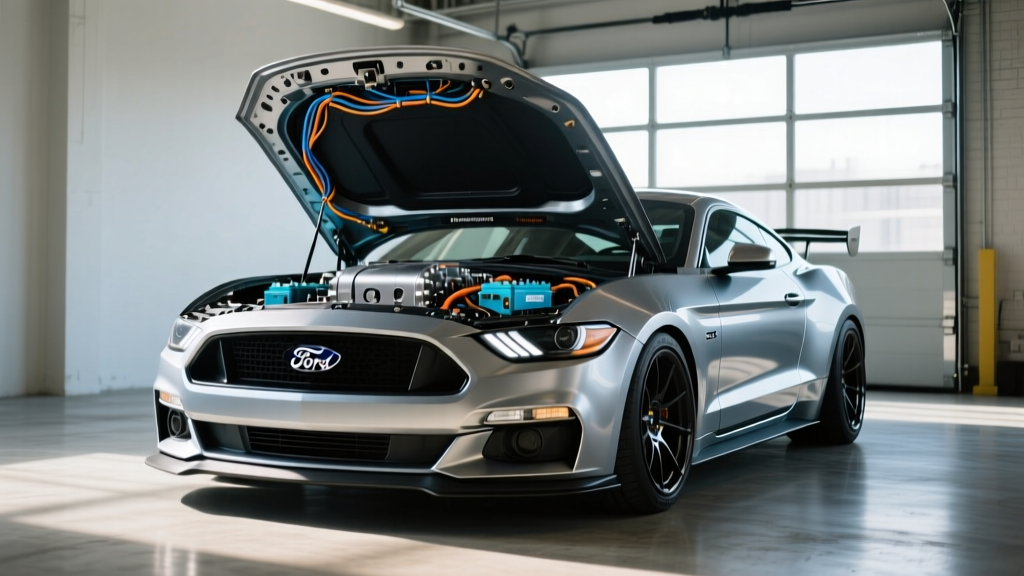
Ford Performance's Eluminator electric crate motor (part number M-9000-MACHE) is a permanent-magnet synchronous motor pulled directly from the Mustang Mach-E GT platform. It produces 281 horsepower and 317 lb-ft of torque and retails for $4,495 through Ford Performance authorized dealers. However, Ford does not sell a complete turnkey conversion kit — you'll need to separately source a high-voltage battery pack, inverter, charger, thermal management system, and custom fabrication. A realistic full EV swap using the Eluminator lands between $18,000 and $35,000 in parts and labor depending on the donor vehicle and battery capacity chosen.
Eluminator Crate Motor Specs: What You're Actually Buying
The Eluminator is not a standalone engine in the traditional sense. It's an electric traction motor designed for integration into custom builds, restomods, and one-off EV conversions. Here's the complete spec breakdown:
| Specification | Value |
|---|---|
| Part Number | M-9000-MACHE |
| Motor Type | Permanent-magnet synchronous (PMSM) |
| Peak Power | 210 kW (281 hp) |
| Peak Torque | 317 lb-ft (430 Nm) |
| Operating Voltage | ~370V nominal (compatible with 350–400V packs) |
| Weight | ~205 lbs (motor only) |
| Price (MSRP) | $4,495 |
| Warranty | Ford Performance limited parts warranty (not emissions/powertrain) |
| Availability | In stock through authorized Ford Performance dealers (2026) |
Ford debuted the Eluminator at the 2021 SEMA Show inside a 1978 F-100 pickup (the "F-100 Eluminator" concept), which used two Eluminator motors for a combined 563 hp. That concept ran on a Mach-E GT battery pack and demonstrated the motor's potential — but it was a factory-built show car, not a bolt-in kit you can replicate at home without significant engineering.
The Real Cost of an EV Conversion Using the Eluminator
The $4,495 sticker price is just the starting line. An electric crate motor needs an entire high-voltage ecosystem to function. Here's what a realistic budget looks like for a single-motor Eluminator swap into a lightweight classic car or truck:
| Component | Estimated Cost | Notes |
|---|---|---|
| Eluminator Motor (M-9000-MACHE) | $4,495 | Motor only, no inverter included |
| High-Voltage Battery Pack (30–60 kWh) | $5,000–$14,000 | Salvaged Mach-E, Tesla module, or new LFP pack |
| Inverter / Motor Controller | $2,500–$5,000 | Must match motor voltage and current specs |
| Onboard Charger (Level 2, 7–11 kW) | $800–$2,000 | Enables home AC charging |
| DC-DC Converter (HV to 12V) | $300–$600 | Powers lights, gauges, accessories |
| Thermal Management (coolant pump, radiator) | $500–$1,500 | Motor and inverter cooling required |
| High-Voltage Wiring & Safety Components | $800–$1,500 | Orange HV cable, contactors, fuses, MSD |
| Custom Fabrication (motor mounts, adapter plate) | $2,000–$5,000 | Varies wildly by donor vehicle |
| Labor (if outsourced to EV swap shop) | $3,000–$8,000 | 100–200+ hours depending on complexity |
| Total Estimated Range | $18,000–$35,000+ | Excludes body/paint, suspension upgrades |
For context, a complete new 2026 Mustang Mach-E Select starts around $42,495 (before any federal incentives) and comes with a full warranty, EPA-certified range of 250 miles, DC fast charging up to 150 kW, and modern ADAS. The Eluminator route only makes financial sense if you're building a custom vehicle where the value is in the build itself — not as a cost-saving alternative to buying a production EV.
EV Swap vs. Buying a Production EV: Data Comparison
If your goal is simply to drive electric, a crate motor conversion rarely competes with a factory EV on cost, convenience, or reliability. Here's how they stack up:
| Factor | Eluminator EV Swap | 2026 Mach-E Select (Production EV) |
|---|---|---|
| Total Cost | $18,000–$35,000 (conversion only) + donor car | ~$42,495 MSRP (before incentives) |
| EPA-Certified Range | None (not EPA certified) | 250 miles (EPA est.) |
| Real-World Range | 80–180 miles (depends on pack size, vehicle weight) | ~200–230 miles highway; ~170 in cold weather |
| DC Fast Charging | Unlikely (most swaps lack DC-FC capability) | 150 kW peak, 10–80% in ~35 min |
| Level 2 Home Charging | Possible with separate onboard charger (3–7 kW) | 10.5 kW onboard, ~30 miles/hr added |
| Warranty | Motor only; no system-level warranty | 3 yr/36,000 mi basic; 8 yr/100,000 mi battery |
| Federal Tax Credit (§30D) | Not eligible (not a new certified vehicle) | Up to $7,500 if buyer meets IRS income, MSRP, and sourcing requirements |
| Safety Ratings | None | NHTSA 5-star; IIHS Top Safety Pick |
| Insurance | Specialty/agreed-value (often expensive) | Standard EV insurance ($1,400–$2,200/yr avg.) |
Who Should Actually Consider the Eluminator?
The Ford electric crate motor fills a niche, and it's important to know whether you're in that niche before writing a check:
Decision Framework
Choose the Eluminator swap if:
- You're building a restomod, show car, or track car and want electric torque in a classic chassis (e.g., '65 Mustang, '78 F-100, early Bronco)
- You have fabrication skills or access to a shop experienced with high-voltage EV systems
- You understand this is a hobby/build project, not a daily-driver cost optimization
- You want to support the motor with a custom battery pack sized to your vehicle's weight and use case
- You don't need DC fast charging or EPA-certified range for road trips
Buy a production EV instead if:
- You want reliable daily transportation with a warranty and safety ratings
- You need 200+ miles of real-world range and access to public DC fast charging
- You want to take advantage of the §30D federal tax credit (up to $7,500 at point of sale, subject to income caps: $150K single / $300K joint, MSRP caps: $55K cars / $80K trucks/SUVs, and battery sourcing rules)
- You don't have the time, tools, or budget for a multi-month custom build
- You need financing — most banks won't lend on a custom EV conversion
Common Misconceptions About Electric Crate Motors
| Myth | Fact |
|---|---|
| "The Eluminator is a complete plug-and-play EV kit." | It's a motor only. You must separately source an inverter, battery pack, charger, thermal management, HV wiring, and control electronics. Ford does not sell a complete kit. |
| "An EV swap saves money compared to buying an EV." | A quality Eluminator conversion runs $18K–$35K+ on top of the donor car cost. A new Mach-E Select at ~$42,495 (potentially ~$34,995 after tax credit) includes warranty, range certification, fast charging, and safety systems. |
| "I'll get 250 miles of range like the Mach-E." | Only if you install a comparable ~70+ kWh battery pack in a vehicle of similar weight and aerodynamics. Most swaps use smaller packs (30–50 kWh) and heavier/less-aero donor vehicles, yielding 80–150 real-world miles. |
| "I can fast-charge it on a road trip." | Most conversions lack DC fast-charge hardware due to cost and complexity. Expect Level 2 (AC) charging only at 3–7 kW — meaning a full charge takes 6–15 hours depending on pack size. |
| "It qualifies for the $7,500 EV tax credit." | Conversions do not qualify for the IRS §30D new clean vehicle credit. The credit applies only to new, OEM-certified vehicles meeting MSRP, income, and battery-sourcing requirements. |
Battery Chemistry and Pack Selection for Your Swap
If you move forward with an Eluminator build, your battery choice is the single biggest decision affecting range, cost, weight, and longevity:
| Chemistry | Energy Density | Cycle Life | Cost per kWh | Best For |
|---|---|---|---|---|
| NMC (Nickel Manganese Cobalt) | High (~200–260 Wh/kg at cell level) | 1,000–2,000 cycles to 80% SoH | $140–$180/kWh | Maximizing range in a weight-constrained build |
| LFP (Lithium Iron Phosphate) | Lower (~140–180 Wh/kg) | 3,000–5,000 cycles to 80% SoH | $100–$140/kWh | Durability, daily cycling, tolerance to 100% SoC storage |
| Salvaged OEM Pack (Mach-E, Tesla modules) | Varies | Unknown remaining life — test before install | $80–$130/kWh (used market) | Budget builds with acceptable range trade-offs |
kW vs. kWh reminder: The Eluminator's 210 kW rating refers to power (how fast energy is delivered to the wheels). Your battery's kWh rating refers to energy capacity (how far you can go). A 40 kWh pack with a 210 kW motor will drain in roughly 11 minutes at full power — but in real driving at ~0.35 kWh/mile in a 3,500-lb vehicle, that same pack yields approximately 114 miles of range.
Real-World Ownership Considerations
Before committing to a crate motor EV build, honestly assess your situation:
Home charging access: Most conversions can accept Level 2 AC charging (240V) at 3–7 kW if you install a compatible onboard charger. You'll need a dedicated 40A or 50A circuit installed by a licensed electrician — budget $800–$2,500 for the circuit and EVSE (charger unit). Without home charging, relying on public Level 2 stations at ~$0.25–$0.49/kWh adds significant per-mile cost and inconvenience.
Climate impact: Battery packs without active thermal management (common in swaps) lose 20–40% of their range in freezing temperatures. If you live in the upper Midwest or Northeast, plan for a pack 30–40% larger than your summer range needs.
Registration and insurance: Most states require a special inspection for converted vehicles. You'll need to re-title the car (some states issue "converted electric" titles). Insurance requires a specialty agreed-value policy from companies like Hagerty or Grundy — expect $1,200–$3,000/year for a high-value restomod.
Maintenance: The Eluminator motor itself is nearly maintenance-free (no oil, no spark plugs). But your custom battery pack, cooling system, and HV components have no dealership service network. You are your own warranty department.
Frequently Asked Questions
Can I buy the Eluminator directly from Ford's website?
No. The Eluminator (M-9000-MACHE) is sold through authorized Ford Performance parts dealers and select online performance parts retailers. Check the Ford Performance Parts catalog for current dealer listings and stock status.
Does the Eluminator come with an inverter or controller?
No. The crate motor is sold as a standalone motor unit. You must source a compatible inverter/motor controller separately. Companies like Cascadia Motion, EV West, and AEM EV offer controllers that can be tuned to the Eluminator's specifications, but integration requires electrical engineering expertise.
How many miles of range can I expect from a single Eluminator?
Range depends entirely on your battery pack size, vehicle weight, and aerodynamics. Realistic estimates: a 40 kWh NMC pack in a 3,500-lb car yields roughly 100–120 miles; a 60 kWh pack in the same vehicle gets 150–180 miles. A heavy truck like an F-100 with a 40 kWh pack may see only 70–90 miles.
Is a Ford electric crate motor conversion street-legal?
Yes, but the process varies by state. Most states require a safety inspection, brake certification, and updated registration reflecting the electric powertrain. California's BAR (Bureau of Automotive Repair) has specific EV conversion inspection requirements. Check your state DMV before starting the build.
How does the Eluminator compare to other electric crate motors?
At $4,495 and 281 hp, the Eluminator is one of the most affordable and powerful crate motors available. Competitors include the NetGain Hyper9 (~$3,500, ~120 hp) for lighter builds and the Cascadia Motion iDM series ($8,000–$15,000, 150–400+ hp) for higher-end applications. The Eluminator's advantage is OEM-grade quality from a major manufacturer; its disadvantage is the lack of a bundled inverter or support ecosystem.
Will Ford release a complete Eluminator conversion kit?
As of early 2026, Ford Performance has not announced a complete turnkey EV conversion kit. The Eluminator remains a motor-only offering. Ford has hinted at expanding its crate motor lineup, but any additional components (battery, inverter) would likely be sold separately. Watch the Ford Performance Parts catalog for updates.