The Short Answer: Is Porsche Going All Electric?
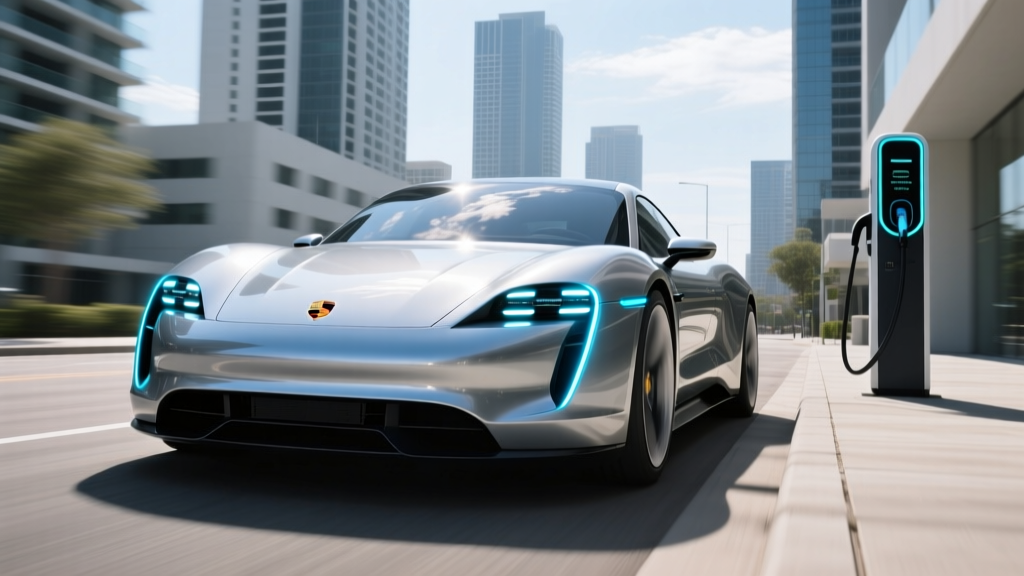
No — not yet. As of 2026, Porsche has not gone fully electric across its entire lineup, but the transition is well underway. The Taycan (sedan/wagon) and the all-new Macan EV are fully battery-electric. The Cayenne and Panamera remain available as plug-in hybrids (PHEVs), while the 911 now features the T-Hybrid powertrain (a performance hybrid, not a plug-in). Porsche's stated goal is for 80% of global deliveries to be all-electric by 2030, but the company has stopped short of a hard ICE phase-out date, acknowledging that the 911 and certain markets will retain combustion options longer.
Porsche's 2026 Electrified Lineup: What You Can Actually Buy
Porsche's current showroom reflects a brand in mid-transition. Here's exactly what's available and what's coming, with real specs and pricing.
| Model | Powertrain | EPA Range / MPG | Starting MSRP (2026) | Status |
|---|---|---|---|---|
| Taycan (base) | BEV — 83.7 kWh usable (NMC) | EPA 255 mi (real-world ~220-240 mi highway) | $92,950 | On sale |
| Taycan 4S | BEV — 97.0 kWh usable (Performance Battery Plus) | EPA 283 mi (real-world ~250-270 mi) | $107,350 | On sale |
| Taycan Turbo GT | BEV — 97.0 kWh | EPA 269 mi | $230,700 | On sale |
| Macan EV (base) | BEV — 95.0 kWh usable (NMC, 800V) | EPA 300 mi (real-world ~265-285 mi) | $78,800 | On sale |
| Macan 4 EV | BEV — 95.0 kWh (800V) | EPA 288 mi | $86,500 | On sale |
| Macan Turbo EV | BEV — 95.0 kWh (800V) | EPA 277 mi | $105,300 | On sale |
| Cayenne E-Hybrid | PHEV — 25.9 kWh battery | EPA 32 mi electric-only / 21 MPG combined gas | $91,700 | On sale |
| Panamera E-Hybrid | PHEV — 25.9 kWh battery | EPA 30 mi electric-only / 22 MPG combined | $104,500 | On sale |
| 911 Carrera GPT T-Hybrid | HEV (non-plug-in, 1.9 kWh) | ~22 MPG combined (est.) | $164,900 | On sale |
| Cayenne EV (announced) | BEV — details TBD | Est. 300+ mi | TBA | Expected late 2026/2027 |
The Macan EV and Taycan both ride on 800-volt architectures, which translates to genuinely fast DC charging — a meaningful advantage over 400V competitors. The Cayenne EV, when it arrives, will complete Porsche's SUV electrification. The 718 Boxster/Cayman EV has been delayed and may arrive as a BEV or remain hybrid — Porsche has not confirmed a timeline.
Taycan vs Macan EV vs Gas Porsche: Real Cost Comparison
Buying a Porsche is an emotional decision, but ownership costs are real. Let's compare a 2026 Macan EV against the outgoing gas Macan and a Taycan 4S against the Panamera, using five-year ownership projections.
5-Year Ownership Cost: Macan EV vs Gas Macan (60,000 miles)
| Cost Category | Macan EV ($78,800 MSRP) | Gas Macan ($62,900 MSRP) |
|---|---|---|
| Purchase Price | $78,800 | $62,900 |
| Federal Tax Credit (§30D) | $0 (MSRP exceeds $80K SUV cap; sourcing rules) | $0 |
| Fuel/Energy (60k mi) | ~$4,200 (home L2 @ $0.15/kWh, 3.2 mi/kWh) | ~$9,600 (19 MPG avg @ $3.80/gal) |
| Maintenance (5 yr) | ~$2,800 (no oil, fewer wear items) | ~$5,500 (oil, brakes, filters, spark plugs) |
| Insurance (5 yr avg) | ~$18,500 (EV premium ~15-20%) | ~$15,800 |
| Depreciation (est. 5 yr) | ~$35,000 (44%) | ~$30,000 (48%) |
| Total 5-Year Cost | ~$139,300 | ~$123,800 |
| Cost Per Mile | ~$2.32 | ~$2.06 |
Sources: fueleconomy.gov for efficiency data; insurance estimates from industry averages for luxury SUVs. Actual costs vary by state, driving pattern, and electricity rate.
The EV saves roughly $8,100 on fuel and maintenance over five years, but the higher purchase price and insurance premium offset most of that gain. At this price tier, the value proposition is about the driving experience and technology — not pure economics. If you charge primarily at home on a standard residential rate, the per-mile energy cost drops to roughly $0.05/mile versus $0.20/mile for premium gas.
Charging Reality: What Porsche EV Owners Need to Know
Porsche's 800V architecture is the brand's strongest EV differentiator. Here's what charging actually looks like in practice.
| Charging Level | Power (kW) | Macan EV Speed | Taycan 4S Speed | Time / Notes |
|---|---|---|---|---|
| Level 1 (120V) | ~1.4 kW | ~4 mi/hr | ~3.5 mi/hr | Emergency/trickle only — impractical for daily use |
| Level 2 (240V home) | 11.5 kW (Macan) / 9.6 kW (Taycan) | ~33 mi/hr | ~28 mi/hr | Full overnight charge in ~8-9 hours |
| DC Fast Charge | Peak 270 kW (Macan) / 320 kW (Taycan) | 10-80% in ~21 min | 10-80% in ~18 min | Requires 350 kW charger; tapers significantly above 80% |
Real-world charging caveat: Peak charge rates of 270-320 kW are only achievable at 350 kW chargers (Electrify America, select Tesla Superchargers with NACS adapter) when the battery is preconditioned and at a low state of charge. Expect sustained rates closer to 150-200 kW through the bulk of the session. Above 80% SoC, charging slows dramatically — plan to charge to 80% on road trips and move on.
Home charging setup: A Level 2 home installation (240V/48A circuit for the Porsche Mobile Charger Connect) typically costs $1,200–$3,500 including a licensed electrician, NEMA 14-50 outlet or hardwired connection, and permit. If your home's electrical panel needs an upgrade to 200A, add $2,000–$5,000. Always get a panel assessment before purchase.
Porsche EV Tax Credit & Incentive Reality Check
Here's where Porsche buyers face a hard truth: most new Porsche EVs do not qualify for the $7,500 federal §30D tax credit. The reasons are twofold:
- MSRP cap: The IRS limits the credit to SUVs priced under $80,000 and sedans under $55,000. The base Macan EV starts at $78,800 — just under the SUV cap — but any options push it over. The Taycan (sedan) starts well above $55,000.
- Battery sourcing: The §30D credit requires that critical minerals and battery components meet escalating domestic-content thresholds. Porsche sources battery cells from LG Energy Solution and CATL, and as of 2026, the Taycan's battery supply chain does not fully meet the critical-minerals requirement for the full credit.
A bare-bones Macan EV might qualify for a partial credit depending on the latest IRS guidance on battery sourcing, but buyers should consult a tax professional and check the DOE's qualifying vehicle list at the point of purchase. Do not assume credit eligibility — verify it.
Used Porsche EVs may qualify for the up-to-$4,000 used clean vehicle credit (§25E), which has a $25,000 sale-price cap — effectively excluding most used Taycans and Macan EVs in the current market.
EV vs Gas Porsche: Decision Framework for Buyers
Should You Buy Electric, Hybrid, or Gas Porsche?
Choose the Macan EV or Taycan if:
- You have reliable home Level 2 charging (or can install it)
- Your daily driving is under 200 miles and you road-trip less than 5,000 miles/year
- You value instant torque, quiet operation, and lower routine maintenance
- You live in a region with robust DC fast-charging infrastructure (Electrify America, Tesla Supercharger network with NACS adapter)
- You want to future-proof against tightening urban emissions zones
Choose a Cayenne or Panamera E-Hybrid (PHEV) if:
- You want 30 miles of electric-only commuting but need 400+ mile total range for frequent road trips
- You lack reliable home charging but still want some EV benefit
- You need a larger vehicle (Cayenne offers more cargo and towing than Macan EV)
- You want to avoid range anxiety in cold climates or rural areas
Stick with a gas Porsche (911, Cayenne gas) if:
- You drive a 911 — the T-Hybrid is the current electrified option, and it's a performance hybrid, not an EV
- You live in a charging desert with no realistic path to home or workplace charging
- You tow frequently (Cayenne gas tows 7,700 lbs vs Macan EV at 4,409 lbs)
- You prioritize long-term collectibility of naturally aspirated flat-six engines
Common Porsche EV Misconceptions — Addressed With Facts
| Myth | Fact |
|---|---|
| "Porsche EVs can't handle track use without overheating." | The Taycan Turbo GT set a Nürburgring lap record for production EVs (7:07.55). Porsche's thermal management with 800V and active cooling allows repeated hard launches. Battery temps are actively managed, though sustained track sessions will still reduce range. |
| "The Taycan's EPA range is too low compared to Tesla." | The Taycan 4S is EPA-rated at 283 miles, while real-world highway testing typically yields 250-270 miles. Porsche's EPA testing is known to be conservative — many owners report exceeding EPA figures in mixed driving. A Model S Long Range does 402 mi EPA, but the Taycan charges faster (320 kW peak vs 250 kW). |
| "Porsche is abandoning gas cars entirely in 2026." | False. The 911, Cayenne (gas/PHEV), and Panamera (gas/PHEV) remain on sale. Porsche targets 80% EV deliveries by 2030, not 100%. |
| "EV maintenance is zero cost." | EVs eliminate oil changes, spark plugs, and transmission fluid. But tire wear is 20-30% faster due to vehicle weight and instant torque. Expect $1,200-$1,800 for a set of Porsche-spec tires every 20,000-25,000 miles. Cabin air filters, brake fluid, wiper blades, and 12V battery replacement still apply. |
| "The Macan EV is just a rebadged Audi Q6 e-tron." | They share the PPE (Premium Platform Electric) 800V architecture, but Porsche tunes the suspension, steering, and power delivery independently. The Macan EV has unique body panels, interior, and software calibration. Driving dynamics are distinct. |
Real-World Ownership Considerations for Porsche EV Buyers
Cold-weather range loss: Expect 20-30% range reduction in sub-freezing temperatures. A Macan EV rated at 300 miles EPA may deliver 210-240 miles in 20°F weather on the highway. Porsche's heat pump (standard on Macan EV, optional on some Taycan trims) mitigates this but doesn't eliminate it. Preconditioning the battery while plugged in is essential for both range preservation and DC charging speed.
Insurance costs: Porsche EVs carry a 15-25% insurance premium over their gas counterparts, driven by higher repair costs (specialized body shops, battery replacement risk, aluminum construction). Average annual premiums for a Macan EV run $3,200-$4,200 depending on state and driver profile. Get quotes before purchasing.
Battery warranty: Porsche covers the high-voltage battery for 8 years / 100,000 miles with a capacity-retention threshold of 70%. If degradation drops below 70% within the warranty period, Porsche will repair or replace modules to restore capacity. Real-world data from 2020-2024 Taycan owners shows typical degradation of 5-8% over the first 60,000 miles — well within the warranty buffer.
Charging network access: Porsche EVs use the CCS1 connector natively. As of 2025, Porsche began offering a NACS adapter for access to Tesla's Supercharger network (15,000+ stations). This dramatically expands road-trip charging options, particularly in rural corridors. Verify adapter availability with your dealer at purchase.
Depreciation: Luxury EVs have experienced steeper depreciation than gas equivalents in 2024-2025, partly due to Tesla-initiated price cuts and rapid technology iteration. A 2-year-old Taycan may depreciate 40-50% from MSRP. The Macan EV, as a newer and more affordable entry point, may hold value better — but data is still limited.
Frequently Asked Questions
Will Porsche make an electric 911?
Not as a full BEV in the near term. The 2025+ 911 Carrera GPT uses a T-Hybrid system (1.9 kWh battery, electric motor integrated into the transmission) for performance enhancement, not plug-in electric driving. Porsche's CEO has stated the 911 will be "the last car to go electric" due to its heritage and enthusiast base. Expect hybrid 911s for years, with a possible full BEV variant late in the decade at the earliest.
Is the Macan EV replacing the gas Macan?
Not immediately. In the US, the gas Macan was discontinued after the 2024 model year due to new cybersecurity regulations (UN R155) that the older platform couldn't meet without costly re-engineering. The Macan EV is its de facto replacement in the American market. In other markets, the gas Macan may continue alongside the EV.
How does the Taycan's charging speed compare to competitors?
The refreshed Taycan peaks at 320 kW on 800V chargers — among the fastest of any production EV. For context, the Tesla Model S peaks at 250 kW, the BMW i5 at 205 kW, and the Lucid Air at 300 kW. In real-world 10-80% testing, the Taycan 4S achieves this in approximately 18 minutes at a 350 kW station, compared to ~25 minutes for the Model S at a V3 Supercharger.
Can I charge a Porsche EV at Tesla Superchargers?
Yes, with the Porsche-approved NACS adapter (available from Porsche dealers). This grants access to Tesla's Supercharger network, which uses the NACS connector. Charging speed is limited to Tesla's V3 rate of ~250 kW rather than the Porsche's native 320 kW capability, but network coverage is unmatched. Porsche's own charging partnership with Electrify America provides 350 kW-capable stations along major corridors.
What's the real cost to charge a Taycan at home?
Charging a Taycan 4S from 10% to 90% (roughly 77 kWh) at the US residential average of $0.16/kWh costs about $12.32 — equivalent to roughly 3.5 gallons of premium gas. At 3.0 mi/kWh efficiency, that's about 230 miles of range for $12.32, or $0.054/mile. Compare that to a gas Panamera at 22 MPG on $4.20/gal premium: $0.191/mile. Home charging is roughly 3.5x cheaper per mile.
Does Porsche's EV lineup qualify for any state incentives?
While federal §30D credits are largely unavailable for Porsche EVs due to MSRP caps, several states offer their own rebates that have no MSRP cap or have higher thresholds. Examples include Colorado's innovative motor vehicle credit, and various utility-company rebates for EV purchase or home charger installation. These vary by jurisdiction and change frequently — check your state's energy office and local utility for current programs.
Bottom line: Porsche is not going all-electric in 2026, but the writing is on the wall. If you want a Porsche EV today, the Macan EV and Taycan are compelling, fast-charging, and well-engineered. If you need maximum range, towing, or the 911 experience, hybrids and gas remain viable. The smart move is to match the powertrain to your actual driving pattern — not to a marketing timeline.