The Short Answer on the 2027 Ford Electric Truck
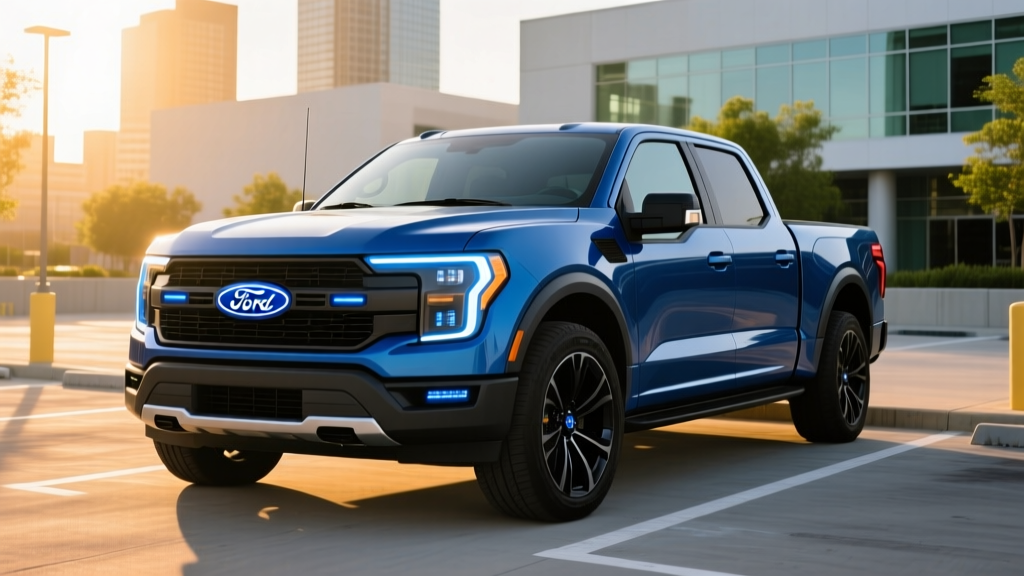
The 2027 Ford F-150 Lightning is the latest iteration of Ford's full-size electric pickup, carrying forward the dual-motor, standard-range (98 kWh usable, LFP) and extended-range (131 kWh usable, NMC) battery options. Expect EPA range figures near 240 miles (standard) and 320 miles (extended), peak DC fast charging up to 150 kW (standard) and 195 kW (extended), and a starting MSRP around $55,000 before any federal tax incentives. It remains one of the few electric trucks that can tow, haul, and serve as a mobile power source via Pro Power Onboard — but real-world range drops significantly under load and in cold weather, and public charging infrastructure for trucks is still limited.
Range, Battery, and Efficiency: What the Numbers Actually Mean
Ford offers the F-150 Lightning with two battery packs. Understanding the chemistry and real-world implications matters more than the sticker range.
| Spec | Standard Range (SR) | Extended Range (ER) |
|---|---|---|
| Usable Battery | 98 kWh (LFP) | 131 kWh (NMC) |
| EPA Range | ~240 mi | ~320 mi |
| Real-World Highway (70 mph) | ~190–210 mi | ~255–280 mi |
| Cold-Weather Loss (20°F) | ~25–30% | ~25–30% |
| Efficiency (MPGe) | ~78 MPGe combined | ~70 MPGe combined |
| kWh/100 mi | ~43 | ~48 |
| Horsepower | 452 hp | 580 hp |
| Torque | 775 lb-ft | 775 lb-ft |
| 0–60 mph | ~5.0 sec | ~3.8 sec |
| Max Towing | 7,700 lb | 10,000 lb |
| Max Payload | ~2,235 lb | ~1,800 lb |
Real-World Range Reality Check
The EPA sticker is a laboratory estimate. On a 70-mph highway drive in moderate temperatures, plan for 15–20% less range than the EPA figure. If you're towing a 5,000-lb trailer, expect range to drop by 40–50% — meaning the extended-range pack delivers roughly 160 miles of towing range. In sub-freezing weather without preconditioning, range loss can reach 30%. These are physics, not defects: a 5,500-lb truck pushing air at highway speed consumes energy at a rate no battery pack can fully offset.
LFP vs NMC: Which Battery Chemistry Is Right for You?
The standard-range pack uses lithium iron phosphate (LFP) chemistry. LFP offers longer cycle life (3,000+ full cycles vs ~1,000–1,500 for NMC), can be charged to 100% daily without degradation concerns, and uses no cobalt or nickel. The trade-off: lower energy density (heavier pack for fewer miles) and reduced performance in extreme cold.
The extended-range pack uses NMC (nickel manganese cobalt) chemistry, which delivers more miles per pound but benefits from being kept between 20–80% state of charge for daily use. Ford recommends charging NMC packs to 100% only before long trips.
| Factor | LFP (Standard Range) | NMC (Extended Range) |
|---|---|---|
| Daily Charging | 100% OK daily | 20–80% recommended |
| Cycle Life | 3,000+ cycles | 1,000–1,500 cycles |
| Cold-Weather Performance | Moderate loss | Slightly better |
| Energy Density | Lower | Higher |
| Longevity (15+ yr ownership) | Strong advantage | Good with proper care |
Charging Speeds and Infrastructure: What 2027 Buyers Need to Know
Charging is the single biggest ownership variable. Here's what the 2027 F-150 Lightning supports:
| Level | Power | Miles Added/Hour | Notes |
|---|---|---|---|
| Level 1 (120V) | ~1.4 kW | ~3 mi/hr | Emergency/trickle only |
| Level 2 (240V, 48A) | 11.5 kW | ~25 mi/hr | Home daily charging; full charge ~10–13 hr |
| Level 2 (240V, 80A) | 19.2 kW | ~42 mi/hr | Optional onboard charger; full charge ~5–7 hr |
| DC Fast (SR peak) | 150 kW | N/A | 15–80% in ~38 min |
| DC Fast (ER peak) | 195 kW | N/A | 15–80% in ~35 min |
Charging Curve Reality
Peak kW numbers are just that — peaks. The F-150 Lightning's charge curve tapers significantly above 80% state of charge. A 15–80% session at a 350-kW Electrify America or Tesla Supercharger stall (via NACS adapter) will average closer to 100–120 kW sustained. Plan road-trip stops around 25–35 minutes, not the theoretical minimum.
Home Charging Installation
Most Lightning owners charge at home overnight. A Level 2 setup requires a 240V circuit — typically 60A (for the 48A charger) or 100A (for the 80A option).
| Item | Cost Range |
|---|---|
| Level 2 EVSE (Ford Charge Station Pro or equivalent) | $500–$1,300 |
| Electrician labor (standard install, panel nearby) | $800–$2,000 |
| Electrical panel upgrade (if needed, 200A service) | $1,500–$4,000 |
| Permit and inspection | $100–$400 |
| Total (no panel upgrade) | $1,400–$3,700 |
| Total (with panel upgrade) | $2,900–$7,700 |
Not every home can support Level 2 without a panel upgrade. Older homes with 100A service may need to upgrade to 200A before adding a 60A EV circuit. Get a quote from a licensed electrician before committing to a purchase.
EV vs Gas F-150: 5-Year Cost of Ownership Comparison
The F-150 Lightning costs more upfront but can save substantially on fuel and maintenance — depending on your driving patterns and electricity rates.
| Category | F-150 Lightning ER (AWD) | F-150 Gas (3.5L EcoBoost, AWD) |
|---|---|---|
| Base MSRP (approx.) | $69,000 | $52,000 |
| Federal Tax Credit (§30D) | Up to $7,500 (see eligibility) | $0 |
| Net Purchase (after credit) | ~$61,500 | $52,000 |
| Fuel/Energy Cost (15,000 mi/yr) | ~$900/yr (home charging, $0.13/kWh) | ~$2,625/yr ($3.50/gal, 19 MPG) |
| 5-Year Fuel/Energy Total | ~$4,500 | ~$13,125 |
| Maintenance (5 yr) | ~$1,200 (tires, cabin filter, fluid top-offs) | ~$3,500 (oil, filters, brakes, transmission) |
| Insurance (5 yr avg) | ~$12,000 (higher premiums typical) | ~$9,500 |
| Estimated Depreciation (5 yr) | ~$28,000 | ~$22,000 |
| 5-Year Total Cost | ~$107,200 | ~$100,125 |
With the federal tax credit applied at point of sale, the 5-year cost gap narrows to roughly $7,000. For drivers who travel more than 15,000 miles annually or who live in states with low electricity rates, the Lightning can break even sooner. For low-mileage drivers without home charging access, the gas F-150 remains cheaper over five years.
Federal Tax Credit Eligibility (§30D)
The IRS §30D clean vehicle credit offers up to $7,500, but eligibility depends on multiple requirements that change periodically:
- MSRP cap: Pickup trucks must have an MSRP at or below $80,000
- Buyer income cap: AGI must not exceed $150,000 (single) / $300,000 (joint)
- Battery sourcing: Critical minerals and battery components must meet phased-in domestic/free-trade sourcing thresholds
- Assembly: Final assembly must occur in North America
- Point-of-sale transfer: Buyers can transfer the credit to the dealer for an upfront price reduction
Ford builds the F-150 Lightning in Michigan, satisfying the assembly requirement. However, battery sourcing rules tighten annually — always verify current-year eligibility on the IRS website or with your tax professional before relying on the credit.
Real-World Ownership: Who Should (and Shouldn't) Buy the Lightning
The F-150 Lightning is not a universal solution. Your driving patterns, climate, and charging access determine whether it works.
| Myth | Fact |
|---|---|
| "The Lightning can't tow." | It tows up to 10,000 lb — but towing cuts range by 40–50%. Plan short hops or frequent charging stops. |
| "Electric trucks are cheaper to own." | Lower fuel and maintenance costs offset the higher purchase price only if you charge at home and drive 12,000+ miles/year. |
| "Charging takes too long." | Home charging happens while you sleep (zero active time). Road-trip DC fast charging adds 25–35 min per stop — longer than gas, but manageable with planning. |
| "The battery will need expensive replacement." | Ford's battery warranty covers 8 years / 100,000 miles against degradation below 70% capacity. Most packs outlast this threshold significantly. |
| "You can charge anywhere." | Public chargers that accommodate truck-length vehicles with trailers are rare. Home charging is essential for convenient ownership. |
Climate and Driving Pattern Considerations
If you live in the Upper Midwest or Northeast and regularly drive in sub-freezing temperatures, budget for 25–30% range loss in winter. The Lightning's heat pump (standard on most trims) helps, but resistive cabin heating still draws from the traction battery. Preconditioning the battery while plugged in mitigates some of this loss and improves DC fast-charging speeds in cold weather.
For daily commutes under 80 miles round-trip with home charging, the standard-range pack is more than sufficient and offers the LFP longevity advantage. The extended-range pack makes sense for frequent road trips, towing, or drivers in regions with sparse public charging infrastructure.
Decision Framework: Is the 2027 Ford Electric Truck Right for You?
Choose the F-150 Lightning If:
- You have reliable Level 2 home charging (garage or driveway with 240V access)
- Your daily driving is under 200 miles and most trips start from home
- You value instant torque, quiet operation, and Pro Power Onboard for job-site or camping use
- You qualify for the §30D tax credit (income and sourcing requirements met)
- You want lower per-mile energy costs and minimal scheduled maintenance
Stick With a Gas or Hybrid F-150 If:
- You live in an apartment or lack access to any home or workplace charging
- You regularly tow heavy loads over long distances (200+ miles between stops)
- You frequently drive in remote areas with no DC fast-charging infrastructure
- Your annual mileage is under 8,000 miles (savings won't offset the price premium)
- You need maximum bed payload (the Lightning's battery weight reduces payload by ~400 lb vs gas models)
Consider the F-150 PowerBoost Hybrid as a Middle Ground
The F-150 PowerBoost hybrid offers 25 MPG combined, 7,000-lb towing, and Pro Power Onboard without charging dependency. At roughly $55,000 MSRP with no range limitations, it bridges the gap for buyers who want electrified efficiency without committing to full battery-electric ownership.
Frequently Asked Questions
What is the real-world range of the 2027 F-150 Lightning?
Expect approximately 190–210 highway miles from the standard-range pack and 255–280 from the extended-range pack in moderate temperatures at highway speeds. Towing reduces these figures by 40–50%. Cold weather (below 32°F) reduces range by an additional 25–30% without preconditioning.
How much does it cost to charge the F-150 Lightning at home?
At the US average residential rate of $0.13/kWh, a full charge of the extended-range 131 kWh pack costs approximately $17. For 15,000 miles of annual driving, expect roughly $850–$950 per year in home electricity costs — compared to $2,500–$2,800 in gasoline for an equivalent gas F-150.
Does the 2027 Lightning qualify for the $7,500 federal tax credit?
It can, but eligibility depends on your income (AGI under $150K single / $300K joint), the truck's MSRP (under $80K for pickups), and battery-sourcing requirements that tighten each year. The credit can be transferred to the dealer at point of sale for an immediate price reduction. Verify current eligibility on IRS.gov or consult a tax professional.
Can I use Tesla Superchargers with the F-150 Lightning?
Yes. Ford provides a NACS adapter for Lightning owners, enabling access to Tesla's Supercharger network (V3 stalls at up to 150 kW for non-Tesla vehicles). Ford's native charge port is NACS on 2025+ models, eliminating the need for an adapter at Tesla stalls. For Electrify America and other CCS networks, a CCS adapter may be needed depending on your model year's native port.
What is the battery warranty on the F-150 Lightning?
Ford covers the high-voltage battery for 8 years or 100,000 miles (whichever comes first) against degradation below 70% of original capacity. The electric powertrain components are covered under the same 8-year/100,000-mile warranty. Out-of-warranty battery replacement costs are estimated at $15,000–$25,000 depending on pack size, though most packs are expected to retain well above 70% capacity at the warranty threshold based on current degradation data.
How does the Lightning compare to the Chevy Silverado EV and Rivian R1T?
The Silverado EV offers longer maximum range (up to ~400 EPA miles on the top pack) but starts at a higher price point. The Rivian R1T is a smaller, more adventure-oriented truck with tri-motor performance options but less towing capacity and a smaller bed. The Lightning occupies the middle ground: full-size utility, competitive pricing, and the broadest dealer/service network of the three.