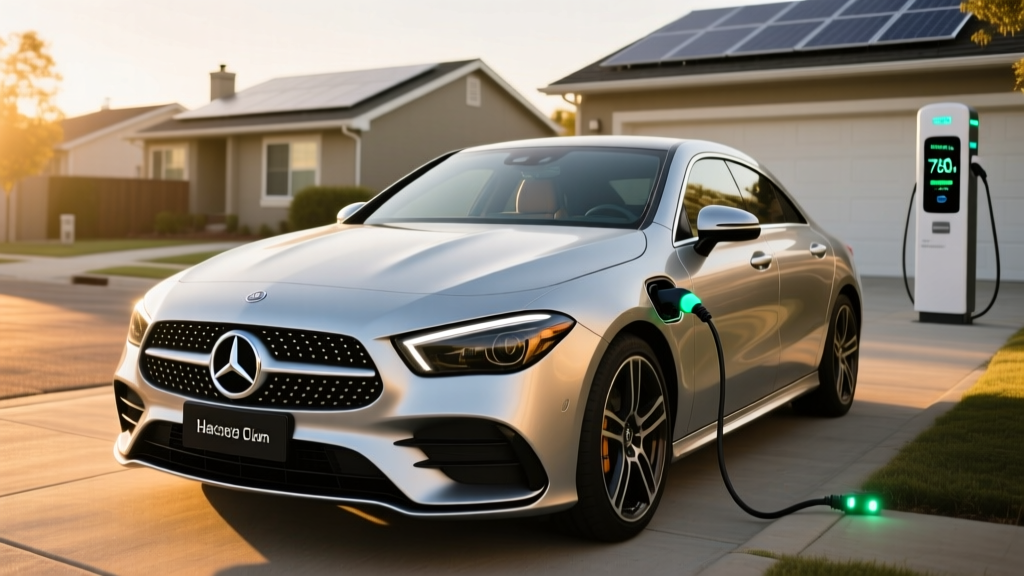
Quick Answer: The 2026 Mercedes-Benz CLA Electric (CLA EV) is the brand's entry-level luxury electric sedan built on the new Mercedes-Benz Modular Architecture (MMA). It targets an EPA-estimated range of approximately 400+ miles (WLTP-rated over 750 km for the European variant), features an 800-volt electrical architecture enabling DC fast charging up to 250 kW, and carries an expected starting MSRP near $48,000–$52,000 before incentives. It competes directly with the Tesla Model 3, BMW i4, and upcoming electric Audi A4. Below, we break down the real numbers buyers need.
What the Mercedes-Benz CLA Electric Actually Is
The CLA Electric is not a retrofit of the existing fuel-burning CLA. It rides on Mercedes' ground-up MMA platform, which was engineered to support both battery-electric and mild-hybrid powertrains. The electric variant leads the lineup for the 2026 model year. Mercedes has confirmed an 800V architecture — a significant technical choice that enables faster DC charging and lighter wiring harnesses compared to the 400V systems used in many legacy luxury EVs.
The production CLA EV follows the Concept CLA Class that previewed the design and powertrain direction. Key confirmed and estimated specifications for the US-market model include:
| Specification | 2026 CLA Electric (Estimated/Confirmed) |
|---|---|
| Platform | Mercedes-Benz Modular Architecture (MMA) |
| Battery Capacity (usable) | ~85 kWh (NMC chemistry, long-range variant) |
| EPA Range (est.) | ~390–410 miles (long-range RWD) |
| WLTP Range (EU confirmed) | 750+ km (~466 mi, not directly comparable to EPA) |
| Architecture | 800-volt |
| Peak DC Fast Charge Rate | Up to 250 kW |
| 10–80% DC Charge Time (est.) | ~22–25 minutes |
| Level 2 AC Charge Rate | Up to 22 kW (optional); 11 kW standard |
| Drivetrain | RWD standard; AWD (4MATIC) available |
| Horsepower (est.) | ~268 hp (RWD); ~350+ hp (AWD) |
| 0–60 mph (est.) | ~6.2 sec (RWD); ~4.5 sec (AWD) |
| Starting MSRP (est.) | $48,000–$52,000 (base RWD) |
| Battery Warranty | 8 years / 100,000 miles (expected) |
Real-world range caveat: The EPA estimate of ~390–410 miles applies to mixed driving. On sustained highway trips at 75 mph, expect approximately 320–350 miles. In cold weather (below 32°F), range can drop 20–30%, potentially yielding 275–320 miles. The CLA EV is expected to include a heat pump as standard equipment, which mitigates but does not eliminate cold-weather losses.
Range Reality Check: EPA ~400 mi → Highway (75 mph) ~330 mi → Cold weather (20°F) ~280–300 mi. The 800V system and ~250 kW peak charging help offset range loss by keeping charging stops short: roughly 15 minutes adds ~200 miles under ideal conditions.
Charging Speed: The 800V Advantage in Practice
The 800-volt architecture is the CLA Electric's most consequential technical feature for daily ownership. Here is why it matters beyond the headline number:
At a 350 kW DC fast charger (such as Electrify America's latest stations), the CLA EV can accept up to 250 kW. However, peak rate is not sustained rate. Like all EVs, the CLA's charge curve tapers as the battery fills. Based on comparable 800V platforms (Hyundai Ioniq 5, Porsche Taycan, Mercedes' own EQE), a realistic charging session looks like this:
| Charging Level | Power (kW) | Miles Added per Hour | Typical Use Case |
|---|---|---|---|
| Level 1 (120V household) | ~1.4 kW | ~5 mi/hr | Emergency / overnight trickle |
| Level 2 (240V home, 48A) | ~11 kW | ~38–42 mi/hr | Daily home charging (full charge ~8–9 hrs) |
| Level 2 (240V, optional 22 kW onboard) | ~22 kW | ~75–85 mi/hr | Fast home or workplace charging (~4.5 hrs full) |
| DC Fast Charge (peak) | Up to 250 kW | ~800+ mi/hr (at peak) | Road trips; 10–80% in ~22–25 min |
Charging curve reality: The 250 kW peak typically holds from roughly 10% to 40% State of Charge (SoC), then progressively tapers. From 80% to 100%, charging slows dramatically — often below 50 kW. For road trips, plan to charge from 10–80% and drive on. Charging past 80% is only practical at your destination or overnight.
Connector note: The US-market CLA Electric is expected to use the NACS (Tesla-style) connector, as Mercedes-Benz has committed to adopting NACS for its North American EVs starting in 2025. This grants access to Tesla's Supercharger network (over 25,000 stalls in the US) in addition to Electrify America, EVgo, and ChargePoint networks.
CLA Electric vs. Gas CLA: The Cost Comparison
Buyers cross-shopping the CLA Electric against the conventional CLA 250 need concrete numbers. Here is a 5-year total cost of ownership comparison, assuming 12,000 miles/year, $3.50/gallon gasoline, and $0.14/kWh home electricity (national averages).
| Cost Category | 2026 CLA Electric (RWD) | 2026 CLA 250 (Gas) |
|---|---|---|
| Base MSRP (est.) | $50,000 | $44,000 |
| Federal Tax Credit (§30D) | Up to $7,500 (if eligible*) | $0 |
| Effective Purchase Price | ~$42,500 | $44,000 |
| Fuel/Energy (5 yrs, 60k mi) | ~$3,360 (home charging) | ~$7,560 (gasoline) |
| Maintenance (5 yrs) | ~$1,200 | ~$3,000 |
| Insurance (5 yrs, est. avg) | ~$12,000 | ~$10,500 |
| Estimated Depreciation (5 yrs) | ~$22,000 | ~$19,000 |
| 5-Year Total Cost | ~$81,060 | ~$84,060 |
Key takeaways:
- The CLA Electric can actually cost less over 5 years than the gas CLA 250, primarily due to fuel and maintenance savings offsetting the higher MSRP — but only if you qualify for the federal tax credit and charge primarily at home.
- Electricity costs vary enormously: at $0.14/kWh (national average), you spend ~$0.056/mile. In states like California ($0.30/kWh), that rises to ~$0.12/mile. Public DC fast charging ($0.35–$0.50/kWh) can push costs to $0.14–$0.20/mile — approaching gasoline.
- EV insurance premiums run 10–20% higher on average due to repair costs and battery replacement exposure. Get quotes before purchasing.
- Depreciation for luxury EVs remains higher than for luxury gas cars, though the gap is narrowing as EV adoption grows.
*Federal §30D tax credit eligibility for 2026 depends on buyer income caps ($150k single / $300k joint AGI), vehicle MSRP caps ($55,000 for sedans), and battery critical-mineral and component sourcing requirements. The CLA EV's eligibility is not guaranteed and must be verified at point of sale. Check current rules at IRS.gov.
How It Stacks Up Against Rivals
The CLA Electric enters a competitive compact luxury EV sedan segment. Here is how it compares against the key alternatives on the specs that matter most to buyers:
| Spec | Mercedes CLA EV (est.) | Tesla Model 3 LR | BMW i4 eDrive40 | Hyundai Ioniq 6 LR |
|---|---|---|---|---|
| EPA Range | ~400 mi | 363 mi | 307 mi | 361 mi |
| Battery (usable kWh) | ~85 kWh | 79 kWh | 81 kWh | 77.4 kWh |
| Peak DC Charge (kW) | 250 kW | 250 kW | 205 kW | 240 kW |
| 10–80% Charge (min) | ~22–25 | ~25–28 | ~31 | ~18 |
| Starting MSRP | ~$50,000 | $47,740 | $57,900 | $42,450 |
| Efficiency (MPGe est.) | ~130 MPGe | 132 MPGe | 109 MPGe | 140 MPGe |
| Architecture | 800V | ~400V | 400V | 800V |
What this tells us: The CLA Electric's claimed range, if EPA-validated near 400 miles, would lead the segment. The 800V architecture gives it a charging-speed advantage over the BMW i4 and parity with Tesla. However, the Hyundai Ioniq 6 charges faster (10–80% in ~18 minutes) and costs significantly less, though it lacks the Mercedes badge and interior luxury. The Tesla Model 3 remains the efficiency and charging-network benchmark.
Real-World Ownership: What First-Time EV Buyers Must Know
If the CLA Electric is your first EV, these practical considerations matter more than any spec sheet:
Home Charging Access Is Non-Negotiable for Most Owners
Over 80% of EV charging happens at home. If you cannot install a Level 2 (240V) charger — whether due to apartment living, HOA restrictions, or electrical panel limitations — EV ownership becomes significantly more inconvenient and expensive. A Level 2 home installation typically costs $1,200–$3,500 including equipment, electrician labor, and permits. If your home has a 200-amp electrical panel with available capacity, expect the lower end. Older homes with 100-amp service may need a panel upgrade ($2,000–$5,000+).
Without home charging, you will rely on public DC fast charging, which costs 3–5x more per mile and adds 20–40 minutes to your routine multiple times per week. This is viable but erodes the cost and convenience advantages of going electric.
Cold Weather Changes Everything
If you live where winters regularly drop below freezing, plan for 20–30% range loss. A 400-mile EPA rating becomes 280–320 miles in 20°F weather. The CLA EV's heat pump (expected standard) helps, but physics is unforgiving: cold batteries have higher internal resistance, and cabin heating draws significant energy.
Practical cold-weather strategy: precondition the battery and cabin while still plugged in at home. This warms the battery to optimal operating temperature using grid power rather than battery power, preserving range for your drive.
Driving Patterns Determine Whether an EV Makes Sense
The CLA Electric's ~400-mile range comfortably covers most daily commutes and errands for a week between charges. For road trips, the 800V fast-charging capability means ~15-minute stops every 200–250 miles — comparable to gas-car rest stops if you plan around charging stations.
However, if you regularly drive 300+ miles one-way in rural areas with sparse charging infrastructure, a PHEV or gas vehicle may still be more practical. Check fueleconomy.gov and PlugShare for charging availability along your common routes.
Tax Credit Eligibility: Don't Assume You Qualify
The federal §30D clean vehicle credit can reduce the CLA Electric's effective price by up to $7,500 — but eligibility is far from automatic. Here is what determines whether you can claim it:
- Buyer income cap: Modified AGI must not exceed $150,000 (single), $225,000 (head of household), or $300,000 (joint filing).
- Vehicle MSRP cap: Sedans must have an MSRP at or below $55,000. If the CLA EV's base trim exceeds this, higher trims will not qualify.
- Battery sourcing: A percentage of critical minerals and battery components must be sourced from the US or free-trade-agreement countries. These thresholds increase annually and can change a vehicle's eligibility mid-year.
- Point-of-sale transfer: As of 2024, you can transfer the credit to the dealer at purchase, reducing your out-of-pocket cost immediately rather than waiting for a tax refund.
- Final assembly: The vehicle must undergo final assembly in North America. The CLA EV's assembly location (likely Germany for initial production) could affect eligibility — this is a critical detail to verify before purchase.
Always verify current eligibility on IRS.gov and consult a tax professional. Rules change, and manufacturer/model eligibility lists update throughout the year.
Common Misconceptions About the CLA Electric
| Myth | Fact |
|---|---|
| "400 miles of range means I'll always get 400 miles." | EPA range is a laboratory estimate. Highway driving at 75+ mph, cold weather, hilly terrain, and aggressive acceleration all reduce range by 15–30%. Plan for ~300–340 miles in real-world mixed driving. |
| "It charges at 250 kW, so a full charge takes 20 minutes." | 250 kW is the peak rate, sustained only at low SoC. The charge curve tapers significantly above 50–60%. A 10–80% session takes ~22–25 minutes; 10–100% takes 45+ minutes. |
| "The battery will need replacing in 5 years." | Modern NMC batteries are engineered for 1,500–3,000+ charge cycles with ~10–15% degradation over 100,000 miles. Mercedes is expected to warrant the battery for 8 years/100,000 miles with a minimum 70% capacity retention threshold. |
| "EVs are always cheaper to own." | EVs save on fuel and maintenance but often cost more for insurance, depreciation, and upfront purchase. The savings depend heavily on home charging access, electricity rates, annual mileage, and tax credit eligibility. |
| "I can use any public charger." | The CLA EV is expected to use NACS connectors. Some older public chargers use CCS1 or CHAdeMO connectors. You may need an adapter for CCS stations, though the NACS ecosystem (including Tesla Superchargers) is rapidly becoming the US standard. |
Decision Framework: Is the CLA Electric Right for You?
Choose the Mercedes-Benz CLA Electric if:
- You want a luxury compact sedan with class-leading range (~400 mi EPA) and fast 800V charging.
- You have reliable home Level 2 charging access (garage, driveway, or workplace).
- You drive 12,000–15,000 miles per year and want to reduce fuel and maintenance costs.
- You qualify for the §30D tax credit (income, MSRP, and sourcing requirements all met).
- You value Mercedes' interior quality, MBUX infotainment, and dealer service network.
Consider an alternative if:
- You live in an apartment without charging access and cannot install a home charger — a PHEV or hybrid (such as a Toyota Prius or BMW 330e) may be more practical.
- You regularly drive 300+ miles in rural areas with limited DC fast charging infrastructure.
- Your budget is below $45,000 — the Hyundai Ioniq 6 offers similar range and faster charging for ~$8,000 less.
- You prioritize the lowest total cost of ownership above luxury branding — the Tesla Model 3 offers comparable range and unmatched Supercharger access at a lower price.
- You need immediate availability — confirm production and delivery timelines with your local Mercedes dealer, as initial US allocations may be limited.
Frequently Asked Questions
When will the 2026 Mercedes-Benz CLA Electric be available in the US?
Mercedes has confirmed the CLA Electric for global markets with European deliveries beginning in late 2025. US-market availability is expected in the first half of 2026 as a 2026 model-year vehicle. Exact timing depends on production ramp-up and NACS connector certification for North America. Check with your local Mercedes-Benz dealer for allocation updates.
Will the CLA Electric qualify for the $7,500 federal tax credit?
Eligibility is not guaranteed and depends on several factors: the vehicle's MSRP must be at or below $55,000 (sedan cap), final assembly must occur in North America, and battery sourcing must meet critical-mineral and component thresholds. If the CLA EV is assembled in Germany, it may not qualify regardless of price. Verify on the fueleconomy.gov tax credit page closer to launch.
How does the CLA Electric compare to the gas CLA 250 in daily driving?
The electric CLA offers instant torque (no turbo lag), a lower center of gravity (better handling), near-silent operation, and the ability to "refuel" at home overnight. The gas CLA 250 has a lower starting price, no range considerations in extreme cold, and a 5-minute refueling time. For city and suburban commuters with home charging, the EV is the superior daily driver. For frequent long-distance rural driving, the gas model retains advantages.
What is the expected battery replacement cost?
Full battery pack replacement for a ~85 kWh luxury EV currently ranges from $15,000 to $25,000+ out of warranty. However, battery replacements are rare — most packs outlast the vehicle's economic life. The 8-year/100,000-mile battery warranty covers defects and excessive degradation (typically below 70% capacity). Individual module replacement, if needed, costs significantly less than a full pack swap.
Can I charge the CLA Electric at Tesla Superchargers?
Yes — Mercedes-Benz has committed to the NACS connector standard for North America. The CLA Electric should be compatible with Tesla's Supercharger network natively (no adapter needed), alongside other NACS-equipped public chargers. This is one of the strongest arguments for the NACS-equipped CLA EV over CCS-only competitors.
What home electrical upgrades might I need for Level 2 charging?
A Level 2 charger requires a dedicated 240V circuit (typically 40–60 amps). If your home has a 200-amp panel with spare capacity, installation is straightforward ($1,200–$2,500). If you have a 100-amp panel, an upgrade to 200 amps may be necessary ($2,000–$5,000). Always hire a licensed electrician and pull permits — unpermitted electrical work can void home insurance and create fire hazards.