The Short Answer on 2027 Electric Vehicles
The 2027 model year brings a maturing EV market with broader NACS adoption, expanded LFP battery options, and more sub-$40,000 models than any prior year. If you're shopping 2027 electric vehicles, expect EPA ranges between 250 and 350 miles for mainstream models, DC fast-charging speeds from 150 to 350 kW (10–80% in roughly 15–28 minutes depending on the platform), and base MSRPs starting around $29,990 for compact crossovers before incentives. The critical first step: confirm you have reliable home or workplace Level 2 charging access, as this determines whether an EV saves you money or creates friction.
The 2027 EV Landscape: What's Actually Changed
By the 2027 model year, several structural shifts have reshaped the buying decision. The Tesla NACS connector has become the dominant standard, with Ford, GM, Rivian, Volvo, Polestar, and Hyundai/Kia models shipping with native NACS ports. Legacy CCS vehicles still exist in inventory, and CHAdeMO remains limited to older Nissan Leaf platforms. This means public charging access has consolidated significantly — Tesla's Supercharger network, now open to NACS-equipped non-Tesla vehicles, provides the most reliable DC fast-charging infrastructure in the U.S.
Battery chemistry has bifurcated. Entry-level and mid-range trims increasingly use LFP (lithium iron phosphate) packs, which trade roughly 10–15% lower energy density for longer cycle life, lower degradation, and the ability to charge to 100% daily without harm. Premium trims retain NMC (nickel manganese cobalt) chemistry for maximum range and cold-weather performance. Understanding which chemistry your target model uses is now as important as the kWh figure.
On the pricing front, average new EV transaction prices have settled near $52,000 according to Kelley Blue Book data, but the volume of models under $40,000 has grown — driven by vehicles like the Chevrolet Equinox EV, Hyundai Kona Electric, and updated Nissan Leaf. The federal §30D tax credit remains available at up to $7,500 for qualifying vehicles and buyers, but eligibility hinges on MSRP caps ($55,000 for sedans, $80,000 for SUVs/trucks/vans), adjusted gross income limits ($150K single / $300K joint), and battery critical-mineral and component sourcing requirements that tighten annually.
EV vs. Gas vs. Hybrid: The Real Cost Comparison
The most common question from first-time EV shoppers: does the math actually work compared to a gas car or hybrid? The answer depends heavily on your driving volume, local electricity rates, and whether you can charge at home. Here's a concrete 5-year comparison for a mainstream compact crossover driven 15,000 miles per year:
| Cost Factor (5 Years / 75K Miles) | 2027 EV (Avg.) | 2027 Hybrid (Avg.) | 2027 Gas Car (Avg.) |
|---|---|---|---|
| Purchase Price (after incentives) | $33,500 | $31,000 | $28,500 |
| Fuel / Electricity | $3,750 (home charging at $0.14/kWh) | $5,250 (40 MPG at $3.50/gal) | $8,750 (28 MPG at $3.50/gal) |
| Maintenance | $1,200 | $2,800 | $3,500 |
| Insurance (avg.) | $8,500 | $7,200 | $7,000 |
| Estimated Depreciation | $14,000 | $12,500 | $11,500 |
| 5-Year Total Cost | $60,950 | $58,750 | $59,250 |
Key takeaway: EVs win on fuel and maintenance but lose ground on insurance premiums (typically 15–25% higher than equivalent gas models), faster depreciation in some segments, and higher upfront cost even after incentives. The breakeven point versus a gas car typically arrives around year 4–5 for home chargers. If you rely solely on public DC fast charging at $0.35–$0.50/kWh, the fuel cost advantage narrows significantly — potentially to just $1,500–$2,000 savings over five years.
Real-World Range, Charging, and the Fine Print
EPA range stickers on 2027 electric vehicles tell part of the story. Real-world range depends on speed, temperature, terrain, and climate control usage. Here's what to actually expect:
EPA vs. Reality
EPA sticker: 310 miles (typical 2027 mid-size EV with ~77 kWh usable battery)
Real-world highway (70 mph, 65°F): ~255–275 miles
Real-world highway (70 mph, 30°F): ~210–240 miles
Real-world city with regen (55°F): ~290–315 miles
Source: Testing methodology consistent with EPA fueleconomy.gov and independent EV range tests.
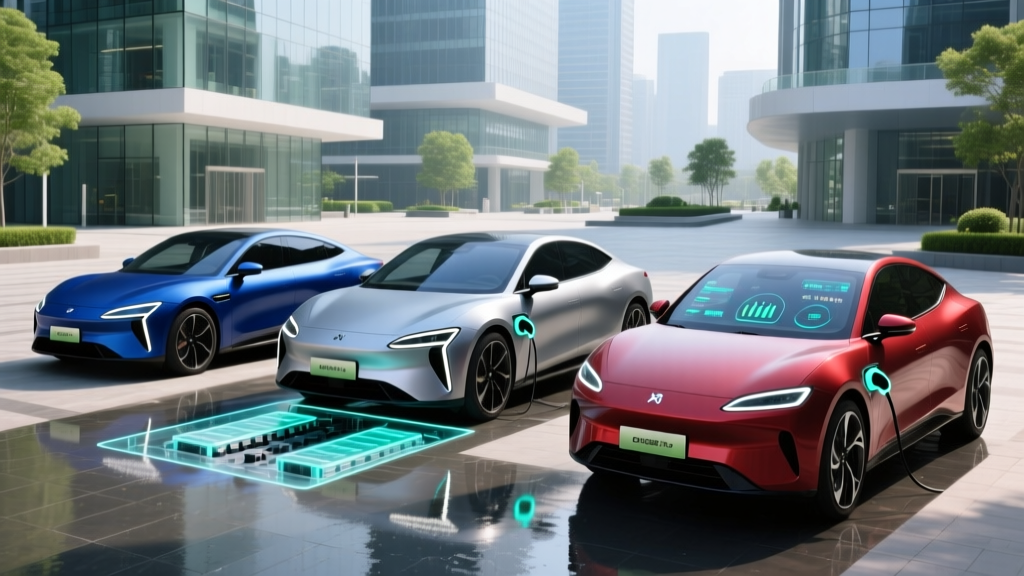
Charging speed is where marketing diverges most sharply from reality. A vehicle advertised as "350 kW capable" will only sustain that peak rate for a narrow State of Charge (SoC) window — typically 10% to 25%. Above 50% SoC, the charge curve tapers significantly. A 350 kW-capable vehicle might average 180–220 kW over a full 10–80% session, translating to roughly 15–18 minutes at a compatible station. A 150 kW-capable vehicle with a flatter charge curve might average 120–130 kW and take 25–28 minutes for the same session. The peak number matters less than the average.
| Metric | 2027 EV (Mid-Range) | 2027 Gas Crossover |
|---|---|---|
| Energy Capacity | 77 kWh usable (NMC) | 14.5-gallon tank |
| EPA Range / Distance | 310 miles | 406 miles (28 MPG) |
| Refuel / Recharge Time (10–80% or full) | ~18 min (DC fast, 10–80%) | ~5 min (full tank) |
| Cost per Full "Tank" | $10.78 (home, $0.14/kWh) | $50.75 ($3.50/gal) |
| Cost per Mile | $0.035 (home) | $0.125 |
| Cold-Weather Range Loss | 20–35% | 5–10% |
| MPGe (combined) | 110–120 MPGe | N/A |
What First-Time EV Buyers Must Know Before Signing
If you've never owned an electric vehicle, the ownership experience differs from a gas car in ways that go beyond the powertrain. Here's a practical checklist drawn from real ownership patterns:
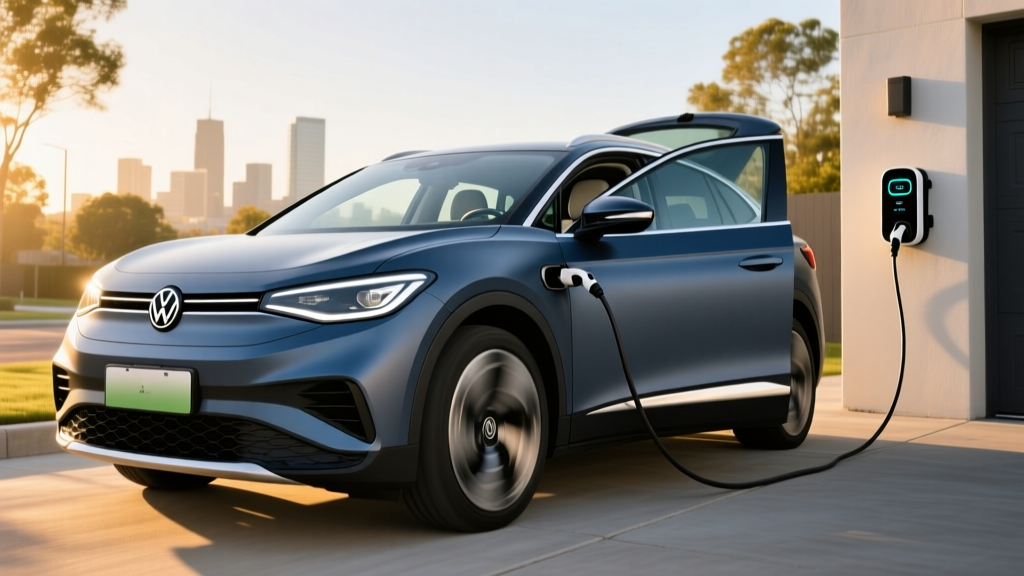
1. Home charging is non-negotiable for most buyers. A Level 2 home charger (240V, 32–48 amps / 7.7–11.5 kW) adds roughly 25–40 miles of range per hour and is the backbone of convenient EV ownership. Installation costs range from $500 (simple outlet near the panel) to $3,500+ (panel upgrade, long conduit runs, or detached garages). Without home charging, you'll depend on public infrastructure, which adds time, cost, and unpredictability.
2. The battery warranty protects you — read it carefully. Federal law mandates a minimum 8-year/100,000-mile battery warranty for EVs, but the capacity-retention threshold varies. Most manufacturers guarantee 70% of original capacity. Some warrant to 65% or 75%. A battery at 70% SoH (State of Health) still provides usable daily range, just reduced from new. Full replacement costs range from $8,000 to $20,000+ depending on pack size, but catastrophic failure within the warranty period is rare. Per data tracked by sources like Recurrent Auto, most EV batteries degrade 8–12% over the first 100,000 miles, then flatten.
3. Tax credit eligibility is not guaranteed. The §30D credit of up to $7,500 can now be transferred to the dealer at point of sale, reducing your purchase price directly. But qualifying requires meeting ALL of these conditions simultaneously:
- Vehicle MSRP under $55,000 (sedans) or $80,000 (SUVs, trucks, vans)
- Buyer AGI under $150,000 (single) / $225,000 (head of household) / $300,000 (joint)
- Battery meets critical-mineral sourcing thresholds (percentage increases annually through 2027+)
- Battery meets component manufacturing/assembly thresholds
- Vehicle final assembly in North America
- Vehicle is new (not previously titled)
The sourcing requirements tighten each year, meaning some models that qualified in 2025 may not qualify in 2027. Always verify current eligibility on irs.gov before committing to a purchase, and consult a tax professional for your specific situation.
4. Insurance costs more — budget for it. EV insurance premiums run 15–25% higher than comparable gas vehicles, driven by higher repair costs, specialized parts, and total-loss thresholds. Get quotes from at least three insurers before purchasing. Some manufacturers (Tesla, GM) offer branded insurance programs that can be competitive in certain states.
5. Cold weather is a real range penalty. If you live where winters drop below freezing regularly, expect 20–35% range reduction in sustained cold (below 25°F). Vehicles equipped with a heat pump (standard on many 2027 models from Hyundai, Kia, Tesla, and others) recover some of this loss — typically 5–10 percentage points — by warming the cabin more efficiently than resistive heating. Preconditioning the battery while plugged in also mitigates both range loss and slow charging in cold weather.
Common EV Misconceptions — Corrected
| Myth | Fact |
|---|---|
| "EV batteries need replacing every 5 years" | Modern EV batteries are engineered for 200,000+ miles. Average degradation is ~1–2% per year. Most will retain 80–85% capacity at 100,000 miles. |
| "Electricity from coal makes EVs worse than gas" | Even on the dirtiest U.S. grids, EVs produce 50–60% fewer lifecycle emissions than gas cars per EPA analysis. On cleaner grids, the advantage widens to 70%+. |
| "All 2027 EVs qualify for the $7,500 tax credit" | Eligibility depends on MSRP, buyer income, battery sourcing, and assembly location. Many popular models qualify for $3,750 (partial) or $0 depending on trim and buyer income. |
| "You can't take an EV on a road trip" | With 250+ miles of real-world range and 150+ kW DC fast charging, most EVs add 150–200 miles in a 20-minute stop. Route planning apps (A Better Routeplanner, PlugShare) make this straightforward. |
| "Level 2 Autopilot/FSD means the car drives itself" | All consumer driver-assist systems in 2027 (Tesla FSD Supervised, GM Super Cruise, Ford BlueCruise, Hyundai HDA2) are SAE Level 2. The driver must remain attentive, hands-on or eyes-on, and is legally responsible at all times. |
| "Charging at home is expensive" | At the U.S. average of $0.14/kWh, a full 77 kWh charge costs ~$10.78 for 250–310 miles of range — roughly 80% cheaper than gasoline per mile. |
Decision Framework: Which 2027 Electric Vehicle Fits You?
If / Then Buying Guide
IF you have Level 2 home charging and drive under 40 miles daily → THEN a compact EV with a 58–65 kWh LFP battery (e.g., Chevrolet Equinox EV, Hyundai Kona Electric) handles your commute with margin, charges to 100% daily safely, and starts under $35,000 before credits.
IF you regularly road-trip 200+ miles → THEN prioritize a vehicle with 300+ EPA miles and 200+ kW DC fast-charging capability on the NACS network (e.g., Tesla Model Y Long Range, Hyundai Ioniq 5, Kia EV6). Route plan with A Better Routeplanner before committing.
IF you live in a cold climate (sustained sub-30°F winters) → THEN choose a model with a heat pump and NMC chemistry for better cold-weather retention, add 25–30% to the EPA range for your realistic winter expectation, and precondition while plugged in every morning.
IF you lack home charging and can't install it → THEN seriously consider a PHEV (plug-in hybrid) instead. Models like the Toyota RAV4 Prime or Hyundai Tucson PHEV offer 30–42 miles of electric-only range for daily driving, plus a gas engine for longer trips, eliminating public-charging dependency.
IF you need a truck for towing → THEN know that towing 5,000+ lbs cuts EV range by 35–50%. The Ford F-150 Lightning and Rivian R1T can tow capably, but plan for charging stops every 100–130 miles under load. A diesel or hybrid truck may be more practical for frequent heavy towing.
IF you're budget-conscious and the §30D credit applies → THEN target models under $40,000 MSRP that meet all sourcing requirements. The point-of-sale transfer means you see the $7,500 reduction at purchase — but verify the specific VIN qualifies before signing.
Frequently Asked Questions
What's the cheapest 2027 electric vehicle worth buying?
The Nissan Leaf (starting ~$29,990) and Chevrolet Equinox EV (starting ~$33,000) are the most affordable new EVs with practical range (200–315 miles EPA). The Leaf uses CHAdeMO for DC charging, which limits public fast-charging options. The Equinox EV uses NACS, giving broader network access.
How long does a 2027 EV battery actually last?
Based on current degradation data from fleets and long-term owners, expect 85–92% battery capacity retention at 100,000 miles and 75–85% at 200,000 miles for NMC packs. LFP packs often show slightly better retention. Federal warranty mandates 8 years/100,000 miles minimum with at least 70% capacity retention, though some manufacturers warrant lower thresholds.
Is a plug-in hybrid better than a full EV in 2027?
It depends on your charging access and driving pattern. If you have home charging and drive under 40 miles daily, a PHEV lets you run electric most days while keeping a gas engine for road trips — no range anxiety, no public-charging dependency. If you drive more than 50 miles daily or want zero tailpipe emissions, a full EV with 300+ miles of range is more cost-effective long-term due to lower fuel and maintenance costs.
Do 2027 EVs charge on Tesla Superchargers?
Most 2027 model-year EVs from Ford, GM, Rivian, Hyundai, Kia, and Volvo ship with native NACS ports and can access Tesla Superchargers directly. Older CCS-equipped vehicles require a manufacturer-approved NACS adapter. Always verify adapter compatibility with your specific model before relying on it for travel.
What happens if my EV runs out of charge on the road?
The same thing as running out of gas: you need a tow to the nearest charger. Roadside assistance coverage (included with most new EVs for 3–5 years) typically covers this. The practical solution is route planning — apps like PlugShare and A Better Routeplanner show charger locations, status, and connector types along your route.
Will EV prices drop further after 2027?
Battery cell costs have declined roughly 10–15% annually over the past three years, and LFP adoption is accelerating cost reduction. However, tariff policies, critical-mineral supply constraints, and rising raw-material demand create uncertainty. Prices for compact and mid-size EVs are expected to continue gradually declining, but premium segments may hold steady.