The 08 Toyota Tundra Bolt Pattern: Exact Specs Every Owner Needs
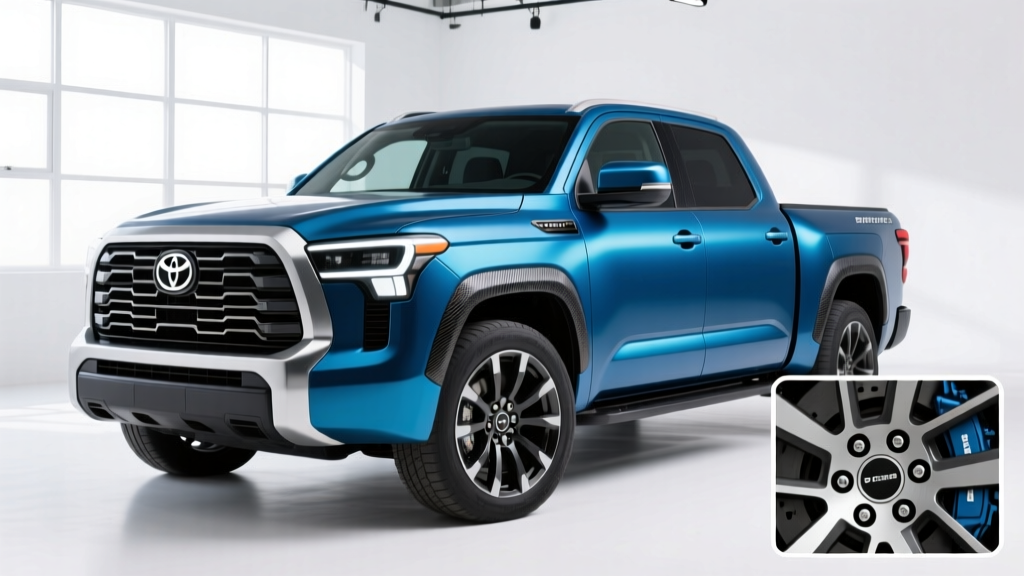
If you're shopping for wheels, planning a brake upgrade, or evaluating an electrified powertrain swap on a second-generation Tundra, the 08 Toyota Tundra bolt pattern is your starting point. The 2008 model year sits squarely in Toyota's second-generation Tundra run (2007–2021), and its wheel mounting spec is shared across a long swath of model years — making it one of the most well-documented truck bolt patterns on the road.
For 2026, this data matters more than ever. The second-gen Tundra's robust rear axle, frame strength, and aftermarket support have made it a popular candidate for hybrid conversions and, increasingly, full EV swap projects. Whether you're fitting wheels to a stock 5.7L V8, an i-Force MAX hybrid retrofit, or a battery-electric conversion, getting the bolt pattern, hub bore, and offset right is non-negotiable for safety and drivability.
Complete Wheel Mounting Specifications
Before ordering wheels or adapters, confirm every dimension. The bolt pattern alone isn't enough — hub bore mismatch causes vibration, and incorrect offset alters scrub radius, stressing wheel bearings and ball joints.
| Specification | Value |
|---|---|
| Bolt Pattern (PCD) | 5×150 mm (5×5.9 in) |
| Center Bore | 110 mm (hub-centric) |
| Lug Thread Size | M14×1.5 |
| Lug Nut Torque Spec | 97 lb-ft (131 Nm) |
| Factory Offset Range | +40 mm to +60 mm |
| Factory Wheel Sizes | 18" (base/SR5), 20" (Limited/Platinum) |
| Lug Type | Mag seat (flat washer style) |
The 5×150 pattern is relatively uncommon in the broader wheel market compared to the more universal 5×139.7 (5×5.5) found on many domestic trucks. This limits your off-the-shelf wheel selection but is well-supported by manufacturers catering specifically to Toyota and Lexus truck/SUV platforms. The 110 mm hub bore is shared with the Toyota Land Cruiser (200-series), Lexus LX 570, and Sequoia — meaning wheels from those vehicles can cross-fit if bolt pattern and offset align.
Why This Bolt Pattern Matters for 2026 Electrified Builds
The second-generation Tundra's 10.5-inch rear axle and full-floating rear hub design give it a load rating that appeals to EV conversion shops. When you're adding 800–1,200 lbs of battery mass, you need axles and hubs engineered for heavy-duty work — and the 08 Tundra's 5×150 hub assembly was designed for a truck with a gross vehicle weight rating (GVWR) up to 7,200 lbs.
Here's where the bolt pattern intersects with electrification:
- EV swap wheel selection: Heavier vehicles need wheels rated for the increased load. The 5×150 pattern has limited lightweight forged options, so builders often commission custom forgings or adapt hub-centric rings for near-fitment wheels.
- Regenerative braking loads: EV conversions with aggressive regen put cyclic torque through the hub assembly. Proper lug torque (97 lb-ft) and hub-centric fitment prevent stud fatigue.
- Brake upgrades for added mass: Larger rotors and calipers for the added weight of batteries may require specific wheel barrel clearance — offset becomes critical when fitting over aftermarket brake kits.
For those considering a Tundra-based electrified build in 2026, companies like EV West and Stealth EV have documented 5×150 hub compatibility in their Toyota truck conversion kits, though availability of purpose-built EV wheels in this pattern remains narrower than in 5×139.7 or 5×120.
Cross-Compatibility: What Else Uses 5×150?
Knowing the 08 Toyota Tundra bolt pattern shares its PCD with other vehicles expands your wheel sourcing options considerably. The following vehicles use the same 5×150 pattern with a 110 mm hub bore:
| Vehicle | Years | Notes |
|---|---|---|
| Toyota Tundra (2nd gen) | 2007–2021 | All trims, 18" and 20" wheels |
| Toyota Sequoia (2nd gen) | 2008–2022 | Same hub, similar offset range |
| Toyota Land Cruiser 200 | 2008–2021 | 110mm bore, often higher offset |
| Lexus LX 570 | 2008–2021 | Premium wheel options available |
| Lexus LX 600 | 2022–2026 | Same PCD/bore, verify offset |
Important: Even when the bolt pattern and hub bore match, always verify offset, load rating, and wheel diameter clearance over brake calipers. Lexus LX wheels often carry a higher offset (+50 to +60 mm) that may sit too far inward on a Tundra, particularly with aftermarket brake kits or suspension components.
Wheel Fitment for Hybrid and EV Tundra Conversions
The 2026 landscape for Tundra electrification has matured. While Toyota's factory i-Force MAX hybrid (available in the third-gen Tundra, 2022+) uses a different bolt pattern (5×150 retained, but with updated hub geometry), the second-gen platform remains the go-to for aftermarket EV conversions because of its simpler wiring, solid rear axle, and lower acquisition cost.
When fitting wheels to a converted Tundra, consider these EV-specific factors:
- Wheel load rating must exceed 25% of GVWR per corner (≥1,800 lbs per wheel for a 7,200 lb GVWR Tundra)
- Offset within +35 to +60 mm to maintain proper scrub radius and bearing load
- Hub-centric fitment mandatory — lug-centric wheels on a heavy EV conversion risk stud shear under regen braking loads
- Barrel clearance for larger brake rotors (common upgrade for added vehicle mass)
- Consider low-rolling-resistance tires to recover range (e.g., Michelin Defender LTX M/S2 in LT-metric sizing)
Custom wheel manufacturers like Fuel Off-Road, Method Race Wheels, and Black Rhino offer 5×150 options in 17"–20" diameters with the correct 110 mm bore. For EV conversions where minimizing unsprung weight matters for efficiency, forged aluminum options from HRE or Rotiform can be ordered in 5×150, though lead times typically run 8–12 weeks and pricing starts around $3,500 per wheel.
Measuring and Verifying Your Bolt Pattern at Home
If you're confirming the 08 Toyota Tundra bolt pattern on a truck you're evaluating for purchase or conversion, here's how to verify without specialized tools:
- Count the lugs: The Tundra uses 5 lug studs per hub.
- Measure center-to-center: With a caliper or ruler, measure from the center of one stud to the farthest point (opposite side) of the stud across from it. For a 5-lug pattern, you measure center-to-far-edge of the opposing stud. The result should be approximately 150 mm (5.9 inches).
- Check the hub bore: Measure the center hole diameter with calipers — it should read 110 mm.
- Verify thread pitch: Use a thread pitch gauge on a lug nut. M14×1.5 means 14 mm diameter with 1.5 mm thread pitch.
For precision, a bolt pattern gauge (available from Summit Racing or Amazon for under $25) eliminates measurement error. This is especially important when sourcing used wheels or evaluating adapter plates for an EV conversion.
Torque Specs and Maintenance for Heavier Electrified Builds
Factory torque specification for the 08 Tundra's M14×1.5 lug nuts is 97 lb-ft (131 Nm). This spec applies whether you're running a stock 5.7L V8 or a converted electric drivetrain. However, EV conversions introduce unique stress patterns:
- Regenerative braking applies reverse torque pulses through the hub that a stock internal-combustion truck never experiences. Check lug torque after the first 100 miles post-conversion, then at every tire rotation.
- Added battery mass increases lateral load on studs during cornering. If your conversion adds more than 500 lbs over stock curb weight, consider upgrading to ARP wheel studs (part number varies by application) for higher tensile strength.
- Thermal cycling from hub-mounted motors (in some conversion kits) can affect stud preload. Follow your conversion kit manufacturer's re-torque schedule.
Frequently Asked Questions
Is the 08 Toyota Tundra bolt pattern the same as a Chevy Silverado?
No. The 2008 Chevy Silverado 1500 uses a 6×139.7 mm (6×5.5 in) bolt pattern with a 78.1 mm hub bore. The patterns are completely incompatible without adapter plates, and even then, the hub bore difference (110 mm Toyota vs 78.1 mm Chevy) makes direct wheel swaps impossible.
Can I put Ford F-150 wheels on a 2008 Tundra?
No. The 2008 F-150 uses a 6×135 mm bolt pattern. Different lug count, different circle diameter, different hub bore. They will not mount to a Tundra hub.
What is the largest tire I can fit on stock 08 Tundra wheels?
On factory 18" wheels, most owners fit up to a 285/70R18 (approximately 33.7" diameter) without a leveling kit. With a 2" front leveling kit, 295/70R18 (34.3") clears without rubbing at full lock. These sizes assume stock offset (+40 to +50 mm) and no aftermarket control arms.
Does the 2007 Tundra have the same bolt pattern as the 2008?
Yes. The entire second-generation Tundra run (2007–2021) shares the 5×150 mm bolt pattern, 110 mm hub bore, and M14×1.5 lug specification. Wheels from any 2007–2021 Tundra will cross-fit a 2008 model.
Are wheel adapters safe for an EV conversion?
Hub-centric adapters from reputable manufacturers (e.g., Motorsport Tech, H&R) are acceptable for light-duty use when properly torqued and inspected. However, for a heavy EV conversion with regenerative braking, most conversion shops recommend against adapters due to the added leverage on wheel studs. Purpose-built wheels in 5×150 are strongly preferred.
Will the third-gen Tundra (2022+) wheels fit a 2008?
The third-generation Tundra (2022–2026) retains the 5×150 mm bolt pattern but uses a different hub design and typically a different offset range. Some third-gen wheels may physically mount, but offset and brake clearance must be verified individually. Do not assume compatibility without measurement.
For official wheel and torque specifications, consult the Toyota Owners manual portal or your vehicle's owner's manual directly. For aftermarket wheel fitment data, Tire Rack's fitment guide and vehicle-specific forums like TundraSolutions remain valuable resources for verified owner data.