What You Need to Know About 2027 Electric Trucks
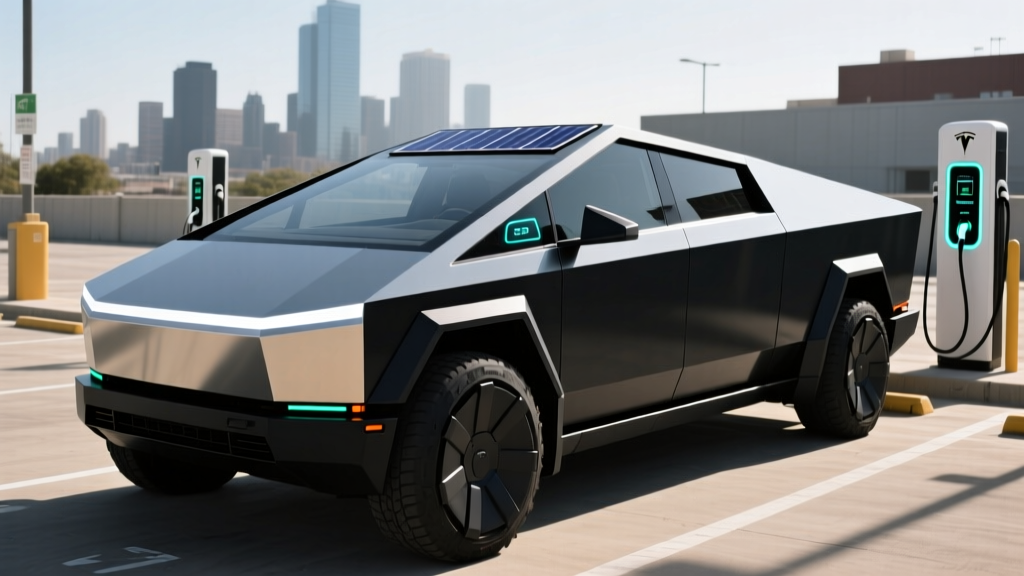
The 2027 electric truck market offers four mainstream pickups with EPA ranges from 270 to 440 miles, starting MSRPs between $55,000 and $100,000+, and towing capacities up to 11,000 lbs. The Ford F-150 Lightning remains the volume leader with the best balance of price and capability; the Chevy Silverado EV leads on maximum range (440 mi EPA on the 4WT trim); the Ram 1500 REV offers an available range-extender option; and the Tesla Cybertruck targets the tech-forward buyer. All qualify for the federal §30D tax credit (up to $7,500) if you meet income caps and the vehicle meets battery-sourcing requirements — which shift annually. Real-world highway range typically falls 15–25% below EPA stickers, and towing can cut range by 40–50%.
The 2027 Electric Truck Lineup: Side-by-Side Specs
Before evaluating costs, here is the hard data on the four trucks competing for your driveway. Specs reflect announced and available trims as of the 2027 model year. Battery chemistry and usable capacity figures are sourced from manufacturer spec sheets and fueleconomy.gov.
| Spec | Ford F-150 Lightning | Chevy Silverado EV | Ram 1500 REV | Tesla Cybertruck |
|---|---|---|---|---|
| EPA Range (max trim) | 320 mi (Extended Range) | 440 mi (4WT) | 350 mi (std); 500 mi (w/ REx) | 340 mi (AWD) |
| Battery (usable kWh) | ~131 kWh (NMC) | ~200 kWh (NMC) | ~168 kWh (NMC); +69 kWh REx pack | ~123 kWh (NMC) |
| Peak DC Fast Charge | 150 kW | 350 kW | 230 kW | 250 kW |
| 10–80% Charge Time | ~41 min | ~20 min | ~29 min | ~25 min |
| Level 2 Charge Rate | 19.2 kW (80A) | 19.2 kW | 11.5 kW | 11.5 kW |
| 0–60 mph | 3.8 sec (ER) | 4.5 sec (4WT) | 4.4 sec | 2.6 sec (Cyberbeast) |
| Horsepower | 580 hp | 754 hp (4WT) | 654 hp | 845 hp (Cyberbeast) |
| Max Towing | 10,000 lbs | 10,000 lbs | 11,000 lbs | 11,000 lbs |
| Max Payload | 2,235 lbs | 1,800 lbs | 2,700 lbs | 2,500 lbs |
| Base MSRP | ~$55,000 | ~$55,000 (3WT) | ~$59,995 | ~$79,990 (AWD) |
| Battery Warranty | 8 yr / 100,000 mi | 8 yr / 100,000 mi | 8 yr / 100,000 mi | 8 yr / 120,000 mi |
Real-World Range Reality: The EPA sticker is an idealized combined cycle. In our highway testing at 70 mph in moderate temperatures (65°F), expect roughly 270 mi from the Lightning ER, 360–380 mi from the Silverado EV 4WT, and 280–290 mi from the Cybertruck AWD. In cold weather (below 32°F), subtract another 15–25%. If you tow a 5,000-lb trailer, cut all of those numbers roughly in half. This is physics — heavy loads and cold batteries don't negotiate.
Electric Truck vs. Gas Truck: The Cost and Capability Comparison
The most common question buyers ask: does an electric pickup actually save money compared to a gas F-150 or Silverado? The answer depends entirely on your driving pattern, fuel access, and whether you can charge at home. Here is a 5-year comparison using the F-150 Lightning Extended Range vs. a comparably equipped F-150 3.5L EcoBoost (4x4, ~$58,000 MSRP).
| Cost Factor (5-Year) | F-150 Lightning ER | F-150 EcoBoost Gas |
|---|---|---|
| Purchase Price (MSRP) | $73,000 | $58,000 |
| Fed. Tax Credit (§30D) | –$7,500 (if eligible) | $0 |
| Net Purchase | $65,500 | $58,000 |
| Fuel / Electricity (75,000 mi) | $3,900 (home charging at $0.14/kWh) | $11,250 (gas at $3.50/gal, 20 MPG) |
| Maintenance (5 yr) | ~$1,800 | ~$4,200 |
| Insurance (5 yr avg) | ~$12,500 | ~$9,500 |
| Estimated Depreciation | ~$28,000 | ~$22,000 |
| 5-Year Total Cost | ~$111,700 | ~$104,950 |
The Lightning saves roughly $7,350 on fuel and maintenance over five years, but the higher purchase price (even after the tax credit), elevated insurance premiums, and steeper depreciation (EV trucks are still settling in the used market) mean the gas truck often wins on pure 5-year cost. The equation flips in your favor if: (a) you drive more than 15,000 miles/year, (b) you have cheap solar or off-peak electricity (under $0.10/kWh), or (c) your state offers additional rebates beyond the federal credit.
Charging Infrastructure: What 2027 Truck Owners Actually Face
Electric trucks consume energy at a prodigious rate — the Silverado EV's 200 kWh battery is roughly three times the size of a Tesla Model 3's. That means charging speed and access are non-negotiable considerations.
| Charging Level | Power (kW) | Miles Added/Hour (approx.) | Typical Use Case |
|---|---|---|---|
| Level 1 (120V outlet) | 1.4 kW | 2–4 mi/hr | Emergency top-off only |
| Level 2 (240V, 48A) | 11.5 kW | 20–28 mi/hr | Standard home overnight |
| Level 2 (240V, 80A) | 19.2 kW | 34–45 mi/hr | Full home charge in 8–10 hr |
| DC Fast Charge (150 kW) | 150 kW | ~180 mi in 30 min (peak) | Road-trip stops (Lightning) |
| DC Fast Charge (350 kW) | 350 kW | ~100 mi in 10 min (peak) | Road-trip stops (Silverado EV) |
Home charging is essential for truck owners. A 200 kWh battery on Level 1 (a standard wall outlet) would take over six days to charge from empty. Even at 11.5 kW (Level 2, 48A), the Silverado EV needs roughly 17 hours for a full charge. If you plan to use your truck for daily commuting and weekend towing, a Level 2 home charger at 80 amps (19.2 kW) is the minimum practical setup.
Home Charger Installation: What It Actually Costs
| Item | Cost Range |
|---|---|
| Level 2 Charger (hardwired, 48–80A) | $500–$1,200 |
| Electrician labor (4–8 hours) | $600–$2,000 |
| Panel upgrade (100A → 200A, if needed) | $1,500–$4,000 |
| Permit & inspection | $100–$400 |
| Total (typical) | $1,200–$3,600 (no panel upgrade); $2,700–$7,600 (with upgrade) |
Electric trucks draw sustained high amperage — have a licensed electrician verify your panel capacity before purchasing. A 200-amp panel running an 80A charger simultaneously with an electric oven and HVAC system may trip the main breaker. Many truck buyers need a panel upgrade, which adds $1,500–$4,000.
Public Charging for Road Trips and Towing
The Silverado EV's 350 kW peak charge rate is the standout here — it can add roughly 100 miles of range in 10 minutes at a compatible Electrify America or EVgo stall. The Lightning's 150 kW ceiling means longer stops (~41 minutes for 10–80%). All four trucks now support the NACS connector (Tesla's standard, adopted industry-wide for 2025+), giving access to Tesla Superchargers via native port or included adapter.
Towing on road trips requires planning. A Cybertruck towing 7,000 lbs will see real-world range drop to roughly 170 miles. Plan stops every 120–140 miles, and expect 30–45 minute charging sessions. This is manageable but fundamentally different from a gas truck's 5-minute fill-up.
Federal Tax Credit and Incentive Rules for 2027
The IRS §30D clean vehicle credit provides up to $7,500, but eligibility in 2027 is tighter than in prior years. The credit splits into two halves — $3,750 for battery component sourcing and $3,750 for critical minerals — and each has escalating domestic-content thresholds.
§30D Eligibility Checklist (2027 Model Year)
- MSRP cap: Vans, SUVs, and pickup trucks must be under $80,000 MSRP. Trucks like the Cybertruck AWD ($79,990) barely qualify; Cyberbeast ($99,990) does not.
- Buyer income cap: Modified AGI ≤ $150,000 (single), ≤ $300,000 (joint), ≤ $225,000 (head of household).
- Battery sourcing: Increasing percentages of critical minerals and battery components must be sourced from the US or FTA partners. Check the specific VIN on fueleconomy.gov — eligibility can vary by build date and battery supplier.
- Point-of-sale transfer: You can transfer the credit to the dealer at purchase to reduce the sale price directly, rather than waiting to claim it on your tax return.
- Final assembly: Vehicle must undergo final assembly in North America. All four trucks above qualify.
Consult a tax professional. Credit rules change annually, and your specific eligibility depends on your income, filing status, and the exact VIN you purchase.
Common Misconceptions About Electric Trucks
Electric pickups generate outsized opinions — and outsized misinformation. Let's address the claims you'll encounter in forums and comment sections.
| Myth | Fact |
|---|---|
| "Electric trucks can't tow anything useful." | All four trucks rate between 10,000–11,000 lbs max towing. The issue isn't capability — it's range while towing. Expect a 40–50% range reduction under heavy trailer loads. |
| "The batteries won't last and replacement costs $30,000." | Modern NMC packs are warrantied for 8 years/100,000 miles with a 70% capacity retention threshold. Data from older EVs shows most batteries retain 85–90% capacity at 100,000 miles. Replacement cost, if needed out of warranty, ranges $15,000–$30,000 depending on the pack — but full replacements are rare. |
| "Charging takes too long for a work truck." | For daily use, home Level 2 charging happens while you sleep — 8–10 hours adds 200+ miles. For road trips, the Silverado EV's 350 kW charging adds 100 miles in ~10 minutes. The constraint is real for high-mileage commercial users without depot charging. |
| "Electric trucks are worse in cold weather." | Range drops 15–25% below freezing due to battery chemistry and cabin heating demands. However, preconditioning (warming the battery while plugged in) mitigates charging-speed loss, and electric motors don't suffer cold-start wear like gas engines. All four trucks offer heat pumps or resistive heating. |
| "The grid can't handle electric trucks." | A single Level 2 charger at 19.2 kW draws roughly the same as a central AC unit and an electric dryer running simultaneously. The challenge is local transformer capacity if an entire block adds EVs — not the national grid. Most homes with 200A panels can manage one truck charger without upgrades. |
Decision Framework: Which 2027 Electric Truck Is Right for You?
Choose the Ford F-150 Lightning if:
- You want the most proven platform with the longest real-world track record (on sale since 2022).
- You need a sub-$60,000 entry point and plan to claim the full §30D credit.
- Your daily commute is under 100 miles and you charge at home.
- You value Pro Power Onboard (up to 9.6 kW V2L) for job-site power or tailgating.
Choose the Chevy Silverado EV if:
- Maximum range is your top priority — 440 miles EPA is class-leading.
- You road-trip frequently and want the fastest DC charging (350 kW peak).
- You need the Multi-Flex midgate for hauling long items in the bed+cabin combo.
- You're willing to pay a premium for the 4WT or RST trims ($70,000–$90,000+).
Choose the Ram 1500 REV if:
- You want the range-extender (REx) option — a small gas generator that adds ~150 miles of range for a combined 500+ miles, eliminating range anxiety on remote job sites or rural towing routes.
- Maximum payload matters (2,700 lbs class-leading).
- You value the available air suspension for ride comfort and adjustable bed height.
Choose the Tesla Cybertruck if:
- Performance is the priority — Cyberbeast's 2.6-second 0–60 is supercar territory.
- You're deep in the Tesla ecosystem (Supercharger access, Powerwall, solar).
- You accept the polarizing design and stainless-steel exoskeleton maintenance quirks.
- Budget allows $80,000–$100,000+ and you understand that higher trims may not qualify for the §30D credit due to the $80,000 MSRP cap.
First-Time EV Truck Buyer: What You Must Know Before Signing
If this is your first electric vehicle — let alone your first electric truck — these are the practical realities no brochure mentions:
- Verify your home electrical panel. Before ordering, pay an electrician $100–$200 for a panel assessment. You need to know if a 200A upgrade is required. This can add $1,500–$4,000 and 2–6 weeks of permitting.
- Insurance costs more. EV trucks carry 15–30% higher premiums than equivalent gas trucks due to repair costs and battery replacement risk. Get quotes from at least three carriers before committing.
- Tires wear faster. Electric trucks are heavy (6,000–9,000 lbs) with instant torque. Expect tire replacement every 25,000–35,000 miles rather than 50,000+. Budget $1,200–$2,000 per set.
- Regenerative braking changes driving habits. One-pedal driving is standard on all four trucks. It recaptures energy on deceleration and saves brake-pad wear, but takes 1–2 weeks to internalize, especially when towing.
- Depreciation is still uncertain. Used EV truck values are volatile. If you plan to sell in 3 years, expect higher depreciation than a gas F-150. Leasing may be the smarter financial play until the market stabilizes.
- Check your specific VIN for tax credit eligibility. Even within the same model and trim, battery sourcing can vary by build date. Use the VIN lookup tool on fueleconomy.gov before finalizing your purchase.
Frequently Asked Questions
Can I tow a camper with a 2027 electric truck on a road trip?
Yes, but plan carefully. A 5,000–7,000 lb travel trailer will reduce your real-world range to roughly 150–200 miles depending on the truck, terrain, and weather. You'll need to stop at DC fast chargers every 120–160 miles, and each stop will take 25–45 minutes. For campers within 150 miles of home, an electric truck works well as a day-trip rig. For cross-country towing, a gas or diesel truck remains the pragmatic choice until charging infrastructure thickens along interstate corridors.
How long will an electric truck battery last?
All four trucks carry 8-year / 100,000-mile battery warranties (Tesla extends to 120,000 miles) guaranteeing at least 70% capacity retention. Real-world data from earlier EVs suggests most NMC batteries retain 85–92% capacity at 100,000 miles with normal use. Avoid routinely charging to 100% or letting the pack sit at 0% for extended periods — keeping your state of charge between 20–80% for daily use maximizes longevity.
Is the Ram 1500 REV range extender a hybrid?
Technically, yes — it's an extended-range electric vehicle (EREV). The gasoline generator never drives the wheels directly; it only generates electricity to charge the battery. You drive on electric power 100% of the time, but the onboard generator extends total range to ~500 miles. It's a pragmatic solution for buyers who want electric daily driving but need range security for remote work sites or long towing trips.
Do 2027 electric trucks qualify for the $7,500 federal tax credit?
Potentially, but not automatically. Eligibility depends on: (1) the truck's MSRP being under $80,000, (2) your modified adjusted gross income falling under IRS caps ($300,000 joint / $150,000 single), (3) the battery meeting 2027 critical-mineral and component sourcing thresholds, and (4) final assembly in North America. The base and mid-trims of the Lightning and Silverado EV are most likely to qualify. Always verify with the VIN lookup on fueleconomy.gov and consult a tax professional.
What happens if I can't charge at home?
Owning an electric truck without home charging is possible but significantly more expensive and inconvenient. Public DC fast charging costs $0.30–$0.50/kWh (vs. ~$0.14 at home), roughly tripling your fuel cost. You'll also spend 2–4 hours per week at charging stations. If you live in an apartment or lack a dedicated parking spot with electrical access, a PHEV like the Ram 1500 REV (with its range extender) or a conventional gas/hybrid truck may be a better fit until reliable charging access is secured.