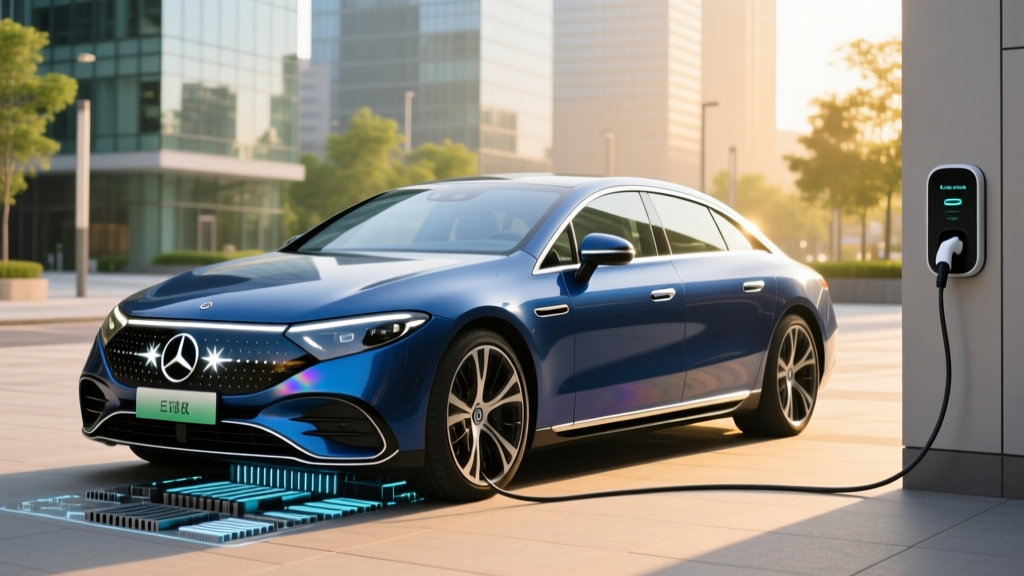
The Mercedes-Benz EQS Sedan remains the benchmark for what a flagship electric luxury car can be. For 2026, Mercedes has refined the aerodynamics, updated the battery management software, and adjusted pricing to stay competitive against the Tesla Model S, Lucid Air, and BMW i7. But with a six-figure starting price and complex federal tax credit rules, the EQS demands a hard look at the numbers before you sign the lease or purchase agreement.
Below is a comprehensive, spec-driven review covering real-world range, charging behavior, ownership costs, and whether the EQS Sedan justifies its premium in a rapidly maturing luxury EV market.
Quick Verdict: Who the EQS Sedan Is For
The 2026 Mercedes-Benz EQS Sedan is engineered for buyers who prioritize cabin isolation, ride quality, and long-distance electric comfort over outright performance. The EQS 450+ delivers up to 390 miles of EPA-estimated range — among the highest of any luxury sedan — while the dual-motor EQS 580 4MATIC trades some range for all-weather traction and a 3.4-second 0-60 mph time.
This is not a sports sedan. It is an autobahn cruiser with best-in-class aerodynamics (a drag coefficient of 0.20) and a cabin that rivals the S-Class. If your use case is executive commuting, cross-country road trips, or chauffeured travel, the EQS delivers. If you want track-day thrills or a third row, look at the Lucid Air or Rivian R1S instead.
Range, Efficiency, and Real-World Expectations
The EQS 450+ carries an EPA-estimated 390 miles on its 118 kWh usable battery. In real-world highway driving at 70-75 mph with climate control on, expect approximately 320-345 miles in mild weather. In cold conditions (below 32°F), plan for 260-295 miles of usable range due to battery resistance and cabin heating demands. The dual-motor EQS 580 4MATIC rates at 345 miles EPA, with real-world highway figures closer to 280-310 miles.
The EQS achieves its exceptional efficiency through a combination of the industry's lowest production-car drag coefficient and a heat pump that comes standard on all 2026 trims. The heat pump recovers waste heat from the drivetrain and ambient air, reducing the energy penalty of cabin heating in cold weather by up to 30% compared to resistive heating systems.
Efficiency on the EQS 450+ is rated at 97 MPGe combined (roughly 35 kWh per 100 miles), per fueleconomy.gov. The EQS 580 drops slightly to 91 MPGe combined (37 kWh/100 mi) due to the added weight and mechanical drag of the front motor.
Battery Chemistry and Longevity
The 2026 EQS uses a 118 kWh usable (120 kWh gross) lithium-ion battery pack with NMC (nickel manganese cobalt) chemistry. NMC offers higher energy density than LFP, which is essential for fitting 390 miles of range into a sedan floorpan, but it requires more careful thermal management and benefits from not being routinely charged to 100%.
| Spec | EQS 450+ | EQS 580 4MATIC |
|---|---|---|
| EPA Range | 390 mi | 345 mi |
| Battery (usable) | 118 kWh NMC | 118 kWh NMC |
| Drivetrain | RWD (single motor) | AWD (dual motor) |
| Horsepower | 355 hp | 536 hp |
| 0-60 mph | 5.3 sec | 3.4 sec |
| Max DC Charge Rate | 200 kW | 200 kW |
| 10-80% DC Time | ~31 min | ~31 min |
| Level 2 Rate | 9.6 kW (~31 mi/hr) | 9.6 kW (~31 mi/hr) |
| MPGe (combined) | 97 MPGe | 91 MPGe |
| Base MSRP | $105,550 | $127,350 |
| Federal Tax Credit | Not eligible (MSRP cap) | Not eligible (MSRP cap) |
Mercedes-Benz warrants the EQS high-voltage battery for 8 years or 100,000 miles, whichever comes first, against defects and capacity loss below 70% of original capacity. This is industry-standard and matches BMW, Audi, and Tesla's battery warranty terms. Real-world degradation data from earlier EQS model years (2022-2024) suggests most owners see approximately 5-8% capacity loss over the first 60,000 miles when using a mix of Level 2 and DC fast charging — well within the warranty threshold.
Charging Speed: DC Fast and Home Level 2
The EQS Sedan supports a maximum DC fast-charge rate of 200 kW via its CCS1 connector (NACS adapter available for Tesla Supercharger access). On a 350 kW Electrify America or EVgo station, the EQS follows a progressive charge curve:
- 10-20% SoC: Ramps quickly to peak ~195-200 kW
- 20-50% SoC: Sustains approximately 170-190 kW
- 50-80% SoC: Tapers from ~140 kW down to ~90 kW
- Above 80% SoC: Drops sharply to ~40 kW and below — charging past 80% is only practical at your destination
The result is a 10-80% charge time of approximately 31 minutes under ideal thermal conditions. The EQS's battery preconditioning system activates automatically when you navigate to a DC fast charger in the MBUX infotainment, warming or cooling the pack to its optimal charging temperature window. Without preconditioning (for example, arriving at a charger with a cold-soaked battery in winter), expect 10-80% times to stretch to 40-50 minutes.
For home charging, the onboard charger accepts up to 9.6 kW on Level 2 (240V, 40A). This adds approximately 31 miles of range per hour, meaning a full 10-100% charge from empty takes roughly 12-13 hours — easily accomplished overnight. Mercedes offers its Wallbox Home charger, but any quality J1772 Level 2 station (ChargePoint Home Flex, Emporia Vue, Tesla Wall Connector with J1772 adapter) will work identically.
Pricing, Trims, and the Federal Tax Credit Reality
The 2026 EQS Sedan is offered in three primary configurations:
- EQS 450+ Sedan: $105,550 MSRP (RWD, 355 hp, 390 mi range)
- EQS 450 4MATIC Sedan: $111,550 MSRP (AWD, 355 hp, ~360 mi range)
- EQS 580 4MATIC Sedan: $127,350 MSRP (AWD, 536 hp, 345 mi range)
Options packages — including the AMG Line exterior, Executive Rear Seat package, MBUX Hyperscreen (a 56-inch curved glass display spanning the full dashboard), and rear-axle steering — can push an EQS 580 to $140,000-$148,000 as-tested.
Under IRS §30D rules, the new clean vehicle credit is limited to sedans with an MSRP at or below $55,000 (and SUVs/trucks at or below $80,000). Every EQS trim exceeds the sedan MSRP cap and therefore does not qualify for the $7,500 federal tax credit, regardless of buyer income or battery sourcing. Additionally, buyer income caps apply to qualifying vehicles ($150,000 single / $300,000 joint AGI). Some state and utility incentives may still apply — check your local programs.
Interior Space, Cargo, and Technology
The EQS Sedan rides on Mercedes' dedicated EVA electric platform, which places the battery low in the floor and frees up interior volume. The result is generous:
- Front legroom: 41.7 inches
- Rear legroom: 42.1 inches (class-leading — more than the S-Class)
- Trunk (cargo): 22.0 cubic feet (hatchback-style liftback opening)
- Frunk: Not available — the space under the hood houses HVAC and power electronics
The cabin highlight is the available MBUX Hyperscreen, a 56-inch curved glass panel that integrates a 12.3-inch instrument cluster, 17.7-inch central OLED touchscreen, and 12.3-inch passenger display. The system runs Mercedes' latest MBUX generation with wireless Apple CarPlay and Android Auto, over-the-air updates, and natural-language voice control.
On the driver-assistance front, the EQS comes standard with Active Distance Assist DISTRONIC (adaptive cruise), Active Steering Assist (lane centering), and Active Lane Change Assist. These constitute an SAE Level 2 system — meaning the driver must remain fully engaged with hands on the wheel and eyes on the road at all times. The optional DRIVE PILOT system, where approved, enables conditional SAE Level 3 driving at speeds up to 40 mph on suitable highways, allowing the driver to look away from the road under specific conditions. Availability remains limited to select mapped highways in Nevada and California as of 2026.
Driving Dynamics and Ride Quality
The EQS 450+ delivers a 5.3-second 0-60 mph time, which is leisurely by modern EV standards but perfectly adequate for merging and passing. The EQS 580's 3.4-second sprint places it in sports-car territory, though the sedan's 5,800-pound curb weight is felt in corners. Standard AIRMATIC air suspension with adaptive damping delivers a pillowy ride over rough pavement, and the available rear-axle steering (up to 10 degrees) shrinks the turning circle to that of a compact hatchback — invaluable in parking garages and tight urban streets.
Regenerative braking offers three modes selectable via steering-wheel paddles: coasting (D Auto), moderate regen (D+), and strong regen approaching one-pedal driving (D-). However, the EQS does not offer true one-pedal driving to a full stop in all modes — Mercedes' philosophy prioritizes a smooth, coasting feel over aggressive energy recuperation. Drivers accustomed to the one-pedal behavior of a Tesla or Chevrolet Bolt may find the EQS braking feel initially soft.
Competitive Comparison: EQS vs. Lucid Air, BMW i7, Tesla Model S
| Attribute | Mercedes EQS 450+ | Lucid Air Pure | BMW i7 xDrive60 | Tesla Model S LR |
|---|---|---|---|---|
| EPA Range | 390 mi | 419 mi | 318 mi | 402 mi |
| Starting MSRP | $105,550 | $77,400 | $125,295 | $79,990 |
| Max DC Charge | 200 kW | 250 kW | 195 kW | 250 kW |
| 0-60 mph | 5.3 sec | 5.2 sec | 4.5 sec | 3.1 sec |
| Rear Legroom | 42.1 in | 41.3 in | 42.8 in | 35.4 in |
| Fed. Tax Credit | No (MSRP cap) | No (MSRP cap) | No (MSRP cap) | No (MSRP cap) |
The Lucid Air Pure undercuts the EQS by nearly $30,000 and offers more range, but its dealer network is far smaller and its interior materials don't match Mercedes' craftsmanship. The BMW i7 is the EQS's closest rival in luxury execution, with a slightly roomier rear seat, but it sacrifices 72 miles of range and costs $20,000 more. The Tesla Model S remains the performance and value leader, but its interior quality and ride refinement lag significantly behind the German competition.
Pros and Cons
- Class-leading 390-mile EPA range (450+)
- Exceptional rear-seat legroom (42.1 in)
- Ultra-quiet cabin with superb ride quality
- Heat pump standard on all trims
- Available SAE Level 3 DRIVE PILOT (limited areas)
- Hatchback-style liftback for practical cargo loading
- Rear-axle steering for tight maneuverability
- $105K+ starting price; no federal tax credit
- 200 kW peak DC charging trails Lucid/Tesla (250 kW)
- No front trunk (frunk)
- Regen braking doesn't offer full one-pedal stop in all modes
- Hyperscreen adds significant cost and potential distraction
- Heavy curb weight (~5,800 lbs) affects tire wear and handling
- Depreciation steeper than S-Class historically
Ownership Costs and Depreciation
Luxury EVs carry higher insurance premiums than their ICE counterparts — expect $2,800-$3,600 annually for the EQS depending on your state and driving record. Maintenance costs are significantly lower than a gas S-Class (no oil changes, fewer brake replacements thanks to regen), with Mercedes' scheduled service running approximately $600-$900 per year for cabin filter replacements, fluid top-offs, and tire rotations.
Charging cost is a fraction of gasoline. At a national average of $0.16/kWh for home electricity, fully charging the 118 kWh battery costs approximately $18.90, yielding a per-mile energy cost of roughly $0.049 — compared to $0.14-$0.17/mile for a comparable gas sedan at $3.50/gallon and 24 MPG.
Depreciation is the EQS's largest ownership cost. Luxury EVs have historically lost 50-60% of their value within three years, driven by rapid technology advancement and battery-health concerns among used buyers. If you plan to keep the EQS beyond five years or lease with favorable terms, this sting is reduced.
Frequently Asked Questions
Does the 2026 Mercedes-Benz EQS Sedan qualify for the federal EV tax credit?
No. Under current IRS §30D guidelines, new sedans must have an MSRP at or below $55,000 to qualify for the $7,500 clean vehicle credit. Every EQS trim starts well above this cap, making none of them eligible regardless of buyer income or battery component sourcing.
What is the real-world highway range of the EQS 450+?
While the EPA rates the EQS 450+ at 390 miles, sustained highway driving at 70-75 mph in moderate temperatures yields approximately 320-345 miles before needing to charge. In cold weather (below freezing), expect 260-295 miles. This still covers most intercity trips with a single 20-25 minute fast-charge stop.
Can the EQS use Tesla Superchargers?
Yes. The 2026 EQS ships with a CCS1 inlet, and Mercedes provides or supports a NACS adapter that enables access to Tesla's Supercharger network (V3 and V4 stalls). Charge speed is limited to the EQS's 200 kW maximum, even at 250 kW or 350 kW Supercharger stalls.
How long does the EQS battery last before replacement?
Based on current NMC degradation data, most EQS owners can expect 85-92% battery capacity retention after 100,000 miles. The 8-year/100,000-mile warranty covers replacement if capacity drops below 70%. A full out-of-warranty battery replacement would likely cost $20,000-$30,000 based on current pricing — though this figure is expected to decline as battery costs fall.
Is the EQS Sedan worth buying over the Lucid Air or BMW i7?
Choose the EQS 450+ if you want the best combination of range, rear-seat comfort, and traditional Mercedes dealer support. Choose the Lucid Air Pure if you want more range at a lower price and don't mind a smaller service network. Choose the BMW i7 if you prioritize the latest iDrive infotainment and slightly more rear headroom, and can accept shorter range and higher cost.
What home charging setup do I need for the EQS?
A 240V, 40-amp Level 2 circuit with a NEMA 14-50 outlet or hardwired station delivers the EQS's full 9.6 kW onboard charge rate. Installation costs typically range from $800-$2,500 depending on your electrical panel capacity and the distance from panel to garage. Have a licensed electrician verify your panel has sufficient capacity (a 200A main panel is usually adequate).