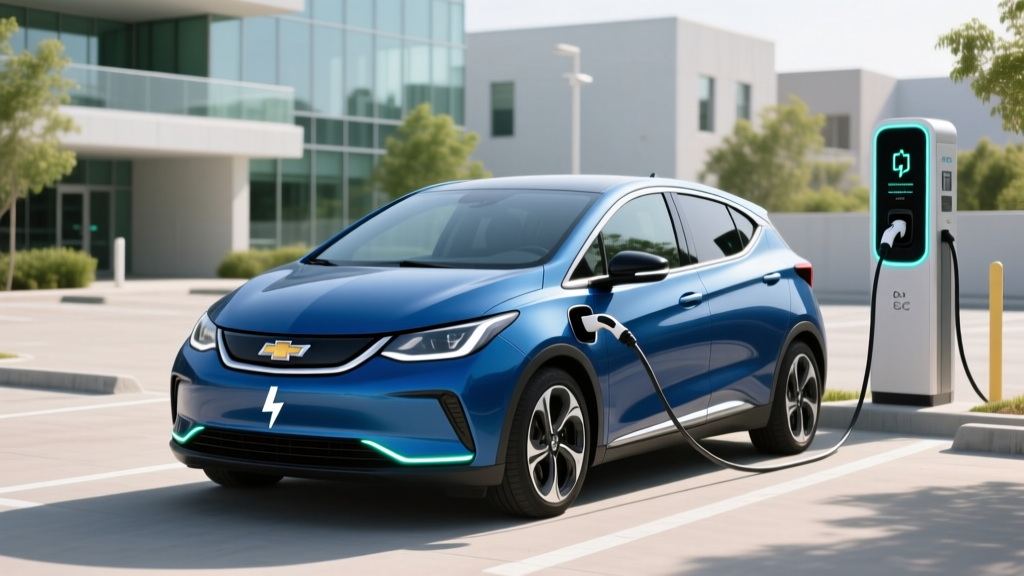
When Chevrolet confirmed the next-generation Bolt would return on the Ultium platform, it immediately became one of the most anticipated budget EVs in the segment. The 2027 Chevy Bolt arrives for the 2027 model year with a completely new battery architecture, native NACS charging, and a starting price that undercuts nearly every other new EV on the market. After spending time with Chevrolet's preliminary specifications and comparing them against the outgoing Bolt EUV, here is the full breakdown of what buyers can expect — and where the new Bolt fits in a rapidly shifting affordable-EV landscape.
2027 Chevy Bolt: Preliminary Spec Sheet
| Specification | 2027 Chevy Bolt (Preliminary) |
|---|---|
| EPA Range (est.) | ~255 miles |
| Battery Capacity | ~65 kWh usable (LFP, Ultium platform) |
| Drivetrain | FWD, single motor |
| Horsepower | ~200 hp |
| 0–60 mph | ~7.0 seconds (est.) |
| Peak DC Fast Charge | ~150 kW (NACS native) |
| 10–80% DC Charge Time | ~30 minutes (est.) |
| Level 2 Home Charging | 11.5 kW (~39 mi/hr) |
| EPA Efficiency (est.) | ~120 MPGe / 28 kWh/100 mi |
| Cargo Volume | ~17 cu ft (rear seats up), ~57 cu ft (folded) |
| Base MSRP | $28,900 (est., incl. destination) |
| Battery/Powertrain Warranty | 8 years / 100,000 miles |
Note: The 2027 Chevy Bolt is an announced model with preliminary specifications. Final EPA figures, pricing, and trim details will be confirmed closer to the on-sale date. This profile is based on Chevrolet disclosures and industry analysis available as of mid-2026.
Range and Efficiency: Real-World Expectations
Real-World Expectation: ~210–230 miles at sustained highway speeds (70+ mph); ~170–195 miles in cold weather (below 32°F) with cabin heating active.
The outgoing Bolt EV and EUV posted EPA ranges of 259 and 247 miles respectively on an older 65 kWh NMC battery. The 2027 Bolt's shift to lithium iron phosphate (LFP) chemistry on the Ultium platform is a deliberate trade-off: LFP cells are cheaper, more durable over thousands of cycles, and safer in thermal runaway scenarios, but they carry lower energy density than NMC. That means Chevrolet is likely fitting a similar usable capacity (~65 kWh) into a slightly heavier pack, yielding an estimated EPA range around 255 miles for the base trim.
In real-world driving, range depends heavily on conditions. Highway driving at 75 mph in mild weather typically costs EVs 10–15% versus their EPA sticker. Cold weather compounds this — LFP chemistry is somewhat more resistant to low-temperature capacity loss than NMC, but the cabin heating load alone can cut range by 20–30% in sub-freezing conditions. Commuters with short, mixed-speed routes will see figures closest to the EPA number; cross-state road trippers in January should plan conservatively.
Efficiency should land around 28 kWh per 100 miles (roughly 120 MPGe), competitive with the Hyundai Kona Electric and slightly behind the more aerodynamic Tesla Model 3. For context, the average US electricity rate of ~$0.16/kWh means a full home charge costs roughly $10.40 — about one-third the per-mile fuel cost of a 30 MPG gas car at $3.50/gallon.
Charging: NACS Native and Meaningfully Faster
The single biggest upgrade over the previous-generation Bolt is charging. The old Bolt's 55 kW DC fast-charging cap was its most criticized flaw, adding roughly 200 miles of range in an hour at a fast charger — painfully slow for road trips. The 2027 Bolt rectifies this with a native NACS (North American Charging Standard) port and an estimated peak DC charge rate of around 150 kW.
| Charging Level | Power | Speed / Time |
|---|---|---|
| Level 1 (120V household) | ~1.4 kW | ~4 mi/hr |
| Level 2 (240V home/public) | 11.5 kW | ~39 mi/hr; full charge in ~6 hrs |
| DC Fast Charge (NACS) | Peak ~150 kW | 10–80% in ~30 min |
At 150 kW peak, the 2027 Bolt should add roughly 150 miles of range in 15 minutes under optimal conditions (warm battery, low state of charge). However, LFP batteries tend to have flatter charge curves than NMC — meaning the Bolt may sustain a relatively high charge rate deeper into the session before tapering above 80%. This is a practical advantage for drivers who regularly charge to 90% or 100%.
For home charging, the 11.5 kW onboard charger is a solid spec. Most owners will install a 48-amp Level 2 wall connector on a 60-amp circuit, recovering a full battery overnight in about six hours. If your electrical panel needs an upgrade to support a 240V/60A circuit, budget $500–$2,000 for the electrician work on top of $300–$600 for the charging unit itself.
Performance and Driving Dynamics
Chevrolet has confirmed the 2027 Bolt will ride on a variant of the Ultium BEV3 platform, but it retains front-wheel drive with a single motor producing an estimated 200 horsepower. That is a meaningful bump from the outgoing Bolt's 200 hp / 266 lb-ft setup, and with Ultium's more efficient power electronics, the 0–60 mph time should drop to around 7.0 seconds — brisk enough for confident highway merging but not sporty in the way a dual-motor Tesla Model 3 or Hyundai Ioniq 5 AWD would feel.
Ride quality should benefit from the Ultium platform's lower center of gravity and revised suspension geometry. The outgoing Bolt was competent but firm over rough pavement; early indications suggest Chevrolet is tuning the 2027 model for a more compliant ride while maintaining the tight turning radius (~35.5 feet) that makes the Bolt excellent in urban environments.
Regenerative braking is expected to include a one-pedal driving mode with adjustable regen levels, carried over from the previous generation. This remains one of the Bolt's most appreciated features among owners who prefer to minimize friction brake use.
Interior, Cargo, and Technology
The 2027 Bolt will feature a redesigned interior anchored by an 11-inch digital instrument cluster and a 17.7-inch diagonal infotainment touchscreen running GM's latest Ultifi-based software stack. Wireless Apple CarPlay and Android Auto are expected, along with Google built-in for navigation and voice assistant functions.
Cargo space should remain competitive with the outgoing Bolt EUV's proportions: approximately 17 cubic feet behind the rear seats and 57 cubic feet with the 60/40 split rear seats folded. Rear legroom in the previous EUV was a generous 39.1 inches — one of the best in the subcompact EV segment — and the 2027 model is expected to match or slightly exceed that figure thanks to the Ultium platform's flat floor.
On the driver-assistance front, the 2027 Bolt will come with Chevy Safety Assist as standard (automatic emergency braking, lane-keeping assist, following distance indicator, IntelliBeam headlights). Super Cruise — GM's hands-off, eyes-on Level 2 highway driving system — is expected as an option on higher trims, a significant upgrade from the previous Bolt which lacked any advanced semi-autonomous capability. Note: Super Cruise is an SAE Level 2 system, meaning the driver must remain attentive and ready to take over at all times.
Pricing, Trims, and Federal Tax Credit Eligibility
| Trim | Est. MSRP | Est. After §30D Credit |
|---|---|---|
| Bolt EV 1LT | $28,900 | $21,400* |
| Bolt EV 2LT | $32,500 | $25,000* |
| Bolt EUV (if offered) | $34,900 | $27,400* |
*Federal tax credit eligibility depends on multiple factors. See checklist below.
Chevrolet has positioned the next-gen Bolt as the most affordable new EV in America, and the estimated $28,900 starting price for the 1LT trim makes that claim credible. That is roughly $1,000 less than the Nissan Leaf's base price and significantly undercuts the Hyundai Kona Electric ($33,000+), Tesla Model 3 ($39,000+), and Volvo EX30 ($36,000+).
Federal Tax Credit (§30D) Eligibility Checklist
- MSRP Cap: Vehicle must have an MSRP at or below $55,000 for sedans/hatchbacks (the Bolt clears this easily).
- Buyer Income Cap: Modified AGI must not exceed $150,000 (single), $225,000 (head of household), or $300,000 (married filing jointly).
- Battery Sourcing: Critical minerals and battery components must meet escalating domestic-content thresholds per IRS §30D rules. As an LFP battery, sourcing from China could limit credit eligibility to $3,750 (half credit) if mineral requirements are not met.
- Point-of-Sale Transfer: Eligible buyers can apply the credit as an immediate dealer discount rather than waiting for a tax refund.
- Assembly: Vehicle must undergo final assembly in North America (the Bolt is built in Michigan).
The Bolt's LFP battery chemistry introduces a wrinkle: LFP cells are predominantly manufactured in China. If GM cannot source sufficient critical minerals from US free-trade-agreement partners, buyers may qualify for only $3,750 rather than the full $7,500. Chevrolet has indicated it is working with LG Energy Solution and other partners to meet domestic-sourcing thresholds, but final credit amounts will depend on the specific battery pack configuration at launch. Always verify current eligibility on IRS.gov or consult a tax professional before purchasing.
Pros, Cons, and Who Should Buy the 2027 Bolt
Pros
- Lowest starting MSRP of any new long-range EV
- Native NACS port — full Tesla Supercharger access
- 150 kW DC fast charging (3× faster than outgoing Bolt)
- LFP battery: longer cycle life, 100% SoC daily charging safe
- Generous rear-seat legroom for the subcompact class
- Super Cruise availability on higher trims
- Federal tax credit likely (at least partial)
Cons
- FWD only — no AWD option for snow-belt buyers
- Range (~255 mi EPA) trails Tesla Model 3 and Hyundai Kona Electric
- DC fast charge still slower than 800V competitors (Ioniq 5, EV6)
- LFP battery adds weight vs NMC at same kWh
- Towing capacity minimal (~1,000 lbs or less)
- Cargo space adequate but not class-leading
Who the 2027 Bolt Is For
Choose the Bolt if: You want the cheapest new EV with 250+ miles of range, you primarily commute and run errands within a 100-mile daily radius, you can charge at home overnight, and you want access to the Tesla Supercharger network without an adapter.
Look elsewhere if: You need AWD for harsh winters (consider the Subaru Solterra or Hyundai Kona AWD), you regularly take 400+ mile road trips and want 300+ mile range (Tesla Model 3 Long Range), or you need meaningful towing capacity (Rivian R2, Ford Explorer EV).
How the 2027 Bolt Stacks Up Against Competitors
| Model | EPA Range | DC Fast Charge | Base MSRP |
|---|---|---|---|
| 2027 Chevy Bolt | ~255 mi | ~150 kW | $28,900 |
| Hyundai Kona Electric | 261 mi | 100 kW | $33,550 |
| Tesla Model 3 RWD | 272 mi | 170 kW | $39,990 |
| Nissan Leaf | 212 mi | 100 kW | $29,990 |
| Volvo EX30 | 265 mi | 153 kW | $36,245 |
The Bolt's value proposition is clear: it offers 90% of the range of its more expensive rivals at 70–80% of the price. The Kona Electric edges it on range and offers AWD, but costs $4,600 more before credits. The Model 3 is the benchmark for efficiency and charging speed but starts $11,000 higher. The Nissan Leaf is the closest in price but trails on range by 43 miles and uses the aging CHAdeMO connector with a shrinking public network.
Warranty and Long-Term Ownership
Chevrolet covers the Bolt's battery and powertrain for 8 years or 100,000 miles, whichever comes first, with a capacity retention threshold of 60% — consistent with industry norms and GM's published warranty terms. The LFP chemistry should provide a longevity advantage: LFP cells typically retain 80%+ capacity after 3,000 full charge cycles, compared to 1,000–2,000 cycles for NMC. For an owner driving 12,000 miles per year and charging daily, that translates to well over 15 years of practical battery life before significant degradation.
One LFP-specific ownership tip: unlike NMC batteries, LFP cells benefit from being charged to 100% regularly (at least once per week). This helps the battery management system calibrate state-of-charge readings, which can drift on LFP chemistry due to its flat voltage curve. GM is expected to recommend this practice in the owner's manual.
Frequently Asked Questions
What is the real-world range of the 2027 Chevy Bolt?
With an estimated EPA range of ~255 miles, expect roughly 210–230 miles on the highway at 70+ mph in mild weather, and 170–195 miles in cold conditions below freezing. City driving with regenerative braking will yield results closest to the EPA sticker.
How fast does the 2027 Bolt charge at home and on the road?
At home on a 240V Level 2 charger (11.5 kW), the Bolt adds about 39 miles of range per hour and fully charges in roughly 6 hours. On DC fast chargers, it peaks at approximately 150 kW, reaching 10–80% in about 30 minutes — a dramatic improvement over the outgoing Bolt's 55 kW limit.
Does the 2027 Chevy Bolt qualify for the $7,500 federal EV tax credit?
Likely, but the full amount is not guaranteed. The Bolt meets the MSRP cap ($55,000 for hatchbacks), is assembled in Michigan (North American final assembly), and most buyers will fall under the income caps. However, LFP battery sourcing may limit the credit to $3,750 if critical-mineral thresholds are not fully met. Check IRS.gov for the most current eligibility list before purchasing.
Is the 2027 Bolt worth buying over the Tesla Model 3 or Hyundai Kona Electric?
If budget is your primary concern and you can charge at home, the Bolt offers the best value in the new-EV market. If you need 300+ mile range, faster DC charging, or AWD, the Model 3 or Kona are worth the premium. The Bolt is the smartest choice for cost-conscious commuters who don't regularly drive 300+ miles in a single day.
Does the 2027 Bolt have access to Tesla Superchargers?
Yes. The 2027 Bolt comes with a native NACS port, meaning it plugs directly into Tesla Superchargers without an adapter — a significant advantage for road-trip charging reliability.
What is the LFP battery advantage?
LFP (lithium iron phosphate) batteries are less expensive to manufacture, safer in extreme conditions, and last significantly longer (more charge cycles) than NMC batteries. The trade-off is lower energy density, meaning more weight for the same range. For a budget EV like the Bolt, LFP is the right engineering choice.