The Cybertruck Sales Slump: Beyond the Hype Cycle
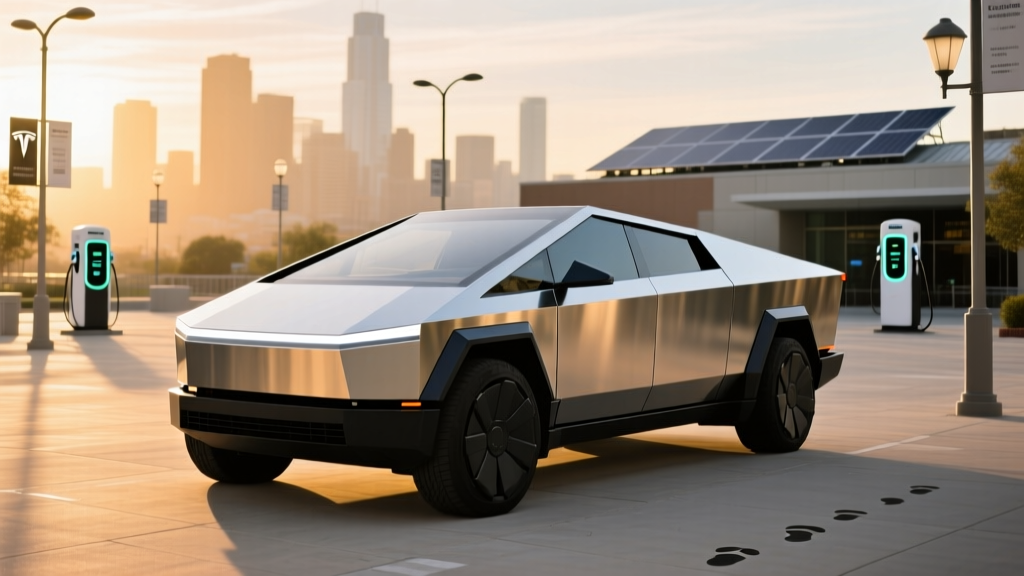
When Tesla unveiled the Cybertruck in 2019, it generated over a million reservations. By early 2026, however, industry analysts and dealer data point to a starkly different reality: Cybertruck poor sales have become one of the most discussed underperformance stories in the EV market. Production ramped significantly through 2024 and 2025, yet demand has not kept pace with the polarizing truck's ambitious volume targets. Resale values on the secondary market have softened, wait times have evaporated, and Tesla has quietly adjusted pricing and trim availability to stimulate demand.
This isn't a vehicle that fails on specifications alone. The Cybertruck remains a technically ambitious electric pickup with class-leading acceleration, an 800-volt architecture, and a stainless-steel exoskeleton. But for buyers evaluating a $80,000+ electric truck, the question isn't whether it's impressive — it's whether it's practical. We break down every dimension of the 2026 Cybertruck to explain why sales have stalled and whether the truck still makes sense for the right buyer.
Range, Efficiency, and Real-World Expectations
The 2026 Tesla Cybertruck is offered in two primary battery configurations across the AWD and Cyberbeast trims. The usable battery capacity sits at approximately 123 kWh (gross ~135 kWh), using an NMC (nickel-manganese-cobalt) chemistry optimized for energy density and high-power discharge. Tesla does not officially publish chemistry details, but teardown analyses and supply-chain reporting confirm NMC cells in a structural battery pack.
| Trim | EPA Est. Range | Real-World Highway (70 mph) | Cold Weather (20°F) |
|---|---|---|---|
| AWD | 340 miles | ~270-290 miles | ~220-250 miles |
| Cyberbeast | 320 miles | ~255-275 miles | ~210-240 miles |
The Cybertruck's angular, flat-panel stainless-steel body creates a drag coefficient (Cd) significantly worse than a conventional rounded pickup. At highway speeds, aerodynamic drag dominates energy consumption. Expect a 15-22% range reduction on sustained 70+ mph highway drives versus the EPA combined figure. In freezing temperatures, the loss compounds — battery heating and cabin HVAC draw can push total range loss to 30-35%.
Efficiency ratings from fueleconomy.gov place the AWD trim at approximately 70 MPGe combined (roughly 48 kWh/100 miles), which is poor by EV standards but expected for a 6,800+ lb stainless-steel truck. The Cyberbeast, with its tri-motor setup and higher performance tuning, drops to around 65 MPGe. For context, a Ford F-150 Lightning Extended Range achieves roughly 70-72 MPGe, and the Rivian R1T Dual-Motor Large sits around 70 MPGe as well. The Cybertruck is not an efficiency leader — it's a brute-force approach to electric trucking.
Charging Speed: 800V Architecture Meets Reality
One area where the Cybertruck genuinely excels is DC fast charging. Its 800-volt electrical architecture enables peak charge rates up to 350 kW at compatible V4 Superchargers and third-party CCS/NACS stations. However, as any experienced EV owner knows, peak kW is not sustained kW. The charge curve tapers significantly above 60% state of charge (SoC).
| Charging Level | Power / Rate | Time / Miles Added |
|---|---|---|
| DC Fast Charge (peak) | 350 kW (V4 Supercharger) | 10-80% in ~18-22 minutes |
| DC Fast Charge (sustained avg.) | ~170-200 kW average (10-80%) | Adds ~130-150 miles in 15 min |
| Level 2 (Tesla Wall Connector) | 11.5 kW / 48A | ~37 miles per hour of charging |
| Level 2 (standard 240V/40A) | 9.6 kW | ~30 miles per hour of charging |
| Level 1 (120V/12A) | 1.4 kW | ~4-5 miles per hour (emergency only) |
At home on a properly installed Level 2 Tesla Wall Connector (hardwired, 60A circuit), you'll recover roughly 37 miles of range per hour — enough to fully replenish the pack overnight from 20% SoC in about 9-10 hours. The Cybertruck accepts a maximum of 11.5 kW on Level 2, which is competitive but not class-leading (the F-150 Lightning can accept up to 19.2 kW with the optional onboard charger).
Preconditioning matters: The Cybertruck's battery thermal management system will precondition the pack when a Supercharger is set as your navigation destination. Skipping this step — or arriving at a charger with a cold-soaked battery — can reduce peak charge rates by 40-60%. Always navigate to the charger through the vehicle's built-in nav for optimal charging speed.
Performance and Drivetrain Specs
| Specification | AWD | Cyberbeast |
|---|---|---|
| Drivetrain | Dual-Motor AWD | Tri-Motor AWD |
| Horsepower | 600 hp | 845 hp |
| 0-60 mph | 4.1 seconds | 2.6 seconds |
| Top Speed | 130 mph | 130 mph |
| Towing Capacity | 11,000 lbs | 11,000 lbs |
| Payload Capacity | 2,500 lbs | 2,500 lbs |
| Bed Length | 6 ft (72 in) | 6 ft (72 in) |
| Cargo Volume (bed) | ~67 cu ft | ~67 cu ft |
| Front Trunk (frunk) | ~7 cu ft | ~7 cu ft |
| Curb Weight | ~6,800 lbs | ~6,900 lbs |
| Battery (usable) | ~123 kWh (NMC) | ~123 kWh (NMC) |
The acceleration figures are genuinely supercar-level, particularly for the Cyberbeast. A 2.6-second 0-60 mph time in a nearly 7,000-pound vehicle defies physics expectations and remains the quickest production pickup ever sold. The dual-motor AWD provides excellent traction in rain and light snow, though the truck's weight and stainless-steel body mean that winter road salt is a genuine corrosion concern that owners in snow-belt states should take seriously.
Towing at 11,000 lbs is competitive with the F-150 Lightning (10,000 lbs) and exceeds the Rivian R1T (11,000 lbs max with quad-motor). However, towing any heavy trailer will slash range by 40-55%. Plan for 150-180 miles of range when towing near maximum capacity — and confirm your route has adequate DC fast charging along the way.
Interior, Technology, and Daily Usability
The Cybertruck interior is a study in minimalism. A single 18.5-inch center touchscreen handles virtually all vehicle functions, including climate controls, glovebox release, and mirror adjustment (the Cybertruck uses camera-based digital side mirrors in place of traditional mirrors). Rear-seat passengers get a 9.4-inch touchscreen for climate and entertainment. The front seats are reasonably comfortable for long drives, but rear-seat legroom — at approximately 38.2 inches — is tighter than the F-150 Lightning's 43.5 inches and the Rivian R1T's 40.1 inches.
Standout tech features include:
- Tesla Autopilot (standard) and Full Self-Driving Supervised (optional, ~$8,000) — SAE Level 2 driver-assist systems requiring constant driver attention
- Camera-based digital side mirrors (reduces drag, takes adjustment)
- Adaptive air suspension with up to 17 inches of ground clearance in Extract mode
- Powered tonneau cover with 300-lb load rating on top
- Built-in bed power: 120V and 240V outlets for job-site or camping use (up to 11.5 kW export)
- HEPA air filtration (Bioweapon Defense Mode)
Notable drawbacks:
- Digital side mirrors have a learning curve and can lag in heavy rain
- No Apple CarPlay or Android Auto — Tesla's ecosystem only
- Rear visibility is poor despite cameras; the sail-pillar design creates large blind spots
- Stainless-steel body panels show fingerprints, smudges, and water spots relentlessly
- Fit and finish, while improved from early 2024 deliveries, still lags legacy automaker standards in some examples
- The angular bed design limits some aftermarket accessory compatibility (tonneau covers, bed racks)
Pricing, Trims, and the Tax Credit Question
| Trim | Base MSRP | As-Tested (typical) | §30D Tax Credit |
|---|---|---|---|
| AWD | $79,990 | $83,000-$87,000 | Not eligible (MSRP exceeds $80,000 truck cap) |
| Cyberbeast | $99,990 | $105,000-$115,000 | Not eligible (MSRP exceeds $80,000 truck cap) |
This is where the Cybertruck's value proposition becomes complicated — and where cybertruck poor sales find one of their root causes. Under current IRS §30D federal tax credit rules, pickup trucks must have an MSRP at or below $80,000 to qualify for up to $7,500 in credits. The Cybertruck AWD starts at $79,990, which technically clears the cap — but only in its absolute base configuration with zero options, no FSD, and no delivery fees factored in. In practice, virtually no Cybertruck leaves the factory at or below $80,000 once destination charges ($1,390-$2,290 depending on year) and even basic options are added.
The Cyberbeast, at $99,990, is firmly above the cap and receives no federal purchase credit. Buyers must also meet income thresholds (modified AGI ≤ $300,000 joint / $150,000 single for new vehicles) and the vehicle must meet battery component and critical mineral sourcing requirements that phase in progressively through 2026. Tesla's battery supply chain has faced scrutiny under these rules, and the credit amount can be reduced from the full $7,500 to $3,750 or zero depending on the specific battery's compliance status.
Bottom line: Most Cybertruck buyers will pay full MSRP with no federal purchase incentive. At $80,000-$115,000, the truck competes with well-equipped F-150 Lightnings ($65,000-$96,000), Rivian R1Ts ($73,000-$99,000), and the Chevrolet Silverado EV ($75,000-$105,000). Consult a tax professional and verify current-year eligibility at IRS.gov before assuming credit availability.
Warranty and Long-Term Ownership Costs
Tesla provides the following warranty coverage for the 2026 Cybertruck:
- Basic Vehicle Limited Warranty: 4 years / 50,000 miles
- Battery & Drive Unit Warranty: 8 years / 120,000 miles (whichever comes first), with a minimum 70% battery capacity retention threshold
- Corrosion Warranty: 12 years with no mileage limit (stainless-steel body)
The 8-year/120,000-mile battery warranty is competitive, though the 70% retention threshold means Tesla is only obligated to address the battery if it degrades below 70% of original capacity — a level most owners would find noticeably impactful. Real-world degradation data for the Cybertruck's specific pack is still maturing, but Tesla's NMC packs in the Model S and Model X historically show 10-15% degradation over 150,000 miles, which would keep most vehicles above the warranty threshold.
Insurance costs remain elevated for the Cybertruck. Its stainless-steel body panels are difficult to repair (they cannot be traditionally painted or hammered), replacement parts carry premium pricing, and the truck's high performance profile contributes to actuarial risk. Expect annual insurance premiums in the $3,500-$5,500 range depending on location, driving record, and coverage level — significantly higher than a comparably priced F-150 Lightning.
Why Cybertruck Poor Sales Persist: The Competitive Reality
The Cybertruck's sales challenges aren't about a single flaw — they're about the gap between what the truck is and what most pickup buyers actually need. Consider the competitive landscape:
- Best-in-class acceleration (2.6s Cyberbeast)
- 800V architecture enables 350 kW peak DC charging
- 11,000-lb towing capacity
- Stainless-steel body is dent-resistant
- Tesla Supercharger network access (largest reliable DC network)
- 240V bed outlet for job-site and camping power
- Over-the-air updates continually add features
- No federal tax credit in most configurations (MSRP cap)
- Real-world highway range drops to ~270 mi (AWD)
- Tight rear-seat legroom vs. F-150 Lightning, Rivian R1T
- Digital mirrors have a steep learning curve
- No Apple CarPlay / Android Auto
- Stainless-steel body is difficult and expensive to repair after collision
- High insurance premiums ($3,500-$5,500/yr typical)
- Poor rear visibility; large blind spots
- Bed accessory ecosystem still limited vs. conventional trucks
- Choose the Cybertruck if: You want a head-turning EV truck with supercar acceleration, you primarily drive in urban/suburban settings where range is less critical, you value Tesla's Supercharger network, and you can absorb the full purchase price without a tax credit.
- Choose the F-150 Lightning if: You need maximum rear-seat space, you want a more conventional truck experience with a full accessory ecosystem, and you qualify for the $7,500 federal tax credit (Lightning MSRP fits under the $80,000 cap).
- Choose the Rivian R1T if: You prioritize adventure/off-road capability, want quad-motor torque vectoring, and value a more refined interior with Apple CarPlay support.
Frequently Asked Questions
What is the real-world range of the 2026 Cybertruck?
The EPA rates the AWD at 340 miles and the Cyberbeast at 320 miles. In real-world highway driving at 70+ mph, expect approximately 270-290 miles (AWD) and 255-275 miles (Cyberbeast). Cold weather at 20°F can reduce range further to 220-250 miles due to battery heating demands and increased cabin HVAC load.
How fast does the Cybertruck charge at home and on the road?
On DC fast charging at a V4 Supercharger, the Cybertruck peaks at 350 kW and charges from 10-80% in approximately 18-22 minutes. At home on a Level 2 Tesla Wall Connector (11.5 kW), it adds about 37 miles of range per hour, requiring roughly 9-10 hours for a near-full charge from 20% SoC.
Does the Cybertruck qualify for the $7,500 federal EV tax credit?
In most real-world configurations, no. While the AWD base MSRP of $79,990 technically falls under the $80,000 truck cap, destination charges and any options push the total above the limit. The Cyberbeast at $99,990 is well above the cap. Additionally, buyers must meet IRS income limits and the battery must comply with critical-mineral and component sourcing rules. Always verify current eligibility at IRS.gov and consult a tax professional.
Is the Cybertruck worth buying versus the F-150 Lightning or Rivian R1T?
It depends on your priorities. The Cybertruck wins on acceleration, peak DC charging speed, and the Tesla Supercharger network. The F-150 Lightning wins on rear-seat space, conventional truck ergonomics, tax credit eligibility, and aftermarket support. The Rivian R1T wins on off-road capability, interior refinement, and adventure versatility. For most traditional truck buyers, the Lightning or R1T offers a more practical package at a more accessible price.
What are the biggest ownership concerns with the Cybertruck?
Insurance costs run $3,500-$5,500 annually due to the stainless-steel body's repair complexity and the truck's performance profile. The digital side mirrors require an adjustment period. Rear visibility is compromised. And the truck's polarizing design limits its appeal in some professional and fleet contexts, which may affect long-term resale value.
How does towing affect Cybertruck range?
Towing near the 11,000-lb maximum will reduce range by 40-55%. Plan for approximately 150-180 miles of effective range when towing heavy loads, and ensure your route includes DC fast chargers spaced no more than 120 miles apart for safety margin.