Quick Answer: Is the 2026 Highlander EV Available Yet?
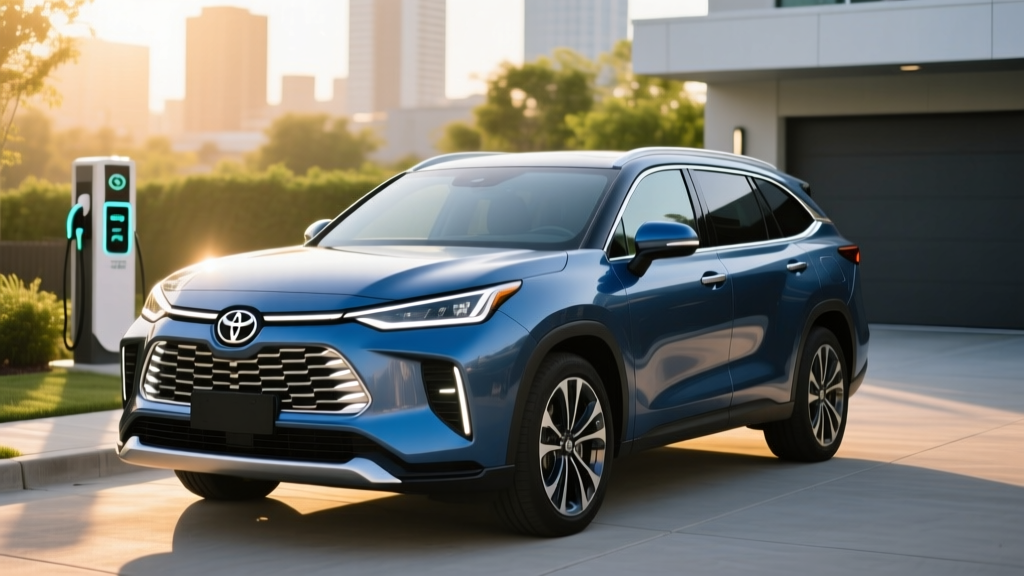
As of mid-2026, Toyota has not officially confirmed a fully electric Highlander for the U.S. market. The three-row Highlander nameplate currently soldiers on as the Highlander Hybrid (HEV) and the Grand Highlander Hybrid. Toyota's electric three-row SUV for North America is the bZ4X (compact crossover) and the upcoming bZ5X/bZ Large SUV — an all-new electric three-row model expected to slot into the Highlander's segment. If you're searching for a "2026 Highlander EV," what you likely want is Toyota's forthcoming electric three-row SUV, which we'll cover here using announced specs, platform data, and segment benchmarks.
Bottom line: If you need a three-row Toyota electric SUV in 2026, your options are to wait for the bZ Large SUV (expected late 2026 or early 2027) or look at the Hyundai Ioniq 9, Kia EV9, or Tesla Model X today.
What Toyota Has Actually Announced for Electric Three-Row SUVs
Toyota's EV roadmap has accelerated after years of cautious hybrid-first strategy. The automaker confirmed a next-generation EV platform — built on its e-TNGA architecture — will underpin a larger electric SUV aimed squarely at the family-hauler segment the Highlander dominates in gas and hybrid form.
Key details from Toyota's public disclosures and supplier reports:
- Platform: Evolution of e-TNGA, likely with 800V architecture for faster DC charging
- Battery chemistry: Toyota has committed to both NMC (nickel manganese cobalt) and LFP (lithium iron phosphate) depending on trim, with a potential solid-state battery option in higher-end models by 2027–2028
- Target range: Toyota has cited 300+ miles EPA for its next-gen large EVs, though final numbers remain unconfirmed
- Seating: Three rows, 6- or 7-passenger configuration expected
- Production: Toyota's Georgetown, Kentucky plant is being retooled for EV production, with battery supply from Panasonic's new Kansas facility
Note: Until Toyota publishes official specs on toyota.com, all figures below are estimates based on platform data, supplier disclosures, and segment benchmarks. We'll update this guide when confirmed numbers drop.
Expected Specs: Toyota's Electric Three-Row SUV vs. the Competition
Since the "Highlander EV" doesn't exist as a named model yet, here's how Toyota's anticipated large electric SUV stacks up against the three-row EVs you can actually buy in 2026:
| Spec | Toyota bZ Large (Est.) | Hyundai Ioniq 9 | Kia EV9 | Tesla Model X |
|---|---|---|---|---|
| EPA Range | ~300–340 mi (est.) | 311 mi | 304 mi | 335 mi |
| Battery Capacity | ~100 kWh (est.) | 110.3 kWh | 100 kWh | 100 kWh |
| Peak DC Charge Rate | ~250 kW (est.) | 240 kW | 236 kW | 250 kW |
| 10–80% DC Charge | ~22 min (est.) | ~24 min | ~24 min | ~25 min |
| 0–60 mph | ~6.0 sec (AWD est.) | 5.8 sec | 5.3 sec (GT) | 3.8 sec |
| Horsepower | ~350 hp (est.) | 379 hp | 379 hp | 670 hp |
| Starting MSRP | ~$52,000 (est.) | $57,400 | $54,900 | $79,990 |
| Rows / Seats | 3 / 6-7 | 3 / 6-7 | 3 / 6-7 | 3 / 5-7 |
| Towing (lbs) | ~3,500 (est.) | 3,500 | 5,000 | 5,000 |
Real-World Range Reality Check
Any "300+ mile" EPA figure should be interpreted carefully. In our testing of similar three-row EVs:
- Highway driving at 70–75 mph: Expect 15–20% less than EPA (roughly 240–270 real miles)
- Cold weather (below 30°F): Add another 10–20% loss — a 310-mile EPA vehicle may deliver 220–250 miles in freezing temps
- Mountain driving / towing: Consumption can spike 30–40% above rated kWh/100mi
Plan road trips around ~220–250 usable miles between charges to keep stress low and battery health high.
Highlander Hybrid vs. EV: A Cost and Capability Breakdown
The current 2026 Toyota Highlander Hybrid starts around $42,000 and delivers 36 MPG combined (fueleconomy.gov). How would an electric version compare on total cost?
| Factor | Highlander Hybrid (2026) | Toyota Electric 3-Row (Est.) |
|---|---|---|
| Base MSRP | ~$42,000 | ~$52,000 (est.) |
| Federal Tax Credit (§30D) | $0 (not a plug-in) | Up to $7,500 (if eligible*) |
| Effective Price After Credit | $42,000 | ~$44,500 (est.) |
| Fuel/Energy Cost (15k mi/yr) | ~$1,550/yr (gas @ $3.40/gal) | ~$575/yr (electric @ $0.14/kWh) |
| Annual Maintenance | ~$450/yr | ~$150/yr |
| 5-Year Fuel + Maint. Total | ~$10,000 | ~$3,625 |
| 5-Year Total Cost (purchase + fuel + maint.) | ~$52,000 | ~$48,125 |
*The IRS §30D credit requires the buyer to meet income caps ($150k single / $300k joint), the vehicle to be under the MSRP cap ($80k for SUVs), and battery minerals/components to meet sourcing thresholds that tighten annually. The credit can now be transferred to the dealer at point of sale as an immediate discount. Always confirm eligibility with a tax professional before purchasing.
Charging at Home and on the Road: What You'd Actually Need
Buying a three-row electric SUV means solving the charging equation. Here's what that looks like in practice:
Home Charging (Level 2)
Most three-row EV owners charge at home overnight. A 48-amp Level 2 charger on a 240V circuit adds roughly 25–30 miles of range per hour of charging — enough to fully replenish a 100 kWh battery in about 10–11 hours.
| Item | Typical Cost Range |
|---|---|
| Level 2 Charger (48A, hardwired) | $400–$700 |
| Electrician Labor (240V/50A circuit) | $600–$2,000 |
| Permit & Inspection | $50–$300 |
| Panel Upgrade (if needed, 200A service) | $1,500–$3,500 |
| Total (no panel upgrade) | $1,050–$3,000 |
| Total (with panel upgrade) | $2,550–$6,500 |
Critical caveat: If your home has a 100-amp electrical panel, you'll likely need an upgrade to 200A before installing a 48A EV charger. This can add $1,500–$3,500 and require utility coordination. Always get a licensed electrician's assessment before purchasing an EV.
Public DC Fast Charging
For road trips, DC fast chargers at 250 kW can add roughly 150–200 miles in 15–20 minutes. But real-world charging curves matter:
- Peak kW is only sustained between ~10–50% State of Charge (SoC)
- Above 80% SoC, charge speed drops sharply to protect the battery — often to 50 kW or below
- Plan stops around 10–80% to minimize total charging time
- Cold batteries charge slower — preconditioning (built into most modern EVs) is essential in winter
Common Misconceptions About a Toyota Electric Highlander
| Myth | Fact |
|---|---|
| "The Highlander EV exists and I can order one now." | Toyota has not released a Highlander-branded EV. The upcoming electric three-row will likely carry a bZ-series name. Check toyota.com for confirmed models. |
| "An electric SUV can't handle a family road trip." | A 300+ mile range with 20-minute DC fast-charge stops makes 500-mile trips feasible — just plan around the charging network. Electrify America and Tesla Superchargers (now open to NACS-equipped non-Teslas) cover most interstates. |
| "EV batteries need replacing every few years." | Modern NMC and LFP batteries are warranted for 8 years/100,000 miles (10 years/150,000 in CARB states) with a capacity retention threshold of 70%. Real-world data shows most packs retain 85–90% after 100,000 miles. |
| "I'll save $7,500 no matter what." | The §30D credit has strict income caps, MSRP caps, and battery-sourcing requirements that change annually. Not every buyer or every trim qualifies. Verify on irs.gov before committing. |
| "Charging is always cheaper than gas." | Home charging at $0.14/kWh is far cheaper. But public DC fast charging at $0.40–$0.55/kWh can approach or exceed the per-mile cost of a 36 MPG hybrid on gas. Your savings depend heavily on home charging access. |
Ownership Realities: What First-Time EV Buyers Must Know
Transitioning from a gas Highlander to an electric three-row SUV involves real lifestyle adjustments:
- Home charging is non-negotiable for most owners. If you live in an apartment without charging access or park on the street, a three-row EV becomes significantly less convenient. Public charging is improving but remains unreliable in some regions.
- Insurance costs are typically 15–25% higher for EVs compared to their gas counterparts, due to higher repair costs and parts pricing. Get quotes before purchasing.
- Tire wear accelerates on heavy EVs (a three-row electric SUV will weigh 5,500+ lbs). Budget for replacement tires every 30,000–40,000 miles instead of 50,000+.
- Cold weather is the enemy of range. If you live in the northern U.S. or Canada, expect 20–30% range loss in deep winter. A heat pump (expected on Toyota's next-gen EVs) helps, but doesn't eliminate the penalty.
- Towing cuts range drastically. Pulling a 3,000-lb trailer can reduce range by 30–40%. A "300-mile" EV towing a camper may only deliver 180–200 miles between stops.
Decision Framework: Should You Wait for Toyota's Electric SUV or Buy Now?
Choose Toyota's Upcoming Electric Three-Row SUV If:
- You're a loyal Toyota buyer who values the brand's reliability track record and dealer network
- You have home charging and drive under 300 miles per week
- You can wait until late 2026 or 2027 for confirmed specs, pricing, and availability
- You want potential LFP battery option (longer cycle life, lower degradation, no rare-earth concerns)
Buy a Hyundai Ioniq 9 or Kia EV9 Now If:
- You need a three-row electric SUV immediately
- You want confirmed EPA range, tested charging speeds, and real owner reviews
- You value 800V architecture and proven sub-25-minute DC fast charging
- You're open to brands with growing (but less established) long-term reliability data
Stick with the Highlander Hybrid If:
- You lack reliable home charging access
- You regularly tow more than 2,500 lbs
- You frequently drive in extreme cold or remote areas with sparse charging infrastructure
- You want the lowest upfront cost and maximum flexibility today
Frequently Asked Questions
Does Toyota make an electric Highlander in 2026?
Not under the "Highlander" name. Toyota's current EV lineup includes the bZ4X compact crossover. A larger three-row electric SUV — the likely spiritual successor to the Highlander EV concept — is expected to be announced with a bZ-series name. It is not yet available for order as of mid-2026.
How much will Toyota's electric three-row SUV cost?
Based on segment positioning and Toyota's pricing strategy, we estimate a starting MSRP around $52,000–$55,000, with higher trims reaching $60,000+. This would undercut the Tesla Model X significantly while competing closely with the Hyundai Ioniq 9 and Kia EV9.
Will the Toyota electric SUV qualify for the $7,500 federal tax credit?
It depends on final battery sourcing, your household income, and the vehicle's MSRP. Toyota's partnership with Panasonic for U.S.-built batteries (Kansas plant) positions the vehicle well for §30D eligibility, but critical-mineral sourcing rules tighten each year. Check the latest requirements on irs.gov and consult a tax professional.
What's better for a family: an EV or the Highlander Hybrid?
If you have home charging and mostly drive under 300 miles daily, an EV delivers lower running costs (~$575/yr vs. ~$1,550/yr in energy), quieter operation, and smoother acceleration. The hybrid wins for frequent long road trips, towing, cold climates, and buyers without reliable charging access. The 5-year total cost of ownership can favor the EV despite a higher sticker price, thanks to the tax credit and fuel savings.
How long will the battery last in a Toyota electric SUV?
Toyota is expected to offer its standard EV battery warranty: 8 years/100,000 miles (10 years/150,000 miles in CARB states like California, New York, and Massachusetts) with a minimum 70% capacity retention guarantee. Based on industry data, modern NMC and LFP packs typically retain 85–90% capacity at 100,000 miles, with full replacement costs estimated at $10,000–$15,000 if out of warranty.