The Lease Case for Ford's Electric Pony
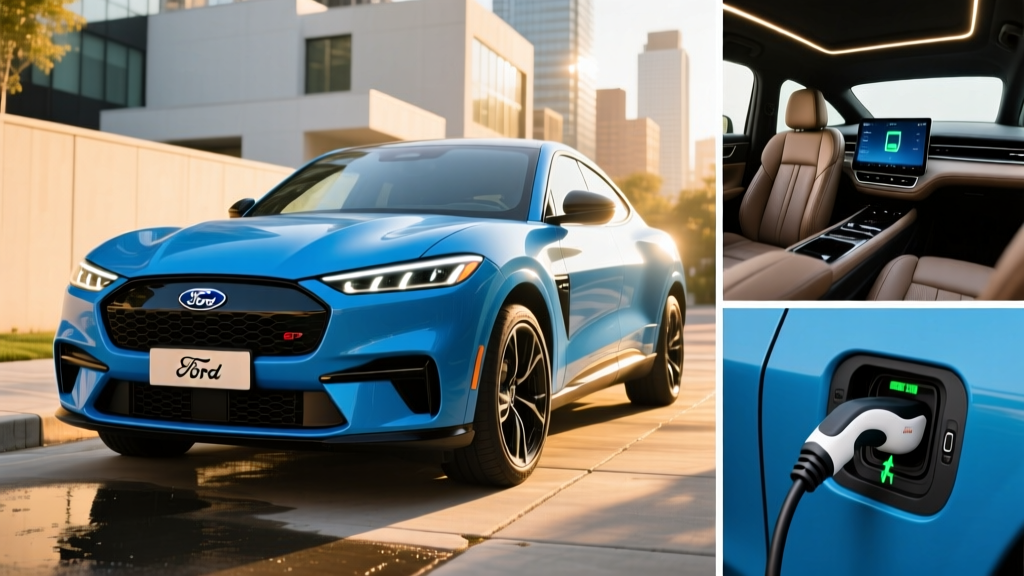
Ford's Mustang Mach-E has evolved significantly since its 2021 debut, and for 2026, it remains one of the most compelling midsize electric crossovers on the market. But with EV incentives shifting and competition intensifying from the Hyundai Ioniq 5, Tesla Model Y, and Chevrolet Equinox EV, many buyers are asking whether it makes more sense to lease a Mustang Mach-E rather than buy outright. The answer depends on your driving habits, tax situation, and how Ford's current lease deals interact with federal incentives.
This review covers everything you need to know before signing: real-world range versus the EPA sticker, DC fast-charging reality, total lease economics, and whether the Mach-E's strengths align with your daily use case.
2026 Mustang Mach-E Specifications at a Glance
| Spec | Select (RWD) | Premium (AWD) | GT (AWD) |
|---|---|---|---|
| EPA Range | 250 mi | 320 mi (Ext. Range) | 280 mi |
| Battery (Usable) | 70 kWh (LFP) | 91 kWh (NMC) | 91 kWh (NMC) |
| Horsepower | 266 hp | 346 hp | 480 hp |
| 0-60 mph | 6.1 sec | 5.1 sec | 3.5 sec |
| Peak DC Charge | 115 kW | 150 kW | 150 kW |
| 10-80% DC Time | ~38 min | ~41 min | ~41 min |
| Level 2 Rate | 10.5 kW (~30 mi/hr) | 10.5 kW (~30 mi/hr) | 10.5 kW (~30 mi/hr) |
| MPGe (Combined) | 105 MPGe | 98 MPGe | 86 MPGe |
| Base MSRP | $39,995 | $46,995 | $55,995 |
Real-World Range: What the EPA Sticker Doesn't Tell You
EPA Estimate: Up to 320 miles (Premium AWD with Extended Range battery)
Real-World Highway (70 mph): Expect 260-280 miles
Cold Weather (below 30°F): Expect 200-230 miles (25-35% reduction typical for NMC packs)
LFP Select Trim (70 kWh): EPA 250 mi; real-world highway ~210-225 mi
The Mach-E Premium with the Extended Range 91 kWh NMC battery delivers the longest legs in the lineup, but the EPA's combined cycle blends city and highway driving. On sustained highway runs at 70-75 mph, efficiency drops to roughly 3.0-3.2 miles per kWh, yielding around 270 miles before you'll want to find a charger. The LFP-equipped Select trim sacrifices some range for a lower price and longer cycle life — LFP chemistry tolerates daily 100% charging better than NMC, making it practical for commuters who charge at home nightly.
For context, in cold-weather testing by independent reviewers, the NMC Extended Range pack loses roughly 25-30% of its rated range at highway speeds in sub-freezing temperatures. The Mach-E's heat pump (standard on 2026 models) helps mitigate cabin energy draw, but battery chemistry physics still dominate.
Charging Speed: DC Fast and Home Level 2 Breakdown
| Charging Level | Power / Rate | Miles Added | Notes |
|---|---|---|---|
| Level 1 (120V) | 1.4 kW | ~3-4 mi/hr | Emergency/trickle only |
| Level 2 (240V, 48A) | 10.5 kW | ~30 mi/hr | Full charge overnight (~9-10 hrs) |
| DC Fast (Select) | Peak 115 kW | ~150 mi in 30 min | Tapers significantly above 80% |
| DC Fast (Premium/GT) | Peak 150 kW | ~170 mi in 30 min | Sustains ~130 kW to 50% SoC, then curves down |
The Mach-E's charging speeds are adequate but no longer class-leading. The Hyundai Ioniq 5 peaks at 240 kW on an 800V architecture, and even the refreshed Tesla Model Y sustains higher charge rates. Ford's 150 kW peak on Extended Range trims means a 10-80% session takes roughly 41 minutes at a capable 350 kW charger — but only if the battery is preconditioned.
Preconditioning matters: The Mach-E's navigation system will warm the battery when you route to a DC fast charger. Without preconditioning (for example, arriving at a charger without using the built-in nav), expect peak rates closer to 80-100 kW until the pack warms up, adding 10-15 minutes to your stop. Always use the vehicle's navigation to route to chargers for optimal charge curves.
At home, the 10.5 kW Level 2 onboard charger is competitive. A full overnight charge on a 48-amp Level 2 circuit (like the Ford Charge Station Pro) replenishes the Extended Range battery in roughly 9-10 hours — sufficient for daily driving needs. Home installation of a 240V/60A circuit typically costs $800-$2,000 depending on panel proximity, per Ford's home charging guidelines.
Performance and Driving Dynamics
The Mach-E GT remains one of the quickest crossovers in its price bracket. With 480 horsepower and 634 lb-ft of torque (with the Performance Upgrade), it hits 60 mph in 3.5 seconds — territory occupied by sports cars just a decade ago. The dual-motor AWD system provides confident traction, and the low center of gravity from the floor-mounted battery pack keeps body roll well-controlled through corners.
The Select RWD with its 266 hp and 6.1-second 0-60 time is the efficiency champion and perfectly adequate for commuting. The Premium AWD strikes a balance: 346 hp, 5.1 seconds to 60, and the longest range in the lineup. All trims feature one-pedal driving with adjustable regenerative braking intensity, though Ford's regen doesn't quite bring the vehicle to a complete stop without brake application at the lowest speeds — a minor quirk compared to Tesla's or Chevrolet's implementations.
Pricing, Lease Economics, and Federal Tax Credit Eligibility
Whether to buy or lease a Mustang Mach-E in 2026 hinges largely on how the federal EV tax credit interacts with your tax liability and Ford's current lease incentives.
| Trim | Base MSRP | §30D Credit Eligible? | Est. Monthly Lease (36 mo) |
|---|---|---|---|
| Select RWD | $39,995 | Yes (if income/sourcing met) | $349-$429 |
| Premium AWD (Ext. Range) | $46,995 | Yes | $449-$549 |
| GT AWD | $55,995 | Yes (under $80K SUV cap) | $599-$699 |
Federal §30D Tax Credit Rules (2026): The Mach-E qualifies for up to $7,500 in federal tax credits, but eligibility is not automatic. Per IRS guidelines, you must meet:
- Income caps: Modified AGI ≤ $150,000 (single), $225,000 (head of household), $300,000 (joint)
- MSRP cap: Vehicle MSRP must not exceed $80,000 for SUVs (all Mach-E trims qualify)
- Battery sourcing: Critical minerals and battery components must meet phased-in percentages from US/free-trade-agreement partners — Ford sources LFP cells from CATL (China) for the Select trim, which may affect critical-mineral credit eligibility in 2026. The NMC Extended Range pack has stronger North American content.
- Point-of-sale transfer: As of 2024, eligible buyers can transfer the credit to the dealer at purchase, reducing the purchase price directly. For leases, the credit technically goes to the lessor (Ford Credit), who typically passes it through as a capitalized cost reduction.
The lease advantage: When you lease a Mustang Mach-E through Ford Credit, the lessor claims the §30D credit (classified as a commercial clean vehicle under §45W in lease structures). Ford Credit has historically passed the full $7,500 through as a lease incentive, effectively reducing monthly payments. This bypasses the individual income caps and battery-sourcing restrictions that apply to purchases — a significant advantage for high-income buyers or those whose tax liability is below $7,500. Always verify current lease terms with your dealer, as incentive structures change monthly.
Interior, Cargo, and Technology
The Mach-E's cabin is one of its strongest selling points. The 15.5-inch vertical touchscreen running SYNC 4A dominates the dashboard and is responsive, with wireless Apple CarPlay and Android Auto standard across all trims. Physical buttons are minimal — climate controls live in the screen — but Ford has retained a physical volume knob and steering-wheel controls for the most-used functions.
Cargo space: 29.7 cubic feet behind the rear seats, expanding to 59.7 cubic feet with the 60/40 rear seats folded. The front trunk (frunk) adds 4.7 cubic feet of weather-sealed storage — useful for charging cables, groceries, or a small cooler. Rear legroom measures 38.9 inches, competitive with the Model Y and Ioniq 5.
Driver assistance: Ford's BlueCruise (SAE Level 2) is available on Premium and GT trims with the optional Intelligent Adaptive Cruise package. It enables hands-free driving on over 130,000 miles of pre-mapped divided highways, but requires driver attention monitoring via an infrared camera. This is not autonomous driving — you must remain alert and ready to resume control. BlueCruise costs $2,100 as a one-time purchase or $75/month via subscription after a trial period.
Warranty Coverage and Long-Term Ownership
Ford provides solid warranty coverage for the Mach-E's electric powertrain:
- Battery warranty: 8 years / 100,000 miles (whichever comes first), covering defects and capacity loss below 70% of original capacity
- Powertrain warranty: 5 years / 60,000 miles
- Bumper-to-bumper: 3 years / 36,000 miles
The 70% retention threshold at 8 years is industry-standard but worth noting — if your battery degrades to 69% capacity within the warranty period, Ford will repair or replace it. Real-world degradation data from early 2021-2022 Mach-E owners shows roughly 5-8% capacity loss at 60,000-80,000 miles, which is within expectations for liquid-cooled NMC packs. LFP batteries in the Select trim are expected to degrade more slowly over cycle life, though long-term fleet data is still maturing.
For lease customers, warranty coverage is largely moot — a standard 36-month lease ends well before major powertrain concerns arise, which is another point in the lease column.
Pros, Cons, and Who Should Lease a Mustang Mach-E
- Strong real-world range (320 mi EPA on Premium Ext. Range)
- Excellent cargo capacity (29.7 cu ft + frunk)
- BlueCruise hands-free highway driving available
- Competitive lease pricing with §30D pass-through
- Comfortable ride quality, refined cabin materials
- Ford dealer network for service (vs. startup brands)
- DC fast charging slower than Ioniq 5 and Model Y
- No rear wiper (visibility issue in rain/snow)
- LFP Select trim range may be limiting for road trips
- BlueCruise requires ongoing subscription after trial
- Battery sourcing rules may limit purchase credit on Select trim
- Insurance premiums 15-25% higher than gas Escape equivalent
- Daily commuters with home Level 2 charging and round trips under 150 miles — the Select RWD at ~$349/mo lease is a strong value.
- Families needing cargo space who take 1-2 road trips per year — the Premium Extended Range gives 320 mi EPA and 29.7 cu ft of cargo room.
- Buyers who want hands-free highway assist without Tesla's ecosystem lock-in — BlueCruise is competitive with Super Cruise for mapped-highway driving.
- High-income earners who exceed §30D income caps on purchases but can capture the credit through a lease structure.
- Frequent road-trippers who prioritize fastest charging — the Ioniq 5 or Model Y recharge faster on DC.
- Towing-focused buyers — the Mach-E is rated for only 1,500 lbs (Select) to 2,200 lbs (GT), well below the F-150 Lightning or Rivian R1S.
Frequently Asked Questions
What is the real-world range of the 2026 Mustang Mach-E?
The EPA rates the Premium AWD Extended Range at 320 miles combined. In real-world highway driving at 70 mph, expect 260-280 miles. In cold weather (below 30°F), range drops to approximately 200-230 miles. The Select RWD with the smaller LFP battery delivers about 210-225 real-world highway miles from its 250-mile EPA rating.
How fast does the Mustang Mach-E charge?
On DC fast charging, Extended Range trims peak at 150 kW, achieving a 10-80% charge in approximately 41 minutes with battery preconditioning. The Select RWD peaks at 115 kW with a similar 38-minute 10-80% window. At home on a Level 2 (240V/48A) charger, the onboard 10.5 kW charger adds about 30 miles of range per hour.
How much does it cost to lease a Mustang Mach-E after tax credits?
Lease payments vary by region, credit tier, and dealer, but typical 36-month leases range from $349/mo (Select RWD) to $549/mo (Premium AWD Extended Range) with $3,995 due at signing. Ford Credit typically applies the $7,500 federal credit as a capitalized cost reduction, lowering monthly payments. Confirm current incentives with your local Ford dealer.
Does the Mustang Mach-E qualify for the $7,500 federal EV tax credit?
Yes, the Mach-E is eligible under IRS §30D, subject to buyer income caps ($150K single / $300K joint), the $80K SUV MSRP cap (all trims qualify), and battery-sourcing requirements. When leased, the credit passes through Ford Credit as a lessor incentive, which typically bypasses individual income and sourcing restrictions. Always verify current eligibility with your dealer and consult a tax professional for purchase scenarios.
Is the Mustang Mach-E worth it vs. the Tesla Model Y and Hyundai Ioniq 5?
The Mach-E wins on interior quality, cargo versatility (frunk + large hatch), and BlueCruise highway assist. The Model Y leads in charging infrastructure (Supercharger network) and software integration. The Ioniq 5 charges significantly faster (240 kW peak, 10-80% in ~18 min). If you prioritize comfort, dealer service access, and don't need the fastest DC charging, the Mach-E is a strong choice — especially on a lease that captures the full federal incentive.
What are the biggest drawbacks of the Mustang Mach-E?
The primary limitations are DC fast-charging speed (150 kW peak trails competitors), the lack of a rear wiper, and insurance costs that run 15-25% above comparable gas crossovers. The Select trim's 250-mile EPA range is adequate for commuting but may require mid-trip charging on longer road trips.