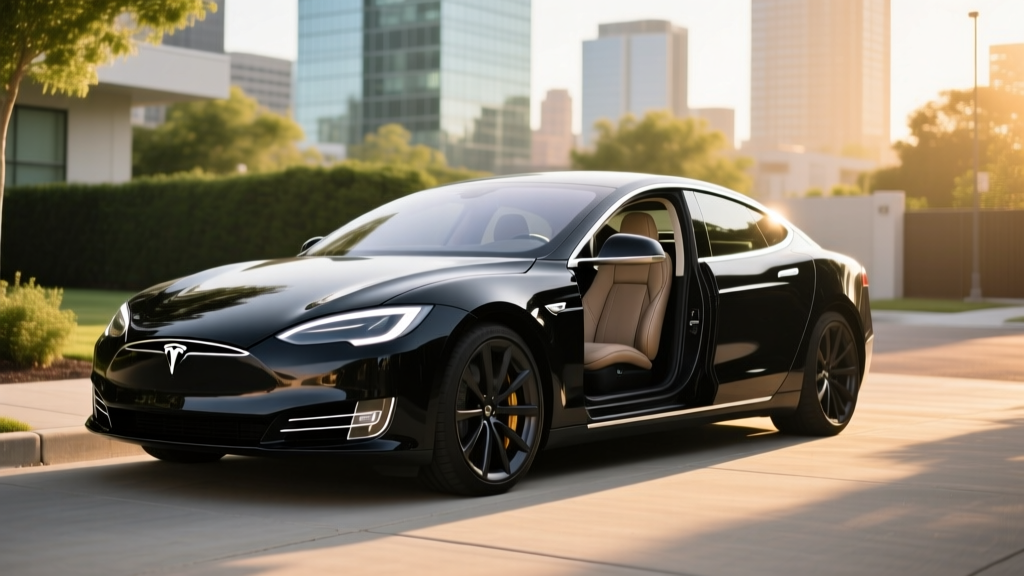
The Tesla Model S has been the benchmark luxury electric sedan for over a decade, but in 2026 the competitive landscape looks radically different. The Lucid Air, Mercedes-Benz EQS, and BMW i7 all offer compelling alternatives, making the decision to lease or buy a Model S more nuanced than ever. If you've been searching for 2026 Model S lease offers, this review gives you the exact numbers — range, charging speeds, pricing, tax credit eligibility, and real-world ownership data — you need to evaluate whether Tesla's flagship sedan still earns its premium.
For 2026, the Model S continues with the refreshed Palladium-era platform introduced in 2021, featuring the yoke-compatible interior, 17-inch center display, and dual-motor or tri-motor powertrains. Below, we cover everything from EPA range to the fine print of leasing versus buying.
2026 Model S Trim Lineup and Key Specifications
Tesla offers the Model S in two primary configurations for 2026: the Long Range (dual-motor AWD) and the Plaid (tri-motor AWD). Both share the same 100 kWh battery pack architecture, though usable capacity sits closer to 95 kWh due to buffer protection. Tesla uses NMC (nickel manganese cobalt) chemistry in the Model S — prioritizing energy density and performance over the LFP chemistry found in the Model 3 RWD.
| Spec | Model S Long Range | Model S Plaid |
|---|---|---|
| EPA Range | 402 miles | 396 miles |
| Battery (usable) | ~95 kWh (NMC) | ~95 kWh (NMC) |
| Drivetrain | Dual-Motor AWD | Tri-Motor AWD |
| Horsepower | 670 hp | 1,020 hp |
| 0-60 mph | 3.1 seconds | 1.99 seconds |
| Top Speed | 155 mph | 200 mph |
| Peak DC Charge Rate | 250 kW | 250 kW |
| 10-80% DCFC Time | ~30 minutes | ~30 minutes |
| Level 2 Charge Rate | 11.5 kW (~41 mi/hr) | 11.5 kW (~41 mi/hr) |
| MPGe (combined) | 120 MPGe | 116 MPGe |
| Efficiency | 28 kWh/100 mi | 29 kWh/100 mi |
| Base MSRP | $74,990 | $89,990 |
Source: fueleconomy.gov and Tesla's official specifications.
Real-World Range: What the EPA Number Doesn't Tell You
EPA estimate: 402 miles
Expected real-world highway (70-75 mph): ~330-350 miles
Expected real-world cold weather (below 32°F): ~280-310 miles
Mixed city/highway moderate climate: ~360-380 miles
The Model S Long Range's 402-mile EPA rating remains one of the highest of any production EV sold in the U.S. However, real-world results depend heavily on driving style, speed, and temperature. At sustained highway speeds above 70 mph, aerodynamic drag significantly increases energy consumption — expect roughly 12-18% below the EPA sticker. In freezing temperatures, the battery must divert energy to thermal management, and cabin heating further reduces range. Tesla's heat pump system helps mitigate cold-weather losses compared to older resistance-heater EVs, but a 20-25% reduction in deep winter is realistic.
For daily commuting under 60 miles round-trip in moderate climates, most owners report matching or slightly exceeding the EPA figure thanks to regenerative braking in stop-and-go traffic. The Model S also benefits from Tesla's route-based battery preconditioning: when you navigate to a Supercharger, the car warms the battery to optimal temperature before arrival, enabling faster charging.
Charging Speed and Infrastructure
Charging speed is where the Model S ownership experience either shines or frustrates, depending on your access to Tesla's Supercharger network versus third-party DC fast chargers.
| Charging Level | Power (kW) | Speed (miles/hour) | Typical Use Case |
|---|---|---|---|
| Level 1 (120V outlet) | ~1.4 kW | ~5 mi/hr | Emergency / trickle only |
| Level 2 (240V, 48A) | 11.5 kW | ~41 mi/hr | Home overnight charging |
| DC Fast (Tesla Supercharger V3) | 250 kW peak | ~200 mi in 15 min | Road trips |
| DC Fast (CCS adapter, 350 kW station) | ~250 kW peak | Similar to V3 SC | Non-Tesla networks |
Understanding kW vs kWh: The battery capacity is measured in kWh (kilowatt-hours — total energy stored), while charging speed is measured in kW (kilowatts — the rate of energy transfer). The Model S's ~95 kWh battery charging at 250 kW peak doesn't maintain that rate for the entire session.
The Model S peaks at 250 kW on V3 Superchargers but only sustains that rate between approximately 10-30% state of charge. The charge curve tapers progressively: by 50% SoC you're typically seeing 150-170 kW, and above 80% it drops below 60 kW to protect battery longevity. A 10-80% session takes roughly 30 minutes under ideal conditions (warm battery, V3 stall). Add 5-10 minutes if the battery hasn't preconditioned.
For home charging, a Level 2 Wall Connector on a 60-amp circuit delivers 11.5 kW, replenishing roughly 41 miles of range per hour — enough for a full overnight charge from 20% to 100% in about 8 hours. Installation typically requires a 240V/60A circuit; budget $800-$2,000 for a licensed electrician depending on panel proximity and local permit costs.
Performance and Driving Dynamics
The Model S Long Range's 670 horsepower and 3.1-second 0-60 time place it firmly in sports-sedan territory — this is a car that outruns most V8 muscle cars while carrying five adults in silence. The dual-motor all-wheel-drive system provides exceptional traction in rain and light snow, with torque vectoring that makes the car feel planted through corners despite its 4,561-pound curb weight.
The Plaid variant is in a different universe entirely. With 1,020 horsepower from three motors and a 1.99-second 0-60 time, it's one of the quickest production cars ever built. The tri-motor setup enables torque vectoring across the rear axle, and the carbon-sleeved rotors allow sustained high-speed runs without power derating — a problem that plagued early Plaid prototypes.
Ride quality benefits from the adaptive air suspension, which offers adjustable ride height and damping. The 2026 model carries over the refreshed chassis tuning that improved ride comfort over the 2021-2022 versions, though some reviewers still note firmness over sharp impacts with the 21-inch Arachnid wheels. The 19-inch Tempest wheels provide a noticeably more compliant ride and deliver roughly 5-8% better range due to lower rolling resistance and improved aerodynamics.
Pricing, Leasing, and Federal Tax Credit Eligibility
| Detail | Long Range | Plaid |
|---|---|---|
| Base MSRP | $74,990 | $89,990 |
| Destination Fee | $1,995 | $1,995 |
| Typical Options (paint, wheels, FSD) | +$5,000-$12,000 | +$5,000-$12,000 |
| As-Tested Price (well-equipped) | ~$82,000-$89,000 | ~$97,000-$104,000 |
| Estimated Monthly Lease (36 mo, 10k mi/yr)* | ~$950-$1,150/mo | ~$1,200-$1,450/mo |
| Federal §30D Tax Credit Eligible? | No (MSRP cap) | No (MSRP cap) |
*Lease estimates vary by region, credit tier, money factor, and residual value. Tesla does not always offer traditional lease programs — third-party leasing banks and Tesla's own financing terms change quarterly. Always confirm current offers on Tesla.com or through a leasing broker.
Federal Tax Credit Reality: Under current IRS §30D rules, the Model S does not qualify for the $7,500 federal EV tax credit. The reason is straightforward: the §30D credit imposes an MSRP cap of $55,000 for sedans (and $80,000 for SUVs/vans/trucks). Since the Model S is classified as a sedan and starts at $74,990, it exceeds the limit regardless of battery sourcing or buyer income.
This is a critical consideration when comparing total cost against competitors. Some buyers structure a lease through a third-party bank to potentially capture the $7,500 commercial clean vehicle credit (§45W) that lessors can claim and pass through as a capitalized-cost reduction — but this depends entirely on the leasing company's willingness to pass savings to the lessee. Always ask for the full lease disclosure including the money factor and residual.
- ✅ Buyer income within limits ($150k single / $300k joint) — likely met
- ✅ Vehicle assembled in North America — yes (Fremont, CA)
- ✅ Battery component and critical mineral sourcing — partially met
- ❌ Sedan MSRP cap: $55,000 — Model S starts at $74,990 — EXCEEDS CAP
Result: No federal purchase credit available. Lease structures may offer alternative savings.
Interior, Cargo, and Technology
The Model S cabin remains one of the most spacious in the luxury EV sedan segment. The absence of a transmission tunnel and compact motor assemblies create genuinely generous interior volume:
- Front legroom: 42.7 inches
- Rear legroom: 35.4 inches
- Cargo (rear trunk): 26.3 cubic feet
- Frunk (front trunk): 5.3 cubic feet
- Total cargo with rear seats folded: ~64.9 cubic feet
The 17-inch center touchscreen runs Tesla's latest software, supporting Netflix, YouTube, and gaming while parked. The 22-speaker audio system is one of the best in any production car, and wireless phone charging, ventilated front seats, and a panoramic glass roof are all standard. The rear passengers get their own 8-inch touchscreen for climate and entertainment controls.
The yoke steering wheel remains standard (a conventional round wheel is available as a no-cost option). While polarizing, most owners adapt within a few weeks, though low-speed parking maneuvers and roundabouts still draw criticism.
Driver Assistance: Tesla's Basic Autopilot is standard and provides competent highway lane-keeping and adaptive cruise control. Full Self-Driving (FSD) Supervised is available as an $8,000 option or $99/month subscription. It's critical to understand that FSD is an SAE Level 2 system — it requires continuous driver supervision and is not autonomous. The driver must keep hands on the wheel (or apply torque to the yoke) and remain fully attentive at all times.
Tesla Autopilot and FSD (Supervised) are SAE Level 2 driver-assistance systems. The vehicle can control steering, acceleration, and braking under certain conditions, but the driver must remain fully engaged and supervising at all times. This is not a self-driving car. Only Level 4 services like Waymo operate without a human driver — and those are geofenced robotaxis, not consumer vehicles.
Model S vs. the Competition: Is It Worth Leasing in 2026?
The Model S faces credible competition from several quarters. Here's how it stacks up against key rivals on the metrics that matter most to luxury EV sedan buyers:
| Metric | Tesla Model S LR | Lucid Air Pure | Mercedes EQS 450+ | BMW i7 xDrive60 |
|---|---|---|---|---|
| EPA Range | 402 mi | 419 mi | 390 mi | 318 mi |
| 0-60 mph | 3.1s | 5.2s | 5.9s | 4.5s |
| Peak DCFC | 250 kW | 200 kW | 200 kW | 195 kW |
| Base MSRP | $74,990 | $69,900 | $104,400 | $105,700 |
| §30D Credit | No (MSRP) | No (MSRP) | No (MSRP) | No (MSRP) |
| Supercharger Access | Native | Adapter needed | Adapter needed | Adapter needed |
The Lucid Air Pure offers more range at a lower price, but lacks Tesla's Supercharger network advantage and has a much smaller service-center footprint. The EQS and i7 offer superior interior materials and dealership service networks, but cost $30,000+ more and deliver less range and slower charging.
For road-trippers who regularly drive 300+ miles between stops, the Model S's combination of range and Supercharger access remains hard to beat. Tesla's V3 and V4 Superchargers are consistently more reliable and widespread than Electrify America or EVgo stations, reducing the "charging desert" anxiety that affects non-Tesla EVs on long highway routes.
Warranty and Long-Term Ownership
Tesla provides the following warranty coverage for the 2026 Model S:
- Basic Vehicle Limited Warranty: 4 years / 50,000 miles
- Battery & Drive Unit Warranty: 8 years / 150,000 miles (Long Range) with minimum 70% capacity retention
- Battery & Drive Unit Warranty: 8 years / 150,000 miles (Plaid) with minimum 70% capacity retention
The 150,000-mile battery warranty is competitive with the industry standard (most automakers offer 8 years / 100,000 miles). Tesla's NMC battery chemistry typically shows 8-12% degradation over the first 100,000 miles based on fleet data, meaning most owners retain well above the 70% threshold. If you plan to lease for 36 months and 30,000-45,000 miles, battery degradation is essentially a non-issue.
For buyers planning to keep the vehicle beyond the warranty period, note that a Model S battery replacement currently runs $15,000-$22,000 depending on the pack and service center — a significant potential expense that lessees don't face.
Pros and Cons at a Glance
- Class-leading 402-mile EPA range (Long Range)
- Native Tesla Supercharger network access — most reliable DCFC infrastructure
- Exceptional performance: 3.1s 0-60 (LR) / 1.99s (Plaid)
- Generous cargo space: 26.3 cu ft trunk + 5.3 cu ft frunk
- OTA software updates continuously add features
- Strong resale value relative to German luxury EVs
- No federal §30D tax credit (exceeds $55k sedan MSRP cap)
- 250 kW peak charge rate trails newer 800V architectures (Hyundai/Kia at 350 kW)
- Panel gap and build quality inconsistencies still reported
- Yoke steering controversial; not ideal for all drivers
- Minimal physical controls — everything routed through touchscreen
- Service center wait times can be long in some metro areas
Who Should Lease the 2026 Model S?
Choose the Model S if:
- You regularly road-trip 300+ miles and want Supercharger convenience
- You want a fast, spacious sedan with over 400 miles of range
- You prefer leasing to avoid battery-degradation risk and depreciation
- Tech-forward features and OTA updates matter to you
Look elsewhere if:
- You need the federal $7,500 tax credit (consider Model 3, Ioniq 6, or PHEVs)
- Interior luxury materials and dealership service are top priorities (EQS, i7)
- You want the absolute fastest DC charging available (Ioniq 6, EV6 on 800V)
- Budget is under $65,000 (the Model S doesn't play in this space)
Frequently Asked Questions
What is the real-world range of the 2026 Tesla Model S?
The EPA rates the Model S Long Range at 402 miles and the Plaid at 396 miles. In real-world highway driving at 70-75 mph, expect 330-350 miles. In freezing temperatures, range can drop to 280-310 miles due to battery thermal management demands and cabin heating. City driving with regenerative braking often matches or slightly exceeds the EPA number.
How fast does the Model S charge at home and on the road?
At home on a Level 2 (240V) Wall Connector, the Model S charges at 11.5 kW, adding approximately 41 miles of range per hour — a full charge takes about 8 hours. On DC fast chargers, it peaks at 250 kW (Tesla V3 Superchargers), with a 10-80% session taking roughly 30 minutes. The charge curve tapers significantly above 50% SoC, so plan for longer stops if charging above 80%.
Does the 2026 Model S qualify for the federal EV tax credit?
No. The Model S exceeds the IRS §30D sedan MSRP cap of $55,000. At a starting price of $74,990, neither the Long Range nor the Plaid qualifies for the $7,500 purchase credit regardless of buyer income or battery sourcing. Some lessees may benefit indirectly if the leasing company passes through the commercial clean vehicle credit (§45W) as a cap-cost reduction, but this is not guaranteed.
Is leasing the Model S better than buying in 2026?
Leasing makes sense if you want to avoid long-term battery replacement risk ($15,000-$22,000 out of warranty), prefer predictable monthly costs, and plan to upgrade every 3 years. Buying makes more sense if you drive under 15,000 miles annually, can invest the difference versus a loan payment, and plan to keep the car 5+ years. Without the federal tax credit, the financial case for buying weakens, making leasing relatively more attractive.
How does the Model S compare to the Lucid Air?
The Lucid Air Pure offers 419 miles of EPA range at a lower $69,900 starting price, but charges slower (200 kW peak), lacks native Supercharger access, and has fewer service centers. The Model S wins on charging infrastructure, performance (3.1s vs 5.2s 0-60), and software maturity. The Air wins on range, price, and interior space. For road-trippers, the Model S's Supercharger advantage is significant; for daily commuters who rarely fast-charge, the Air is compelling.
What are typical 2026 Model S lease payments?
Based on current market conditions, expect approximately $950-$1,150/month for a Long Range on a 36-month lease with 10,000 miles per year, and $1,200-$1,450/month for the Plaid. These figures vary significantly by money factor, residual value, down payment, and regional incentives. Tesla's direct lease offers are periodically available on their website, but third-party leasing banks sometimes offer more competitive terms — shop both.