The Short Answer on a Fully Electric Toyota
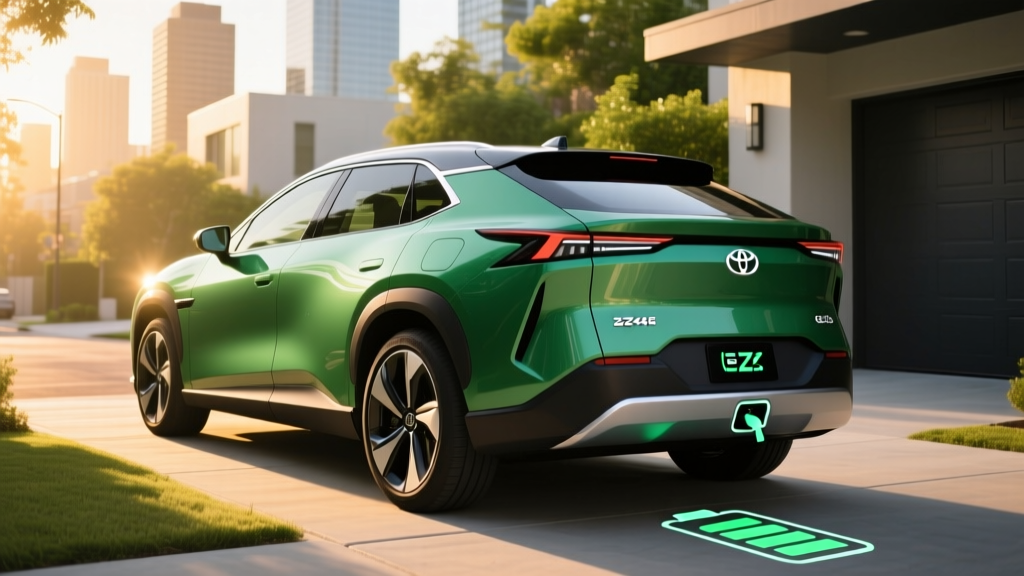
As of the 2026 model year, Toyota's only fully electric Toyota available in the U.S. is the bZ4X, a compact crossover SUV. It offers an EPA-estimated 252 miles of range (FWD), 150 kW peak DC fast charging, and starts at approximately $38,465. It qualifies for a portion of the federal §30D tax credit depending on battery-sourcing compliance and your income. If you need more range, faster charging, or a broader EV lineup, you'll need to look beyond Toyota's current all-electric offerings — but the bZ4X is a competent, practical entry point for brand-loyal buyers transitioning from a RAV4 or Camry.
2026 Toyota bZ4X: Core EV Specs at a Glance
Toyota's first dedicated battery-electric vehicle sits on the e-TNGA platform and is mechanically related to the Subaru Solterra. For 2026, Toyota has refined thermal management and slightly adjusted pricing, but the fundamental hardware remains the same as the refreshed 2025 model.
| Specification | bZ4X FWD (XLE) | bZ4X AWD (XLE) |
|---|---|---|
| EPA Range | 252 mi | 228 mi |
| Battery (usable) | 71.4 kWh (NMC) | 71.4 kWh (NMC) |
| Efficiency | 119 MPGe (28 kWh/100mi) | 104 MPGe (32 kWh/100mi) |
| Peak DC Fast Charge | 150 kW (CCS1) | 150 kW (CCS1) |
| 10–80% DCFC Time | ~30 min | ~30 min |
| Level 2 Charging | 6.6 kW (~25 mi/hr) | 6.6 kW (~25 mi/hr) |
| Horsepower | 201 hp | 214 hp |
| 0–60 mph | 7.1 sec | 6.5 sec |
| Cargo Volume | 27.7 cu ft (rear seats up) | 27.7 cu ft |
| Starting MSRP | $38,465 | $40,565 |
| Battery Warranty | 8 yr / 100,000 mi | 8 yr / 100,000 mi |
Sources: EPA fueleconomy.gov, Toyota.com bZ4X specs.
Real-World Range vs. the EPA Sticker
The 252-mile EPA figure for the FWD model is achievable in mild weather with mixed driving. Expect ~210–230 miles on sustained highway driving at 70–75 mph, and ~180–200 miles in freezing temperatures (below 30°F). The AWD model's 228-mile rating drops proportionally. The bZ4X uses an NMC lithium-ion pack, which is more sensitive to cold-weather range loss than LFP chemistry. Preconditioning the battery via the Toyota app before DC fast charging is essential to hitting the advertised 150 kW peak rate — without it, you may see 50–80 kW initially in cold weather.
Fully Electric Toyota vs. Toyota Hybrids: Which Saves More?
This is the critical comparison for most Toyota shoppers. The bZ4X isn't competing with a Tesla Model Y in most buyers' minds — it's competing with the RAV4 Hybrid and RAV4 Prime PHEV. Here's how the numbers stack up over 5 years and 75,000 miles.
| Cost Factor (5 yr / 75k mi) | bZ4X FWD (EV) | RAV4 Hybrid AWD | RAV4 Prime PHEV |
|---|---|---|---|
| Base MSRP | $38,465 | $33,425 | $43,690 |
| Est. Federal Tax Credit | Up to $3,750* | $0 | Up to $7,500* |
| Effective Purchase Price | ~$34,715 | $33,425 | ~$36,190 |
| Fuel / Energy Cost | ~$4,125† | ~$7,500‡ | ~$4,800§ |
| Maintenance (5 yr) | ~$1,800 | ~$3,200 | ~$2,800 |
| Insurance (5 yr avg) | ~$9,500 | ~$7,800 | ~$8,600 |
| 5-Year Total Cost | ~$50,140 | ~$51,925 | ~$52,390 |
* §30D credit eligibility depends on battery critical-mineral sourcing, buyer income caps ($150k single / $300k MFJ), and MSRP caps ($80k SUV). Verify current-year rules at IRS.gov. Tax professional recommended.
† Home charging at $0.14/kWh national avg. ‡ Gas at $3.40/gal, 39 MPG combined. § Mix of 70% electric / 30% gas driving.
The bZ4X edges out the RAV4 Hybrid on total cost primarily through fuel and maintenance savings, but only if you have reliable home charging. The RAV4 Prime PHEV can be cheaper after the full $7,500 credit and offers 42 miles of electric-only range plus unlimited gas range — making it the better choice for apartment dwellers or road-trippers who can't rely on public DC charging.
Charging the bZ4X: What First-Time EV Buyers Must Know
Charging infrastructure is the make-or-break factor for a fully electric Toyota. Here's what the bZ4X actually delivers at each charging level:
| Level | Power | Speed (mi/hr added) | Full Charge Time | Typical Use |
|---|---|---|---|---|
| Level 1 (120V) | ~1.4 kW | ~5 mi/hr | ~50+ hr | Emergency / overnight trickle |
| Level 2 (240V) | 6.6 kW | ~25 mi/hr | ~11 hr (0–100%) | Home / workplace daily |
| DC Fast (CCS1) | 150 kW peak | ~150 mi/hr (peak) | ~30 min (10–80%) | Road trips |
Home Charging Reality Check
The bZ4X's 6.6 kW onboard charger is a limiting factor. Many competitors (Hyundai Ioniq 5 at 10.9 kW, Tesla Model Y at 11.5 kW) charge faster on Level 2. An 11-hour 0–100% session means you need to plug in every night if you drive more than 150 miles per day — unlikely for most commuters, but worth noting.
Expect to pay $500–$1,500 for a Level 2 home charger installation if your electrical panel has capacity. If you need a panel upgrade (common in older homes), add $1,500–$3,000. A licensed electrician should evaluate your panel before purchase.
DC Fast Charging: The Curve Matters
The 150 kW peak rate sounds respectable, but sustained charging speed tells the real story. The bZ4X's charge curve tapers significantly above 60% State of Charge. In real-world testing, you'll see:
- 10–40% SoC: ~120–150 kW (fastest segment)
- 40–60% SoC: ~90–110 kW (moderate taper)
- 60–80% SoC: ~50–70 kW (significant taper)
This means a 10–80% session takes about 30 minutes at a capable CCS1 station — fine for a lunch stop, but slower than the Ioniq 5's ~18-minute 10–80% on its 350 kW-capable architecture. Toyota also uses the CCS1 connector, not NACS. Toyota has committed to adopting NACS on future models, but 2026 bZ4X owners will need a CCS-to-NACS adapter for Tesla Supercharger access.
Common Misconceptions About a Fully Electric Toyota
| Myth | Fact |
|---|---|
| "Toyota EVs have terrible range." | The bZ4X FWD achieves 252 mi EPA — competitive with the VW ID.4 (275 mi) and Subaru Solterra (227 mi), though below the Ioniq 5 (303 mi) and Model Y (310 mi). |
| "The battery will need replacing in 5 years." | Toyota warranties the battery for 8 years / 100,000 miles against capacity loss below 70%. Real-world NMC degradation data from similar packs suggests 10–15% capacity loss at 150,000 miles — not a replacement scenario. |
| "You always get the full $7,500 tax credit." | The §30D credit for the bZ4X varies based on critical-mineral and battery-component sourcing requirements that tighten annually. In 2026, partial credit (often $3,750) is more common than the full $7,500. Income caps ($150k single / $300k joint) and the $80,000 SUV MSRP cap also apply. Always verify at IRS.gov. |
| "EVs cost more to insure." | Generally true. The bZ4X costs roughly 15–25% more to insure than a RAV4 Hybrid due to higher repair costs for battery and electronics. Budget ~$1,900/yr vs. ~$1,560/yr. |
| "I can charge it at any public station." | The bZ4X uses CCS1. It cannot natively use Tesla Superchargers (NACS) without an adapter, and CHAdeMO stations are increasingly rare. Check PlugShare for CCS1 availability on your routes. |
Real-World Ownership Considerations
Climate Matters More Than You Think
If you live in the upper Midwest, New England, or mountain West, plan for 20–30% range loss in sustained sub-freezing temperatures. A bZ4X FWD rated at 252 miles could deliver ~175–200 miles on a cold January highway trip. The bZ4X uses a resistance heater (PTC) in most trims rather than a heat pump, which consumes more energy for cabin heating. If cold weather is routine, a heat-pump-equipped competitor (Ioniq 5, Model Y) will serve you better.
Driving Pattern Fit
The bZ4X excels as a commuter and suburban daily driver with home charging. It struggles as a frequent road-trip vehicle due to its moderate DC charge speed and CCS-only connector. If you drive more than 200 miles one-way more than a few times per month, consider the RAV4 Prime PHEV instead.
Resale Value Uncertainty
EV depreciation has been steeper than hybrids in recent years. The bZ4X may lose 50–60% of its value over 5 years, compared to ~35–40% for a RAV4 Hybrid. Toyota's brand reputation helps, but the EV market's rapid evolution compresses used values. Factor this into your total cost calculation if you plan to sell or trade.
Decision Framework: Is the Fully Electric Toyota Right for You?
Choose the Toyota bZ4X If:
- You have Level 2 home charging (garage or driveway with 240V access)
- Your daily commute is under 80 miles round-trip
- You want to stay in the Toyota dealer ecosystem for service and loyalty incentives
- You qualify for at least $3,750 in federal tax credits based on your income and the vehicle's sourcing compliance
- You live in a mild-to-moderate climate (less than 30 days below 25°F per year)
Choose the RAV4 Prime PHEV Instead If:
- You live in an apartment or lack home charging access
- You take road trips of 300+ miles more than 4–5 times per year
- You live in a cold climate where range loss compounds charging inconvenience
- You want Toyota reliability without any charging-infrastructure dependency
Choose a Competitor EV (Ioniq 5, Model Y, EV6) If:
- You need 300+ miles of EPA range
- Fast DC charging (10–80% in under 20 minutes) is important for your road-trip habits
- You want NACS / Supercharger access natively (Model Y) or via established adapter programs
- Heat-pump efficiency in cold weather is a priority
Frequently Asked Questions
Does Toyota make any other fully electric vehicles besides the bZ4X?
Not in the U.S. market as of 2026. Toyota has announced additional bZ-series EVs globally, including a larger SUV and a sedan, but U.S. availability and specs remain unconfirmed. The bZ4X is currently the only fully electric Toyota you can buy stateside.
Can I charge the bZ4X at a Tesla Supercharger?
Not natively. The bZ4X uses a CCS1 connector, while Tesla Superchargers use NACS. Toyota has announced that future models will adopt NACS, and a CCS-to-NACS adapter may become available — but as of early 2026, confirm adapter compatibility with both Toyota and Tesla before relying on Supercharger access.
What does it cost to charge the bZ4X at home?
At the national average electricity rate of $0.14/kWh, a full 71.4 kWh charge costs approximately $10.00. That delivers roughly 252 miles of range — equivalent to about $0.04 per mile. A comparable RAV4 Hybrid at 39 MPG and $3.40/gal costs about $0.087 per mile. Home charging cuts your per-mile energy cost by more than half.
How long will the bZ4X battery last before needing replacement?
Toyota warranties the traction battery for 8 years or 100,000 miles, guaranteeing it retains at least 70% of original capacity. Based on NMC degradation data from similar battery packs, expect 85–90% capacity retention at 100,000 miles under normal use. Full battery replacement (if out of warranty) currently costs between $12,000 and $18,000 — but this is rarely needed within the vehicle's typical lifespan.
Is the bZ4X eligible for the federal EV tax credit in 2026?
Potentially, but it depends. The §30D credit has strict battery-component and critical-mineral sourcing requirements that tighten each year, along with buyer income caps ($150,000 single / $300,000 married filing jointly) and an $80,000 MSRP cap for SUVs. The bZ4X may qualify for a partial credit (typically $3,750) rather than the full $7,500. The credit can be transferred to the dealer at point of sale as a purchase-price reduction. Always verify current eligibility at IRS.gov and consult a tax professional.
How does the bZ4X compare to the Subaru Solterra?
The Solterra is the bZ4X's mechanical twin — same e-TNGA platform, same 71.4 kWh battery, similar range (227 mi EPA for the Subaru). The differences are cosmetic styling, suspension tuning, and standard features. Subaru includes AWD as standard on all trims, while Toyota offers FWD. If you want the lowest price and FWD efficiency, choose the bZ4X. If AWD is mandatory, the Solterra's pricing may be more competitive.