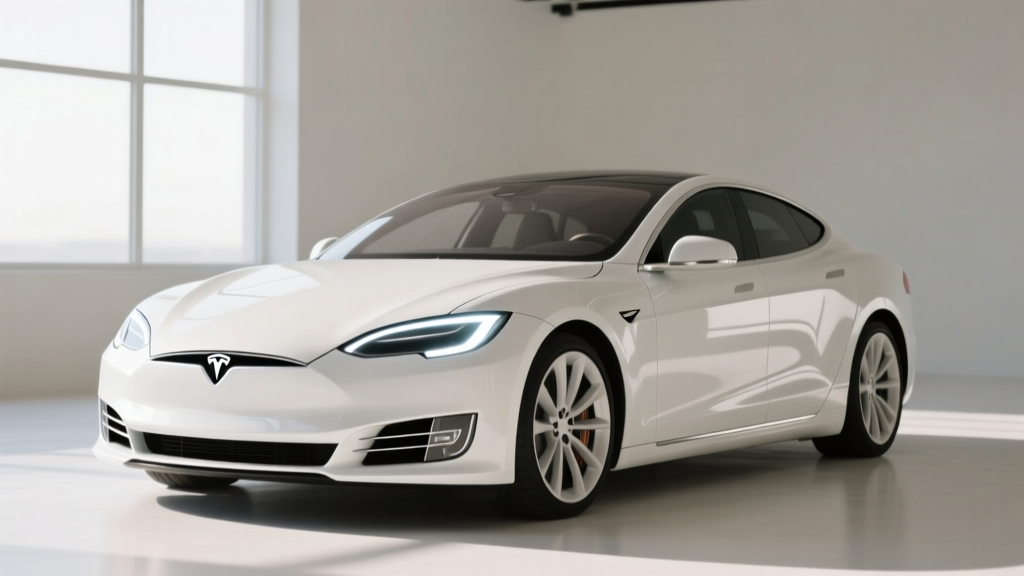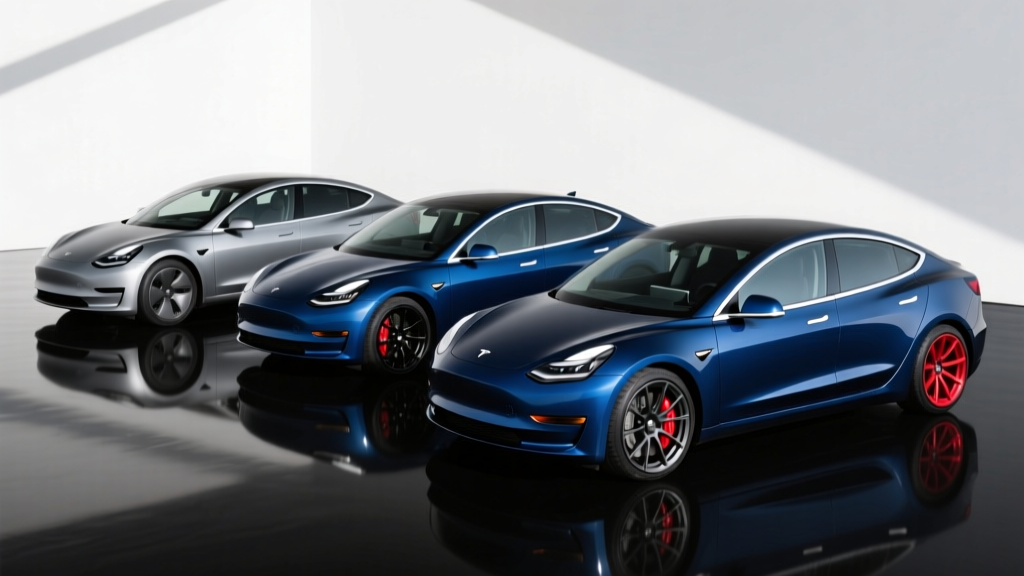
The Tesla Model 3 remains the default benchmark in the compact electric sedan segment, and for 2026, the lineup is streamlined into three distinct trims: the entry-level Rear-Wheel Drive, the efficiency-focused Long Range AWD, and the track-capable Performance. Each trim targets a different buyer—from the cost-conscious commuter to the road-trip enthusiast to the driving-dynamics purist. But the differences go far beyond price tags. Battery chemistry, charging curves, drivetrain layout, and federal tax credit eligibility all shift meaningfully across the lineup.
This guide breaks down every 2026 Tesla Model 3 trim with the exact numbers that matter: EPA range, usable battery capacity, DC fast-charge speeds, real-world efficiency, and out-the-door pricing after incentives. If you're cross-shopping the Model 3 against the Hyundai Ioniq 6, BMW i4, or Polestar 2, this is the spec-driven primer you need before stepping into a Tesla showroom—or clicking "Order" online.
2026 Tesla Model 3 Trim Lineup at a Glance
| Spec | RWD (Base) | Long Range AWD | Performance |
|---|---|---|---|
| Base MSRP | $38,990 | $45,990 | $52,990 |
| EPA Range | 272 mi | 363 mi | 315 mi |
| Battery (usable, est.) | ~57.5 kWh (LFP) | ~75 kWh (NMC) | ~75 kWh (NMC) |
| Drivetrain | RWD, single motor | AWD, dual motor | AWD, dual motor |
| Horsepower | 271 hp | 346 hp | 510 hp |
| 0–60 mph | 5.8 sec | 4.2 sec | 2.9 sec |
| Top Speed | 125 mph | 125 mph | 163 mph |
| Max DC Fast Charge | 170 kW | 250 kW | 250 kW |
| 10–80% DCFC Time | ~25 min | ~27 min | ~27 min |
| MPGe (combined) | 132 MPGe | 130 MPGe | 115 MPGe |
| kWh/100 mi | 25 | 26 | 29 |
| Cargo (trunk + frunk) | 23 cu ft total | 23 cu ft total | 23 cu ft total |
| Warranty (battery) | 8 yr / 100,000 mi | 8 yr / 120,000 mi | 8 yr / 120,000 mi |
Real-World Range: What the EPA Sticker Doesn't Tell You
EPA range estimates are useful for comparison shopping, but real-world results depend heavily on driving style, ambient temperature, and terrain. Here's how each trim performs outside the lab.
Model 3 RWD: EPA 272 miles. Expect roughly 220–245 miles on sustained highway driving at 70+ mph. In freezing temperatures (below 32°F), plan for 185–210 miles of usable range. The LFP battery's lower energy density and smaller pack make this trim the most sensitive to cold-weather losses.
Model 3 Long Range AWD: EPA 363 miles. Real-world highway: 290–320 miles. Cold weather: 245–280 miles. The larger NMC pack and heat pump give this trim the best buffer for road trips and winter commutes alike.
Model 3 Performance: EPA 315 miles. Highway reality: 250–280 miles. Cold weather: 210–240 miles. The stickier tires, more aggressive alignment, and higher power draw under hard acceleration reduce efficiency—but that's the trade for 2.9-second 0–60 sprints.
Tesla includes a heat pump as standard equipment on all 2026 Model 3 trims, which recovers waste heat from the drivetrain and ambient air to warm the cabin and battery. This significantly reduces winter range loss compared to resistive heating systems. Still, any EV will lose 15–30% of rated range in sub-freezing conditions, and the Model 3 is no exception. Plan your charging stops accordingly.
Battery Chemistry: LFP vs. NMC Across the Lineup
One of the most consequential differences between Model 3 trims is battery chemistry, and it affects everything from daily charging habits to long-term degradation.
| Factor | LFP (RWD trim) | NMC (Long Range & Performance) |
|---|---|---|
| Energy Density | Lower (~160 Wh/kg cell-level) | Higher (~250 Wh/kg cell-level) |
| Daily Charging Recommendation | Charge to 100% daily | Charge to 80% daily; 100% for trips |
| Cycle Life | 3,000+ cycles | 1,000–2,000 cycles |
| Cold-Weather Performance | Slower charge acceptance when cold | Better cold-weather charge rates |
| Cost to Replace (out of warranty) | ~$8,000–$10,000 | ~$12,000–$16,000 |
| Long-Term Degradation | ~5–8% over 150k miles | ~8–12% over 150k miles |
The LFP (lithium iron phosphate) pack in the RWD trim is a practical advantage for commuters who can charge at home every night. Tesla explicitly recommends charging LFP batteries to 100% at least once per week to maintain accurate state-of-charge calibration. This means you can use the full 272 EPA-rated miles as your daily working range without guilt.
The NMC (nickel manganese cobalt) packs in the Long Range and Performance trims deliver more range and power from a lighter package, but Tesla recommends keeping daily charge at 80% to maximize longevity. That effectively gives you ~290 usable daily miles on the Long Range—still best-in-class—and the full 363 miles when you set it to 100% before a road trip.
Charging Speed: DC Fast, Level 2, and the Charge Curve Reality
Peak charge rate is a headline number, but the charge curve—how quickly the battery charges across the full 10–80% window—is what determines your actual time spent at a Supercharger or public DC station.
| Charging Method | RWD | Long Range AWD | Performance |
|---|---|---|---|
| Max DC Fast Charge | 170 kW | 250 kW | 250 kW |
| 10–80% DCFC Time | ~25 minutes | ~27 minutes | ~27 minutes |
| Miles Added in 15 min (DCFC) | ~130 mi | ~175 mi | ~155 mi |
| Level 2 Home Charging (kW) | 7.6 kW (32A) | 11.5 kW (48A) | 11.5 kW (48A) |
| Level 2 Miles per Hour | ~30 mi/hr | ~44 mi/hr | ~44 mi/hr |
| Full Level 2 Charge (0–100%) | ~8 hours | ~7 hours | ~7 hours |
| Charge Port | NACS (native) | NACS (native) | NACS (native) |
All 2026 Model 3 trims use the NACS (North American Charging Standard) connector natively, which gives direct access to Tesla's Supercharger network—over 6,000 stalls in North America as of early 2026, with a strong reliability record. Third-party networks like Electrify America and EVgo also support NACS-equipped vehicles, though adapter requirements and handshake protocols vary by station.
The RWD trim's 170 kW peak rate is lower than its siblings, but because the LFP pack is smaller (~57.5 kWh usable), the 10–80% fill time is only marginally longer. The real-world impact: on a road trip, the RWD adds roughly 130 miles of range in 15 minutes, while the Long Range adds about 175 miles. For highway driving at 3–4 miles per kWh, that difference means one fewer stop on a 400-mile journey.
At home, the Long Range and Performance trims accept 48 amps on a Level 2 circuit (requiring a 60-amp breaker), replenishing about 44 miles of range per hour. The RWD maxes at 32 amps on Level 2, adding roughly 30 miles per hour. For most commuters driving 30–50 miles daily, either rate easily replenishes overnight on a standard 240V home charger.
Performance and Driving Dynamics
The Model 3 has always been a driver's car by EV standards, and the 2026 refresh sharpens the steering feel, improves cabin isolation, and retunes the adaptive dampers on the Performance trim.
RWD (271 hp, 5.8s 0–60): The single-motor rear-drive layout gives the base Model 3 a lighter nose and a more playful balance than the AWD variants. It's quick enough for confident highway merging and genuinely engaging on a back road. This is the trim for buyers who prioritize efficiency and value over outright speed.
Long Range AWD (346 hp, 4.2s 0–60): The dual-motor setup adds all-weather traction and a meaningful acceleration bump. The extra ~200 lbs over the front axle is noticeable in tight corners, but the trade-off—superior snow and rain confidence plus 90 additional miles of range—justifies it for most buyers outside the Sun Belt.
Performance (510 hp, 2.9s 0–60): Track Mode, adaptive dampers, high-performance brakes, and stickier summer tires transform the Model 3 into a legitimate sports sedan rival. The 2.9-second sprint to 60 mph matches a Porsche 911 Carrera, and the low center of gravity keeps body roll minimal. The trade-off is a firmer ride, higher tire wear costs, and ~50 fewer miles of EPA range compared to the Long Range.
Pricing, Tax Credits, and Total Cost
Understanding what you'll actually pay requires navigating the IRS §30D federal tax credit rules, which apply income caps, MSRP limits, and battery-sourcing requirements.
| Trim | Base MSRP | Destination Fee | Federal Credit (est.) | Effective Price* |
|---|---|---|---|---|
| RWD | $38,990 | $1,390 | Up to $7,500 | ~$32,880 |
| Long Range AWD | $45,990 | $1,390 | Up to $7,500 | ~$39,880 |
| Performance | $52,990 | $1,390 | Up to $7,500 | ~$46,880 |
*Effective price assumes full $7,500 credit eligibility. Actual credit depends on buyer income, vehicle MSRP cap compliance, and battery critical-mineral/component sourcing. Consult a tax professional and check fueleconomy.gov for current eligibility.
§30D Federal Tax Credit Requirements (2026):
- MSRP Cap: Sedans must be ≤ $55,000. The RWD and Long Range qualify; the Performance at $52,990 also qualifies, but adding premium paint, FSD, or wheels can push it over the cap.
- Buyer Income Cap: AGI ≤ $150,000 (single), $225,000 (head of household), $300,000 (joint).
- Battery Sourcing: Critical minerals and battery components must meet escalating domestic/free-trade-partner thresholds. Tesla has progressively localized its supply chain, but verify current-year compliance on the IRS qualified vehicle list.
- Point-of-Sale Transfer: As of 2024+, you can transfer the credit to the dealer at purchase, reducing your out-of-pocket cost immediately rather than waiting for tax filing.
Interior, Tech, and Daily Usability
The 2026 Model 3 interior received meaningful upgrades with the "Highland" refresh that carried forward: ventilated front seats, ambient lighting, rear-seat touchscreen, improved acoustic glass, and a refined suspension tune that dramatically reduces road noise compared to pre-2024 models.
Cargo Space: 23 cubic feet total (trunk + frunk). The trunk is a liftback design with a wide opening, making it practical for bulky items. Rear seats fold 60/40. The frunk holds a charging cable and a small bag—useful but modest.
Passenger Space: Front legroom is generous at 42.2 inches. Rear legroom at 35.2 inches is adequate for adults under 6 feet but tighter than a Hyundai Ioniq 6 or BMW i4. The low roofline means taller passengers may brush the headliner.
Infotainment: The 15.4-inch center touchscreen runs Tesla's proprietary OS—no Apple CarPlay or Android Auto. Navigation, media, and vehicle controls are all screen-based, including climate adjustments via swipe. The interface is fast and responsive, but the lack of phone integration is a dealbreaker for some buyers. A wireless phone charger and USB-C ports (front and rear) are standard.
Driver Assistance: Basic Autopilot (lane centering, adaptive cruise, traffic-aware features) is included. Full Self-Driving (Supervised) is an $8,000 option or $99/month subscription. Important clarification: FSD Supervised is an SAE Level 2 system. The driver must remain attentive, keep hands on the wheel (or demonstrate engagement via camera monitoring), and be prepared to take over at any moment. It is not autonomous driving.
⚠️ Driver-Assist Limitation Notice: Tesla Autopilot and FSD (Supervised) are SAE Level 2 driver-assistance systems. They do not make the vehicle self-driving. The driver is legally and practically responsible for all vehicle operation at all times. NHTSA has investigated multiple incidents involving Autopilot misuse. Always maintain active supervision.
Who Should Buy Which Tesla Model 3 Trim?
Choose the RWD if: You commute under 50 miles daily, have reliable home charging, live in a mild climate, and want the lowest entry price with the longest-lasting LFP battery. Ideal for: urban commuters, rideshare drivers, second-car households.
Choose the Long Range AWD if: You take regular road trips, live in a region with cold winters, need all-wheel drive for snow, or simply want the maximum range buffer. This is the sweet-spot trim for most buyers. Ideal for: one-car households, frequent travelers, cold-climate residents.
Choose the Performance if: Driving dynamics are a priority, you want sub-3-second acceleration, and you're willing to trade some range and ride comfort for it. Ideal for: driving enthusiasts, track-day hobbyists, buyers cross-shopping the BMW i4 M50 or Polestar 2 BST.
How the Model 3 Stacks Up Against Competitors
The compact electric sedan market is more competitive than ever. Here's how the Model 3 Long Range—the volume trim—compares to key rivals:
| Spec | Tesla Model 3 LR AWD | Hyundai Ioniq 6 SEL AWD | BMW i4 eDrive40 | Polestar 2 LR Dual Motor |
|---|---|---|---|---|
| Price (est.) | $45,990 | $47,500 | $57,900 | $53,300 |
| EPA Range | 363 mi | 316 mi | 307 mi | 276 mi |
| Max DCFC | 250 kW | 240 kW | 205 kW | 205 kW |
| 0–60 mph | 4.2 sec | 5.1 sec | 5.5 sec | 4.3 sec |
| Charging Network | Supercharger (native NACS) | CCS (NACS adapter avail.) | CCS (NACS adapter avail.) | CCS (NACS adapter avail.) |
The Model 3 Long Range leads on range and price while offering the most reliable public charging experience via the Supercharger network. The Ioniq 6 counters with a more traditional interior layout and CarPlay support. The BMW i4 wins on build quality and dealer service infrastructure. The Polestar 2 offers Scandinavian design and Android Automotive OS. But on pure value-per-mile-of-range, the Model 3 remains the benchmark.
Pros
- Best-in-class EPA range (363 mi, Long Range)
- Supercharger network reliability
- Over-the-air updates add features post-purchase
- Strong resale value relative to EV segment average
- LFP battery option (RWD) for daily 100% charging
- Heat pump standard on all trims
Cons
- No Apple CarPlay or Android Auto
- Rear seat legroom is tight for tall adults
- FSD is expensive and still Level 2 (not autonomous)
- Service center availability varies by region
- No physical buttons—everything is screen-based
- Insurance premiums run higher than gas equivalents
Frequently Asked Questions
What is the real-world range of the 2026 Tesla Model 3?
It depends on trim and conditions. The Long Range AWD delivers roughly 290–320 miles on highway trips at 70 mph and 245–280 miles in freezing weather. The RWD is more limited at 220–245 highway miles. The Performance yields about 250–280 highway miles. All figures assume moderate driving; aggressive acceleration and high speeds reduce range further.
How fast does the Model 3 charge at home and on the road?
On DC fast chargers, the Long Range and Performance peak at 250 kW, achieving 10–80% in about 27 minutes and adding roughly 175 miles in 15 minutes. The RWD peaks at 170 kW with a similar 10–80% time of ~25 minutes but adds fewer miles due to the smaller pack. At home on Level 2 (240V), the Long Range and Performance add about 44 miles per hour; the RWD adds about 30 miles per hour.
Does the Tesla Model 3 qualify for the $7,500 federal tax credit?
All three trims fall under the $55,000 MSRP cap for sedans under IRS §30D rules. However, eligibility depends on buyer income (≤$150k single / $300k joint), battery critical-mineral and component sourcing requirements, and whether you've already received a credit for another vehicle in the same calendar year. Tesla's battery sourcing has generally qualified, but confirm on the IRS qualified vehicle list at the time of purchase. The credit can be transferred at point of sale to reduce your upfront cost.
Is the Model 3 worth buying vs. the Hyundai Ioniq 6 or BMW i4?
If range and charging convenience are your top priorities, the Model 3 Long Range is hard to beat—363 EPA miles and Supercharger access are significant advantages. The Ioniq 6 offers a more conventional interior and CarPlay. The BMW i4 delivers superior build quality and dealer service. For pure value, the Model 3 wins. For traditional luxury feel, the BMW edges ahead. Test-drive all three before deciding.
What are the biggest pros and cons of the 2026 Model 3?
The biggest advantages are class-leading range, Supercharger network reliability, strong performance, OTA updates, and competitive pricing. The main drawbacks are the lack of Apple CarPlay/Android Auto, tight rear seating, screen-only controls, regional service center gaps, and higher insurance costs compared to ICE sedans.
How long will the Model 3 battery last?
Tesla warranties the battery for 8 years/100,000 miles (RWD) or 8 years/120,000 miles (Long Range/Performance), guaranteeing at least 70% capacity retention. Real-world data from high-mileage Teslas suggests NMC packs retain roughly 88–92% capacity at 150,000 miles, while LFP packs often retain 92–95% due to their superior cycle life. Battery replacement outside warranty currently runs $8,000–$16,000 depending on pack size.
Can I charge a Model 3 at non-Tesla charging stations?
Yes. The 2026 Model 3 uses the NACS connector natively. As of 2026, most major charging networks—including Electrify America, EVgo, and ChargePoint—have added NACS cables or provide adapters at many stations. Tesla Superchargers remain the most reliable network, but public charging compatibility is no longer a limitation for NACS-equipped vehicles.
Sources: EPA range and efficiency data via fueleconomy.gov; federal tax credit rules via IRS §30D; vehicle specifications from Tesla.com.