The Tesla Model 3 remains one of the most-searched electric sedans in the U.S. market, and for good reason: it undercuts most EV competitors on price while delivering class-leading efficiency and access to Tesla's Supercharger network. But with refreshed styling, updated battery chemistry, and shifting federal incentive rules, the 2026 Model 3 demands a fresh look — especially for shoppers researching Tesla lease requirements and weighing whether to lease or buy.
This review breaks down every number that matters: real-world range versus the EPA sticker, DC fast-charging curves, home charging costs, §30D tax credit eligibility, and the lease-versus-buy math that trips up many first-time EV buyers.
2026 Tesla Model 3 at a Glance: Key Specs
| Spec | Model 3 RWD | Model 3 Long Range AWD | Model 3 Performance |
|---|---|---|---|
| EPA Range | 272 mi | 363 mi | 315 mi |
| Battery (usable) | ~57.5 kWh (LFP) | ~75 kWh (NMC) | ~75 kWh (NMC) |
| Drivetrain | Rear-Wheel Drive | Dual-Motor AWD | Dual-Motor AWD |
| 0-60 mph | 5.8 sec | 4.2 sec | 2.9 sec |
| Horsepower | 271 hp | 346 hp | 510 hp |
| Max DC Fast Charge | 170 kW | 250 kW | 250 kW |
| 10-80% DC Time | ~25 min | ~22 min | ~22 min |
| Level 2 Home Rate | 11.5 kW (~44 mi/hr) | 11.5 kW (~44 mi/hr) | 11.5 kW (~44 mi/hr) |
| MPGe (combined) | 132 MPGe | 125 MPGe | 118 MPGe |
| Base MSRP | $38,990 | $44,990 | $52,990 |
Source: fueleconomy.gov and Tesla.com (2026 model year). Specs subject to change by trim and production batch.
Real-World Range: What the EPA Sticker Doesn't Tell You
EPA estimate: 272 mi (RWD) / 363 mi (Long Range AWD) / 315 mi (Performance)
Real-world highway (70-80 mph): Expect 220-240 mi (RWD), 290-310 mi (Long Range), 250-270 mi (Performance)
Cold weather (below 32°F): Subtract 20-30% — the LFP RWD pack is especially sensitive to cold, dropping to ~180-195 mi highway in freezing temps.
The RWD Model 3 uses a lithium iron phosphate (LFP) battery. LFP chemistry is excellent for longevity — Tesla recommends charging it to 100% regularly — but it suffers more capacity loss in cold weather than the nickel-manganese-cobalt (NMC) packs in the Long Range and Performance trims. If you live in the northern U.S. and regularly drive highway distances in winter, the Long Range AWD's 363-mile EPA rating gives you a far more comfortable buffer.
On a 75°F day at 65 mph, the Long Range AWD consistently delivers 300+ miles on a single charge. Push it to 80 mph or climb mountain passes, and you'll see that drop to 270-280 miles. The RWD trim, with its smaller 57.5 kWh pack, is best suited for commuters with home charging who rarely exceed 150 miles between plug-ins.
Charging Speed: DC Fast, Level 2, and the Supercharger Advantage
| Charging Level | Power / Rate | Miles Added per Hour | Notes |
|---|---|---|---|
| Level 1 (120V outlet) | ~1.2 kW | ~4-5 mi/hr | Emergency/trickle only |
| Level 2 (240V home) | 11.5 kW | ~44 mi/hr | Full charge overnight (~6-8 hrs) |
| DC Fast (V3 Supercharger) | Up to 250 kW (LR/Perf) | ~1,000 mi/hr peak | 10-80% in ~22 min |
| DC Fast (RWD trim) | Up to 170 kW | ~680 mi/hr peak | 10-80% in ~25 min |
The Model 3 uses the NACS (North American Charging Standard) connector natively — no adapter needed at Tesla Superchargers. This is a significant practical advantage: Tesla's Supercharger network has the highest uptime and reliability ratings among U.S. DC fast-charging networks, consistently above 95% availability.
On a V3 Supercharger (250 kW), the Long Range and Performance trims sustain peak charging rates up to roughly 40% State of Charge (SoC), then taper progressively. The 10-80% time of ~22 minutes assumes you've preconditioned the battery by navigating to the Supercharger in the car's navigation system. Skip preconditioning and that time can stretch to 30+ minutes, especially in cold weather.
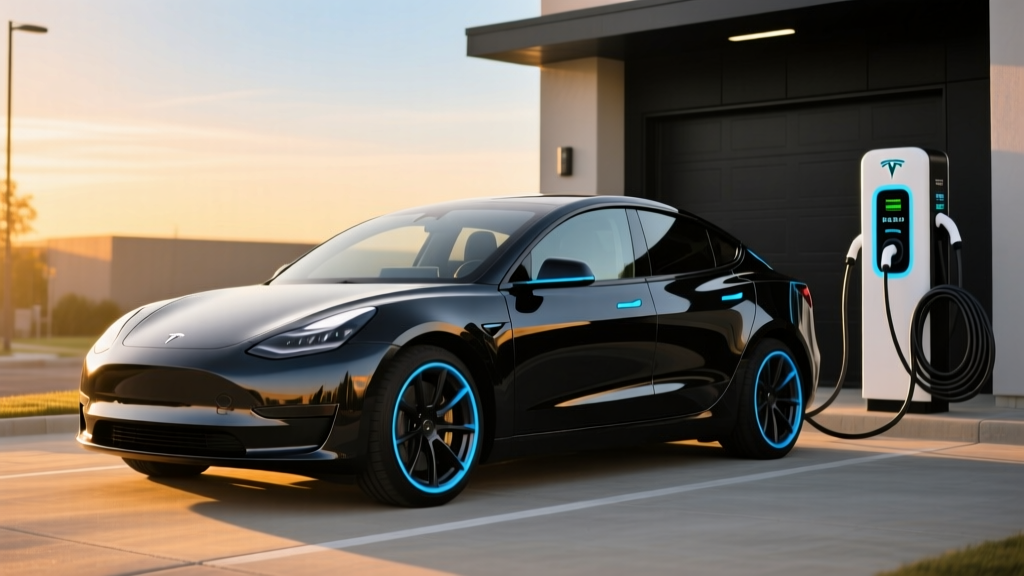
For home charging, a 48-amp Level 2 wall connector on a 60-amp circuit delivers the full 11.5 kW. Expect to pay $500-$1,200 for professional installation depending on your panel's proximity to the garage and whether a panel upgrade is needed. Most owners wake up to a full battery every morning, making public charging a road-trip-only affair.
Pricing, Lease Requirements, and Federal Tax Credit Eligibility
| Trim | Base MSRP | Est. Monthly Lease* | §30D Credit Eligible? |
|---|---|---|---|
| Model 3 RWD | $38,990 | $329-$399/mo | Yes (up to $7,500) |
| Model 3 Long Range AWD | $44,990 | $449-$529/mo | Yes (up to $7,500) |
| Model 3 Performance | $52,990 | $579-$649/mo | Yes (up to $7,500) |
*Lease estimates based on 36-month/10,000-mile terms with $2,500-$3,999 due at signing. Actual terms vary by region, credit tier, and current Tesla offers.
Tesla lease requirements are straightforward but differ from traditional automaker leases in a few key ways:
- Credit score: Tesla's financing arm typically requires a minimum FICO of ~670 for competitive lease rates. Scores above 720 unlock the lowest money factors.
- Down payment: Usually $2,500-$4,000 due at signing (first month + acquisition fee + registration).
- Mileage limits: Standard leases offer 10,000 or 12,000 miles/year. Excess mileage fees run $0.20-$0.25/mile — steep for high-mileage commuters.
- No purchase option: Tesla leases generally do not include a buyout option at lease-end. You return the car or lease a new one.
- Insurance: Tesla requires proof of full-coverage insurance before delivery. Tesla's own insurance product (available in most states) uses real-time driving data and can be 10-20% cheaper than third-party quotes for safe drivers.
Federal Tax Credit (§30D) Rules for 2026
- Vehicle MSRP cap: Sedans must be ≤$55,000 — the RWD and Long Range qualify; the Performance trim at $52,990 also qualifies (before options push it over).
- Buyer income cap: AGI ≤$150,000 (single) / ≤$300,000 (joint filing).
- Battery sourcing: Must meet critical mineral and battery component requirements, which have tightened annually. Tesla's U.S.-assembled packs with CATL-sourced LFP (RWD) have faced scrutiny — confirm current-year eligibility at fueleconomy.gov.
- Point-of-sale transfer: You can transfer the credit to Tesla at purchase for an immediate price reduction, or claim it on your tax return.
- Lease loophole (§45W): Leased EVs may qualify for a $7,500 commercial credit passed to the lessor, who may (or may not) pass savings to you. Tesla has historically passed this through as a lease discount — verify current offers.
Source: IRS.gov. Rules change frequently — consult a tax professional for your specific situation.
Interior, Cargo Space, and Daily Practicality
The Model 3's minimalist interior divides opinion, but the numbers are solid for a compact sedan:
- Cargo volume: 23 cu ft (trunk + frunk combined) — the frunk adds ~3 cu ft of secure, weatherproof storage.
- Rear legroom: 35.2 inches — adequate for adults under 6 feet on longer trips, though the sloping roofline cuts headroom.
- Front legroom: 42.7 inches — generous by any measure.
- Display: 15.4-inch center touchscreen handles all controls (no instrument cluster). The 2026 refresh adds rear-seat ventilation controls and improved ambient lighting.
The cabin is notably quieter than pre-2024 Model 3s thanks to acoustic glass and improved door seals introduced with the "Highland" refresh. Road noise on coarse pavement is still present but no longer class-trailing.
Driver Assistance: Autopilot and FSD Supervised
Tesla's Autopilot (standard) and Full Self-Driving Supervised ($8,000 option or $99/month) are SAE Level 2 driver-assistance systems. You must keep your hands on the wheel and eyes on the road at all times. FSD Supervised can navigate highway interchanges, handle some city intersections, and manage stoplights, but it requires constant driver supervision and does not make the car autonomous.
Standard Autopilot includes adaptive cruise control and lane centering — sufficient for most highway commuting. FSD Supervised adds highway on/off-ramp navigation, autosteer on city streets, and smart summon. Real-world reliability varies significantly by geography and road-marking quality. For most buyers, standard Autopilot is the pragmatic choice.
Warranty Coverage
| Coverage | Terms |
|---|---|
| Basic Vehicle | 4 years / 50,000 miles |
| Battery & Drive Unit (RWD) | 8 years / 100,000 miles (≥70% retention) |
| Battery & Drive Unit (LR/Performance) | 8 years / 120,000 miles (≥70% retention) |
The 70% capacity retention threshold is standard for the industry. Real-world degradation data from Tesla's fleet shows NMC packs losing roughly 10-12% capacity over the first 100,000 miles, while LFP packs degrade more slowly but may show less linear degradation curves. Either way, most owners will not approach warranty limits during typical ownership.
Pros and Cons
- Best-in-class efficiency (132 MPGe RWD)
- Native NACS / Supercharger network access
- Strong real-world charging speed (250 kW LR)
- Competitive MSRP with tax credit eligibility
- Over-the-air updates improve the car over time
- Low maintenance costs (no oil, minimal brake wear)
- RWD range drops significantly in cold weather
- No physical controls — everything through the screen
- Rear seat headroom tight for taller passengers
- FSD Supervised is expensive and still Level 2
- Tesla lease has no end-of-term purchase option
- Insurance costs above average for the segment
Model 3 vs. Key Competitors: Is It Worth It?
| Attribute | Tesla Model 3 LR | Hyundai Ioniq 6 SEL | BMW i4 eDrive40 |
|---|---|---|---|
| EPA Range | 363 mi | 305 mi | 301 mi |
| Base MSRP | $44,990 | $42,600 | $57,900 |
| Max DC Charge | 250 kW | 233 kW | 205 kW |
| 10-80% Time | ~22 min | ~18 min | ~31 min |
| Charging Network | Supercharger (native) | CCS → NACS adapter | CCS → NACS adapter |
| §30D Credit | Up to $7,500 | Up to $7,500 | No (MSRP > $55K cap) |
The Ioniq 6 charges faster (10-80% in ~18 minutes thanks to its 800V architecture) but gives up 58 miles of EPA range and requires a NACS adapter for Supercharger access. The BMW i4 is more refined inside but costs $13,000 more and doesn't qualify for the federal credit. For most buyers prioritizing range, value, and charging convenience, the Model 3 Long Range remains the segment benchmark.
Who Should Lease or Buy the Model 3?
- You want maximum range per dollar in a sedan
- You road-trip regularly and value Supercharger reliability
- You have home Level 2 charging access
- You prefer a tech-forward, minimalist cabin
- You need SUV cargo space or third-row seating
- You want physical buttons and a traditional instrument cluster
- You drive 200+ miles daily in freezing weather (consider Long Range or a larger pack)
- You want a lease with an end-of-term buyout option
Frequently Asked Questions
What credit score do I need to lease a Tesla Model 3?
Tesla's financing typically requires a FICO score of ~670 or higher. Scores above 720 generally qualify for the best money factors. You'll also need proof of income, valid insurance, and a down payment of $2,500-$4,000.
Does the 2026 Tesla Model 3 qualify for the $7,500 federal tax credit?
The RWD ($38,990) and Long Range AWD ($44,990) fall under the §30D sedan MSRP cap of $55,000 and are eligible, provided you meet income limits ($150K single / $300K joint) and the vehicle meets current-year battery sourcing requirements. The Performance trim at $52,990 base also qualifies, but adding options that push MSRP above $55,000 would disqualify it. Always verify at fueleconomy.gov before purchasing.
How much does it cost to charge a Model 3 at home vs. Supercharging?
At the U.S. average electricity rate of ~$0.16/kWh, fully charging the Long Range's 75 kWh pack costs about $12 — roughly equivalent to 1.5 gallons of gas. Supercharger pricing averages $0.25-$0.35/kWh, making a full charge $19-$27. For daily driving, home charging is dramatically cheaper than gas; road-trip Supercharging costs are comparable to a fuel-efficient hybrid.
Can I buy my Tesla Model 3 at the end of the lease?
Generally, no. Tesla's current lease agreements do not include a purchase option at lease-end. You return the vehicle and can lease or purchase a new Tesla. This is a significant difference from most traditional automaker leases and should factor into your decision.
Is the Model 3 RWD sufficient, or should I get Long Range?
If you commute under 60 miles round-trip, have home charging, and live in a mild climate, the RWD is excellent value at $38,990. If you regularly drive 200+ miles, live in a cold-weather state, or want the security of a larger battery buffer, the Long Range's 363-mile EPA range and NMC chemistry justify the $6,000 premium.