The Bottom Line on the 2026 Subaru Uncharted
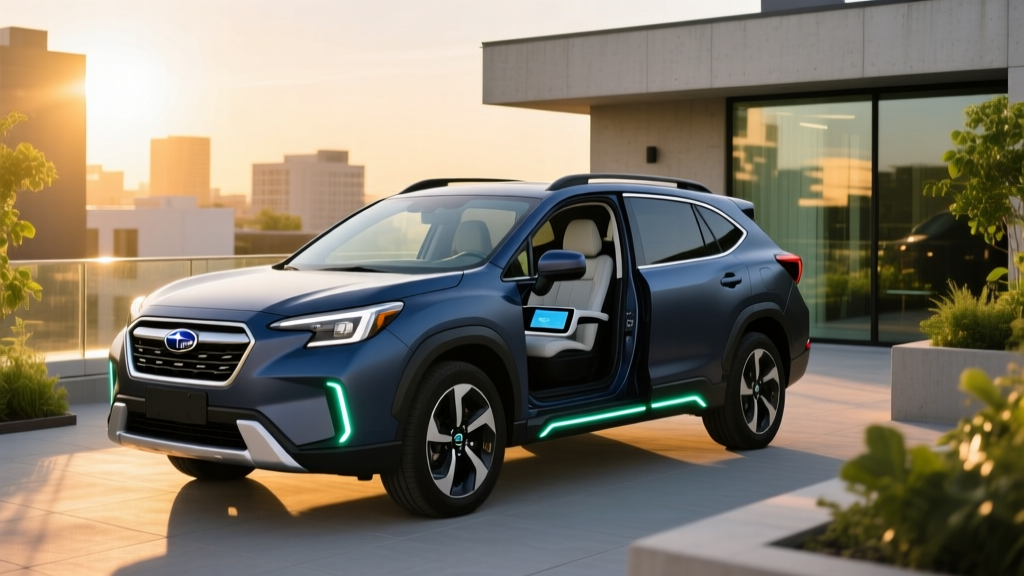
The 2026 Subaru Uncharted is Subaru's compact electric SUV built on the Toyota-derived e-TNGA platform, sharing underpinnings with the bZ4X and Solterra. It is announced for the 2026 model year with an estimated EPA range of 230–250 miles, a usable battery around 71–75 kWh, and a starting MSRP projected between $38,000–$42,000 before incentives. Subaru positions it below the larger Solterra in size and price, targeting urban and suburban buyers who want Subaru's standard AWD and rugged styling in a smaller, more affordable EV package. Because final EPA certifications are pending, all specs below are based on platform data and manufacturer previews — treat them as preliminary until official numbers are published.
What the 2026 Subaru Uncharted Brings to the Table
Subaru entered the EV market cautiously with the Solterra, and the Uncharted represents a second, more accessible step. Built on the same e-TNGA architecture co-developed with Toyota, the Uncharted slots into the compact crossover segment — think the EV equivalent of a Crosstrek in footprint and mission. Here is what we know from Subaru's preview materials and the shared platform:
| Spec | Estimated Value | Notes |
|---|---|---|
| Battery (usable) | ~71–75 kWh | Lithium-ion NMC; shared e-TNGA pack |
| EPA Range | 230–250 mi | Pending certification; AWD reduces range vs FWD competitors |
| Drivetrain | Dual-motor AWD (standard) | Subaru's symmetrical AWD branding; ~214–250 hp |
| DC Fast Charge (peak) | ~150 kW | 10–80% in approximately 30 minutes (platform limit) |
| Level 2 AC Charge | ~11 kW | Full charge in ~7–8 hours |
| 0–60 mph | ~6.5–7.0 sec | Dual-motor torque delivery |
| Ground Clearance | ~8.3 in | Subaru's X-MODE terrain system expected |
| Cargo Volume | ~25–28 cu ft (rear seats up) | Compact crossover class |
| Base MSRP (est.) | $38,000–$42,000 | Before destination, before incentives |
| Battery Warranty | 8 yr / 100,000 mi | Expected to match Solterra's coverage |
The e-TNGA platform's DC fast-charging architecture has been a known limitation. While competitors like the Hyundai Ioniq 5 peak at 235 kW on 800V systems, the Uncharted's ~150 kW peak on a 400V architecture means longer stops on road trips. On a 150 kW charger, expect the charge curve to taper significantly above 80% State of Charge (SoC), adding 10–15 extra minutes to go from 80% to full. For most daily driving, this is irrelevant — you'll charge at home overnight. For road trips, plan accordingly.
Real-World Range: What the EPA Sticker Won't Tell You
An EPA estimate of 230–250 miles is adequate for daily commuting and weekend errands, but real-world conditions tell a more nuanced story. Based on testing data from the Solterra and bZ4X (which share this powertrain), here is what to expect:
Range Reality Check
- EPA estimate: 230–250 miles
- Highway driving (70–75 mph): Expect ~190–210 miles. EVs lose efficiency at sustained high speed because there's no multi-gear transmission to lower RPM — aerodynamic drag dominates.
- Cold weather (below 32°F): Expect ~160–185 miles. Battery chemistry slows, cabin heating draws significant energy, and regenerative braking is limited when the pack is cold. Subaru's expected heat pump (standard on the Solterra) mitigates some of this loss, but physics wins.
- Mixed suburban/urban: ~220–240 miles. This is where the EPA number is most achievable — low speeds, frequent regen opportunities.
Source: fueleconomy.gov — check for official Uncharted listings once EPA certifies the model.
If your daily commute is under 60 miles round-trip and you can charge at home, the Uncharted's range is more than sufficient. If you regularly drive 200+ miles in a single trip or live in a region with harsh winters and limited public charging, the range margin becomes thin.
Cost Breakdown: Uncharted EV vs. Gas vs. Hybrid
The purchase decision comes down to total cost of ownership, not just sticker price. Here's a five-year comparison assuming 15,000 miles per year, $0.14/kWh home electricity (national average), $3.50/gallon gas, and 80% home charging / 20% public DC fast charging for the EV.
| Cost Category | 2026 Uncharted EV (est.) | Gas Compact SUV (~28 MPG) | Compact Hybrid (~40 MPG) |
|---|---|---|---|
| Purchase Price (base) | $40,000 | $30,000 | $33,000 |
| Federal Tax Credit (§30D) | Up to $7,500* | $0 | Up to $7,500* (PHEV only) |
| Effective Purchase | ~$32,500 | $30,000 | $33,000 |
| Fuel/Energy (5 yr, 75K mi) | ~$4,200 | ~$9,375 | ~$6,560 |
| Maintenance (5 yr) | ~$1,800 | ~$3,500 | ~$3,200 |
| Insurance (5 yr, avg.) | ~$9,500 | ~$7,500 | ~$7,800 |
| Total 5-Year Cost | ~$48,000 | ~$50,375 | ~$50,560 |
*Federal §30D tax credit eligibility depends on buyer income caps ($150K single / $300K joint), vehicle MSRP caps ($55K for SUVs), battery critical-mineral sourcing, and North American final assembly. The Uncharted's assembly location and battery sourcing will determine credit eligibility — verify current rules at IRS.gov before purchasing. The credit can now be transferred to the dealer at point of sale, reducing your out-of-pocket cost immediately.
The EV pulls ahead on fuel and maintenance savings — no oil changes, no transmission fluid, far fewer moving parts. However, EV insurance premiums run 15–25% higher on average due to repair costs for battery and structural components. If you don't qualify for the tax credit, the cost advantage narrows considerably.
Tax Credit Eligibility: What You Need to Know
The §30D clean vehicle credit is not a guaranteed $7,500 for every buyer. Here is the current checklist:
- Income cap: Modified AGI ≤ $150,000 (single) or ≤ $300,000 (married filing jointly)
- MSRP cap: Vehicle base price + options must not exceed $55,000 for SUVs (the Uncharted should clear this easily)
- Battery sourcing: Increasing percentages of critical minerals and battery components must be sourced from the US or FTA partners — these thresholds tighten yearly through 2032
- Final assembly: Must occur in North America. Subaru's assembly plans for the Uncharted are not yet confirmed — this is the single biggest unknown for credit eligibility
- Point-of-sale transfer: You can transfer the credit to the dealer for an immediate price reduction, but you must file IRS Form 8936 to confirm eligibility at tax time. If you don't qualify, you owe the credit back
If the Uncharted is assembled in Japan (like the Solterra initially was), it will not qualify for the federal credit unless sourcing rules shift. Subaru may move production to a US plant — this is a critical detail to watch for when official specs drop.
Charging at Home and on the Road
Most Uncharted owners will do the vast majority of their charging at home. Here is what each level delivers:
| Level | Power | Miles Added per Hour | Best For |
|---|---|---|---|
| Level 1 (120V outlet) | ~1.4 kW | ~4–5 mi/hr | Emergency / overnight top-up only |
| Level 2 (240V home) | ~11 kW | ~35–40 mi/hr | Daily charging; full charge in ~7–8 hr |
| DC Fast Charge | Up to ~150 kW | ~200+ mi in 30 min (10–80%) | Road trips; 30 min to 80% SoC |
Home charging setup: A Level 2 home charger requires a 240V circuit (typically 48A / 60A breaker). Installation costs range from $500–$1,500 if your electrical panel has capacity, or $2,000–$4,000+ if a panel upgrade is needed. Factor this into your first-year budget. The equipment itself (a quality Level 2 EVSE like a ChargePoint Home Flex or Emporia V2) runs $400–$700.
Public charging reality: The Uncharted will use either the CCS1 or NACS connector — Subaru's choice here matters for network access. If NACS, you'll have direct access to Tesla Superchargers. If CCS1, you'll rely on Electrify America, EVgo, and ChargePoint networks. Subaru has not yet confirmed the connector for the US-market Uncharted. Adapters exist in both directions, but native compatibility is always more convenient.
EV vs. Gas vs. Hybrid: Decision Framework
The Uncharted competes not just with other EVs but with gas and hybrid crossovers in its own showroom. Here's a practical framework:
Choose the 2026 Subaru Uncharted (EV) If:
- You have reliable home charging (garage, driveway, or dedicated outlet)
- Your daily driving is under 100 miles round-trip
- You qualify for the §30D tax credit (bringing effective price below $35K)
- You want minimal maintenance and lower per-mile energy costs
- You value instant torque and quiet operation
Choose a Subaru Hybrid (or Gas) Instead If:
- You lack home charging access and rely entirely on street or apartment parking
- You regularly drive 300+ miles in a day through areas with sparse charging infrastructure
- You live in extreme cold (sustained sub-zero temperatures) where range loss compounds
- You don't qualify for the tax credit and the upfront premium isn't justified by your mileage
- You need maximum cargo/towing capacity — the Uncharted's compact footprint limits both
Consider a PHEV (Plug-In Hybrid) If:
- You want 25–35 miles of electric-only range for daily commuting but gas flexibility for road trips
- You're in a charging desert but still want some electric driving
- You're not ready to commit to full electric but want to reduce fuel consumption
Common Misconceptions About the Uncharted and EVs
| Myth | Fact |
|---|---|
| "The battery will need replacing in 5 years and cost $20,000" | Modern NMC batteries degrade slowly — expect 10–15% capacity loss over 8–10 years. Subaru's expected 8yr/100K-mi warranty covers defects and excessive degradation (typically below 70% capacity). Full replacement is rare and costs are declining. |
| "230 miles of range isn't enough" | The average American drives ~37 miles per day (fueleconomy.gov). With home charging, you start every day with a full battery. Range only matters on road trips — and a 30-minute DC fast charge gets you back to 80%. |
| "EVs are worse in winter" | EVs start instantly in cold (no engine cranking), and AWD traction is excellent with instant torque. Range does drop 20–30% in extreme cold, but preconditioning the battery while plugged in mitigates much of this. The Uncharted's heat pump helps further. |
| "Public charging is always broken" | Reliability varies by network. Tesla Superchargers (if NACS-compatible) maintain 97%+ uptime. Electrify America and EVgo have improved but still see occasional outages. Planning with apps like PlugShare and A Better Route Planner is essential for road trips. |
| "The tax credit is guaranteed" | Eligibility depends on your income, the vehicle's MSRP, battery sourcing, and assembly location. Always verify at IRS.gov before committing. |
What First-Time EV Buyers Should Know
If the Uncharted would be your first EV, here are the ownership realities no brochure covers:
- Home charging is non-negotiable for convenience. Without it, you'll spend 2–4 hours per week at public chargers. If you're in an apartment or condo, check whether your building has or plans EV charging infrastructure before buying.
- Plan road trips around chargers, not gas stations. Apps like A Better Route Planner (ABRP) let you input the Uncharted's specs and plot charging stops. On a 400-mile trip, expect one 25–35 minute stop.
- Tires wear faster on EVs. The Uncharted's instant torque and heavier curb weight (battery mass) accelerate tire wear. Budget for replacement tires every 30,000–40,000 miles instead of the 50,000+ miles typical for gas cars.
- Regenerative braking changes how you drive. The Uncharted will offer adjustable regen levels. At maximum, you can drive almost entirely with the accelerator pedal — lifting off slows the car significantly while recapturing energy. It takes a few days to adapt, then you won't go back.
- Software updates matter. Subaru's infotainment and powertrain software will receive over-the-air updates. Early-production models often improve significantly after the first year of software patches — consider this if you're buying in the first production batch.
Frequently Asked Questions
When will the 2026 Subaru Uncharted be available to buy?
Subaru has announced the Uncharted for the 2026 model year. Based on typical automotive timelines, expect US deliveries to begin in late 2025 or early 2026. Exact timing depends on production ramp-up and whether Subaru assembles it domestically or imports it.
Will the 2026 Subaru Uncharted qualify for the $7,500 federal tax credit?
It depends on final assembly location and battery sourcing compliance with §30D rules. If assembled in North America with compliant battery components, it should qualify — subject to buyer income caps and the $55,000 SUV MSRP limit. Verify current eligibility at IRS.gov before purchasing.
How does the Uncharted compare to the Subaru Solterra?
The Uncharted is smaller, lighter, and less expensive than the Solterra. Expect slightly better range (the Solterra's EPA rating sits at 222–228 miles depending on trim) and a lower starting price. The Solterra offers more cargo room and a more spacious rear seat. If you need compact maneuverability and a lower price, the Uncharted wins. If you need family-hauler space, stick with the Solterra.
Does the Uncharted use NACS or CCS for charging?
Subaru has not confirmed the US-market connector for the Uncharted. The industry is rapidly shifting to NACS (Tesla's connector), and many automakers have committed to it for 2025+ models. If the Uncharted ships with CCS1, a NACS adapter will enable Supercharger access. Watch for Subaru's official announcement.
What is the expected insurance cost for the Uncharted?
EV insurance premiums typically run 15–25% higher than equivalent gas vehicles. For the Uncharted, expect annual premiums in the $1,700–$2,200 range depending on your driving record, location, and coverage level. Get quotes from multiple insurers — some (like GEICO and Progressive) have become more competitive on EV rates.
Can I tow with the 2026 Subaru Uncharted?
Subaru has not published towing capacity for the Uncharted. Based on the Solterra's 2,000-pound rating and the Uncharted's smaller size, expect a similar or slightly lower figure — adequate for a small utility trailer or bike rack, but not for boat or camper towing.