The Quickest Production Car of Its Era — Revisited for 2026 Buyers
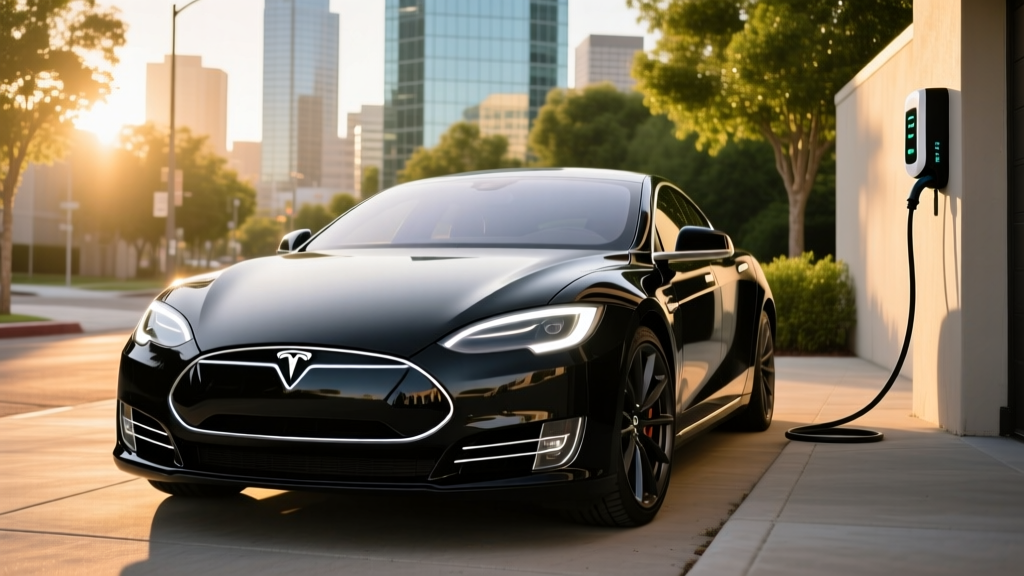
When Tesla launched the Model S P100D with Ludicrous Mode in late 2016, it didn't just reset expectations for electric sedans — it embarrassed supercars costing five times as much. The headline figure was staggering: a 0-60 mph time of 2.3 seconds (with rollout subtracted), verified by Motor Trend and Car and Driver. Nearly a decade later, the 2017 Tesla Model S P100D remains a benchmark in straight-line acceleration, and it's now appearing on the used market at prices that make it genuinely tempting for performance-minded EV buyers.
But buying a used P100D in 2026 requires clear eyes. Battery degradation, outdated Supercharger hardware, expired warranties, and zero federal tax credit eligibility on used purchases all factor into the equation. This review breaks down every number that matters — range, charging, performance, ownership cost — so you can decide if this flagship still earns its badge.
| Spec | Value |
|---|---|
| EPA Range | 315 miles |
| Battery (Usable) | ~100 kWh (NMC chemistry) |
| Drivetrain | Dual-Motor AWD |
| Horsepower | ~762 hp (combined, Ludicrous Mode) |
| 0-60 mph | 2.3 seconds (with rollout) |
| Top Speed | 155 mph |
| MPGe (Combined) | 98 MPGe |
| Efficiency | 34 kWh / 100 mi |
| Max DC Fast Charge | ~120 kW (Supercharger V2) |
| 10-80% DC Charge Time | ~45 minutes |
| Level 2 Home Charge Rate | 11.5 kW (48A) — ~34 mi/hr |
| Cargo Volume | 26.3 cu ft (rear) + 5.3 cu ft (frunk) |
| Original Base MSRP | $134,500 (before options) |
| Federal Tax Credit (2026, Used) | Up to $4,000 (§25E, income caps apply) |
| Battery Warranty (Original) | 8 years / 150,000 miles (expired for most) |
Range and Efficiency: 315 EPA Miles, But What's the Real-World Number?
The 2017 Model S P100D carries a 100 kWh battery pack using NMC (nickel-manganese-cobalt) chemistry — the standard for Tesla's long-range packs before the company began adopting LFP (lithium iron phosphate) in Standard Range models. The EPA rated this car at 315 miles of combined range when new, making it the longest-range production EV available in 2017. For reference, check the official EPA fuel economy listing.
EPA 315 miles is the sticker number. Here's what to actually expect from a 2017 P100D in 2026:
- Battery degradation: NMC packs from this era typically lose 8-12% capacity over 7-8 years of normal use. Expect ~280-290 miles at 100% SoC on a well-maintained pack.
- Highway driving (70-80 mph): Aerodynamic drag and the dual-motor setup consume more energy at sustained speed. Plan on ~240-260 miles of real highway range.
- Cold weather (below 32°F): The 2017 Model S lacks a heat pump (Tesla introduced those in the 2021 refresh). Resistive cabin heating and battery conditioning can reduce range by 25-35%. Expect ~200-230 miles in freezing conditions.
- Combined realistic daily expectation: ~260-280 miles in moderate weather, mixed driving.
Efficiency lands at 34 kWh per 100 miles (98 MPGe combined). That's less efficient than a modern Tesla Model 3 Long Range (~25 kWh/100mi), but the P100D's massive battery compensates with sheer capacity. For context, this sedan weighs over 4,900 lbs — physics demands energy.
Charging: Supercharger V2 Speeds and Home Level 2
The 2017 Model S P100D uses Tesla's proprietary connector (now called NACS). It supports DC fast charging on Tesla Superchargers and, with an adapter, on CCS networks. However, its onboard charging architecture predates the V3 Supercharger era, which means peak charge rates are limited compared to modern Teslas.
| Charging Level | Power (kW) | Speed / Notes |
|---|---|---|
| Level 1 (120V household) | ~1.4 kW | ~4 miles per hour — emergency/trickle only |
| Level 2 (240V, 48A) | 11.5 kW | ~34 miles per hour — full charge in ~9 hours |
| DC Fast (Supercharger V2) | Peak ~120 kW | 10-80% in ~45 minutes; tapers significantly above 60% |
| DC Fast (Supercharger V3) | Capped ~120 kW | V3 stalls can deliver 250 kW, but this car cannot accept above ~120 kW |
| CCS (with adapter) | Peak ~100-120 kW | Adapter required; speeds vary by station |
A critical ownership note: the P100D's charge curve is aggressive in its taper. While you'll see ~120 kW at low states of charge (10-30%), the rate drops to ~60-70 kW by 60% SoC and falls further to ~30-40 kW above 80%. This is why the 10-80% time stretches to roughly 45 minutes despite a respectable peak rate. On a road trip, plan your stops around 20-25 minute sessions that take you from ~15% to ~65%, then move on — that's faster than sitting through the taper.
For home charging, a 48-amp Level 2 wall connector on a 60-amp circuit is ideal. Tesla's Gen 2 Wall Connector (or the current Gen 3, which is backward-compatible) delivers 11.5 kW, adding roughly 34 miles of range per hour. A full overnight charge from 20% to 90% takes about 6 hours — perfectly suited to daily top-ups.
Performance: The 2.3-Second 0-60 That Changed Everything
This is the number people search for, and it still holds up. The 2017 Tesla Model S P100D 0-60 time of 2.3 seconds (with the 1-foot rollout subtracted, per drag-strip convention) was independently verified by multiple outlets. Even without rollout subtraction, the car consistently hits 60 mph in under 2.5 seconds. That puts it in the company of the Bugatti Veyron and Ferrari LaFerrari — in a four-door sedan with a trunk and five seats.
The dual-motor AWD powertrain produces a combined output estimated at ~762 horsepower and over 790 lb-ft of torque in Ludicrous Mode. The instantaneous torque delivery — no turbo lag, no transmission shift — is what makes the launch feel violent. Tesla's Ludicrous+ mode (available via a software update) further optimizes battery preheating for maximum launch performance.
Outside of Ludicrous Mode, the P100D still delivers a 0-60 time in the 3.5-4.0 second range in standard Sport mode, which is more than adequate for any real-world merging or passing scenario. The air suspension adjusts ride height automatically at speed, and the adaptive damping keeps the 4,941-lb sedan surprisingly composed through corners — though no one should mistake it for a sports car on a twisty back road.
Interior, Tech, and Cargo: Flagship Luxury From 2017
The 2017 Model S interior reflects Tesla's minimalist ethos, though "minimalist" in 2017 meant something different than it does in the current Model S refresh. You get:
- 17-inch touchscreen: Vertically oriented, controlling virtually all vehicle functions. The resolution and responsiveness were class-leading in 2017 but feel dated compared to the 2021+ horizontal 17-inch display with AMD Ryzen processor.
- 12.3-inch digital instrument cluster: Clean and functional, showing speed, range, and navigation.
- Autopilot (Hardware 2.0/2.5): The 2017 P100D shipped with Tesla's HW2.0 or HW2.5 suite — capable of basic Autopilot (lane centering, adaptive cruise). Full Self-Driving (Supervised) capability is available as a software purchase, but this hardware generation lacks the camera resolution and processing power of HW3/HW4. FSD performance on HW2.5 is noticeably behind current systems.
- Premium interior package: Most P100Ds were optioned with the premium package including Nappa leather, Alcantara headliner, HEPA air filtration with Bioweapon Defense Mode, ambient lighting, and a premium 11-speaker audio system with subwoofer.
Cargo capacity is genuinely impressive: 26.3 cubic feet behind the rear seats and an additional 5.3 cubic feet in the front trunk (frunk). That's more total cargo volume than many midsize SUVs, and the hatchback-style liftgate makes loading bulky items easy. Rear legroom measures 35.4 inches — adequate for adults on shorter trips, though the sloping roofline limits headroom for taller passengers.
Pricing, Tax Credits, and the Used-EV Equation in 2026
The 2017 Model S P100D originally carried a base MSRP of $134,500, and most examples left the factory with options pushing the as-tested price to $145,000-$155,000. In the 2026 used market, well-maintained P100Ds with 60,000-90,000 miles typically sell in the $30,000-$42,000 range, depending on condition, battery health, and Autopilot/FSD package inclusion.
| Factor | Detail |
|---|---|
| Original MSRP (base) | $134,500 |
| Typical 2026 used price | $30,000 - $42,000 |
| §30D New EV Credit | Not applicable — vehicle is used |
| §25E Used EV Credit | Up to $4,000 (30% of sale price, max $4,000) |
| §25E Income Cap | $75K single / $112.5K HOH / $150K joint (AGI) |
| §25E Vehicle Price Cap | $25,000 sale price maximum |
| §25E Dealer Requirement | Must purchase from licensed dealer, reported to IRS |
Tax credit reality check: The federal §30D new-vehicle credit does not apply to any used purchase. The §25E used-EV credit offers up to $4,000, but it requires the sale price to be $25,000 or less — which eliminates most P100Ds in good condition. If you find a high-mileage example at or below $25,000 from a licensed dealer, and your AGI falls within the income caps, you could claim the credit. Verify current rules at IRS.gov §25E and consult a tax professional before relying on credit eligibility.
One more consideration: Tesla's original battery and drive unit warranty was 8 years / 150,000 miles (whichever came first) for the 100 kWh pack. For a 2017 model year vehicle, that warranty expired at the end of 2025 at the latest. Any battery or drive unit failure is now an out-of-pocket expense. A full 100 kWh battery replacement from Tesla currently runs $18,000-$25,000 depending on the remanufactured pack availability and labor. Third-party EV shops may offer repairs for less, but availability varies by region.
Pros, Cons, and Who Should Buy This Car
- 2.3-second 0-60 mph — still among the quickest production cars ever made
- 315-mile EPA range (260-280 real-world) remains competitive for daily use
- Tesla Supercharger network access — the most reliable DC fast-charging ecosystem
- Hatchback practicality: 31.6 cu ft total cargo, premium sedan comfort
- Over-the-air updates still add features and refinements
- Used pricing makes supercar performance accessible under $40K
- Battery warranty expired — replacement costs $18K-$25K if needed
- Supercharger V2 architecture limits DC fast charging to ~120 kW peak
- No heat pump — significant cold-weather range loss (25-35%)
- HW2.0/2.5 Autopilot hardware is generations behind current FSD capability
- Air suspension and drive unit failures are known issues at high mileage
- Most examples don't qualify for the §25E used-EV credit (price cap: $25K)
Who this car suits best: The 2017 P100D is ideal for an enthusiast buyer who wants supercar acceleration in a practical daily driver, has access to home Level 2 charging, lives in a moderate climate (or accepts cold-weather range trade-offs), and has budgeted for potential out-of-warranty repairs. It's less suited as a primary family hauler for someone who can't absorb a $20K surprise repair, or for a buyer in northern climates who needs reliable winter range.
Key competitors to cross-shop: The 2017-2019 Porsche Panamera 4 E-Hybrid (plug-in hybrid, less electric range, more refined interior), the 2018-2020 Tesla Model 3 Performance (faster charging, newer hardware, less cargo space), and the 2020+ Tesla Model S Long Range (refreshed interior, better range, still expensive used).
Frequently Asked Questions
What is the real-world range of the 2017 Tesla Model S P100D in 2026?
With typical battery degradation of 8-12% over 7-8 years, expect approximately 280-290 miles at full charge in moderate conditions. Highway driving at 75+ mph drops this to ~240-260 miles. In freezing weather without a heat pump, plan on 200-230 miles.
How fast does the 2017 P100D charge at home and on the road?
At home on a 48-amp Level 2 charger, it adds ~34 miles per hour (11.5 kW), fully charging overnight in ~9 hours. On DC fast chargers, it peaks at ~120 kW on Supercharger V2 stalls, taking roughly 45 minutes from 10-80%. It cannot take advantage of V3 Supercharger speeds above 120 kW.
Does the 2017 Model S P100D qualify for any federal EV tax credit?
Not the §30D new-vehicle credit — that applies only to new purchases. The §25E used-EV credit offers up to $4,000, but only if the sale price is $25,000 or less and buyer income is below IRS caps ($75K single / $150K joint). Most P100Ds sell above $25K, making them ineligible. Check current rules at IRS.gov.
Is the 2017 P100D's Autopilot hardware still competitive?
No. Hardware 2.0/2.5 supports basic Autopilot (lane centering, adaptive cruise) adequately, but Full Self-Driving (Supervised) performance on this hardware is noticeably behind the HW3/HW4-equipped vehicles. Tesla has not offered a hardware upgrade path for HW2.5 owners. This is an SAE Level 2 driver-assist system — the driver must remain fully engaged at all times.
What are the biggest ownership risks for a used 2017 P100D?
The three major financial risks are: (1) battery degradation or failure ($18K-$25K replacement), (2) air suspension collapse ($1,500-$3,000 per corner), and (3) drive unit replacement ($5,000-$8,000). All original warranties have expired. A pre-purchase inspection by a Tesla-certified or EV-specialist shop is strongly recommended.
Is the 2017 Model S P100D worth buying vs. a newer Tesla?
It depends on priorities. If raw acceleration and flagship sedan space at a sub-$40K price are your goals, the P100D is hard to beat. If you prioritize charging speed, modern driver-assist hardware, heat-pump efficiency, and remaining warranty coverage, a 2021+ Model S Long Range or a Model 3 Performance is a more rational (if more expensive) choice.