Quick Verdict: Where the Mercedes EQ Lineup Stands in 2026
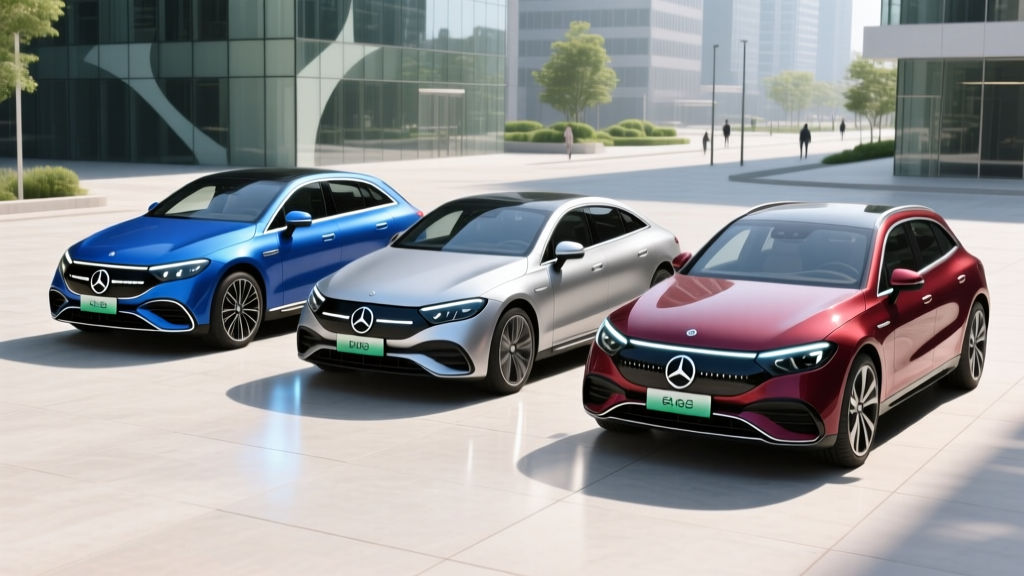
The Mercedes EQ badge has been a moving target since its debut. For 2026, the EQ lineup has narrowed and matured. The EQS sedan and EQS SUV remain the flagship electric offerings, the EQE sedan and EQE SUV fill the mid-size luxury slot, and the compact EQB soldiers on as a practical family hauler. The original EQC has been discontinued in the US market, and Mercedes has signaled a future transition to its new MMA platform architecture — but for now, the EVA2 platform underpins the core EQS and EQE models.
If you're researching a Mercedes EQ purchase in 2026, this guide consolidates the specs, real-world range expectations, charging performance, and federal tax credit reality for every model currently on sale. We've driven and charged these vehicles, and the numbers below reflect both manufacturer data and independent testing.
2026 Mercedes EQ Model-by-Model Spec Breakdown
| Spec | EQS 450+ Sedan | EQS 580 4MATIC Sedan | EQE 350+ Sedan | EQS SUV 450+ | EQE SUV 350+ | EQB 300 4MATIC |
|---|---|---|---|---|---|---|
| EPA Range | 390 mi | 345 mi | 305 mi | 330 mi | 279 mi | 221 mi |
| Battery (usable kWh) | 107.8 kWh | 107.8 kWh | 90.6 kWh | 107.8 kWh | 90.6 kWh | 66.5 kWh |
| Chemistry | NMC 811 | NMC 811 | NMC 811 | NMC 811 | NMC 811 | NMC |
| Drivetrain | RWD | AWD (dual-motor) | RWD | RWD | RWD | AWD |
| Horsepower | 355 hp | 536 hp | 288 hp | 355 hp | 288 hp | 225 hp |
| 0–60 mph | 5.3 sec | 4.1 sec | 6.2 sec | 6.2 sec | 6.4 sec | 7.7 sec |
| Max DC Fast Charge | 200 kW | 200 kW | 170 kW | 200 kW | 170 kW | 100 kW |
| 10–80% DCFC Time | ~31 min | ~31 min | ~32 min | ~31 min | ~32 min | ~32 min |
| Level 2 (AC) Rate | 9.6 kW | 9.6 kW | 9.6 kW | 9.6 kW | 9.6 kW | 7.2 kW |
| MPGe (combined) | 97 MPGe | 87 MPGe | 96 MPGe | 89 MPGe | 88 MPGe | 92 MPGe |
| kWh/100 mi | 34 | 38 | 35 | 37 | 38 | 36 |
| Cargo Volume | 22.0 cu ft (trunk) | 22.0 cu ft (trunk) | 15.0 cu ft (trunk) | 88.0 cu ft (max) | 59.2 cu ft (max) | 62.0 cu ft (max) |
| Rear Legroom | 41.5 in | 41.5 in | 36.5 in | 41.7 in | 38.0 in | 37.0 in |
| Base MSRP | $105,550 | $127,350 | $76,050 | $106,550 | $79,050 | $57,550 |
| Battery Warranty | 10 yr / 155,000 mi | 10 yr / 155,000 mi | 10 yr / 155,000 mi | 10 yr / 155,000 mi | 10 yr / 155,000 mi | 8 yr / 100,000 mi |
Sources: EPA / fueleconomy.gov, Mercedes-Benz USA. Prices reflect 2026 model-year MSRP before destination fees.
Real-World Range: What the EPA Sticker Doesn't Tell You
EQE 350+ Sedan (EPA 305 mi): Highway driving yields ~245–270 mi. Cold weather drops that to ~220–240 mi. Adequate for daily commuting but requires planning on long trips.
EQS SUV 450+ (EPA 330 mi): The heavier SUV body and less aerodynamic profile cut real highway range to ~270–295 mi. Cold weather: ~230–260 mi.
EQB 300 (EPA 221 mi): Real-world highway range is ~175–195 mi. This is a city-and-suburb vehicle; road trips require frequent stops.
The EVA2 platform's thermal management system is competent, and Mercedes includes a heat pump standard on the EQS and EQE, which mitigates cold-weather range loss compared to resistance-heated cabins. However, NMC 811 cells lose more capacity at low temperatures than LFP chemistry would. The EQS 450+ sedan remains the efficiency champion of the lineup thanks to its 0.20 Cd drag coefficient — one of the lowest of any production car.
One factor buyers overlook: the EQS and EQE sedans do not have a frunk (front trunk). The entire under-hood area houses HVAC and power electronics. Cargo capacity is limited to the trunk, which affects road-trip packing for a car with 390 miles of range.
Charging Speed: DC Fast Charging and Home Level 2
Mercedes EQ models on the EVA2 platform (EQS, EQE, and their SUV variants) share a similar charging architecture. The compact EQB uses an older, slower setup.
| Charging Level | EQS / EQE Sedans & SUVs | EQB 300 |
|---|---|---|
| Level 1 (120V, 1.4 kW) | ~3–4 mi/hr | ~2–3 mi/hr |
| Level 2 (240V, home) | 9.6 kW → ~25–28 mi/hr | 7.2 kW → ~20 mi/hr |
| DC Fast Charge (peak) | 200 kW (EQS) / 170 kW (EQE) | 100 kW |
| 10–80% DCFC Time | ~31–32 min | ~32 min |
| 15-min DCFC Range Added | ~186 mi (EQS 450+) | ~80 mi |
Charging curve reality: The EQS and EQE peak at 200 kW and 170 kW respectively, but this rate holds only between roughly 10–40% state of charge. Above 50%, the curve tapers significantly — by 70% SoC, you're typically seeing 80–100 kW. This is why the 10–80% time is ~31 minutes rather than the ~22 minutes a sustained 200 kW would theoretically deliver. On Electrify America or Tesla Supercharger (via the included NACS adapter on 2026 models), preconditioning the battery via the navigation-routed charging feature is essential for hitting peak rates.
Connector note: For 2026, Mercedes-Benz USA equips all EQ models with a native NACS charge port, granting direct access to Tesla Supercharger stations without an adapter. CCS1 compatibility is maintained through an included adapter. The CHAdeMO standard is not supported.
Home charging: A full Level 2 charge on a 48-amp circuit (9.6 kW) takes approximately 11.5 hours for the EQS's 107.8 kWh battery from empty. Most owners will plug in overnight and wake to a full charge. For the EQB, a full charge on a 32-amp circuit takes roughly 9 hours. Installation of a home Level 2 charger typically costs $800–$2,000 depending on panel capacity and conduit run length — budget for a potential panel upgrade if your home has a 100-amp service.
Performance and Driving Dynamics
The EQS 580 4MATIC's 536 hp and 4.1-second 0–60 time make it genuinely quick, but the EQ lineup is tuned for comfort, not sport. Air suspension is standard on the EQS and available on the EQE, delivering a pillowy ride that absorbs highway expansion joints without fuss. Steering is light and isolated — this is a luxury cruiser, not a corner carver.
Regenerative braking offers three levels via steering-wheel paddles (D+, D, D−) plus an intelligent D-Auto mode that uses radar and map data to modulate regen. One-pedal driving is possible in D− but doesn't bring the car to a complete stop, unlike the stronger implementations in the Hyundai Ioniq 5 or Tesla Model S. Mercedes calls this "intelligent recuperation" and it works well in mixed traffic.
The EQB 300 4MATIC is the weakest performer. At 225 hp and 7.7 seconds to 60 mph, it feels adequate around town but strained during highway merging. Its smaller 66.5 kWh battery and 100 kW DC fast-charge ceiling make it the least capable road-trip EV in the lineup.
Pricing, Trims, and Federal Tax Credit Eligibility
| Model | Base MSRP | As-Tested (Typical) | §30D Credit Eligible? | Effective Price After Credit |
|---|---|---|---|---|
| EQS 450+ Sedan | $105,550 | $118,000 | No — exceeds $55,000 sedan MSRP cap | $105,550+ |
| EQS 580 4MATIC | $127,350 | $142,000 | No — exceeds $55,000 sedan MSRP cap | $127,350+ |
| EQE 350+ Sedan | $76,050 | $84,000 | No — exceeds $55,000 sedan MSRP cap | $76,050+ |
| EQS SUV 450+ | $106,550 | $119,000 | No — exceeds $80,000 SUV MSRP cap | $106,550+ |
| EQE SUV 350+ | $79,050 | $88,000 | No — exceeds $80,000 SUV MSRP cap* | $79,050+ |
| EQB 300 4MATIC | $57,550 | $62,000 | Partial — see sourcing rules below | ~$50,050 (if eligible) |
*The EQE SUV base MSRP is under the $80,000 SUV cap, but most equipped models exceed it once packages are added. Verify your exact build.
The hard truth on the federal §30D tax credit: Most of the Mercedes EQ lineup is priced above the IRS MSRP caps — $55,000 for sedans and $80,000 for SUVs, vans, and trucks. This is the primary reason these vehicles don't qualify. Additionally, even for the EQB 300 (which starts under the cap), eligibility depends on:
- Battery component sourcing: A percentage of battery components must be manufactured or assembled in North America (threshold increases annually through 2029).
- Critical minerals: A percentage of critical minerals must be sourced from the US or free-trade-agreement countries.
- Buyer income caps: AGI must not exceed $300,000 (joint), $225,000 (head of household), or $150,000 (single).
- MSRP cap compliance: The vehicle's base MSRP plus commonly included options must stay under the cap for its body style.
- Point-of-sale transfer: As of 2024+, eligible buyers can transfer the credit to the dealer at purchase, reducing the purchase price directly.
The EQB 300's partial eligibility hinges on battery-sourcing compliance, which has tightened significantly. Mercedes sources cells from multiple suppliers, and the specific batch in your vehicle may or may not meet current-year requirements. Always verify eligibility on the official IRS qualified vehicles list before purchasing, and consult a tax professional for your specific situation.
Interior, Tech, and Standout Features
The EQS sedan's Hyperscreen remains one of the most visually striking dashboards in any EV — a 56-inch curved glass panel spanning the full width, combining a 12.3-inch instrument cluster, 17.7-inch central OLED, and 12.3-inch passenger display. It's impressive theater, though the sheer surface area attracts fingerprints and the touch-sensitive climate controls lack the tactile precision of physical buttons.
The EQE sedan and both SUVs use a more conventional dual-screen layout (12.3-inch cluster + 12.8-inch central OLED), which many drivers find easier to use while driving. MBUX infotainment supports wireless Apple CarPlay and Android Auto, over-the-air updates, and natural-language voice control.
Driver assistance: All EQ models come with Mercedes' Driver Assistance Package, including adaptive cruise with stop-and-go, active lane-keeping, and automated lane changes. This is an SAE Level 2 system — the driver must remain attentive and keep hands on the wheel. It is not autonomous driving. The available DRIVE PILOT system (limited to specific highways in Nevada and California at speeds up to 40 mph) is certified SAE Level 3, meaning the car assumes driving responsibility under those narrow conditions, but availability remains extremely limited.
Notable drawbacks: The EQS and EQE sedans have surprisingly small trunks for their size (22 and 15 cu ft respectively) due to the fastback styling and rear-mounted electronics. There is no frunk. Rear visibility in the EQS sedan is compromised by the sloping roofline and thick C-pillars. The EQB, while practical, uses an older platform with slower charging and less range than competitors like the Tesla Model Y or Hyundai Ioniq 5.
Warranty and Battery Longevity
Mercedes provides a 10-year / 155,000-mile battery warranty on the EQS and EQE models (sedan and SUV), which is among the best in the luxury EV segment. The warranty covers battery capacity retention below 70% of original capacity. The EQB carries the more conventional 8-year / 100,000-mile battery warranty.
NMC 811 chemistry offers excellent energy density (enabling the EQS's large 107.8 kWh pack in a manageable weight) but historically shows slightly faster degradation than LFP chemistry over high cycle counts. Real-world data from early EQS owners (2022–2024 models) suggests roughly 4–6% capacity loss over the first 50,000 miles, which is within normal NMC expectations. Mercedes' oversized battery buffer (the difference between gross and usable capacity) helps protect long-term health by avoiding extreme SoC states.
The general vehicle warranty is 4 years / 50,000 miles, which is standard for luxury brands but shorter than Hyundai/Kia's 10-year powertrain coverage.
Competitive Comparison: Is the Mercedes EQ Worth It?
The Mercedes EQ lineup competes against formidable rivals. Here's how the key matchups break down:
- EQS 450+ vs. Tesla Model S: The Model S Long Range offers 402 mi EPA range at a lower starting price (~$79,990), faster Supercharging, and more cargo space (including a frunk). The EQS wins on ride comfort, cabin quietness, and luxury materials. If luxury isolation is the priority, the EQS delivers. If value and range matter more, the Model S is harder to argue against.
- EQE 350+ vs. BMW i5 eDrive40: The i5 starts at ~$67,000, offers 295 mi EPA range, and has a more engaging driving character. The EQE has more range (305 mi) but costs significantly more. The i5 is the sharper driver's car; the EQE is the quieter cruiser.
- EQS SUV vs. Tesla Model X: The Model X offers more range, faster charging, falcon-wing doors, and a lower price. The EQS SUV delivers a more refined interior and less polarizing styling. Both are expensive; neither qualifies for the federal credit.
- EQB 300 vs. Tesla Model Y / Hyundai Ioniq 5: The EQB is the weakest competitive position in the lineup. The Model Y offers ~310 mi range, 250 kW Supercharging, and vastly more cargo space for a similar price. The Ioniq 5 offers 800V ultra-fast charging and ~300 mi range. The EQB's advantage is its Mercedes badge, third-row seat (small), and more traditional styling.
Who Should Buy a Mercedes EQ?
Choose the EQS SUV 450+ if: You need three rows, luxury materials, and can accept ~270–295 mi real-world highway range. Best for affluent families who want the Mercedes experience in an SUV form factor.
Choose the EQE 350+ Sedan if: You want E-Class-level luxury in an EV and your daily commute is under 200 miles round-trip. Accept that road trips require 30-minute charging stops every ~250 miles.
Choose the EQB 300 only if: The Mercedes badge is non-negotiable, you need a compact luxury EV with a (tiny) third row, and your driving is primarily local. For range and charging speed, competitors offer substantially more.
Pros and Cons at a Glance
- Class-leading ride comfort and cabin isolation (EQS/EQE)
- EQS 450+ achieves 390 mi EPA — among the longest-range luxury EVs
- Hyperscreen is visually stunning (standard on EQS, optional on EQE)
- 10-yr/155,000-mi battery warranty on EQS/EQE models
- NACS charge port standard for 2026 (Supercharger access)
- DRIVE PILOT Level 3 available in limited conditions
- Heat pump standard on EQS/EQE (efficient cold-weather heating)
- Most models exceed §30D MSRP caps — no federal tax credit
- Small trunk space on EQS/EQE sedans; no frunk on any model
- EQB uses older platform with slow 100 kW DC charging and 221 mi range
- Regen braking doesn't achieve full one-pedal stop
- Hyperscreen attracts glare and fingerprints; touch controls lack tactility
- High starting prices vs. Tesla, BMW, and Hyundai/Kia competitors
- Real-world highway range 15–20% below EPA on all models
Frequently Asked Questions
What is the real-world range of the Mercedes EQS?
The EQS 450+ sedan carries a 390-mile EPA estimate. In real-world highway driving at 70–75 mph, expect 310–340 miles. In cold weather (below 30°F), plan for 260–290 miles. The RWD powertrain and 0.20 Cd drag coefficient make it one of the most efficient large luxury EVs available.
How fast does a Mercedes EQ charge at a DC fast charger?
The EQS sedan and SUV peak at 200 kW DC fast charging, achieving 10–80% in approximately 31 minutes. The EQE sedan and SUV peak at 170 kW with a similar 10–80% time of ~32 minutes. The EQB is limited to 100 kW. Note that peak charge rates are sustained only between ~10–40% SoC; the curve tapers significantly above 50%.
Does the Mercedes EQ qualify for the $7,500 federal EV tax credit?
Most EQ models do not qualify because their MSRP exceeds the IRS §30D caps ($55,000 for sedans, $80,000 for SUVs). The EQB 300 starts under the cap but may not meet battery-sourcing requirements depending on the production batch. Always check the IRS qualified vehicles list and consult a tax professional before relying on credit eligibility.
How long does it take to charge a Mercedes EQ at home?
On a 48-amp Level 2 home charger (9.6 kW), the EQS's 107.8 kWh battery charges from empty in roughly 11.5 hours. The EQE (90.6 kWh) takes about 9.5 hours. The EQB (66.5 kWh) takes roughly 9 hours on a 32-amp circuit. Most owners plug in overnight and start each day fully charged.
Is the Mercedes EQS better than the Tesla Model S?
It depends on priorities. The EQS offers a quieter cabin, more luxurious materials, a smoother ride, and a slightly lower EPA range (390 vs. 402 mi). The Model S offers faster charging, more cargo space (with a frunk), a lower starting price, and access to the mature Supercharger network. For pure luxury isolation, the EQS wins. For value and practicality, the Model S has the edge.
What battery chemistry does the Mercedes EQ use?
All current Mercedes EQ models use NMC (nickel manganese cobalt) lithium-ion cells, specifically NMC 811 in the EQS and EQE. NMC offers high energy density but shows slightly faster long-term degradation than LFP (lithium iron phosphate) chemistry. Mercedes' 10-year/155,000-mile battery warranty (covering capacity below 70%) provides long-term protection.
Does any Mercedes EQ have a frunk?
No. None of the current EQ models include a front trunk. The under-hood space is occupied by power electronics, HVAC components, and the HEPA filtration system. Cargo is limited to the rear trunk (sedans) or rear cargo area (SUVs).