The Quick Answer: Should You Buy the 2026 Macan EV?
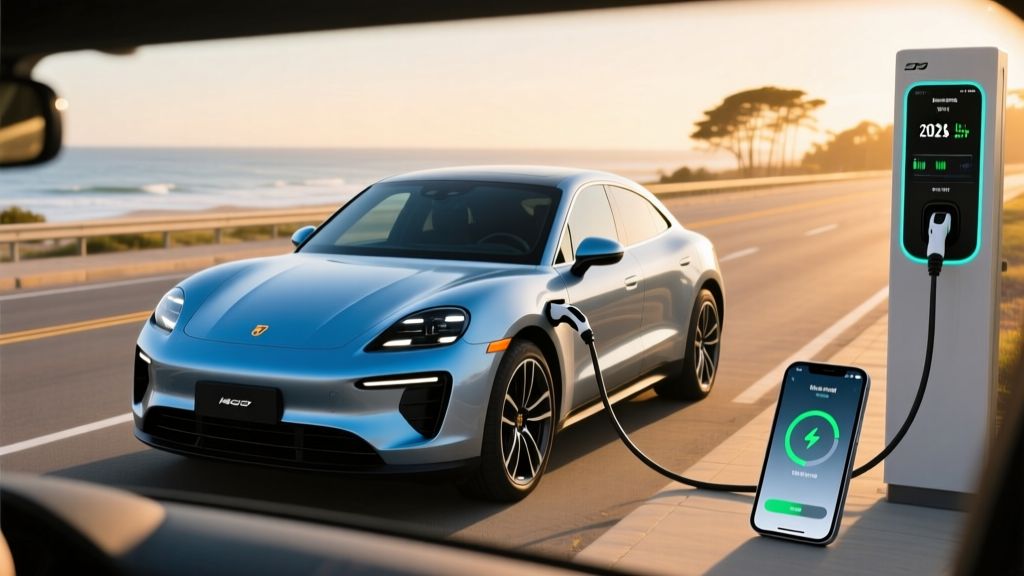
The 2026 Porsche Macan EV delivers up to 308 miles of EPA-estimated range (Macan 4), charges from 10–80% in roughly 21 minutes at a peak 270 kW, and starts at $78,800 before destination. It is one of the fastest-charging luxury SUVs on the market thanks to its 800-volt architecture. However, it does not qualify for the federal §30D tax credit due to its MSRP exceeding the $80,000 SUV cap on higher trims and battery sourcing requirements on all trims. Buyers who can install a Level 2 home charger and primarily drive under 60 miles daily will find it a compelling electric luxury daily driver. If you regularly road-trip through rural charging deserts or lack home charging access, the gas Macan or a plug-in hybrid alternative may better serve your needs.
2026 Macan EV Specs: Range, Battery, and Performance
Porsche offers the 2026 Macan EV in three trims, all built on the Premium Platform Electric (PPE) co-developed with Audi. The usable battery capacity is 95.8 kWh (100 kWh gross) using NMC (nickel-manganese-cobalt) chemistry across all trims.
| Spec | Macan (Base) | Macan 4 | Macan Turbo |
|---|---|---|---|
| EPA Range | ~300 mi | 308 mi | 288 mi |
| Battery (usable) | 95.8 kWh, NMC | ||
| Horsepower | 402 hp | 456 hp | 630 hp |
| 0–60 mph | 5.0 sec | 4.4 sec | 3.1 sec |
| Peak DC Charge Rate | 270 kW | ||
| 10–80% DC Fast Charge | ~21 minutes | ||
| Level 2 Charge Rate | 11 kW (AC onboard charger) | ||
| Base MSRP | $78,800 | $86,000 | $106,600 |
| Drivetrain | RWD | AWD | AWD |
| Battery Warranty | 8 years / 100,000 miles | ||
Real-World Range Expectations
The EPA rates the Macan 4 at 308 miles. In real-world highway driving at 70–75 mph, expect approximately 250–275 miles before needing to charge. In cold weather (below 32°F), plan for a 15–25% reduction, dropping usable range to roughly 215–240 miles. Porsche's thermal management system with standard heat pump helps mitigate winter losses, but physics still applies — the Macan EV's heavy curb weight (~5,300 lbs for the Macan 4) and wide tires work against efficiency at sustained highway speeds. For context, the EPA's fueleconomy.gov lists combined MPGe figures in the low-to-mid 80s depending on trim.
Charging the 2026 Macan EV: Home and Public Networks
The Macan EV's 800-volt architecture is its most practical feature for daily ownership. Here is what charging actually looks like across all three levels:
| Charging Level | Power | Miles Added per Hour | Use Case |
|---|---|---|---|
| Level 1 (120V household) | ~1.4 kW | ~4–5 mi/hr | Emergency / overnight top-up only |
| Level 2 (240V home/work) | 11 kW | ~35–40 mi/hr | Daily primary charging |
| DC Fast Charge | Up to 270 kW | ~650+ mi/hr (peak) | Road trips, rapid top-ups |
Home Charging Setup and Costs
Charging the Macan EV's 95.8 kWh battery from empty to full on Level 2 requires approximately 9–10 hours at 11 kW. Most owners will plug in overnight and wake to a full battery — this is the ideal EV ownership pattern.
Home installation cost breakdown:
| Item | Estimated Cost Range |
|---|---|
| Level 2 charger (e.g., ChargePoint Home Flex, Wallbox Pulsar Plus) | $400–$700 |
| Electrician: 240V/50A circuit install (standard panel) | $800–$2,000 |
| Electrical panel upgrade (if needed, 100A→200A) | $1,500–$4,000 |
| Permit and inspection | $100–$400 |
| Total (no panel upgrade) | $1,300–$3,100 |
| Total (with panel upgrade) | $2,800–$7,100 |
Always get a load calculation from a licensed electrician before assuming your existing panel can handle a 50A circuit. Older homes with 100A service frequently need an upgrade.
Public DC Fast Charging Reality
The 270 kW peak rate is impressive, but like all EVs, the Macan's charge curve tapers significantly above 80% state of charge. You will see 270 kW only in the 10–40% SoC window under ideal battery temperature conditions. From 80–100%, charging slows dramatically to protect battery longevity. Plan road-trip stops around the 10–80% window for the fastest experience. Porsche has integrated Plug & Charge capability with Electrify America and other networks, meaning authentication and billing happen automatically when you plug in — no app fumbling required.
The Macan EV ships with a NACS (Tesla Supercharger) port for the 2026 model year, giving access to Tesla's 20,000+ Supercharger network in addition to CCS-equipped networks like Electrify America and EVgo.
2026 Macan EV vs. Gas Macan: Cost of Ownership
The most common question from Porsche shoppers: does the electric Macan save money versus the gasoline version? The answer depends heavily on your driving patterns, electricity rates, and ownership timeline.
| Factor | 2026 Macan EV (Macan 4) | 2026 Gas Macan (Base AWD) |
|---|---|---|
| Starting MSRP | $86,000 | $62,900 |
| Federal Tax Credit (§30D) | $0 (MSRP/sourcing limits) | N/A |
| Fuel/Energy Cost (15,000 mi/yr) | ~$680–$1,020 (home charging) | ~$2,250–$2,700 (premium gas) |
| Annual Maintenance | ~$200–$400 | ~$600–$1,000 |
| Estimated Annual Insurance | ~$2,800–$3,500 | ~$2,200–$2,800 |
| 5-Year Fuel/Energy Total | ~$3,400–$5,100 | ~$11,250–$13,500 |
| 5-Year Maintenance Total | ~$1,000–$2,000 | ~$3,000–$5,000 |
5-Year Total Cost of Ownership Estimate
| Category | Macan EV (Macan 4) | Gas Macan (AWD) |
|---|---|---|
| Purchase Price | $86,000 | $62,900 |
| Fuel/Energy (5 yrs) | $4,250 | $12,375 |
| Maintenance (5 yrs) | $1,500 | $4,000 |
| Insurance (5 yrs) | $15,750 | $12,500 |
| Home Charger Install | $2,500 | $0 |
| 5-Year Total (before depreciation) | $110,000 | $91,775 |
| Estimated Depreciation (5 yrs) | ~$38,700 (45%) | ~$31,450 (50%) |
| Net 5-Year Cost | ~$71,300 | ~$60,325 |
Assumptions: 15,000 mi/yr, $0.14/kWh national average electricity, $4.50/gal premium gas, 22 MPG combined for gas Macan. Insurance estimates vary significantly by driver profile and state. Depreciation is estimated based on historical Porsche retention rates. IRS §30D credit rules apply — verify current eligibility.
The bottom line: The Macan EV costs roughly $10,000–$12,000 more over five years than the gas Macan, driven almost entirely by the higher purchase price. Fuel and maintenance savings recover approximately $10,600 over that period, but not enough to fully close the gap. Buyers choose the Macan EV for its instant torque (456 hp, 4.4-second 0–60), silent operation, and lower emissions — not as a pure cost-saving play. If you keep the vehicle 7–10 years, the operating-cost advantage grows significantly.
Federal Tax Credit: What Macan EV Buyers Need to Know
The 2026 Macan EV does not currently qualify for the $7,500 federal §30D clean vehicle tax credit. Two primary factors work against it:
- MSRP Cap: SUVs must have an MSRP at or below $80,000 to qualify. The base RWD Macan at $78,800 technically sits under the cap, but adding any options or destination charges pushes it over.
- Battery Sourcing Requirements: For 2026, the critical minerals and battery component sourcing thresholds are stringent. Porsche's supply chain for the PPE platform battery cells does not currently meet the domestic-content requirements as published by the IRS.
- Buyer Income Limits: Even if the vehicle qualified, buyers must have AGI below $150,000 (single) or $300,000 (joint) to claim the credit.
- Point-of-Sale Transfer: If eligible, the credit can be transferred to the dealer at purchase for an immediate price reduction. Since the Macan EV doesn't qualify, this option is unavailable.
Some states offer separate EV rebates or incentives (California's CVRP, Colorado's state credit, etc.) that may partially offset the purchase price. Check your state's energy office or department of revenue for current programs — these vary by jurisdiction and change frequently.
Common Macan EV Misconceptions: Myth vs. Fact
| Myth | Fact |
|---|---|
| "The Macan EV will get me 308 miles on the highway easily." | The 308-mile EPA figure is a combined city/highway estimate. Sustained 75 mph highway driving yields roughly 250–275 miles in moderate temperatures. Cold weather drops this further. |
| "I can charge it on any public charger." | The 2026 Macan EV uses a NACS connector. You can charge at Tesla Superchargers directly. For CCS-only stations, you may need an adapter — verify network compatibility before a road trip. |
| "The battery will need replacing in 5–8 years." | Porsche warranties the battery for 8 years / 100,000 miles with a capacity retention threshold of 70%. NMC batteries in thermally managed systems (like PPE) typically retain 85–90% capacity at 100,000 miles based on industry data. Full replacement, if ever needed out of warranty, would cost an estimated $18,000–$25,000. |
| "It costs thousands to install a home charger." | A standard Level 2 installation on an adequate electrical panel runs $1,300–$3,100 total. Panel upgrades add cost but are a one-time home improvement. |
| "Electric Porsches depreciate terribly." | While EV depreciation has been higher than gas equivalents in some segments, Porsche brand retention is among the strongest in luxury. Expect roughly 45% depreciation over 5 years for the Macan EV — significant, but not catastrophic for the class. |
Real-World Ownership: What First-Time EV Buyers Should Know
If the Macan EV is your first electric vehicle, here is what daily life actually looks like:
Home Charging Is Non-Negotiable for Most Owners
Public DC fast charging works for road trips, but 90%+ of your charging should happen at home on Level 2. If you live in an apartment or condo without charging access, or park exclusively on the street, EV ownership becomes significantly more inconvenient. Before purchasing, confirm you can install a 240V outlet (NEMA 14-50) or hardwired charger in your garage or driveway.
The Charging Curve Matters on Road Trips
On a 400-mile trip, you will stop once to charge. With the Macan's 270 kW peak, a 10–80% session takes about 21 minutes at a compatible charger. However, not all public chargers deliver their advertised peak rate. A station rated for 350 kW may deliver 150 kW if another vehicle is sharing the cabinet, or if ambient temperatures are extreme. Use apps like PlugShare or A Better Routeplanner to check station status and reviews before relying on a specific stop.
Cold Weather Demands Planning
If you live in a region with sustained sub-freezing winters, preconditioning the battery before fast charging is critical. The Macan EV's navigation system will automatically precondition the battery when you route to a charger — this warms the cells to optimal temperature and can shave 5–10 minutes off your charging stop. Without preconditioning, a cold battery may accept only 50–80 kW even at a 270 kW station.
Tire Wear Is Real
EVs are heavy and deliver instant torque. Expect to replace tires every 25,000–35,000 miles rather than the 40,000–50,000 miles typical of gas vehicles. The Macan EV's performance tires (especially on the Turbo trim) can cost $300–$500 per corner. Budget accordingly.
Decision Framework: Is the 2026 Macan EV Right for You?
Choose the Macan EV If:
- You have home Level 2 charging access (garage or driveway with 240V capability)
- Your daily commute is under 60 miles round-trip, making overnight charging effortless
- You value instant acceleration and silent operation over traditional engine character
- You road-trip fewer than 5 times per year and can plan charging stops
- You plan to keep the vehicle 5+ years, maximizing the operating-cost advantage
- You live in a region with moderate winters or have access to preconditioning
Choose the Gas Macan or a PHEV Alternative If:
- You cannot install home charging (apartment, street parking, HOA restrictions)
- You frequently drive 300+ miles through rural areas with sparse charging infrastructure
- You need a vehicle that can refuel in 5 minutes anywhere, without planning
- The $20,000+ price premium over the gas Macan is a budget concern
- You regularly tow near the vehicle's maximum capacity (the Macan EV is rated for 4,409 lbs, but towing severely reduces range)
Frequently Asked Questions
Does the 2026 Macan EV qualify for any tax credits?
The Macan EV does not qualify for the federal §30D credit due to MSRP and battery sourcing limitations. Some state-level incentives may apply — check your state's energy office or consult a tax professional for your specific situation.
How long does it take to charge the Macan EV at home?
On a Level 2 (240V, 11 kW) home charger, a full charge from empty takes approximately 9–10 hours. In practice, most owners plug in nightly and only need to replenish 20–40% of the battery, which takes 2–4 hours.
What is the real-world highway range?
Expect approximately 250–275 miles at highway speeds (70–75 mph) in moderate temperatures. Cold weather (below freezing) can reduce this to 215–240 miles. The EPA's 308-mile figure for the Macan 4 is a combined city/highway estimate.
Is the Macan EV reliable? What about the battery?
Porsche's PPE platform is new but benefits from Audi/Porsche engineering depth. The battery is warranted for 8 years/100,000 miles at 70% minimum capacity retention. NMC batteries with active thermal management have shown strong longevity across the industry, typically retaining 85–90% capacity at 100,000 miles.
Can I use Tesla Superchargers with the Macan EV?
Yes. The 2026 Macan EV is equipped with a NACS (North American Charging Standard) port, giving native access to Tesla's Supercharger network without an adapter.
How does insurance cost compare to the gas Macan?
EV insurance premiums are typically 15–25% higher than equivalent gas vehicles due to higher repair costs and vehicle values. Expect $2,800–$3,500 annually for the Macan EV versus $2,200–$2,800 for the gas version. Get quotes from your insurer before purchasing.
What happens if I need to replace the battery out of warranty?
Full traction battery replacement for the Macan EV is estimated at $18,000–$25,000 based on current NMC pack pricing for vehicles in this class. However, catastrophic battery failure outside the warranty period is uncommon; most degradation is gradual and covered within the 8-year/100,000-mile warranty window.
Sources: fueleconomy.gov (EPA range and efficiency data), IRS §30D Clean Vehicle Credit rules, Porsche USA official specifications. Pricing and incentive rules are current as of the 2026 model year and subject to change. Always verify with your dealer and tax professional before purchasing.