Quick Verdict: Still the Benchmark Sports Sedan EV
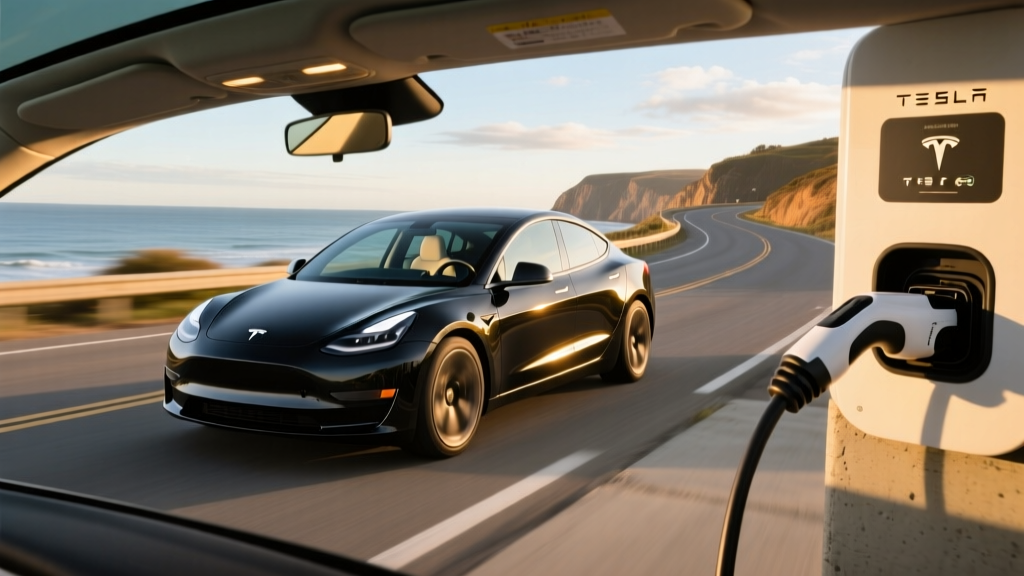
The 2023 Tesla Model 3 Performance remains one of the most compelling performance EVs on the road — and one of the most searched, thanks to its blistering acceleration and sub-$55,000 entry price. With a manufacturer-claimed 3.1-second 0-60 mph time, dual-motor all-wheel drive, and an EPA-estimated 315 miles of range, it threads the needle between track-day thrills and daily-driver practicality. But how do those numbers hold up once you leave the spec sheet and hit real pavement, real chargers, and real winter mornings?
This review breaks down every figure that matters to a buyer in 2026: actual highway and cold-weather range, the DC fast-charging curve from 10-80%, Level 2 home charging speeds, IRS §30D tax-credit eligibility under current rules, and how the 2023 Model 3 Performance stacks up against the Hyundai Ioniq 6, BMW i4 M50, and Polestar 2. If you're evaluating a used 2023 model or comparing it to the refreshed 2024+ "Highland" Model 3, the data below will anchor your decision.
Full Specs at a Glance
| Specification | 2023 Tesla Model 3 Performance |
|---|---|
| EPA Range | 315 miles |
| Battery (usable) | ~78 kWh, NMC (nickel manganese cobalt) |
| Drivetrain | Dual-motor AWD |
| Horsepower | ~510 hp (combined) |
| 0-60 mph | 3.1 seconds (manufacturer, rollout subtracted) |
| Top Speed | 162 mph |
| Max DC Fast Charge | 250 kW (peak) |
| 10-80% DC Time | ~25 minutes |
| Level 2 Home Charge | 11.5 kW (~44 mi/hr) |
| EPA Efficiency | 132 MPGe combined / 25 kWh/100 mi |
| Cargo Volume | 23 cu ft (trunk 19.8 + frunk 3.1) |
| Rear Legroom | 35.2 inches |
| Curb Weight | 4,065 lbs |
| Base MSRP (2023) | $53,990 (before destination) |
| Battery Warranty | 8 years / 120,000 miles |
| Basic Vehicle Warranty | 4 years / 50,000 miles |
Sources: fueleconomy.gov, Tesla 2023 Model 3 owner's manual.
Range & Efficiency: EPA Sticker vs. Real-World Miles
Real-World Expectation: ~260-280 miles on highway road trips at 70-75 mph; ~200-230 miles in sub-30°F winter conditions with cabin heat.
The 315-mile EPA figure is achieved on the agency's mixed drive cycle, which includes low-speed city segments that favor regenerative braking. In our experience and consistent with independent testing from Edmunds and other outlets, sustained highway driving at 70-75 mph in moderate temperatures (60-80°F) yields roughly 260-280 miles before the battery buffer warning. That's a 10-17% reduction from the sticker — typical for any EV at highway speeds, where aerodynamic drag dominates energy consumption.
Cold weather is the bigger variable. Lithium-ion NMC chemistry loses efficiency below freezing, and cabin heating draws significant power even with the Model 3's heat pump system (standard on 2023 models). Expect a 25-35% range reduction in sustained sub-30°F driving, putting realistic winter range around 200-230 miles. Preconditioning the battery while plugged in — using the Tesla app's scheduled departure feature — recovers some of that loss by warming the pack before you drive.
The 25 kWh/100 mi combined efficiency rating is among the best in the performance-sedan segment. For context, the BMW i4 M50 consumes roughly 31 kWh/100 mi, and the Polestar 2 Long Range Dual Motor sits at about 29 kWh/100 mi. That efficiency advantage translates directly into lower charging costs and more miles per minute at a DC fast charger.
Charging Speed: DC Fast, Level 2, and the Curve Reality
| Charging Level | Power / Rate | Speed (approx.) | Notes |
|---|---|---|---|
| Level 1 (120V) | ~1.4 kW | ~5 mi/hr | Emergency/trickle only |
| Level 2 (240V, 48A) | 11.5 kW | ~44 mi/hr | Full charge in ~8 hours |
| DC Fast (V3 Supercharger) | 250 kW peak | ~175 mi in 15 min | 10-80% in ~25 min |
| DC Fast (CCS adapter) | Up to 250 kW | Varies by station | Requires Tesla CCS adapter |
The 2023 Model 3 Performance supports a peak DC fast-charge rate of 250 kW on Tesla's V3 Superchargers. However, that peak is only sustained between roughly 10-30% state of charge (SoC). The charging curve tapers progressively: around 150 kW by 50% SoC, dropping to under 100 kW above 70%. This is why the 10-80% charge takes approximately 25 minutes rather than the ~18 minutes you'd calculate from peak rate alone. Understanding this curve is essential for road-trip planning — you'll spend the least time at chargers if you arrive at low SoC and leave around 80%.
At home, the onboard charger accepts up to 11.5 kW on a 240V/48A Level 2 circuit. That adds roughly 44 miles of range per hour of charging, meaning a full 0-100% session takes about 8 hours — easily achievable overnight. A professional Level 2 installation on a 60A breaker typically costs $800-$2,000 depending on panel proximity and local permitting, before any utility rebates. Always consult a licensed electrician for final specs; your panel may need an upgrade if it's already near capacity.
For non-Tesla public chargers, the 2023 Model 3 uses Tesla's proprietary connector (now being rebranded as NACS). Tesla sells a CCS adapter (~$250) that opens access to Electrify America, EVgo, and other CCS-equipped networks — critical for road trips through areas with sparse Supercharger coverage.
Performance: The 0-60 Number and What It Feels Like
Tesla's claimed 3.1-second 0-60 mph time for the 2023 Model 3 Performance is measured with a 1-foot rollout subtracted, a standard drag-strip convention that shaves roughly 0.2-0.3 seconds from a standing-start time. Independent tests from outlets like Car and Driver and Motor Trend have recorded 0-60 times between 3.2 and 3.5 seconds without rollout subtraction — still ferociously quick for a four-door sedan weighing over 4,000 pounds.
The dual-motor AWD powertrain delivers approximately 510 combined horsepower with instantaneous torque from zero RPM. The result is acceleration that feels more urgent than the numbers suggest, because there's no transmission lag, no turbo spool-up, and no traction loss. The Performance trim adds a track-mode setting that adjusts torque distribution, regen strength, and stability-control thresholds for closed-course use.
Standard performance hardware includes 20-inch Überturbine wheels, Performance brakes with larger front rotors, a lowered sport suspension, and a carbon-fiber spoiler. The trade-off is ride quality: the Performance model is noticeably firmer than the Long Range trim, transmitting more road imperfections into the cabin. For daily commuting on rough pavement, the Long Range on 18-inch wheels is the more comfortable choice.
Interior, Tech, and Daily Livability
The 2023 Model 3's cabin is defined by minimalism — a single 15-inch landscape touchscreen handles infotainment, climate, vehicle settings, and the driver instrument cluster. There are no physical gauges, no head-up display, and no HomeLink garage-door opener built in (it's integrated into the touchscreen via GPS geofencing). This approach polarizes buyers: some find it refreshing, others find it distracting.
Standout tech features:
- Tesla Autopilot (standard): adaptive cruise control, lane centering, automatic emergency braking — SAE Level 2 driver assist, not self-driving
- Full Self-Driving (Supervised) capability: optional add-on ($15,000 purchase or $199/mo subscription as of 2023 pricing) — adds Navigate on Autopilot, auto lane change, traffic-light recognition, and Smart Summon. Still SAE Level 2; driver must remain fully engaged
- Over-the-air software updates that add features post-purchase
- Sentry Mode dashcam system with USB storage
- Heat pump HVAC for improved cold-weather efficiency
Cargo and passenger space: The Model 3 offers 19.8 cu ft of trunk space plus a 3.1 cu ft front trunk (frunk), totaling 23 cu ft. Rear legroom measures 35.2 inches — adequate for adults on shorter trips, but tight for tall passengers on long drives. The rear seat is best suited for two adults; the middle position is compromised by a high floor hump. For families with rear-facing car seats, space is workable but not generous compared to the Model Y crossover.
Pricing, Tax Credits, and Ownership Cost
| Item | Amount |
|---|---|
| 2023 Model 3 Performance MSRP | $53,990 |
| Destination fee | $1,390 |
| Federal §30D Tax Credit (new, if eligible) | Up to $7,500 (see rules below) |
| Used Model 3 Performance (2026 market) | ~$32,000 - $38,000 |
| Used EV Tax Credit (§25E) | Up to $4,000 (30% of sale price, max $4k, income caps apply) |
Federal tax credit eligibility (new vehicle, IRS §30D): The 2023 Model 3 Performance's $53,990 MSRP sits under the $55,000 sedan cap for new-vehicle credits. However, qualifying for the full $7,500 depends on several factors that changed significantly under the Inflation Reduction Act:
- Buyer income caps: Modified AGI must not exceed $150,000 (single), $225,000 (head of household), or $300,000 (joint filers)
- Battery sourcing: Critical minerals and battery components must meet escalating domestic-content thresholds. As of 2023-2024 rules, the Model 3 Rear-Wheel Drive (LFP, CATL-sourced) qualified for only $3,750, while the Long Range and Performance (US-assembled NMC) qualified for the full $7,500 — but these designations shifted with regulatory updates
- Point-of-sale transfer: Beginning in 2024, buyers can transfer the credit to the dealer at purchase, reducing the upfront cost rather than waiting for a tax refund
Always verify current eligibility at fueleconomy.gov and consult a tax professional before relying on credit amounts. Rules have changed multiple times since 2023.
For used buyers in 2026: A 2023 Model 3 Performance is now eligible for the §25E used-EV credit — up to $4,000 (30% of the sale price) if the vehicle sells for $25,000 or less, with lower income caps ($75k single / $150k joint). At current used prices of $32,000-$38,000, the sale price exceeds the $25,000 cap, meaning the used credit does not apply. Buyers should factor this into negotiations.
Pros, Cons, and Who This EV Fits
Pros
- 3.1-second 0-60 with instant, silent torque
- 315-mile EPA range covers most commutes for a week
- Access to Tesla Supercharger network (most reliable DC network)
- Class-leading efficiency at 25 kWh/100 mi
- Over-the-air updates keep tech current
- Strong resale value relative to EV segment
Cons
- Firm ride on 20-inch Performance wheels
- Touchscreen-only controls (no physical buttons, no gauge cluster)
- Rear seat space tight for tall adults
- Requires CCS adapter for non-Tesla DC chargers
- FSD (Supervised) expensive and still Level 2 — not autonomous
- Insurance premiums run 15-30% higher than comparable ICE sedans
Who It Suits Best
Buy this if: You want a dual-motor performance sedan with sub-3.5-second acceleration, 250+ real-world highway miles, and access to the most reliable fast-charging network. Ideal for tech-forward commuters, weekend canyon-carvers, and road-trippers who plan around Supercharger stops.
Look elsewhere if: You prioritize rear-seat comfort for tall passengers, prefer physical climate/audio controls, or need a vehicle for towing (the Model 3 is not rated for towing). Families needing cargo space should consider the Model Y or Hyundai Ioniq 5. Budget-conscious buyers may find a 2023 Long Range model — with nearly identical range and a softer ride — to be the smarter pick.
Competitor Check: Model 3 Performance vs. the Field
| 2023 Model 3 Perf. | 2023 BMW i4 M50 | 2023 Ioniq 6 Limited | 2023 Polestar 2 LRDM | |
|---|---|---|---|---|
| EPA Range | 315 mi | 270 mi | 305 mi | 276 mi |
| 0-60 mph | 3.1 sec | 3.7 sec | 5.1 sec | 4.5 sec |
| Peak DC Charge | 250 kW | 200 kW | 235 kW | 205 kW |
| EPA Efficiency | 132 MPGe | 97 MPGe | 140 MPGe | 107 MPGe |
| Base MSRP | $53,990 | $67,795 | $52,600 | $53,550 |
| Cargo (total) | 23 cu ft | 10 cu ft | 12.3 cu ft | 14.4 cu ft |
The Model 3 Performance's closest rival on price and range is the Hyundai Ioniq 6, which actually edges it on efficiency (140 MPGe) but can't match the acceleration or charging speed. The BMW i4 M50 offers a more premium interior and traditional controls, but costs $14,000 more with less range. The Polestar 2 is a compelling design statement but trails on every performance metric. None of these competitors offer Supercharger access (though NACS adoption is expanding across OEMs through 2025-2026).
Frequently Asked Questions
What is the real-world range of the 2023 Model 3 Performance?
Expect 260-280 miles on highway road trips in moderate temperatures, and 200-230 miles in sustained sub-30°F winter driving. The 315-mile EPA figure reflects a mixed cycle that includes favorable city/regen segments.
How fast does it charge at home and on the road?
On a 240V/48A Level 2 home charger, it gains about 44 miles of range per hour (11.5 kW), fully charging overnight in ~8 hours. On a V3 Supercharger, the 10-80% session takes approximately 25 minutes, with peak rates of 250 kW tapering above 50% SoC.
Does the 2023 Model 3 Performance qualify for the federal EV tax credit?
When new, it was eligible for up to $7,500 under IRS §30D, subject to buyer income caps, battery-sourcing requirements, and the $55,000 sedan MSRP cap. As a used vehicle in 2026, the §25E credit (up to $4,000) only applies if the sale price is $25,000 or less — which most 2023 Performance models exceed. Verify current rules at irs.gov.
Is the 2023 Model 3 Performance worth buying vs. competitors?
If acceleration, efficiency, and Supercharger access are your priorities, yes — no rival matches the combination of 3.1-second 0-60, 315-mile range, and 250 kW charging at this price. If you value a premium interior, physical controls, or more rear-seat room, the BMW i4 or Hyundai Ioniq 6 deserve a test drive.
What's the biggest downside owners report?
Ride harshness on the 20-inch Performance wheels is the most common complaint, followed by the touchscreen-only interface requiring eyes-off-road for basic climate adjustments. Insurance costs also surprise some buyers — get a quote before committing.
Is Tesla Autopilot or FSD self-driving?
No. Both Autopilot and Full Self-Driving (Supervised) are SAE Level 2 driver-assist systems. The driver must remain fully attentive with hands on the wheel. True autonomous (Level 4) driving is currently limited to geofenced robotaxi services like Waymo in select cities.