Quick Verdict: The EV9 Interior Redefines the Three-Row EV
The Kia EV9 remains one of the only mainstream three-row electric SUVs on the market in 2026, and its cabin is the primary reason buyers cross-shop it against the Rivian R1S and Tesla Model X. The EV9 interior pairs a minimalist dual-screen dashboard with genuinely usable third-row space — a rarity in the EV segment — while offering flexible seating configurations including available second-row captain's chairs with relaxation mode. But the EV9 isn't just about the cabin: with up to 304 miles of EPA-estimated range, 210 kW DC fast charging, and a starting MSRP of $54,900, it's a compelling package for families ready to go electric. Below, we break down every spec that matters.
Range, Battery, and Real-World Efficiency
The 2026 Kia EV9 is offered with two battery configurations across its trim lineup. The entry-level Light RWD model uses a 76.1 kWh battery (NMC chemistry), while all other trims — from the Wind AWD up through the GT-Line — use a larger 99.8 kWh usable-capacity pack, also NMC lithium-ion.
| Trim | Battery (kWh usable) | Drivetrain | EPA Range (mi) | MPGe (combined) | kWh/100 mi |
|---|---|---|---|---|---|
| Light RWD | 76.1 | RWD | 230 | 123 | 27 |
| Light Long Range RWD | 99.8 | RWD | 304 | 97 | 35 |
| Wind / Land / GT-Line AWD | 99.8 | AWD (dual-motor) | 270–280 | 89–93 | 36–38 |
According to fueleconomy.gov, the EV9 AWD models consume roughly 36–38 kWh per 100 miles, which is competitive for a 5,000+ lb three-row SUV but noticeably thirstier than a two-row crossover like the Hyundai Ioniq 5. The RWD Long Range model's 35 kWh/100 mi is the efficiency sweet spot in the lineup.
Charging Speed: DC Fast and Level 2 at Home
The EV9 rides on Hyundai Motor Group's E-GMP platform with an 800V electrical architecture, which enables some of the fastest DC charging in its class. Here's what the numbers look like in practice:
| Charging Level | Power / Rate | Time or Miles Added | Connector |
|---|---|---|---|
| Level 1 (120V household) | ~1.4 kW | ~3–4 mi/hr | J1772 / NACS (adapter) |
| Level 2 (240V home, 48A) | 11.5 kW | ~30–34 mi/hr; full charge in ~9 hr | J1772 or NACS |
| DC Fast Charge (peak) | 210 kW (peak) | 10–80% in ~24 min (100 kWh pack) | CCS1 or NACS |
Charging curve reality: The 210 kW peak rate is achieved between roughly 10–45% state of charge on the 99.8 kWh pack. Above 55%, the rate tapers progressively — expect ~120 kW through 70%, then further reduction above 80%. The 10–80% time of approximately 24 minutes is realistic at a functioning 350 kW charger (Electrify America, EVgo, or Tesla Supercharger with NACS adapter). At a 150 kW station, plan for roughly 35–40 minutes for the same 10–80% session.
For home charging, the onboard 11.5 kW charger is robust. A full 10–100% charge on a 48-amp Level 2 home station takes approximately 9 hours for the large pack — ideal for overnight replenishment. If your home has a 200-amp electrical panel with available capacity, installation of a hardwired Level 2 charger typically runs $800–$2,000 including equipment and electrician labor, depending on run length and permit requirements. Homes needing a panel upgrade to 200A should budget an additional $1,500–$3,500.
The EV9 Interior: Cabin Space, Materials, and Technology
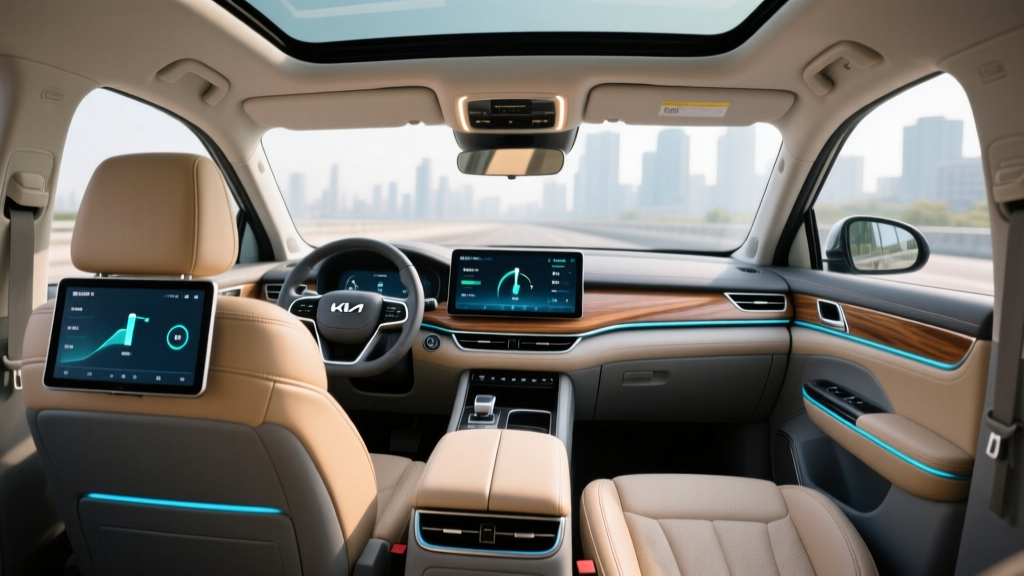
This is where the EV9 earns its keep. The cabin is designed around a flat floor (thanks to the E-GMP skateboard platform) and a wheelbase of 122.0 inches, which gives the interior an airy, spacious feel that competitors struggle to match at this price point.
Passenger and Cargo Dimensions
| Measurement | Specification |
|---|---|
| Front headroom | 40.6 in |
| Front legroom | 41.4 in |
| Second-row legroom | 42.8 in (bench) / 42.8 in (captain's chairs) |
| Third-row legroom | 29.9 in |
| Third-row headroom | 37.8 in |
| Cargo (behind 3rd row) | 20.2 cu ft |
| Cargo (3rd row folded) | 43.5 cu ft |
| Cargo (all rear rows folded) | 81.7 cu ft |
| Front trunk (frunk) | 1.8 cu ft (AWD) / 3.2 cu ft (RWD) |
The second row is where the EV9 truly shines. Available captain's chairs include a "relaxation" mode with powered leg rests and recline — a feature typically found in luxury brands at twice the price. The 42.8 inches of second-row legroom is generous even for tall adults. The third row, at 29.9 inches of legroom, is best suited for children on longer trips or adults on short drives. With 20.2 cubic feet behind the third row, you'll fit several grocery bags or a pair of carry-on suitcases, but a full family road trip with six passengers will require a roof box or careful packing.
Infotainment and Dashboard
The EV9's dashboard centers on a dual 12.3-inch display setup (instrument cluster and infotainment) running Kia's latest Connect interface. Wireless Apple CarPlay and Android Auto are standard across all trims. Higher trims add a head-up display with augmented-reality navigation overlays. A physical row of shortcut buttons below the screen handles climate and volume — a welcome decision given the industry trend toward screen-only controls that frustrate drivers.
Available features include a digital key (use your phone as the key fob), over-the-air software updates, and Kia's connected-car app for remote preconditioning, charge scheduling, and location tracking. The EV9 also supports vehicle-to-load (V2L) capability through an available outlet, allowing you to power camping equipment, tailgate appliances, or even provide limited emergency home power.
Driver-Assistance Technology
All 2026 EV9 models come equipped with Kia's Highway Driving Assist 2 (HDA2), which includes adaptive cruise control with stop-and-go, lane-centering steering, and lane-change assist. This is an SAE Level 2 system — the driver must keep hands on the wheel and eyes on the road at all times. It is not self-driving.
Higher trims add Remote Smart Parking Assist (the EV9 can park or unpark itself while you stand outside via key fob), a surround-view monitor, and blind-spot view cameras that display in the instrument cluster when signaling.
Performance and Drivetrain
| Trim Group | Motor Config | Horsepower | Torque (lb-ft) | 0–60 mph | Towing (lbs) |
|---|---|---|---|---|---|
| Light / Light Long Range RWD | Single motor (rear) | 215 (Light) / 201 (LR) | 258 | 8.2 sec (Light) / 8.8 sec (LR) | 2,000 |
| Wind / Land / GT-Line AWD | Dual motor (front + rear) | 379 | 516 | 5.0 sec | 5,000 |
The dual-motor AWD models transform the EV9 from a comfortable cruiser into a genuinely quick family hauler — 5.0 seconds to 60 mph is sports-sedan territory in a 5,300-pound SUV. The single-motor RWD versions are adequate for daily commuting but feel notably less urgent when merging onto highways at speed. For buyers in snow-belt states, the AWD system's torque distribution and traction management make it the obvious choice, despite the ~25-mile range penalty versus the RWD Long Range.
Towing capacity reaches 5,000 pounds on AWD trims when properly equipped — sufficient for a small boat, utility trailer, or light camper. Note that towing will cut range dramatically, often by 40–50%, so plan charging stops accordingly.
Pricing, Trims, and Federal Tax Credit Eligibility
| Trim | MSRP (incl. destination) | Key Features |
|---|---|---|
| Light RWD | $54,900 | 76.1 kWh, 230 mi range, HDA2, 12.3" displays |
| Light Long Range RWD | $57,500 | 99.8 kWh, 304 mi range, heated front seats |
| Wind AWD | $63,900 | Dual motor, 270 mi, captain's chairs available |
| Land AWD | $69,900 | Premium leather, relaxation 2nd row, HUD |
| GT-Line AWD | $73,900 | Sport styling, boost mode, unique interior trim |
Does the EV9 Qualify for the Federal EV Tax Credit?
Under current IRS §30D rules, the Kia EV9's eligibility for the up-to-$7,500 federal tax credit depends on several factors that buyers must verify for their specific situation:
- MSRP cap: The EV9 is classified as an SUV, so the MSRP cap is $80,000. All current trims fall under this limit.
- Buyer income cap: Modified adjusted gross income must not exceed $300,000 (joint filers), $225,000 (head of household), or $150,000 (single filers).
- Battery sourcing requirements: The credit is split into two halves — $3,750 for critical minerals sourcing and $3,750 for battery component assembly. Kia has worked to localize supply chains, but the exact credit amount (full $7,500 or partial $3,750) varies by model year production batch and sourcing compliance. Verify current eligibility on IRS.gov before purchasing.
- Point-of-sale transfer: If eligible, you can transfer the credit to the dealer at purchase, reducing your out-of-pocket cost immediately rather than waiting for a tax refund.
For a buyer in the Wind AWD trim ($63,900) who qualifies for the full $7,500 credit, the effective price drops to approximately $56,400 — competitive with many gas-powered three-row SUVs once fuel savings are factored in. Consult a tax professional to confirm your eligibility, as rules are subject to legislative changes.
Pros, Cons, and Who Should Buy the EV9
Pros
- Genuinely usable third row — rare in EVs at any price
- Up to 304 miles EPA range (Long Range RWD)
- 210 kW DC fast charging via 800V architecture
- 5,000-lb towing capacity (AWD)
- Flat floor and generous second-row legroom (42.8 in)
- Available relaxation captain's chairs with leg rests
- Standard HDA2 and comprehensive safety suite
- 10-year/100,000-mile battery and powertrain warranty
Cons
- AWD range drops to 270–280 mi — noticeable trade-off
- Third-row cargo space limited (20.2 cu ft behind 3rd row)
- Single-motor RWD models feel underpowered for the weight
- Top trims approach $74,000 before options
- Frunk is small (1.8 cu ft on AWD)
- No NACS port native on early builds — adapter required for Tesla Superchargers
- Cold-weather range loss can be significant without preconditioning discipline
Who the EV9 Suits Best
Buy it if: You need three rows for a growing family, want a mainstream brand with a strong dealer network and long warranty, regularly drive routes with DC fast-charging access, and value cabin comfort and technology over outright performance. The Wind AWD at ~$56,400 after the tax credit is the value sweet spot.
Look elsewhere if: You only need two rows (the Hyundai Ioniq 5 or Kia EV6 offers better efficiency and lower pricing), you need 350+ miles of range for remote-area road trips, or you want Level 4 autonomous capability (not available in any consumer vehicle at this price).
Warranty and Long-Term Ownership
Kia backs the EV9 with one of the strongest warranties in the segment:
- Battery and powertrain: 10 years / 100,000 miles (whichever comes first)
- Battery capacity retention: Kia warrants that the high-voltage battery will retain at least 70% of its original capacity during the warranty period
- Limited vehicle warranty: 5 years / 60,000 miles
- Anti-perforation: 5 years / 100,000 miles
The 70% capacity retention threshold is industry-standard but worth noting: if your 99.8 kWh pack degrades to below ~70 kWh within 10 years or 100,000 miles, Kia will repair or replace it. Real-world data from E-GMP platform vehicles (Ioniq 5, EV6) suggests typical degradation of 8–12% over the first 100,000 miles when following best practices (avoiding repeated 100% charges, minimizing DC fast-charging in extreme heat). The NMC chemistry in the EV9 prioritizes energy density over the longer cycle life of LFP, so adhering to an 80% daily charge limit is recommended for longevity.
Frequently Asked Questions
What is the real-world range of the 2026 Kia EV9?
The EPA rates the Long Range RWD at 304 miles and AWD models at 270–280 miles. In real-world highway driving at 70 mph, expect 250–270 miles (RWD) or 225–250 miles (AWD). In cold weather below freezing, reduce those figures by 20–30%. City driving with regenerative braking often matches or slightly exceeds EPA estimates.
How fast does the EV9 charge at home and on the road?
At home on a 240V Level 2 charger (48 amps / 11.5 kW), the large 99.8 kWh pack charges from empty to full in about 9 hours, adding roughly 30–34 miles of range per hour. On a DC fast charger, it peaks at 210 kW and charges from 10–80% in approximately 24 minutes at a 350 kW station. At a 150 kW station, expect 35–40 minutes for the same session.
How much does the EV9 cost after the federal tax credit?
The base Light RWD starts at $54,900 MSRP. If you qualify for the full $7,500 §30D credit (subject to income, MSRP, and battery-sourcing rules per IRS.gov), the effective price starts around $47,400. The popular Wind AWD at $63,900 drops to ~$56,400 with the full credit. Always verify eligibility with a tax professional before purchase.
Is the EV9 worth buying vs. the Rivian R1S or Tesla Model X?
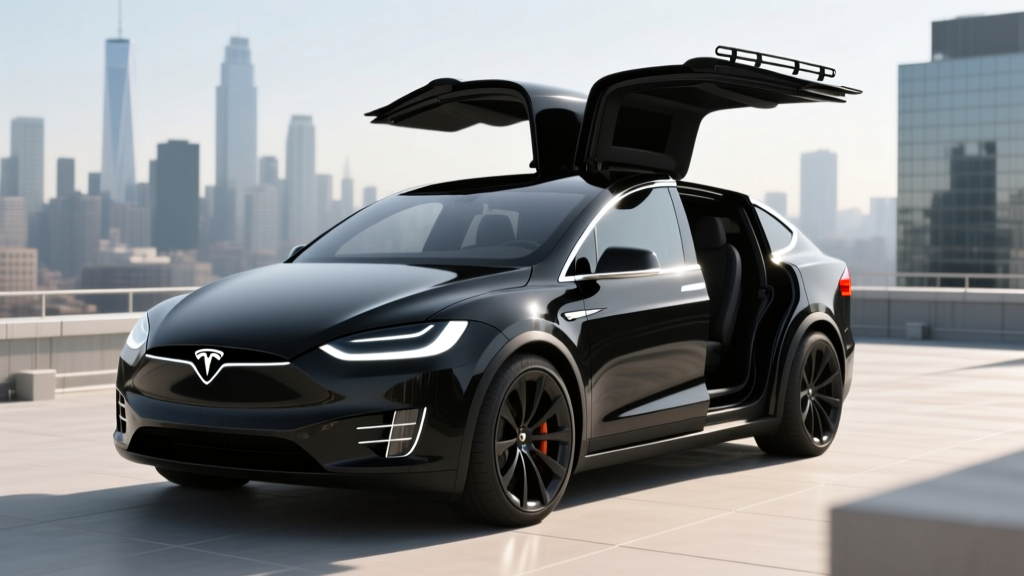
The EV9 undercuts both on price by $15,000–$30,000. The Rivian R1S offers superior off-road capability, a quad-motor option, and a larger battery option but starts above $75,000. The Tesla Model X provides more range (~335 mi) and access to the Supercharger network natively but starts above $80,000 and has a less practical third row. For most families seeking a comfortable, well-equipped three-row EV under $70,000, the EV9 is the most accessible option in 2026.
Does the EV9 interior have a frunk?
Yes, but it's small. The RWD models offer 3.2 cubic feet in the front trunk, while AWD models are reduced to 1.8 cubic feet due to the front motor. It's sufficient for a charging cable bag or small items but not a practical secondary cargo area.
What SAE automation level is the EV9's driver assist?
Kia's Highway Driving Assist 2 is an SAE Level 2 system. It provides combined steering, acceleration, and braking assistance on highways, but the driver must remain fully engaged, monitor the road, and keep hands on the wheel. It is not autonomous or self-driving.