Quick Verdict: Is the 2026 Kia EV9 Worth the Investment?
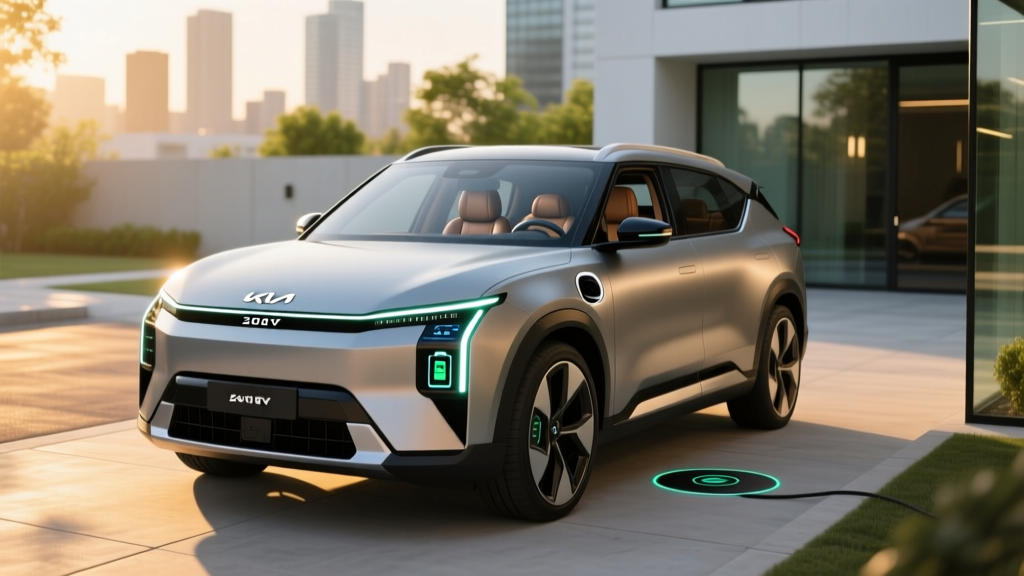
The 2026 Kia EV9 remains one of the only mainstream three-row electric SUVs on the market, and its financial case hinges on a web of incentives, energy costs, and long-term ownership realities. With a starting MSRP around $54,900 for the base Light RWD trim and climbing past $73,000 for the GT-Line AWD, the sticker price is steep — but federal, state, and utility incentives can shave $7,500 to $15,000+ off the effective cost depending on where you live and how you buy. This guide breaks down every dollar: tax credits, per-mile energy costs, insurance premiums, maintenance savings, and depreciation, so you can decide whether the EV9 pencils out over five years of ownership.
2026 Kia EV9 At a Glance: Key Specs That Affect Your Wallet
| Spec | Light RWD | Wind/Long Range AWD | GT-Line AWD |
|---|---|---|---|
| Base MSRP | $54,900 | $63,900 | $73,900 |
| EPA Range | 230 mi | 270 mi (est.) | 260 mi (est.) |
| Battery (usable) | 76.1 kWh (LFP) | 99.8 kWh (NMC) | 99.8 kWh (NMC) |
| Peak DC Fast Charge | ~170 kW | ~210 kW | ~210 kW |
| 10–80% DCFC Time | ~24 min | ~20 min | ~20 min |
| Level 2 Charge Rate | 10.9 kW | 10.9 kW | 10.9 kW |
| Horsepower | 215 hp | 379 hp | 379 hp |
| 0–60 mph | 7.7 sec | 4.5 sec | 4.5 sec |
| MPGe (combined) | 88 MPGe | 85 MPGe (est.) | 83 MPGe (est.) |
| Battery/Powertrain Warranty | 10 years / 100,000 miles | ||
Real-World Range Note: EPA estimates assume moderate temperatures and mixed driving. Expect roughly 210–230 highway miles from the Long Range AWD trims at sustained 70+ mph speeds, and plan for 20–30% range loss in sub-freezing winter conditions. Preconditioning the battery while plugged in mitigates cold-weather losses and improves DC fast-charge speeds.
Federal Tax Credit: Does the 2026 EV9 Qualify for §30D?
The federal EV tax credit under IRS §30D can deliver up to $7,500 — and since 2024, it can be transferred to the dealer as a point-of-sale discount, meaning you don't need to wait until tax filing to benefit. But eligibility is not automatic. The 2026 Kia EV9 faces several hurdles under current rules.
§30D Eligibility Checklist for the 2026 Kia EV9:
- MSRP Cap: The EV9 must have an MSRP at or below $80,000 for SUVs/trucks. Most EV9 trims qualify, but a fully loaded GT-Line with packages may push above this threshold — verify the exact window sticker.
- Buyer Income Limits: Modified adjusted gross income (MAGI) must not exceed $300,000 (joint filers), $225,000 (head of household), or $150,000 (single). The lower of your current-year or prior-year MAGI applies.
- Battery Sourcing — Critical Minerals: A percentage of critical minerals must be extracted or processed in the U.S. or a free-trade-agreement country, or recycled in North America. This threshold increases annually. For 2026, the requirement is 80%.
- Battery Sourcing — Components: A percentage of battery components must be manufactured or assembled in North America. For 2026, the requirement is 100%.
- Foreign Entity of Concern (FEOC) Restriction: Vehicles with battery components from a FEOC (primarily targeting Chinese entities) are disqualified. This has been a significant barrier for many Hyundai/Kia models assembled in Georgia with globally sourced battery cells.
- Point-of-Sale Transfer: You can elect to transfer the credit to the dealer at purchase, reducing your out-of-pocket cost immediately. The dealer must be IRS-registered.
- One Credit Per Vehicle, Per Taxpayer: You can only claim one new EV credit per year, and the vehicle must be for personal use, primarily in the U.S.
The Kia EV9 reality: Kia manufactures the EV9 at its West Point, Georgia plant, which helps with North American assembly. However, battery cell sourcing has been the sticking point for Hyundai Motor Group vehicles under the FEOC and critical-mineral rules. As of early 2026, Kia has been working to qualify more trims by shifting battery supply chains, but you must verify current eligibility at the time of purchase — rules and supply chains evolve. Check the fueleconomy.gov tax credit database for the latest status, and consult a tax professional before relying on the credit in your financial planning.
If the EV9 does not qualify for the full $7,500, it may still earn a partial credit ($3,750) if it meets one of the two sourcing requirements but not the other. Some buyers have also found success with the used EV credit (§25E) if purchasing a qualifying pre-owned EV9 under $25,000 — though that's unlikely for a vehicle this new.
State, Local, and Utility Incentives: Where You Live Matters
Important: State and utility incentives vary enormously by jurisdiction and change frequently. Always verify with your state energy office and local utility before purchase. Below are representative examples, not a comprehensive list.
| Incentive Type | Example | Typical Value |
|---|---|---|
| State Purchase Rebate | Colorado Innovative Motor Vehicle Credit | Up to $5,000 (income-dependent) |
| State Purchase Rebate | California Clean Fuel Reward (if active) | Varies; historically $0–$2,000 |
| State Tax Credit | Massachusetts MOR-EV | Up to $3,500 |
| Utility EV Rebate | Con Edison (NY) / PG&E (CA) / Xcel (CO) | $500–$1,500 |
| Home Charger Install Rebate | Various utility programs | $250–$1,000 |
| HOV Lane Access | CA, CO, FL, MD, VA, others | Non-monetary; high value in congested metros |
| Reduced EV Electricity Rate | Time-of-use EV plans | 20–40% lower $/kWh during off-peak |
Stacked together, a buyer in Colorado with a qualifying utility rebate and the federal credit could see $12,000–$15,000 in total incentives — bringing a $63,900 Wind AWD effectively down to roughly $49,000–$52,000. That transforms the EV9 from a premium splurge into a competitive alternative to a loaded Kia Telluride or Toyota Grand Highlander Hybrid.
Charging Cost vs. Gasoline: The Per-Mile Math
The most common ownership question: how much do you actually save on "fuel"? Let's run the numbers for the EV9 Long Range AWD (99.8 kWh battery, ~85 MPGe combined, roughly 35 kWh per 100 miles based on EPA efficiency data).
| Scenario | Cost Per Mile | Annual Cost (12,000 mi) |
|---|---|---|
| Home Level 2 (national avg $0.16/kWh) | $0.056 | $672 |
| Home Level 2 (off-peak TOU rate $0.09/kWh) | $0.032 | $378 |
| Public DCFC (avg $0.40/kWh) | $0.140 | $1,680 |
| Gas SUV (22 MPG combined, $3.50/gal) | $0.159 | $1,908 |
| Gas SUV (22 MPG combined, $4.00/gal) | $0.182 | $2,182 |
Key takeaway: Charging at home on a standard rate saves roughly $1,200–$1,500 per year compared to a comparable gas three-row SUV. If you have access to off-peak time-of-use rates, savings climb to $1,500–$1,800 annually. However, if you rely exclusively on public DC fast charging, your energy cost approaches — or exceeds — gasoline. Home charging access is the single biggest variable in EV ownership economics.
For the EV9 specifically, the 99.8 kWh battery means a full home charge from 10% to 100% costs about $14.40 at $0.16/kWh — and delivers roughly 240 real-world miles. That's roughly $0.06 per mile for a 5,700-pound three-row electric SUV, a figure that would have seemed impossible a decade ago.
Maintenance Savings: Where EVs Quietly Win
Electric vehicles eliminate the most common recurring maintenance items that plague internal combustion engines. Here's how the EV9 compares to a gas equivalent over five years and 60,000 miles:
| Maintenance Item | Gas SUV (5-yr Cost) | Kia EV9 (5-yr Cost) |
|---|---|---|
| Oil Changes (6 per year × 5 yrs) | $1,500–$2,400 | $0 |
| Transmission Fluid | $200–$400 | $0 (single-speed reduction gear) |
| Spark Plugs | $300–$600 | $0 |
| Engine Air Filter | $150–$300 | $0 |
| Brake Pads/Rotors | $800–$1,600 | $0–$400 (regen braking extends pad life 2–3×) |
| Cabin Air Filter | $150–$250 | $150–$250 |
| Tire Rotation/Replacement | $1,200–$2,000 | $1,400–$2,400 (EVs wear tires ~20% faster due to weight/torque) |
| Coolant Flush | $200–$400 | $100–$200 (battery thermal management) |
| Total Estimated | $4,500–$7,950 | $1,650–$3,250 |
Net 5-year maintenance savings: $2,000–$5,000, depending on your local labor rates and whether you use a dealer or independent shop. The biggest caveat is tires — the EV9's 5,000+ lb curb weight and instant torque mean you'll likely go through one extra set of tires over five years compared to a lighter gas crossover. Budget for EV-rated touring tires (like the Michelin Pilot Sport EV or Hankook iON evo) at $250–$350 per corner.
Insurance Reality: The Cost EV Buyers Often Overlook
EV insurance premiums run 15–25% higher than comparable gas vehicles on average, and the EV9 is no exception. Industry data from IIHS and major insurers suggest annual premiums for the EV9 fall in the $2,200–$3,200 range depending on your driving record, location, coverage level, and deductible.
Why EVs cost more to insure:
- Higher repair costs: Battery pack damage often requires full module or pack replacement rather than repair, and specialized high-voltage training is required for body shops.
- Higher vehicle value: Insurers base premiums partly on replacement cost, and the EV9's MSRP exceeds most gas three-row competitors.
- Sensor-laden body panels: The EV9's ADAS suite (cameras, radar, ultrasonic sensors) means a fender bender that would cost $800 on a conventional SUV can run $2,000–$4,000 with sensor recalibration.
- Lower claim frequency but higher severity: EV drivers tend to have fewer accidents (possibly due to demographics), but when claims do occur, they're costlier.
Over five years, expect to pay $1,500–$3,500 more in insurance than you would for a similarly priced gas SUV. Shop quotes from EV-friendly insurers (Geico, Progressive, and State Farm have improved their EV actuarial models) and ask about EV-specific discounts — some carriers offer reduced rates for vehicles with advanced ADAS features like the EV9's Highway Driving Assist 2.
Depreciation: How Well Does the EV9 Hold Its Value?
EV depreciation has been volatile. Between 2023 and 2025, aggressive Tesla price cuts, new model proliferation, and shifting federal credit rules caused used EV values to drop 25–40% in some segments. The EV9 occupies a unique position:
- Scarcity advantage: As one of the only three-row electric SUVs under $80,000, the EV9 faces less direct competition in the used market than sedans or compact crossovers.
- Kia's warranty backing: The 10-year/100,000-mile battery and powertrain warranty provides confidence to second owners, supporting resale value.
- Depreciation estimate: Industry analysts project the EV9 will retain roughly 45–55% of its value after 5 years / 60,000 miles, depending on trim, condition, and market. A $63,900 Wind AWD might command $29,000–$35,000 as a used vehicle in 2031.
- Risk factor: If solid-state batteries reach mass production by 2028–2029 with dramatically better range and charge speed, current-generation NMC/LFP EVs could see accelerated depreciation — though this remains speculative.
Compared to a gas three-row SUV like the Telluride (which historically retains 55–65% after five years), the EV9 currently depreciates somewhat faster. But the gap is narrowing as EV adoption matures and the used-EV buyer pool expands.
5-Year Total Cost of Ownership: The Full Picture
Here's the comprehensive breakdown for a 2026 Kia EV9 Wind Long Range AWD ($63,900 MSRP), assuming $7,500 federal credit, home charging at $0.16/kWh, 12,000 miles/year, and average insurance and maintenance costs.
| Cost Category | Kia EV9 Wind AWD | Gas SUV (e.g., Telluride SX, ~$48,000) |
|---|---|---|
| Purchase Price (after incentives) | $56,400 (after $7,500 credit) | $48,000 |
| Sales Tax (est. 6%) | $3,384 (on pre-credit price in most states) | $2,880 |
| Home Charger Install (Level 2) | $1,200 (one-time) | $0 |
| Energy/Fuel (5 years) | $3,360 (home charging) | $9,540 (22 MPG, $3.50/gal) |
| Maintenance (5 years) | $2,400 | $5,500 |
| Insurance (5 years) | $13,500 | $10,500 |
| Depreciation (loss in value) | $31,950 (50% retention) | $19,200 (60% retention) |
| Total 5-Year Cost | $112,194 | $95,620 |
| Cost Per Mile | $1.87 | $1.59 |
Analysis: Over five years, the EV9 costs roughly $16,500 more in this scenario — but this is heavily driven by depreciation on the higher purchase price and elevated insurance. If you qualify for the full federal credit plus state incentives (reducing effective purchase price to ~$49,000), charge primarily on off-peak rates, and live in a state with lower insurance differentials, the gap narrows to $5,000–$8,000. The EV9 makes the strongest financial case for buyers who:
- Qualify for the full $7,500 federal credit plus state/utility incentives
- Have reliable home Level 2 charging access
- Plan to keep the vehicle 7–10 years (amortizing the upfront premium and riding out depreciation)
- Value the driving experience, instant torque, and zero tailpipe emissions beyond pure economics
Frequently Asked Questions
How much does it really cost to own a 2026 Kia EV9 over 5 years?
Based on our analysis, expect approximately $110,000–$115,000 over five years including purchase (after federal credit), energy, insurance, maintenance, and depreciation for a Wind AWD trim. This works out to roughly $1.85–$1.95 per mile. Costs drop significantly if you stack state incentives, charge on off-peak electricity rates, and carry higher deductibles on insurance.
Do I qualify for the federal EV tax credit on the 2026 EV9?
It depends on three factors: your income (MAGI under $300K joint / $150K single), the EV9 trim's MSRP (must be at or under $80,000), and Kia's battery supply chain compliance with §30D critical-mineral and component sourcing rules. The FEOC restriction has been the main barrier for Hyundai/Kia vehicles. Check fueleconomy.gov for the current qualification status of your specific trim before purchasing, and consult a tax professional for personalized advice.
How much do I save on fuel and maintenance vs. a gas SUV?
Home charging saves roughly $1,200–$1,800 per year compared to gasoline at $3.50/gallon for a comparable three-row SUV. Maintenance savings add another $400–$1,000 annually from eliminated oil changes, spark plugs, and extended brake life. Combined, expect $1,600–$2,800 in annual operating savings — but only if you charge primarily at home. Public DC fast charging erases most fuel savings.
Are EVs more expensive to insure?
Yes, typically 15–25% more than a gas equivalent. For the EV9, expect annual premiums of $2,200–$3,200 depending on your profile. Higher repair costs for battery and sensor damage drive the premium. Shop multiple quotes and ask about ADAS-related discounts — some insurers reduce rates for vehicles with features like Highway Driving Assist 2 and remote smart parking assist.
How well does the Kia EV9 hold its resale value?
Current projections suggest 45–55% value retention after five years, somewhat below the 55–65% typical of popular gas three-row SUVs. The EV9 benefits from limited competition in the used three-row EV segment and Kia's strong 10-year battery warranty, which supports second-owner confidence. Long-term retention depends on battery health data and whether next-generation battery technology disrupts the used market.
What's the real-world range of the 2026 EV9, and how does it affect ownership costs?
The Long Range AWD's EPA estimate is around 270 miles, but expect 210–240 miles in real-world highway driving, and 180–210 miles in freezing weather. For cost planning, use ~35 kWh per 100 miles as your efficiency baseline. If your commute and driving patterns fit within 200 daily miles with home charging, range limitations won't affect your operating costs. For frequent road-trippers, factor in DC fast-charging costs at $0.30–$0.50/kWh, which raises per-mile energy costs closer to gasoline parity.