Quick Verdict: The Tesla Model 3 as a San Francisco Taxi
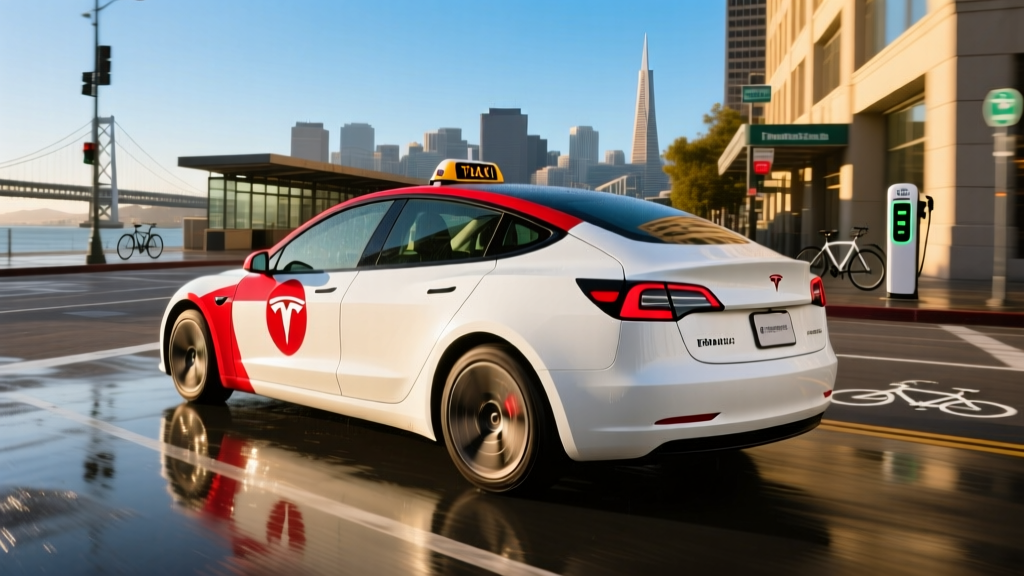
The phrase "tesla taxi san francisco" conjures images of autonomous robotaxis gliding down Market Street. The reality in 2026 is more nuanced: the Tesla Model 3 Long Range AWD is an outstanding electric sedan for rideshare and fleet use in the Bay Area, but it is not a driverless taxi. Operators using the Model 3 for Uber, Lyft, or private car services in San Francisco benefit from its low per-mile energy cost, access to the Supercharger network, and strong passenger appeal. However, Tesla's Full Self-Driving (Supervised) remains an SAE Level 2 driver-assist system — the human driver must stay engaged at all times. True driverless taxi service in San Francisco is currently the domain of Waymo's Level 4 robotaxis, not Tesla.
This review evaluates the 2026 Tesla Model 3 Long Range AWD specifically through the lens of San Francisco rideshare and taxi-style fleet operation: range under real-world city and highway conditions, charging logistics, operating costs, passenger comfort, and total cost of ownership.
Range, Efficiency, and Real-World Expectations
The 2026 Tesla Model 3 Long Range AWD carries an EPA-estimated 363 miles of range from its 79 kWh usable battery pack (NMC chemistry). Efficiency is rated at 132 MPGe combined, or approximately 25 kWh per 100 miles.
- EPA Sticker: 363 miles
- San Francisco city driving (stop-and-go, mild climate): ~320–340 miles — regen braking in hilly terrain recovers energy effectively
- Highway (I-280, US-101 at 65–75 mph): ~280–300 miles
- Cold/wet winter days (40–50°F with cabin heat): ~260–290 miles (15–20% reduction)
- Rideshare reality: Plan for 250 miles of usable range before needing a charge, accounting for a 15% buffer to avoid range stress between shifts
San Francisco's mild climate is a major advantage for EV range. Unlike Midwest or Northeast fleet operators, Bay Area drivers rarely see the 30%+ cold-weather range loss that plagues winter operations. The bigger efficiency hit comes from highway airport runs (SFO, OAK) and sustained climbs through the Oakland Hills or up I-280 toward the Peninsula.
The Model 3's standard heat pump significantly reduces cabin-heating energy draw compared to resistive heaters, preserving range on chilly morning shifts.
| Spec | Value |
|---|---|
| EPA Range | 363 miles |
| Battery (usable) | 79 kWh, NMC chemistry |
| Efficiency | 132 MPGe / 25 kWh/100 mi |
| Drivetrain | Dual-motor AWD |
| Horsepower | 384 hp combined |
| 0–60 mph | 4.2 seconds |
| Max DC Fast Charge | 250 kW peak |
| 10–80% DC Time | ~27 minutes |
| Level 2 Home Charging | 11.5 kW (~44 mi/hr) |
| Cargo Volume | 23 cu ft (trunk + frunk) |
| Rear Legroom | 35.3 inches |
| Base MSRP | $47,740 |
| Battery Warranty | 8 years / 120,000 miles |
Charging Speed and Fleet Logistics in the Bay Area
Charging infrastructure is the make-or-break factor for any EV taxi operation. The Model 3 Long Range AWD supports up to 250 kW peak DC fast charging on V3 Superchargers and compatible CCS/NACS stations. Tesla's native NACS connector gives the Model 3 seamless access to the Supercharger network — the most reliable public charging infrastructure in the US, with consistently high uptime.
| Charging Level | Power / Rate | Miles Added per Hour | Notes |
|---|---|---|---|
| Level 1 (120V) | ~1.4 kW | ~5 mi/hr | Emergency only; not viable for fleet use |
| Level 2 (240V, 48A) | 11.5 kW | ~44 mi/hr | Full charge in ~7 hrs; ideal overnight at depot |
| DC Fast (V3 Supercharger) | 250 kW peak | ~200+ mi in 15 min | 10–80% in ~27 min; tapers above 80% |
| DC Fast (CCS adapter) | Up to 250 kW | Varies by station | Access to Electrify America, EVgo networks |
Charge-curve reality: The 250 kW peak rate applies only between roughly 10–30% state of charge. The rate tapers to ~150 kW by 50%, and drops further above 80%. For fleet operations, the practical move is to charge from 10–80% (adding ~220 miles) in about 27 minutes at a Supercharger, then move on. Charging above 80% at a DC station is time-inefficient — save that for overnight Level 2.
San Francisco charging landscape: The city has multiple Supercharger stations (Daly City, South San Francisco, Emeryville, and the newer urban Superchargers). For fleet operators, the critical question is depot charging: installing Level 2 chargers at a fleet parking location. A commercial 48A Level 2 installation runs $2,000–$5,000 per charger (equipment + electrician), plus potential panel-upgrade costs. Overnight Level 2 charging at ~$0.15/kWh (PG&E EV rate) delivers a full charge for roughly $12 — dramatically cheaper than gasoline.
Preconditioning matters: The Model 3 allows battery preconditioning when navigating to a Supercharger. This warms the battery to optimal temperature for fast charging and can shave 5–8 minutes off a DC session. Fleet drivers should always navigate to the charger rather than just driving there.
Performance and Ride Quality for Rideshare
The dual-motor AWD powertrain produces 384 hp and rockets the Model 3 to 60 mph in 4.2 seconds. That's more performance than any taxi needs, but the real benefit for rideshare is the instant torque for merging onto US-101 or navigating San Francisco's steep grades without hesitation.
Ride quality in the refreshed Model 3 (introduced for 2024 and carried forward) is significantly improved over pre-2024 models. Acoustic glass, revised suspension tuning, and additional sound deadening reduce cabin noise — passengers notice. The rear seat offers 35.3 inches of legroom, which is adequate for most riders but tighter than a Toyota Camry or Hyundai Ioniq 6. The 23 cu ft of combined cargo space (trunk + frunk) handles airport luggage runs for 2–3 passengers comfortably.
Notable drawback: The Model 3's minimalist interior means no physical buttons — everything routes through the 15.4-inch center touchscreen, including climate controls and glovebox release. Some passengers find this disorienting. Rear-seat passengers get a dedicated 8-inch screen for climate and entertainment, which helps.
Pricing, Tax Credits, and Fleet Economics
The 2026 Tesla Model 3 Long Range AWD starts at $47,740 (MSRP, including destination). The Performance trim starts at $54,990, and the base RWD model is $39,990.
| Trim | MSRP | §30D Credit Eligibility | Effective Price (if eligible) |
|---|---|---|---|
| RWD | $39,990 | Up to $7,500 | ~$32,490 |
| Long Range AWD | $47,740 | Up to $7,500 | ~$40,240 |
| Performance | $54,990 | Up to $7,500 | ~$47,490 |
Federal tax credit rules (§30D, 2026): The Model 3 qualifies for up to $7,500 in federal EV tax credits, but eligibility is not automatic. Per IRS rules:
- Income caps: Modified AGI must not exceed $150,000 (single), $225,000 (head of household), or $300,000 (joint filers)
- MSRP cap: Sedans must be priced at or below $55,000 (the Long Range AWD qualifies; the Performance trim may exceed the cap depending on options)
- Battery sourcing: Critical minerals and battery components must meet phased-in domestic-sourcing thresholds that tighten annually through 2026
- Point-of-sale transfer: Buyers can transfer the credit to the dealer for an upfront price reduction — a major cash-flow advantage for fleet buyers
Fleet operators purchasing multiple vehicles should consult a tax professional regarding commercial clean vehicle credits (§45W) which may apply instead of §30D for business-use vehicles.
5-year operating cost advantage: At PG&E's EV time-of-use rate (~$0.15/kWh off-peak), charging a Model 3 costs roughly $0.038 per mile. A comparable gas sedan at 30 MPG with $4.50/gallon fuel costs $0.15 per mile. Over 100,000 miles of rideshare driving, that's a $11,200 fuel savings. Maintenance savings (no oil changes, reduced brake wear from regen) add another $2,000–$4,000.
Driver-Assist Tech: FSD Is Not a Robotaxi
Tesla's Autopilot and Full Self-Driving (Supervised) are Level 2 driver-assist systems. The driver must remain fully attentive, hands on or near the wheel, and ready to take over at any moment. These systems do NOT make the Model 3 a self-driving taxi.
For San Francisco rideshare drivers, FSD (Supervised) — currently a $8,000 one-time purchase or $99/month subscription — offers practical benefits on highway stretches (US-101, I-280) and in stop-and-go traffic on the Bay Bridge. It handles lane-keeping, adaptive cruise, and supervised city-street navigation. However, San Francisco's unique driving environment — construction zones, bike lanes, Muni tracks, aggressive pedestrians, and narrow streets in Chinatown or North Beach — regularly challenges the system.
- Drive without an attentive human behind the wheel
- Reliably handle all SF construction-zone detours
- Replace driver judgment on unmapped or rapidly changing routes
- Qualify the vehicle as a robotaxi or autonomous commercial service
For true Level 4 driverless taxi service in San Francisco, NHTSA-regulated operators like Waymo (using the Jaguar I-PACE) currently hold that role.
Standout tech: Tesla's cabin camera system, 15.4-inch touchscreen, integrated navigation with real-time Supercharger routing, Sentry Mode (parked-camera recording), and over-the-air software updates are genuine advantages for fleet operators. OTA updates mean the vehicle improves over time without dealer visits.
Warranty and Long-Term Battery Outlook
The Model 3 Long Range AWD includes:
- Basic vehicle warranty: 4 years / 50,000 miles
- Battery and drive unit warranty: 8 years / 120,000 miles, with a minimum 70% capacity retention threshold
The NMC battery pack in the Long Range model has demonstrated strong longevity in Tesla's fleet data. Real-world degradation studies from sources like fueleconomy.gov and owner surveys suggest most Model 3 packs lose roughly 10–12% capacity over the first 100,000 miles, then degrade more slowly. For a rideshare vehicle accumulating 30,000–40,000 miles per year, the 8-year/120,000-mile battery warranty provides meaningful protection during the highest-mileage years.
Battery care tip for fleet operators: NMC chemistry prefers daily charges to 80% rather than 100%. Setting the charge limit to 80% for daily use and charging to 100% only for long airport runs or road trips extends long-term battery health. Tesla's built-in charge-limit slider makes this simple.
Pros, Cons, and Who This EV Suits Best
- 363-mile EPA range covers most SF rideshare shifts without mid-shift charging
- Supercharger network access — most reliable public DC charging in the Bay Area
- $0.038/mile energy cost vs. $0.15/mile gas (massive fleet savings)
- Strong passenger appeal and brand recognition
- Heat pump preserves range in mild SF winters
- OTA updates reduce dealer-service dependency
- Excellent safety ratings (IIHS Top Safety Pick+)
- Not a driverless taxi — FSD is Level 2 only, driver required
- Rear legroom (35.3") is tighter than midsize competitors
- All-touchscreen controls frustrate some passengers
- Insurance costs run 15–25% higher than comparable gas sedans
- High-mileage fleet use may exhaust battery warranty within 3–4 years
- No physical buttons for climate or hazard lights
- You have access to overnight Level 2 charging (depot or home)
- Your shifts are primarily within the Bay Area (under 250 miles/day)
- You value low per-mile operating costs over interior spaciousness
- You want Supercharger access for occasional longer trips (SFO runs, wine country)
- You need maximum rear-seat legroom for premium rideshare tiers
- You lack reliable overnight charging access
- You want a lower upfront purchase price without tax-credit dependency
Frequently Asked Questions
What is the real-world range of the Model 3 in San Francisco taxi use?
Expect 320–340 miles in city driving and 280–300 on highway runs. In rainy winter conditions, plan for 260–290 miles. For daily rideshare planning, budget 250 usable miles before needing a charge.
How fast does the Model 3 charge on DC fast chargers and at home?
At a V3 Supercharger (250 kW peak), 10–80% takes about 27 minutes. At home or a depot on a 48A Level 2 charger (11.5 kW), you gain roughly 44 miles per hour — a full overnight charge in about 7 hours.
Does the Tesla Model 3 qualify for the $7,500 federal EV tax credit in 2026?
The RWD ($39,990) and Long Range AWD ($47,740) trims are under the $55,000 sedan MSRP cap and can qualify. Eligibility also depends on your income (≤$150K single / ≤$300K joint), battery-sourcing requirements, and point-of-sale transfer rules. Confirm current eligibility at irs.gov.
Is the Tesla Model 3 a self-driving taxi?
No. Tesla's FSD (Supervised) is an SAE Level 2 driver-assist system requiring full driver attention. True driverless taxi service in San Francisco is operated by Waymo (Level 4). The Model 3 is an EV driven by a human for rideshare, not a robotaxi.
How does the Model 3 compare to competitors for rideshare use?
The Hyundai Ioniq 6 offers more rear legroom (38.4") and 361 miles of range at a lower starting price, but lacks Supercharger access. The Toyota Camry Hybrid eliminates charging concerns entirely with 52 MPG combined but has higher per-mile fuel costs. The Model 3 wins on charging infrastructure, energy cost, and brand appeal.
What's the biggest cost advantage of running a Model 3 as a taxi in SF?
Fuel savings. At PG&E's off-peak EV rate (~$0.15/kWh), the Model 3 costs ~$0.038/mile to "fuel." A gas sedan at 30 MPG with $4.50/gallon costs ~$0.15/mile. Over 100,000 miles, that's over $11,000 in savings — before factoring in reduced maintenance.