The White on White Tesla Model Y: Why This Config Dominates
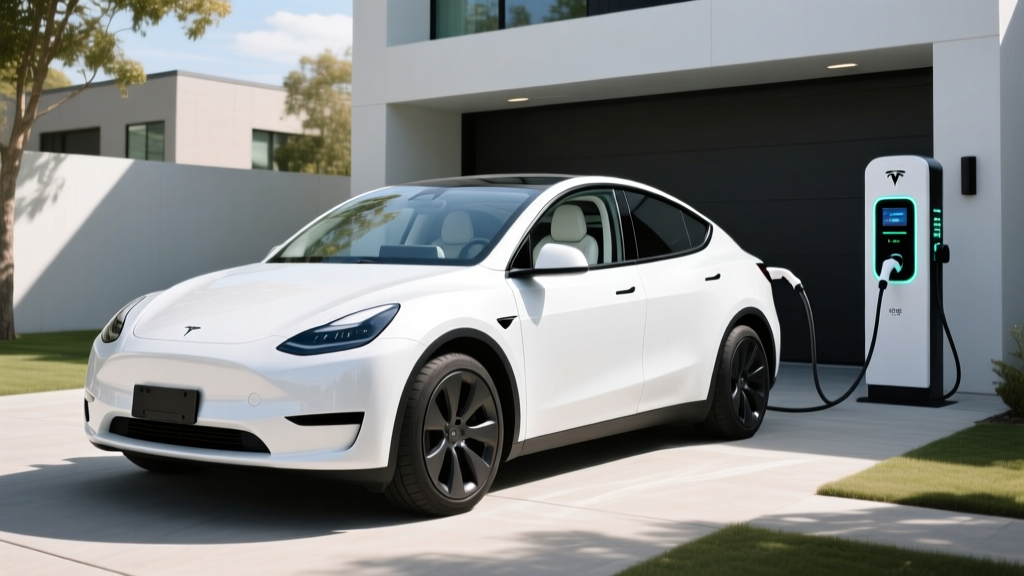
Search any Tesla delivery lot or EV enthusiast forum, and one configuration appears more than any other: the white on white Tesla Model Y. Pearl White Multi-Coat exterior paired with the all-white premium interior has become the default uniform for Tesla buyers, and for reasons that extend beyond aesthetics. The white interior costs $1,000 extra, resists staining surprisingly well thanks to Tesla's synthetic vegan leather, and keeps the cabin visually cooler in summer sun. The Pearl White paint—Tesla's only no-cost exterior color option on the Model Y since 2024—hides micro-scratches and road dust better than the darker Solid Black or Deep Blue Metallic alternatives.
But does the most popular configuration also make the most financial and practical sense in 2026? We've driven the refreshed "Juniper" Model Y Long Range AWD extensively since its launch, tracked real-world charging curves, and reconciled EPA estimates against actual highway and cold-weather driving. Here's the complete data.
2026 Tesla Model Y Long Range AWD: Full Spec Sheet
| Specification | Value |
|---|---|
| EPA Estimated Range | 320 miles |
| Real-World Highway Range (75 mph) | ~265–285 miles |
| Real-World Cold-Weather Range (30°F) | ~230–260 miles |
| Battery Capacity (Usable) | 78.1 kWh (NMC chemistry) |
| Max DC Fast Charge Rate | 250 kW peak |
| 10–80% DC Fast Charge Time | ~27 minutes |
| Level 2 Home Charge Rate | 11.5 kW (~44 mi/hr) |
| 0–60 mph | 4.8 seconds |
| Horsepower | 384 hp (dual motor) |
| Drivetrain | Dual Motor AWD |
| Efficiency | 122 MPGe / 28 kWh/100 mi |
| Cargo Volume (behind 2nd row) | 30.2 cu ft |
| Cargo Volume (seats folded) | 72.1 cu ft |
| Rear Legroom | 41.6 inches |
| Battery Warranty | 8 years / 120,000 miles |
| Base MSRP (Long Range AWD) | $47,990 |
| As-Tested (White on White) | $48,990 |
Real-World Range: What the EPA Sticker Doesn't Tell You
The 2026 Model Y Long Range AWD carries an EPA-estimated 320 miles of range. In real-world mixed driving, expect 275–300 miles in mild weather at moderate speeds. Sustained 75+ mph highway driving reduces this to approximately 265–285 miles. In freezing temperatures (below 32°F), plan for 230–260 miles of usable range before needing a charge stop.
Tesla's efficiency advantage remains genuine. The Juniper-generation Model Y achieves roughly 28 kWh per 100 miles in combined driving according to fueleconomy.gov, which translates to about 3.6 miles per kWh. That efficiency is what enables 320 miles from a relatively modest 78.1 kWh usable battery pack.
The NMC (nickel manganese cobalt) battery chemistry in the Long Range AWD offers higher energy density than the LFP (lithium iron phosphate) pack in the base RWD Model Y. The trade-off: NMC batteries benefit from daily charging limits of 80–90% to minimize long-term degradation, while LFP packs can be charged to 100% daily without accelerated wear. For most owners charging at home overnight, setting the charge limit to 90% and preconditioning before departure covers daily needs while preserving battery health.
Charging Speed: DC Fast, Level 2, and the Charge Curve Reality
The Model Y Long Range AWD peaks at 250 kW on V3 Superchargers and compatible third-party DC fast chargers using the native NACS connector. However, peak rate is not sustained rate—understanding the charge curve is essential for trip planning.
| Charging Method | Power / Rate | Time or Miles Added |
|---|---|---|
| DC Fast Charge (V3 Supercharger) | 250 kW peak, ~150 kW average | 10–80% in ~27 min |
| DC Fast Charge (150 kW station) | ~120 kW average | 10–80% in ~38 min |
| Level 2 (48A home charger, 240V) | 11.5 kW | ~44 miles per hour |
| Level 2 (32A home charger, 240V) | 7.7 kW | ~30 miles per hour |
| Level 1 (120V standard outlet) | ~1.4 kW | ~5 miles per hour |
On a V3 Supercharger, the Model Y sustains near-peak power from roughly 10% to 35% state of charge, then tapers progressively. By 60% SoC, charge rate drops to approximately 150 kW; above 80%, it falls below 60 kW. This is why Tesla and experienced EV road-trippers recommend charging to 80% and driving on rather than waiting for a full charge—the last 20% can take as long as the first 60%.
For home charging, Tesla's Wall Connector at 48 amps on a 60-amp circuit delivers 11.5 kW, replenishing roughly 44 miles of range per hour. A full overnight charge from 20% to 90% takes approximately 7–8 hours, which suits most daily routines. Installation typically requires a NEMA 14-60 outlet or hardwired connection on a dedicated 60-amp breaker; budget $500–$2,000 for a licensed electrician depending on your panel's proximity to the garage.
Performance and Driving Dynamics
The dual-motor AWD Model Y produces 384 horsepower and 375 lb-ft of torque, delivering a 4.8-second 0–60 mph time. That's quick by any measure, but more importantly for daily driving, the instant torque delivery makes highway merging and urban acceleration effortless. The Juniper refresh brought a revised suspension tune that noticeably improves ride quality over the pre-2025 Model Y, with softer damping over sharp impacts and reduced road noise from added acoustic insulation.
Regenerative braking remains strong and predictable, enabling near one-pedal driving in most conditions. The blended brake feel—where the friction brakes seamlessly supplement regen—has improved in this generation, eliminating the grabby transition that plagued earlier Teslas.
Interior, Cargo, and Tech: The White Interior Case
The white on white Tesla Model Y's cabin is minimalist by design. A 15.4-inch center touchscreen handles all infotainment, navigation, and vehicle controls. The Juniper refresh added ventilated front seats, ambient lighting, power-folding second-row seats, and a rear-seat touchscreen for climate and entertainment control.
Cargo capacity is a Model Y strength: 30.2 cubic feet behind the second row, expanding to 72.1 cubic feet with the 60/40 split rear seats folded. The front trunk (frunk) adds another 4.1 cubic feet for charging cables or small bags. Rear legroom measures 41.6 inches—genuinely comfortable for adults on longer trips.
The white premium interior uses Tesla's synthetic leather, which resists dye transfer from denim and wipes clean with a damp cloth. Long-term owners consistently report the white seats holding up better than expected, though the white steering wheel does show grime accumulation and requires periodic cleaning.
Pricing, Tax Credits, and Total Cost
| Trim / Configuration | MSRP | Est. After §30D Credit |
|---|---|---|
| Model Y Long Range AWD (base) | $47,990 | $40,490* |
| Model Y Long Range AWD (White on White) | $48,990 | $41,490* |
| Model Y Performance AWD | $52,490 | $44,990* |
*Estimated pricing assumes full $7,500 federal tax credit eligibility under IRS §30D. Eligibility depends on buyer income caps ($150K single / $300K joint MAGI), vehicle MSRP under $80,000 for SUVs, and battery component/critical mineral sourcing requirements that change annually. The credit can now be transferred to the dealer at point of sale as an instant discount. Verify current-year sourcing compliance on the IRS qualified vehicles list before purchasing.
The white on white configuration adds $1,000 for the white interior over the standard black. Pearl White Multi-Coat exterior remains a no-cost option. Adding FSD (Supervised) costs $8,000 or $99/month—more on that below.
Driver Assistance: Autopilot and FSD Supervised
Tesla Autopilot and FSD (Supervised) are SAE Level 2 driver-assistance systems. The driver must remain attentive, keep hands on the wheel, and be prepared to take over immediately. These are not autonomous driving systems. Only Level 4 services like Waymo operate without a human driver in defined areas.
Standard Autopilot includes Traffic-Aware Cruise Control and Autosteer (lane-centering on highways). FSD (Supervised) adds automatic lane changes, on-ramp to off-ramp navigation, traffic light and stop sign recognition, and enhanced city-street driving. In our testing, FSD handles most highway scenarios competently but still requires intervention for construction zones, faded lane markings, and unprotected left turns in complex intersections. The subscription model ($99/month) makes sense for road-trip-heavy owners who don't want the $8,000 upfront commitment.
Pros, Cons, and Verdict
- Class-leading efficiency (28 kWh/100 mi)
- Extensive Supercharger network (20,000+ stalls in North America)
- Over-the-air updates continuously add features
- Spacious cargo area (72.1 cu ft max)
- Strong resale value relative to EV segment
- White interior resists staining, keeps cabin cool
- No physical buttons—everything through touchscreen
- Ride quality improved but still firm over broken pavement
- NMC battery requires 80–90% daily charge limit for longevity
- FSD (Supervised) is expensive and still requires full attention
- No Apple CarPlay or Android Auto
- Insurance premiums run 15–30% higher than comparable ICE SUVs
Who Should Buy the White on White Tesla Model Y?
This configuration suits commuters and small families who have access to home Level 2 charging and want a single-vehicle solution for daily driving plus occasional road trips. The 320-mile EPA range and Supercharger network make 300+ mile trips practical with one 20–25 minute charge stop. The AWD system handles light snow and rain confidently, though it's not a substitute for dedicated winter tires in severe conditions.
If you primarily drive under 60 miles daily and want the lowest purchase price, the Model Y RWD with its LFP battery ($44,990 MSRP, 310-mile EPA range) is worth considering—you can charge it to 100% daily without degradation concerns. If you frequently tow, note the Model Y's 3,500-pound tow rating is adequate for small trailers but trails the Ford Mustang Mach-E and Hyundai Ioniq 5 in this regard.
Frequently Asked Questions
Does the white on white Tesla Model Y qualify for the $7,500 federal tax credit?
The Model Y Long Range AWD qualifies for the full $7,500 federal EV tax credit under §30D as of early 2026, provided the buyer meets income thresholds (modified AGI under $300K for joint filers, $150K for single filers) and the vehicle's battery components and critical minerals meet annual sourcing requirements. The credit can be applied as a point-of-sale discount through a participating dealer. Always verify the Model Y's current status on the IRS qualified clean vehicles list before finalizing your purchase, as sourcing rules tighten each year.
How does the Model Y's real-world range compare to EPA estimates?
Expect 275–300 miles in mild-weather mixed driving versus the 320-mile EPA sticker. Highway driving at 75+ mph drops range to 265–285 miles. Winter driving below freezing reduces range to 230–260 miles due to battery heating demands and reduced regenerative braking efficiency. Preconditioning the battery while plugged in before departure recovers some of this winter loss.
Is the white Tesla interior hard to keep clean?
Less than you'd expect. Tesla's vegan leather seats resist dye transfer from dark clothing and wipe clean with a damp microfiber cloth. The primary maintenance concern is the white steering wheel, which accumulates hand oils and requires weekly cleaning with a leather-safe cleaner to prevent yellowing over time. Most long-term white-interior owners report satisfaction with minimal effort.
How much does it cost to charge a Model Y at home vs. Superchargers?
At the US average residential electricity rate of ~$0.17/kWh, a full home charge (78 kWh) costs approximately $13.30, yielding a cost per mile of roughly $0.047. Supercharger pricing varies by location and time of day but averages $0.28–$0.36/kWh, putting road-trip fueling at roughly $0.08–$0.10 per mile. Both figures undercut gasoline at $3.50/gallon for a 25 MPG SUV ($0.14/mile).
What is the battery replacement cost for a Model Y?
Out-of-warranty battery replacement for the Model Y currently ranges from $12,000 to $16,000 including labor, though most owners never need this. Tesla's battery warranty covers 8 years or 120,000 miles with a minimum 70% capacity retention threshold. Real-world degradation data from fleet monitoring shows most NMC Model Y packs retain 88–92% capacity at 100,000 miles when owners follow the 80–90% daily charge limit recommendation.