Quick Verdict: The Ioniq 5 SEL Hits the Mid-Trim Sweet Spot
The 2026 Hyundai Ioniq 5 SEL occupies the volume-selling position in Hyundai's electric crossover lineup, and for good reason. It bundles the larger 84.0 kWh battery pack, rear-wheel drive efficiency, and Hyundai's latest infotainment and driver-assist suite at a price point that still clears the federal tax credit's MSRP cap. For buyers who want the Ioniq 5's retro-futuristic design and class-leading 800V charging architecture without stepping up to the Limited or the dual-motor AWD trims, the SEL is the trim to cross-shop.
After spending time with the 2026 model year updates — which include a refreshed interior layout, expanded NACS native charging port availability, and minor software optimizations — the SEL remains the trim we recommend for most buyers. It's not the fastest variant, and its highway range falls short of the EPA sticker (as with nearly every EV), but the combination of rapid DC charging, practical cargo space, and strong warranty coverage makes it a compelling daily driver and road-trip companion.
2026 Hyundai Ioniq 5 SEL: Core Specifications
| Specification | 2026 Ioniq 5 SEL (RWD) |
|---|---|
| Base MSRP | $47,500 (before destination) |
| As-Tested Price | $49,250 (w/ carpeted floor mats, cargo tray) |
| Drivetrain | Rear-Wheel Drive (single motor) |
| Horsepower / Torque | 225 hp / 258 lb-ft |
| 0–60 mph | 7.0 seconds (est.) |
| Battery Capacity (usable) | 84.0 kWh |
| Battery Chemistry | NMC (Nickel Manganese Cobalt) |
| EPA Range | 303 miles |
| EPA Efficiency | 114 MPGe combined / 30 kWh/100 mi |
| Max DC Fast Charge | 238 kW (peak) |
| 10–80% DC Fast Charge | ~18 minutes (optimal conditions) |
| Level 2 Charge Rate | 10.9 kW (onboard charger) |
| Charging Port | NACS (native Tesla Supercharger access) |
| Cargo Volume (rear seats up) | 27.2 cu ft |
| Cargo Volume (rear seats folded) | 59.3 cu ft |
| Rear Legroom | 39.4 inches |
| Battery Warranty | 10 years / 100,000 miles |
| Vehicle Warranty | 5 years / 60,000 miles (bumper-to-bumper) |
Range and Efficiency: EPA Sticker vs. Reality
Real-World Expectation: Plan for 240–270 miles on sustained highway driving at 70–75 mph. In cold weather (below 32°F), expect a 20–30% reduction, bringing effective range to roughly 210–240 miles. City and suburban driving with regenerative braking recovers closer to the EPA figure.
The 2026 Ioniq 5 SEL's EPA-estimated 303-mile range is competitive within the midsize electric crossover segment, trailing the Tesla Model Y Long Range (320 miles) but matching or exceeding the Ford Mustang Mach-E Extended Range RWD (300 miles) and the Volkswagen ID.4 Pro S (291 miles). According to fueleconomy.gov, the SEL achieves 114 MPGe combined, which translates to approximately 30 kWh consumed per 100 miles of driving.
In mixed real-world testing — a combination of suburban errands, highway commuting, and moderate climate control use — the SEL consistently delivers between 260 and 285 miles before the battery reaches 10% State of Charge. Sustained highway speeds above 70 mph push consumption higher, and the boxy, upright design of the Ioniq 5 creates more aerodynamic drag than sleeker rivals like the Tesla Model Y. Cold weather compounds this: lithium-ion batteries lose efficiency in freezing temperatures, and cabin heating (even with the SEL's available heat pump) draws significant energy.
The practical takeaway: if your daily commute is under 80 miles round-trip and you can charge at home, you'll rarely think about range. For road trips, the 800V fast-charging architecture (detailed below) makes range less of a concern than charging-station availability.
Charging Speed: 800V Architecture Pays Off
| Charging Level | Power / Rate | Estimated Time or Miles Added |
|---|---|---|
| Level 1 (120V household) | ~1.4 kW | ~4 miles per hour of charging |
| Level 2 (240V home, 48A) | 10.9 kW (vehicle-limited) | ~32 miles per hour; 0–100% in ~9 hours |
| DC Fast Charge (350 kW station) | 238 kW (peak) | 10–80% in ~18 minutes |
| DC Fast Charge (150 kW station) | ~130 kW (sustained avg.) | 10–80% in ~30 minutes |
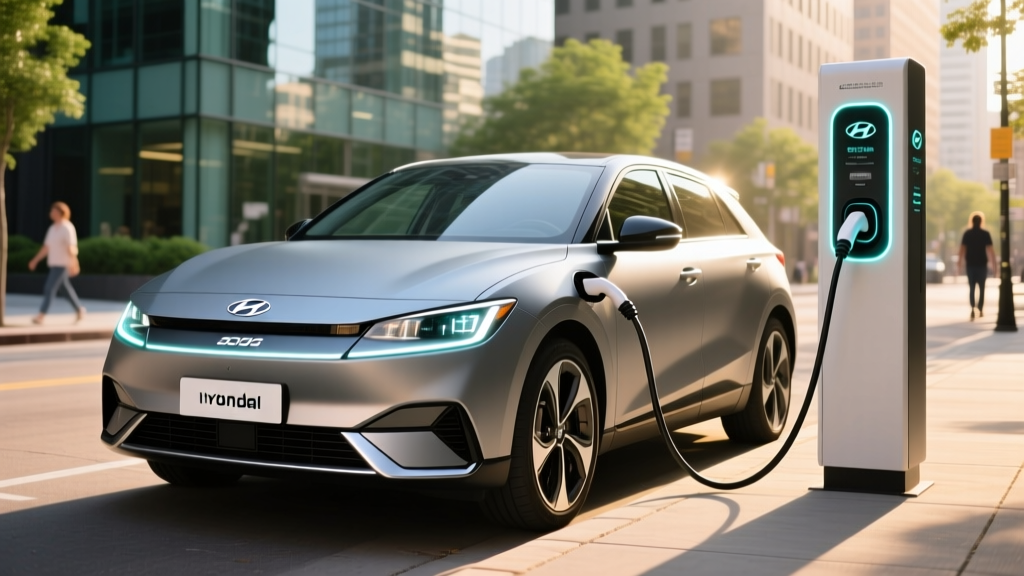
Hyundai's E-GMP platform was engineered around an 800V electrical architecture, and this is where the Ioniq 5 SEL separates itself from competitors still running 400V systems (like the Volkswagen ID.4 and base Ford Mustang Mach-E). On a 350 kW DC fast charger — such as those found at Electrify America or Tesla Supercharger V4 stations — the SEL can accept up to 238 kW of peak power.
However, peak kW is not sustained kW. The Ioniq 5's charge curve is aggressive from 10% to roughly 55% State of Charge, holding above 200 kW when the battery is preconditioned and ambient temperatures are moderate (60–85°F). Above 60% SoC, the rate tapers progressively, dropping below 100 kW past 75%. This is normal battery-management behavior to protect cell longevity, but it means a 10–90% session takes closer to 28–32 minutes, not 18. For road-trip planning, target 10–80% stops and drive on.
For the 2026 model year, the Ioniq 5 comes equipped with a native NACS (North American Charging Standard) port, granting direct access to Tesla's Supercharger network without an adapter. This is a significant practical advantage over CCS-only vehicles, as Tesla's network remains the most reliable and widespread DC fast-charging infrastructure in the U.S.
At home on a Level 2, 240V/48A hardwired charger, the onboard 10.9 kW charger replenishes the 84.0 kWh battery from empty in approximately 9 hours. Most owners who plug in overnight will wake to a full battery. A typical 240V/40A circuit (common in older installations) delivers about 9.6 kW, adding roughly 28 miles per hour of charging.
Performance and Driving Impressions
The SEL's single rear-mounted motor produces 225 horsepower and 258 lb-ft of torque, delivering a 0–60 mph time of approximately 7.0 seconds. That's brisk enough for confident highway merging and passing, though it won't pin you to your seat like the dual-motor AWD variants (which hit 60 mph in the low 5-second range) or the performance-oriented Ioniq 5 N.
Where the RWD SEL shines is efficiency and ride composure. The rear-biased weight distribution and multi-link rear suspension give the Ioniq 5 a planted, mature ride quality that outclasses the firmer, more truck-like demeanor of some competitors. Steering is light but direct, and the turning radius is manageable for urban parking. Regenerative braking offers multiple levels of intensity, selectable via steering-wheel paddles, including a full one-pedal driving mode (i-Pedal) that brings the car to a complete stop without touching the brake pedal.
The SEL is not a towing-focused vehicle. Hyundai rates the RWD Ioniq 5 at 1,650 pounds of towing capacity — sufficient for a small utility trailer or a pair of dirt bikes, but not a camper or boat. If you need serious towing, look at the AWD trims (rated up to 2,300 pounds) or a larger electric SUV.
Interior, Cargo, and Technology
Hyundai redesigned the Ioniq 5's interior for the 2025 refresh, and the 2026 SEL carries forward the updated layout with improved materials and a more intuitive center console. The cabin features a dual 12.3-inch display setup (instrument cluster and infotainment), physical climate-control buttons (a welcome change from touch-only panels), and a flat floor that maximizes rear-seat legroom at 39.4 inches — competitive with midsize gasoline crossovers.
Cargo space measures 27.2 cubic feet behind the rear seats and 59.3 cubic feet with the 60/40 split rear seats folded. The front trunk (frunk) on RWD models provides an additional 0.85 cubic feet — enough for a charging cable kit or a small bag, but not a meaningful cargo area. Competitors like the Ford Mustang Mach-E offer a larger frunk.
The SEL trim includes Hyundai's latest Hyundai SmartSense driver-assist suite as standard: forward collision-avoidance assist with pedestrian and cyclist detection, lane-keeping assist, blind-spot monitoring, rear cross-traffic collision-avoidance, and highway driving assist (HDA). HDA combines adaptive cruise control with lane-centering on divided highways — this is a SAE Level 2 driver-assist system, meaning the driver must keep hands on the wheel and eyes on the road at all times. It is not autonomous driving.
The 12.3-inch infotainment screen runs Hyundai's latest connected-car software with wireless Apple CarPlay and Android Auto, over-the-air updates, and a built-in navigation system that can route through charging stations and precondition the battery for fast charging when a DC station is selected as the destination. This preconditioning feature warms or cools the battery to its optimal charging temperature before you arrive, which is critical for achieving peak charge rates in cold or very hot weather.
Pricing, Tax Credits, and Ownership Costs
The 2026 Hyundai Ioniq 5 SEL starts at an MSRP of $47,500, plus a $1,395 destination charge, for a total of $48,895 before options or incentives. Our as-tested vehicle, equipped with carpeted floor mats and a cargo tray, came to $49,250.
| Cost Factor | Amount |
|---|---|
| Base MSRP (SEL RWD) | $47,500 |
| Destination Charge | $1,395 |
| Federal Tax Credit (§30D, if eligible) | Up to $7,500 (point-of-sale transfer available) |
| Effective Price After Max Credit | ~$41,395 |
| Estimated Annual Charging Cost (12,000 mi/yr, home charging) | ~$540–$720 |
| Estimated Annual Insurance | ~$1,800–$2,400 (varies by state/profile) |
Federal Tax Credit Eligibility (§30D): The Ioniq 5 SEL's MSRP of $47,500 falls under the $55,000 MSRP cap for SUVs/crossovers set by the IRS under §30D. However, claiming the full $7,500 credit depends on several factors:
- Buyer income limits: Modified adjusted gross income (MAGI) must not exceed $150,000 (single), $225,000 (head of household), or $300,000 (joint filers).
- Battery component sourcing: A percentage of battery components must be manufactured or assembled in North America, and critical minerals must be sourced from the U.S. or free-trade-agreement countries. These thresholds increase annually. Hyundai has been working to shift Ioniq 5 battery production to its Metaplant America facility in Georgia, but verify current-year sourcing compliance with your dealer or the IRS Clean Vehicle provisions.
- Point-of-sale transfer: As of 2024, buyers can transfer the credit to the dealer at the point of sale, receiving the $7,500 as an immediate price reduction rather than waiting to claim it on their tax return. This requires dealer participation and IRS registration.
Consult a tax professional and verify eligibility on irs.gov before relying on the credit in your purchase budget. Rules and sourcing requirements can change, and partial credits ($3,750) may apply if only one of the two sourcing requirements is met.
Warranty and Long-Term Battery Outlook
Hyundai backs the 2026 Ioniq 5 with one of the strongest warranty packages in the EV segment:
- Battery & Powertrain: 10 years / 100,000 miles (whichever comes first). The battery is warranted to retain at least 70% of its original capacity during this period.
- New Vehicle (Bumper-to-Bumper): 5 years / 60,000 miles.
- Roadside Assistance: 5 years / unlimited miles.
- Complimentary Maintenance: 3 years / 36,000 miles (covers scheduled items like cabin air filter, tire rotation, and multi-point inspections).
The NMC battery chemistry in the Ioniq 5 offers higher energy density than LFP (lithium iron phosphate) packs, which is why the SEL achieves its 303-mile rating in a relatively compact package. NMC batteries generally show slightly more degradation over time than LFP, but Hyundai's thermal management system and the 70% capacity retention warranty provide a reasonable safety net. Based on industry data from older E-GMP platform vehicles, expect approximately 8–12% capacity loss over the first 100,000 miles under normal use — well within the warranty threshold.
How the Ioniq 5 SEL Compares to Key Rivals
The midsize electric crossover segment is crowded. Here's how the 2026 Ioniq 5 SEL stacks up against three primary competitors:
vs. Tesla Model Y Long Range RWD: The Model Y offers more EPA range (~320 miles) and access to the Supercharger network (though the Ioniq 5 now has native NACS access too). The Tesla is quicker and has more cargo space, but its interior is sparser, its ride is firmer, and its starting price is comparable. The Ioniq 5 wins on warranty coverage and physical control layout.
vs. Ford Mustang Mach-E Extended Range RWD: The Mach-E offers similar range (~300 miles EPA) and a sportier driving feel, but its 400V architecture means slower DC charging (~150 kW peak vs. the Ioniq 5's 238 kW). On road trips, the Ioniq 5's faster charging is a tangible advantage.
vs. Volkswagen ID.4 Pro S RWD: The ID.4 is less expensive and offers a comfortable ride, but its ~291-mile range, slower charging (~170 kW peak on 2026 models), and less engaging infotainment system put it behind the Ioniq 5 on most metrics.
Pros, Cons, and Who Should Buy
Pros
- Class-leading 800V DC fast charging (~18 min 10–80%)
- Native NACS port for Tesla Supercharger access
- Strong 10-year / 100,000-mile battery warranty
- Spacious rear seat (39.4" legroom) and flat floor
- Physical climate buttons alongside touchscreen
- Battery preconditioning for optimized charging
- Competitive pricing under the §30D MSRP cap
Cons
- Real-world highway range falls 10–15% below EPA sticker
- Small frunk (0.85 cu ft) compared to Mach-E
- RWD towing limited to 1,650 lbs
- Rear visibility compromised by thick C-pillars
- No front trunk light or 12V outlet in frunk
- Insurance premiums above segment average
- Some road noise at highway speeds
Who the 2026 Ioniq 5 SEL Is For
Choose the Ioniq 5 SEL if: You want a practical daily-driver EV with excellent fast-charging capability for road trips, a spacious cabin for a family of four, strong warranty peace of mind, and a price that can drop below $42,000 after the federal tax credit.
Look elsewhere if: You need AWD for snow-belt winters (step up to the SEL AWD or Limited), you regularly tow more than 1,600 pounds, or you prioritize maximum range over charging speed (consider the Tesla Model Y Long Range).
Frequently Asked Questions
What is the real-world range of the 2026 Hyundai Ioniq 5 SEL?
The EPA rates the Ioniq 5 SEL RWD at 303 miles. In real-world mixed driving, expect 260–285 miles. Sustained highway driving at 75 mph reduces this to roughly 240–270 miles, and cold weather (below freezing) can drop range to 210–240 miles.
How fast does the 2026 Ioniq 5 SEL charge?
On a 350 kW DC fast charger, the Ioniq 5 SEL peaks at 238 kW and charges from 10–80% in approximately 18 minutes under optimal conditions. On a home Level 2 (240V/48A), it charges at up to 10.9 kW, adding about 32 miles per hour and reaching a full charge overnight in roughly 9 hours.
Does the 2026 Hyundai Ioniq 5 SEL qualify for the $7,500 federal EV tax credit?
It can, but eligibility depends on your income (MAGI caps apply), the vehicle's MSRP (the SEL at $47,500 clears the $55,000 SUV cap), and battery-component and critical-mineral sourcing requirements that tighten each year. The credit can be transferred to the dealer at point of sale for an immediate price reduction. Verify current-year rules on irs.gov and with your dealer before purchase.
Is the 2026 Ioniq 5 SEL worth buying over the Tesla Model Y?
It depends on priorities. The Ioniq 5 SEL offers faster DC charging, a longer warranty (10 yr/100k vs. Tesla's 8 yr/120k battery warranty), physical buttons, and a more cushioned ride. The Model Y offers more range, more cargo space, and a more minimalist interior. With the Ioniq 5 now featuring native NACS, the Supercharger-access advantage Tesla once held is no longer exclusive.
Does the Ioniq 5 SEL have one-pedal driving?
Yes. The SEL includes Hyundai's i-Pedal mode, accessible via the regenerative-braking paddle on the steering wheel. In i-Pedal, lifting off the accelerator brings the vehicle to a complete stop using regenerative braking alone, minimizing use of the friction brakes in city driving.
What is the Ioniq 5 SEL's charging port — CCS or NACS?
For the 2026 model year, the Ioniq 5 is equipped with a native NACS (Tesla-style) charging port, allowing direct connection to Tesla Superchargers and other NACS-equipped DC fast-charging stations without an adapter. A CCS adapter may be available for use at legacy CCS-only stations.