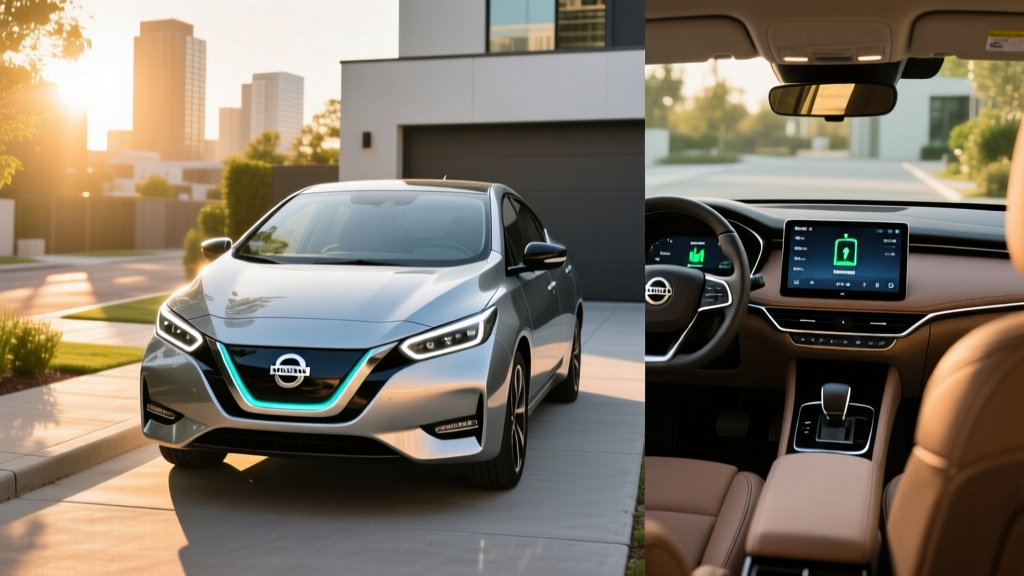
For over a decade, the Nissan Leaf was the default answer for affordable electric transportation. But a glance at recent Nissan Leaf sales figures tells a different story: volume has steadily eroded as rivals like the Chevrolet Equinox EV, Hyundai Kona Electric, and Volvo EX30 flood the sub-$40,000 EV segment with faster charging, longer range, and modern NACS connectors. The 2026 Nissan Leaf soldiers on with minor updates, but does the math still work for today's buyer?
We spent time with the 2026 Leaf SV Plus and the base S trim to answer the question every prospective buyer is asking: in a market that has moved on, is the Leaf still a rational purchase, or has its window closed?
Quick Verdict: Where the 2026 Nissan Leaf Stands
The 2026 Leaf remains one of the cheapest new EVs you can buy, starting under $29,000 before incentives. For urban commuters with reliable home Level 2 charging, it delivers adequate range, a comfortable ride, and low running costs. But its CHAdeMO connector, passive battery cooling, and modest DC fast-charge rate make it increasingly difficult to recommend for anyone who road-trips more than a few times a year. Nissan Leaf sales have contracted not because the car is bad, but because the competition has simply outpaced it on the metrics that matter most in 2026.
Who should look elsewhere: Anyone without home charging (public CHAdeMO stations are dwindling), frequent highway travelers, or buyers in extreme-heat climates where passive cooling accelerates battery degradation.
2026 Nissan Leaf Specifications at a Glance
| Spec | Leaf S (40 kWh) | Leaf SV Plus (60 kWh) |
|---|---|---|
| EPA Range | 149 miles | 212 miles |
| Battery (usable) | 40 kWh | 60 kWh |
| Chemistry | NMC (laminated) | NMC (laminated) |
| Motor / Drivetrain | 147 hp / FWD | 214 hp / FWD |
| 0-60 mph | ~7.9 sec | ~6.5 sec |
| Max DC Fast Charge | 50 kW | 100 kW (peak) |
| 10-80% DC Time | ~40 min | ~45 min |
| Level 2 Rate | 6.6 kW (~22 mi/hr) | 6.6 kW (~22 mi/hr) |
| Efficiency (SV Plus) | 111 MPGe combined | 111 MPGe / 30 kWh/100mi |
| Cargo Volume | 23.6 cu ft (rear seats up) | 23.6 cu ft / 68.8 cu ft folded |
| Base MSRP | $28,140 | $36,190 |
| Battery Warranty | 8 yr / 100,000 mi (capacity) | 8 yr / 100,000 mi (capacity) |
Real-World Range: What the EPA Sticker Doesn't Tell You
Real-World Expectation: 170-195 miles highway in mild weather; 140-165 miles in freezing temperatures (below 32°F). The Leaf S drops to roughly 120-135 miles on a cold winter highway commute.
The SV Plus's 60 kWh NMC pack delivers its EPA-rated 212 miles in city-heavy driving at moderate temperatures — exactly the scenario most commuters face. On a 70 mph highway run at 75°F, expect roughly 185 miles before the low-battery warning. Push the speed to 75-80 mph, and that number drops to around 170 miles.
Cold weather is the Leaf's particular weakness. Unlike competitors with active liquid thermal management (heat pumps and battery conditioning), the Leaf relies on passive air cooling and a resistive cabin heater in the base S trim. Below freezing, range loss of 25-35% is typical. The SV Plus includes a heat pump that mitigates cabin energy draw, but the battery itself still suffers in extreme cold. If you live in Minnesota or Maine and lack a garage, this matters significantly.
According to fueleconomy.gov, the Leaf SV Plus achieves 111 MPGe combined (30 kWh per 100 miles), which is respectable but trails the Hyundai Kona Electric's 118 MPGe and the Chevrolet Equinox EV's efficiency figures.
Charging Speed and the CHAdeMO Problem
This is where Nissan Leaf sales have been most affected by market shifts. The Leaf uses the CHAdeMO DC fast-charging connector — a standard that has effectively lost the North American connector war to Tesla's NACS and the CCS1 standard used by most legacy automakers.
| Charging Level | Power | Miles Added per Hour | Notes |
|---|---|---|---|
| Level 1 (120V household) | 1.4 kW | ~3-5 mi/hr | Emergency/trickle only |
| Level 2 (240V home) | 6.6 kW | ~22 mi/hr | Full charge overnight (~9 hrs SV Plus) |
| DC Fast (CHAdeMO) | 50 kW (S) / 100 kW peak (SV Plus) | ~150-200 mi/hr (peak) | 10-80% in ~40-45 min; tapers sharply above 80% |
The SV Plus peaks at 100 kW on DC fast charge, but that peak is brief. The charge curve tapers noticeably after 60% SoC, and the passive thermal system means sustained high-power charging generates heat that further limits throughput. On a warm day, expect a 10-80% session to take roughly 45 minutes — compared to 18-20 minutes for an Ioniq 5 or EV6 on a 350 kW charger.
More critically, CHAdeMO infrastructure is shrinking relative to CCS and NACS. Electrify America has largely standardized on CCS/NACS. While some CHAdeMO stations remain (particularly older Nissan-partnered sites), finding a reliable, high-power CHAdeMO charger on a road trip requires more planning and often means slower 50 kW units. A CHAdeMO-to-CCS adapter exists but costs $200-$300 and adds connection complexity.
For home Level 2 charging, the 6.6 kW onboard charger is adequate — a full charge from empty takes about 9 hours for the SV Plus, easily managed overnight. If your daily driving is under 60 miles, a Level 2 session replenishes your daily use in roughly 3 hours.
Performance, Interior, and Daily Usability
The SV Plus's 214-horsepower front motor delivers a 6.5-second 0-60 mph time — brisk enough for confident highway merging and genuinely fun around town. The Leaf's low center of gravity and one-pedal driving (via the e-Pedal mode) make it an excellent urban runabout. Regenerative braking is strong but not as aggressive as Tesla or Hyundai systems; you'll still use the friction brake pedal occasionally.
Interior space is a genuine strength. With 23.6 cubic feet behind the rear seats and 68.8 cubic feet with them folded, the Leaf offers hatchback practicality that rivals small crossovers. Rear legroom measures 33.5 inches — adequate for adults on shorter trips but tight for tall passengers on longer drives. The seats are comfortable, and the ride quality is compliant without being floaty.
The 8-inch infotainment touchscreen runs Nissan's latest software with wireless Apple CarPlay and Android Auto. It's responsive enough, though the interface feels dated compared to Hyundai's or Kia's systems. The ProPILOT Assist driver-assistance suite (SAE Level 2) includes adaptive cruise control with stop-and-go, lane centering, and blind-spot intervention. It works well on divided highways but requires hands on the wheel at all times — this is not an eyes-off system.
Pricing, Trims, and Federal Tax Credit Eligibility
| Trim | MSRP | Est. After §30D Credit* | Key Features |
|---|---|---|---|
| S | $28,140 | ~$20,640 | 40 kWh, 149 mi range, 50 kW DC, basic ProPILOT |
| SV | $29,640 | ~$22,140 | 40 kWh + heat pump, upgraded infotainment |
| SV Plus | $36,190 | ~$28,690 | 60 kWh, 212 mi range, 100 kW DC, full ProPILOT |
*Federal tax credit estimates assume buyer eligibility under current IRS §30D rules. Actual credit depends on battery sourcing, critical minerals requirements, buyer income caps ($150K single / $300K joint), and MSRP limits ($55K for cars). The point-of-sale transfer option allows dealers to apply the credit at purchase. Verify current eligibility at irs.gov or with a qualified tax professional.
The Leaf's biggest value proposition in 2026 is the SV Plus at roughly $28,700 after the full $7,500 credit — that's a 212-mile EV with a comfortable interior and proven reliability for under $30K. The base S at $20,600 after credit is among the cheapest new EVs on the market, period, though 149 miles of range limits it to strict city commuting.
However, Nissan Leaf sales have suffered precisely because competitors now match or beat this pricing with superior charging. The Chevrolet Equinox EV starts around $33,000 and offers 319 miles of range with CCS/NACS charging. The Hyundai Kona Electric at $32,975 delivers 261 miles and 100+ kW charging with CCS. The Leaf's price advantage has narrowed to a few thousand dollars — and the charging/infrastructure gap is significant.
Battery Longevity, Warranty, and Degradation Reality
Nissan covers the Leaf's battery with an 8-year/100,000-mile capacity warranty (dropping below 9 bars out of 12 on the capacity gauge triggers a claim). The powertrain carries a 5-year/60,000-mile warranty. The bumper-to-bumper coverage is 3 years/36,000 miles.
Here's the honest truth about Leaf battery longevity: the passive air-cooling system is the Leaf's Achilles heel for long-term health. NMC chemistry degrades faster at elevated temperatures, and without active liquid cooling, Leafs in hot climates (Arizona, Texas, Southern California) have historically shown more degradation than liquid-cooled competitors. Early-generation Leafs (2011-2017) saw 20-30% capacity loss within 5-7 years in hot regions.
The 2026 model benefits from improved cell chemistry and better thermal monitoring, but the fundamental physics haven't changed. If you live in a hot climate and park outside, expect somewhat faster degradation than a liquid-cooled EV. Keeping the battery between 20-80% SoC and avoiding repeated DC fast charging in high heat will help. For cooler climates, degradation is far less of a concern — many northern-state Leaf owners report minimal loss over 8+ years.
Pros and Cons: The Honest Assessment
- Among the cheapest new EVs available, especially after §30D credit
- Comfortable ride quality and compliant suspension
- Strong cargo capacity for a hatchback (23.6 cu ft)
- Proven reliability track record with simple powertrain
- One-pedal e-Pedal mode is well-calibrated
- Heat pump standard on SV and SV Plus trims
- CHAdeMO connector — shrinking public charging access
- Passive battery cooling — worse degradation in hot climates
- Slow DC fast charging vs. 2026 competitors (100 kW peak, tapers early)
- 149-mile base range is limiting even for commuters
- Dated interior design and infotainment interface
- No front trunk (frunk); no vehicle-to-load (V2L) capability
- Tight rear legroom for taller passengers
Is the 2026 Nissan Leaf Worth It vs. the Competition?
Nissan Leaf sales tell a clear story: buyers have options, and most are choosing them. Here's how the Leaf stacks up against key rivals in the affordable EV space:
| Metric | Nissan Leaf SV Plus | Hyundai Kona Electric | Chevy Equinox EV |
|---|---|---|---|
| EPA Range | 212 mi | 261 mi | 319 mi |
| DC Fast Charge | 100 kW (CHAdeMO) | 100+ kW (CCS/NACS) | 150+ kW (CCS/NACS) |
| Thermal Mgmt | Passive air | Active liquid | Active liquid |
| Base MSRP | $36,190 | $32,975 | $33,000 |
| Cargo | 23.6 cu ft | 25.8 cu ft | 26.4 cu ft |
The data makes the case against the Leaf difficult to argue. Both the Kona Electric and Equinox EV offer more range, faster charging on widely-supported connectors, active thermal management, and comparable or lower pricing. The Leaf's sole remaining advantage is that the base S trim can undercut competitors on price after the tax credit — if 149 miles is enough for your needs.
If Nissan transitions the next-generation Leaf to the NACS connector and adds liquid cooling (as rumored for a future redesign), the nameplate could recover. Until then, Nissan Leaf sales will likely continue their slide as informed buyers cross-shop and find better options.
Frequently Asked Questions
What is the real-world range of the 2026 Nissan Leaf?
The SV Plus (60 kWh) delivers roughly 185-195 miles in mixed city/highway driving at moderate temperatures, dropping to 140-165 miles in freezing weather. The base S (40 kWh) manages about 125-140 miles in real-world mixed driving, and as little as 105-120 miles in cold conditions. Highway-only driving at 70+ mph reduces all figures by 10-15%.
How fast does the Nissan Leaf charge at home and on DC fast chargers?
On a home Level 2 charger (240V, 6.6 kW), the SV Plus adds about 22 miles of range per hour, reaching a full charge from empty in roughly 9 hours. On DC fast charge, the SV Plus peaks at 100 kW via CHAdeMO, achieving 10-80% in approximately 45 minutes. The base S maxes out at 50 kW and takes about 40 minutes for the same 10-80% session. Charging slows significantly above 80% SoC to protect the battery.
Does the 2026 Nissan Leaf qualify for the $7,500 federal EV tax credit?
The Leaf has historically qualified for the full $7,500 §30D credit, but eligibility depends on current-year IRS rules including battery component sourcing, critical mineral requirements, buyer income caps ($150K single / $225K head of household / $300K joint), and the $55,000 MSRP cap for passenger cars. The point-of-sale transfer option lets dealers apply the credit directly at purchase. Always verify current eligibility at irs.gov before committing.
Is the Nissan Leaf worth buying over the Hyundai Kona Electric or Chevy Equinox EV?
For most buyers, no. The Kona Electric and Equinox EV offer more range (261 and 319 miles respectively), faster charging on CCS/NACS connectors with broader infrastructure support, and active liquid battery cooling — all at comparable prices. The Leaf makes sense only if the base S trim's sub-$21K after-credit price fits your budget and 149 miles covers your commute with margin, or if you find exceptional dealer discounts on the SV Plus.
Will Nissan switch the Leaf to the NACS (Tesla) connector?
Nissan has committed to adopting NACS for future EV models in North America, but the 2026 Leaf still ships with CHAdeMO. A next-generation Leaf redesign with NACS and likely liquid cooling has been announced as upcoming but has no confirmed on-sale date. If NACS compatibility is a priority, consider it a reason to wait or choose a current competitor.
How long will the Nissan Leaf battery last?
Nissan warrants the battery for 8 years/100,000 miles against dropping below 9 of 12 capacity bars (roughly 75% state of health). In cooler climates, Leaf batteries commonly last 10-15 years with gradual, manageable degradation. In hot climates with frequent DC fast charging, expect faster capacity loss — potentially 15-25% over 8 years. A full battery replacement (if out of warranty) costs approximately $6,500-$9,000 depending on the pack size.
Sources: EPA range and efficiency data from fueleconomy.gov. Federal tax credit rules from IRS §30D guidance. Safety ratings from NHTSA. Manufacturer specifications from Nissan USA. Pricing reflects 2026 model-year MSRP and is subject to change. Real-world range estimates based on aggregated owner data and independent testing; individual results vary with driving style, temperature, terrain, and tire condition.