The 2026 Chevrolet Equinox EV enters its second full model year as one of the most affordable long-range electric SUVs on the market. Built on GM's Ultium platform, it offers up to 319 miles of EPA-estimated range at a starting price that undercuts most competitors by thousands. But does the real-world experience match the spec sheet? After evaluating its charging behavior, efficiency, and daily usability, here's what buyers need to know before signing on the dotted line.
2026 Equinox EV at a Glance: Core Specifications
| Spec | 3LT (FWD) | 2RS (FWD) | 2RS Launch Edition (AWD) |
|---|---|---|---|
| EPA Range | 319 mi | 315 mi | 285 mi |
| Usable Battery | ~85 kWh (NMC, Ultium pouch cells) | ||
| Powertrain | FWD single motor | FWD single motor | Dual-motor AWD |
| Horsepower | 213 hp | 213 hp | 288 hp |
| 0-60 mph | ~8.2 sec | ~8.2 sec | ~5.9 sec |
| Peak DC Fast Charge | 150 kW | ||
| 10-80% DC Time | ~42 min | ||
| Level 2 Home Charge | 11.5 kW (~34 mi/hr) | ||
| EPA Efficiency (3LT) | 114 MPGe / 29 kWh/100 mi | ||
| Base MSRP | $33,600 | $36,300 | $43,400 |
| Battery Warranty | 8 years / 100,000 miles | ||
Real-World Range: What the EPA Number Doesn't Tell You
EPA Estimate: 319 miles
Expected Highway (70 mph, 72°F): ~265–280 miles
Expected Cold Weather (30°F, mixed driving): ~225–250 miles
Expected City / Moderate Climate: ~300–315 miles
The 3LT trim's 319-mile EPA rating is legitimate for mixed suburban driving in moderate temperatures. The Equinox EV's efficiency shines at lower speeds where regenerative braking recaptures energy. However, the boxy crossover shape creates meaningful aerodynamic drag at highway speeds. On a 70-mph cruise in fair weather, expect to use roughly 32–34 kWh/100 miles, trimming range to around 270 miles.
Cold weather compounds this. The Equinox EV uses a standard heat pump (a notable advantage over the outgoing Bolt EV, which lacked one), but lithium-ion chemistry still loses efficiency below freezing. In sustained 25–35°F conditions, plan on a 20–30% range reduction. If your commute is 50 miles round-trip in a Minnesota winter, you'll still have comfortable margin — but a 250-mile road trip in January will require a charging stop.
The AWD 2RS Launch Edition sacrifices range for traction: its 285-mile EPA rating drops to roughly 235–245 miles on a real-world highway trip. For buyers in snow-belt states, that tradeoff may be worth it, but it's a meaningful difference versus the FWD models.
Charging Speed: DC Fast Charging and Home Level 2
| Charging Level | Power / Rate | Time / Range Added | Best For |
|---|---|---|---|
| Level 1 (120V outlet) | ~1.4 kW | ~4 mi/hr | Emergency top-ups, PHEV-style overnight |
| Level 2 (240V, 48A) | 11.5 kW | ~34 mi/hr; full charge ~9 hrs | Daily home charging |
| DC Fast Charge | Peak 150 kW | 10-80% in ~42 min | Road trips |
The Equinox EV's peak 150 kW DC fast-charging rate is adequate but not class-leading. The Hyundai Ioniq 5 peaks at 240 kW, and the Tesla Model Y can sustain over 250 kW on V3 Superchargers. In practice, the Equinox EV's charge curve holds near 150 kW up to roughly 35% state of charge (SoC), then tapers to ~100 kW through 60%, and drops further above 80%. A 10-80% session takes approximately 42 minutes on a properly rated 150+ kW charger.
One critical detail: preconditioning. The Equinox EV does not natively precondition the battery for DC fast charging the way Tesla or Hyundai do via navigation routing. If you arrive at a fast charger with a cold battery, peak rates may be limited to 80–100 kW until the pack warms up. Plan to drive for at least 20–30 minutes at highway speed before pulling into a fast-charging station in cool weather. According to Chevrolet's official Equinox EV specs, the vehicle supports DC charging via CCS1 (with a NACS adapter available for Tesla Supercharger access).
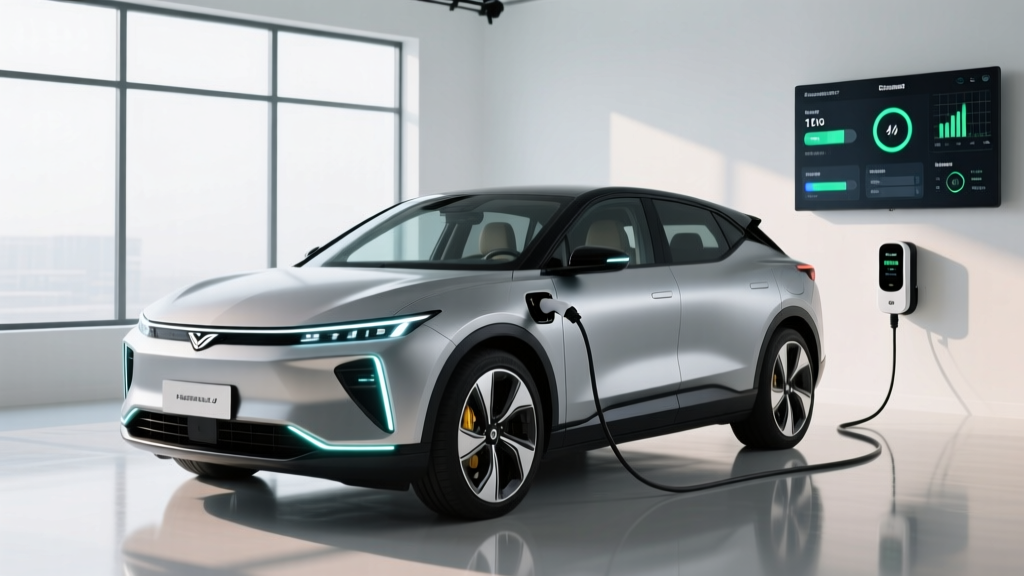
At home, the onboard 11.5 kW charger is a strong point. On a 48-amp Level 2 circuit (requiring a 60-amp breaker), you'll add roughly 34 miles of range per hour. An overnight 8-hour session restores about 270 miles — enough to refill the battery almost entirely. A licensed electrician will typically charge $500–$1,500 for a Level 2 installation, plus $300–$600 for a quality smart charger like the ChargePoint Home Flex or Emporia Vue. Factor in a possible $500–$2,000 panel upgrade if your home has an older 100-amp service.
Performance and Driving Dynamics
The FWD Equinox EV delivers 213 horsepower and 236 lb-ft of torque from a single front-mounted Ultium drive unit. The 0-60 mph time of roughly 8.2 seconds is leisurely by EV standards but entirely adequate for merging and passing. The instant torque delivery makes it feel quicker around town than the number suggests.
The AWD 2RS Launch Edition pairs front and rear motors for 288 hp and 355 lb-ft, dropping the 0-60 time to approximately 5.9 seconds. This is the trim for buyers who want confident highway passing and all-weather traction.
Ride quality is composed and quiet, thanks to the low center of gravity from the floor-mounted battery pack. At ~4,500 lbs (FWD), it's not a lightweight, and you'll feel that mass over sharp bumps. Steering is light and numb — this is a comfort-oriented crossover, not a sporty handler. Regenerative braking offers multiple levels, including a one-pedal-driving mode that can bring the vehicle to a complete stop without touching the brake pedal.
Interior Space, Cargo, and Technology
The Equinox EV's cabin is a significant step up from the gas Equinox. The centerpiece is a 17.7-inch diagonal infotainment touchscreen running Google Built-In (Google Maps, Google Assistant, and the Play Store). A 11-inch digital driver display sits behind the wheel. Wireless Apple CarPlay and Android Auto are standard across all trims.
Passenger space is generous for the compact SUV segment:
- Front legroom: 43.1 inches
- Rear legroom: 37.6 inches
- Cargo behind rear seats: 26.4 cu ft
- Cargo with rear seats folded: 57.2 cu ft
- Frunk (front trunk): Not available — the Ultium platform houses power electronics under the hood
The absence of a frunk is a missed opportunity. Competitors like the Hyundai Ioniq 5 and Ford Mustang Mach-E offer front storage. However, the flat load floor and 57.2 cu ft maximum cargo volume handle family duty well — two large suitcases and a stroller fit without folding the rear seats.
Driver assistance comes via Chevy's Super Cruise on higher trims (3RS and above), which enables hands-free driving on over 400,000 miles of mapped highways. This is an SAE Level 2 system — the driver must remain attentive, and an infrared camera monitors eye gaze. Super Cruise is a $2,200 option on the 3LT and standard on 3RS. Base 2LT and 2RS trims include Chevy Safety Assist (automatic emergency braking, lane keep assist, adaptive cruise control) but not Super Cruise.
Pricing, Trims, and Federal Tax Credit Eligibility
| Trim | Drivetrain | Base MSRP | Est. After §30D Credit* |
|---|---|---|---|
| 2LT | FWD | $33,600 | ~$26,100 |
| 3LT | FWD | $35,900 | ~$28,400 |
| 2RS | FWD | $36,300 | ~$28,800 |
| 3RS | FWD | $41,900 | ~$34,400 |
| 2RS Launch Edition | AWD | $43,400 | ~$35,900 |
*Federal tax credit estimates assume buyer eligibility. Actual credit varies.
The 2026 Equinox EV qualifies for the federal EV tax credit under IRS §30D, but eligibility is not automatic for every buyer. Here's what you need to verify:
- MSRP cap: The Equinox EV is classified as an SUV, so the MSRP cap is $80,000. All trims clear this easily.
- Buyer income limits: Adjusted gross income must not exceed $150,000 (single), $225,000 (head of household), or $300,000 (married filing jointly).
- Battery sourcing: The credit is split into two $3,750 halves — one for critical-mineral sourcing and one for battery-component manufacturing. GM has stated that the Equinox EV's Ultium battery cells (produced at the Ultium Cells plant in Ohio) meet the component requirement. Critical-mineral compliance depends on supply-chain sourcing that can shift mid-year. Verify current eligibility on fueleconomy.gov before purchasing.
- Point-of-sale transfer: As of 2024, buyers can transfer the credit to the dealer at purchase, reducing the out-of-pocket price immediately rather than waiting to claim it on a tax return. Confirm your dealer participates.
For a single filer earning under $150,000 buying a 2LT at $33,600, the effective price could drop to approximately $26,100 — making this one of the cheapest 300+ mile EVs available. Always confirm current-year rules on IRS.gov, as sourcing requirements tighten annually.
Equinox EV vs. Key Competitors
| Spec | Chevy Equinox EV 3LT | Hyundai Ioniq 5 SEL | Tesla Model Y LR | Ford Mustang Mach-E Select |
|---|---|---|---|---|
| EPA Range | 319 mi | 303 mi | 320 mi | 250 mi |
| Battery (usable) | ~85 kWh | 77.4 kWh | ~75 kWh | 70 kWh |
| Peak DC Charge | 150 kW | 240 kW | 250 kW | 150 kW |
| 10-80% Time | ~42 min | ~18 min | ~25 min | ~38 min |
| 0-60 mph | 8.2 sec | 7.1 sec | 5.0 sec | 6.3 sec |
| Base MSRP | $35,900 | $46,500 | $44,990 | $39,995 |
| Cargo (rear seats up) | 26.4 cu ft | 27.2 cu ft | 30.2 cu ft | 29.7 cu ft |
- Lowest starting price in the 300+ mile EV SUV segment
- Standard heat pump for cold-weather efficiency
- Strong Level 2 home charging (11.5 kW / 34 mi/hr)
- Spacious rear seat and flat cargo floor
- Super Cruise availability on higher trims
- Google Built-In infotainment
- 150 kW DC fast charging is slowest in class
- 8.2-sec 0-60 (FWD) feels sluggish vs. rivals
- No frunk (front trunk)
- No battery preconditioning for DC charging
- AWD range drops to 285 mi EPA
- Super Cruise locked to expensive trims
Who Should Buy the 2026 Equinox EV?
- You want 300+ miles of range at the lowest possible price point
- Your daily driving is under 80 miles and you charge at home nightly
- You prioritize cabin comfort and tech over sporty performance
- You qualify for the full $7,500 federal credit and want a sub-$30K effective price
- You rarely take road trips exceeding 250 miles between stops
- You road-trip frequently and need the fastest DC charging available (Ioniq 5, Model Y)
- You want AWD with 300+ miles of range (no current Equinox EV trim offers this)
- You need maximum cargo volume or a frunk for gear (Model Y, Mach-E)
- Quick acceleration matters to you (Model Y, Ioniq 5 are significantly faster)
The 2026 Equinox EV's strongest value proposition is economic, not emotional. It delivers more range per dollar than any electric SUV in its class, and the Google Built-In infotainment system is one of the best in the industry. But the 150 kW charging ceiling and absence of battery preconditioning mean road trips require more patience and planning than in a Hyundai or Tesla. For a home-charging commuter who takes occasional weekend trips, it's an outstanding value. For a frequent long-distance traveler, the Ioniq 5 or Model Y remain better tools for the job.
Frequently Asked Questions
What is the real-world range of the 2026 Equinox EV?
The EPA rates the 3LT FWD at 319 miles. In real-world highway driving at 70 mph in moderate temperatures, expect 265–280 miles. In cold weather (below 35°F), plan on 225–250 miles. City driving with regenerative braking can approach or match the EPA number.
How fast does the Equinox EV charge at home and on the road?
At home on a 240V Level 2 charger (48 amps), the Equinox EV charges at 11.5 kW, adding about 34 miles of range per hour. A full charge takes roughly 9 hours. On a DC fast charger, it peaks at 150 kW and charges from 10% to 80% in approximately 42 minutes.
Does the 2026 Equinox EV qualify for the $7,500 federal tax credit?
Yes, provided you meet the IRS §30D requirements: income under $150,000 (single) / $300,000 (married filing jointly), and the vehicle's battery meets critical-mineral and component-sourcing rules for the current tax year. All trims are well under the $80,000 SUV MSRP cap. Verify current eligibility at fueleconomy.gov before purchasing, as sourcing rules tighten annually.
Is the Equinox EV worth buying over the Tesla Model Y or Hyundai Ioniq 5?
If price is the primary factor, yes. The Equinox EV 3LT at ~$28,400 after the tax credit is thousands less than equivalently ranged competitors. However, the Model Y and Ioniq 5 charge significantly faster (25–18 minutes 10-80%), accelerate quicker, and offer better cargo versatility. The Equinox EV wins on value; its rivals win on road-trip capability and performance.
Does the Equinox EV have Super Cruise?
Super Cruise is available on the 3RS trim as standard equipment and as a $2,200 option on the 3LT. It is not available on base 2LT or 2RS trims. Super Cruise is an SAE Level 2 hands-free driving system — the driver must remain attentive and an infrared camera monitors eye gaze at all times.
What is the battery warranty on the 2026 Equinox EV?
Chevrolet covers the Ultium battery pack for 8 years or 100,000 miles, whichever comes first. The warranty guarantees the battery will retain at least 60% of its original capacity during that period. The limited vehicle warranty is 3 years / 36,000 miles, with a 5-year / 60,000-mile powertrain warranty.