Ford F-150 Lightning Towing Capacity: What the Numbers Actually Mean
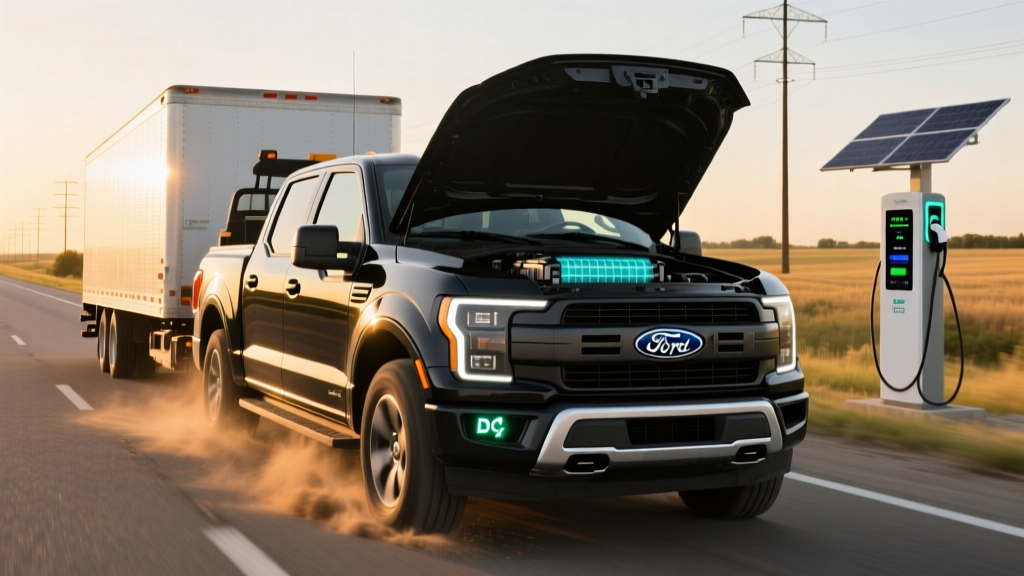
The Ford F-150 Lightning remains one of the few electric pickups that attempts to serve as a genuine work truck rather than a lifestyle statement. For buyers eyeing this rig, the headline figure is the Ford F-150 Lightning towing capacity — rated at up to 10,000 pounds when properly equipped. But towing with an EV introduces variables that gas-truck buyers never consider: range collapse under load, charging logistics on the road, and whether the battery can sustain heavy hauling without excessive degradation.
This review breaks down the 2025 model-year Lightning's towing credentials, real-world efficiency, charging behavior, and total ownership picture so you can decide whether it fits your hauling needs or whether a Rivian R1T, Chevrolet Silverado EV, or hybrid alternative makes more sense.
| Spec | Standard Range | Extended Range |
|---|---|---|
| EPA Range | 240 miles | 320 miles |
| Battery Capacity (usable) | 98 kWh | 131 kWh |
| Battery Chemistry | NMC (Nickel Manganese Cobalt) | NMC |
| Max Towing Capacity | 7,700 lbs | 10,000 lbs* |
| Horsepower | 452 hp | 580 hp |
| Torque | 775 lb-ft | 775 lb-ft |
| 0-60 mph | ~3.8 sec | |
| Drivetrain | Dual-motor AWD | Dual-motor AWD |
| Max DC Fast Charge | 120 kW | 150 kW |
| Level 2 Home Charge Rate | 11.3 kW (30 mi/hr) | 19.2 kW (52 mi/hr) w/ 80A charger |
| MPGe (combined) | 76 MPGe | 70 MPGe |
| Payload Capacity | 2,235 lbs | 1,800 lbs |
| Bed Length | 5.5 ft | 5.5 ft |
| Frunk Volume | 14.1 cu ft | 14.1 cu ft |
| Battery Warranty | 8 years / 100,000 miles (≥70% capacity retention) | |
*10,000-lb towing requires the Max Trailer Tow Package and Extended Range battery on XLT or Lariat trims.
How Towing Affects the F-150 Lightning's Real-World Range
The Extended Range model carries a 320-mile EPA estimate. In real-world driving without a trailer, expect approximately 270–290 miles on the highway at 70 mph, and closer to 240–260 miles in cold weather (below 32°F) due to cabin heating demand and increased battery resistance.
With a trailer: Towing a 5,000–7,000 lb load typically cuts range by 40–55%. That 320-mile Extended Range truck drops to roughly 140–180 miles per charge under moderate towing conditions. A max-weight 10,000-lb trailer in hilly terrain or headwinds can push range below 130 miles.
This range collapse is the single most important factor for prospective Lightning tow-ers. Electric motors don't lose efficiency under load the way internal combustion engines do — they're always efficient at converting energy — but the total energy demand of pushing a heavy trailer through air resistance at highway speed is enormous. Aerodynamic drag scales with the square of speed, and a boxy trailer compounds this dramatically.
Ford's onboard range calculator is reasonably accurate once it learns your towing pattern. The truck's SYNC system includes a dedicated trailer profile where you input trailer weight, dimensions, and axle count, and the navigation will factor charging stops into your route accordingly. In practice, owners report the projected range while towing is within 10–15% of actual results after a few trips.
For context, the EPA's fueleconomy.gov listing shows the Extended Range Lightning at 70 MPGe combined (48 kWh/100 mi). Under towing load, expect consumption to roughly double — meaning 90–110 kWh/100 mi is typical, which is why the battery depletes so quickly.
Charging Speed: DC Fast Charging and Home Setup
Charging is where the Lightning's work-truck ambitions meet infrastructure reality. The Extended Range battery supports a peak DC fast-charge rate of 150 kW, which is modest compared to rivals like the Hyundai Ioniq 5 (peak 240 kW) or the Tesla Cybertruck (peak 250+ kW). Ford uses the CCS1 connector on current models, with NACS adapter compatibility expanding access to Tesla Supercharger stations.
| Charging Level | Standard Range (98 kWh) | Extended Range (131 kWh) |
|---|---|---|
| Level 1 (120V, 12A) | ~1.4 kW / ~3 mi/hr | ~1.4 kW / ~2 mi/hr |
| Level 2 (240V, 32A mobile) | 7.7 kW / ~20 mi/hr | 7.7 kW / ~14 mi/hr |
| Level 2 (240V, 48A wall unit) | 11.3 kW / ~30 mi/hr | 11.3 kW / ~21 mi/hr |
| Level 2 (240V, 80A Ford Charge Station Pro) | N/A (max 48A onboard) | 19.2 kW / ~52 mi/hr |
| DC Fast Charge (peak) | 120 kW | 150 kW |
| DC 10-80% Time | ~44 min | ~41 min |
The 10-80% DC fast-charge time of roughly 41 minutes for the Extended Range battery is acceptable for road-trip stops but noticeably slower than the 18–22 minute times posted by 800V-architecture vehicles. The charge curve tapers significantly above 80% State of Charge — if you need to charge past 90%, expect the rate to drop below 40 kW, adding substantial time.
For home charging, the 19.2 kW Ford Charge Station Pro (an 80-amp unit requiring a 100-amp dedicated circuit) is the gold standard for Extended Range owners. It adds roughly 52 miles of range per hour, meaning a full overnight replenishment is realistic even after a heavy towing day. Installation typically costs $1,500–$3,500 depending on your electrical panel capacity — and a panel upgrade to 200A or 400A service may be necessary in older homes.
Standard Range owners are limited to 48A onboard charging (11.3 kW), which still delivers about 30 miles per hour on a compatible Level 2 unit. For daily commuting and light hauling, this is more than adequate.
Performance, Drivetrain, and the Towing Experience
Every F-150 Lightning comes with dual electric motors providing standard all-wheel drive. The Extended Range model's 580 horsepower and 775 lb-ft of torque deliver a 0-60 mph time of approximately 3.8 seconds — genuinely quick for a 6,500-lb truck, and the instant torque makes merging onto highways with a trailer feel effortless compared to a turbocharged gas V6 that needs to build boost.
The towing experience itself is where the Lightning shines. Electric motors provide maximum torque from zero RPM, so there's no gear-hunting or turbo lag when starting from a stop on an incline. The regenerative braking system can handle significant deceleration force, reducing brake wear on the truck (though trailer brakes remain essential for loads above 3,000 lbs).
Ford's Pro Trailer Hitch Assist automates the backing-up process to align the hitch ball with the trailer coupler — a genuine time-saver. The available Pro Trailer Backup Assist then takes over steering when reversing a trailer; you control direction with a knob rather than fighting the counter-intuitive steering geometry of a trailer.
The truck's independent rear suspension (a departure from the live axle on gas F-150s) improves ride quality when unloaded but has drawn mixed reviews from heavy-towing users who note slightly more squat under maximum tongue weight. The available onboard scales feature estimates payload and tongue weight in real time through the SYNC display.
Interior, Cargo, and Technology
The Lightning's cabin mirrors the gas F-150 in layout, which means a spacious, practical interior with generous rear-seat legroom (43.6 inches in the SuperCrew configuration). The available 12-inch or available 15.5-inch portrait touchscreen runs SYNC 4A, which supports wireless Apple CarPlay and Android Auto, over-the-air updates, and Ford's cloud-connected navigation.
The 14.1-cubic-foot Mega Power Frunk (front trunk) is a standout feature — lockable, weatherproof, and equipped with power outlets. It's large enough for tools, charging cables, or a week's groceries, and its drain plug lets you use it as a cooler.
The 5.5-foot bed offers 52.8 cubic feet of volume, and the available Pro Power Onboard system turns the truck into a mobile generator. The 9.6 kW Pro Power Onboard option (standard on Platinum, available on Lariat) provides 240V outlets in the bed — enough to run power tools at a job site, appliances during an outage, or even weld in a pinch. This vehicle-to-load (V2L) capability is one of the Lightning's most compelling differentiators.
Driver-assistance technology includes Ford Co-Pilot360 2.0 as standard, with automatic emergency braking, lane-keeping assist, blind-spot monitoring (extended for trailer length when a trailer profile is active), and adaptive cruise control. The available BlueCruise hands-free driving system is rated SAE Level 2 — it allows hands-off operation on pre-approved divided highways but requires continuous driver attention via a driver-monitoring camera. It does not handle trailer towing in hands-free mode; you must maintain steering control when a trailer is attached.
Pricing, Trim Levels, and Federal Tax Credit Eligibility
| Trim | Battery | MSRP | Est. After §30D Credit |
|---|---|---|---|
| Pro (Standard Range) | 98 kWh | $54,995 | $47,495* |
| XLT (Standard Range) | 98 kWh | $59,995 | $52,495* |
| XLT (Extended Range) | 131 kWh | $69,995 | $62,495* |
| Lariat (Extended Range) | 131 kWh | $77,495 | $69,995* |
| Platinum (Extended Range) | 131 kWh | $96,874 | Ineligible (above MSRP cap) |
*Price after potential $7,500 federal tax credit. Eligibility depends on buyer income, battery sourcing, and MSRP caps. See details below.
The F-150 Lightning is classified as a light truck under IRS §30D rules, meaning the MSRP cap is $80,000 (higher than the $55,000 sedan cap). The Pro, XLT, and Lariat trims fall under this threshold. The Platinum trim at $96,874 exceeds the cap and is not eligible for the federal credit.
Federal tax credit eligibility under IRS §30D requires meeting several conditions simultaneously:
- Income caps: Modified adjusted gross income must not exceed $300,000 (married filing jointly), $225,000 (head of household), or $150,000 (single).
- MSRP cap: Vehicle MSRP must not exceed $80,000 for trucks/SUVs.
- Battery sourcing: A percentage of critical minerals and battery components must be sourced from the U.S. or free-trade-agreement partners. These thresholds increase annually. Ford has confirmed certain Lightning configurations qualify, but eligibility can shift mid-year as supply chains change.
- Point-of-sale transfer: As of 2024, buyers can transfer the credit to the dealer at purchase, reducing the purchase price directly rather than waiting for a tax refund.
Consult a tax professional and verify current eligibility on the IRS website before finalizing your purchase. Manufacturer and dealer incentives may also apply and can stack with the federal credit in some cases.
Competitor Comparison: Lightning vs. R1T vs. Silverado EV
For buyers specifically focused on the Ford F-150 Lightning towing capacity, the competitive set is narrow but important:
| Vehicle | Max Towing | Max EPA Range | Starting MSRP | Peak DC Charge |
|---|---|---|---|---|
| Ford F-150 Lightning (Ext. Range) | 10,000 lbs | 320 mi | $69,995 | 150 kW |
| Rivian R1T (Dual-Motor Max) | 11,000 lbs | 410 mi | $75,900 | 200+ kW |
| Chevrolet Silverado EV (4WT) | 10,000 lbs | 390 mi | $55,900 (fleet) | 200 kW |
| Tesla Cybertruck (AWD) | 11,000 lbs | 340 mi | $79,990 | 250+ kW |
The Rivian R1T offers higher towing capacity, significantly more range with the Max Pack, and faster charging — but at a premium price and with a smaller bed (4.5 ft). The Silverado EV targets fleet buyers in its initial configurations and offers competitive range via GM's Ultium platform. The Cybertruck's stainless-steel exoskeleton and 48V architecture are polarizing, and its real-world towing range remains less documented.
Where the Lightning wins is familiarity, dealer network depth, the Pro Power Onboard V2L system, and the frunk. It's the most "normal truck" of the group, which matters to fleet managers and traditional truck buyers transitioning to electric.
Pros and Cons
Pros
- Up to 10,000-lb towing capacity with Max Trailer Tow Package
- Pro Power Onboard (up to 9.6 kW V2L) — best-in-class mobile power
- 14.1 cu-ft Mega Power Frunk with lockable, weatherproof storage
- Instant torque makes towing feel effortless; no turbo lag or gear hunting
- BlueCruise hands-free driving (SAE Level 2) on approved highways
- Familiar F-150 cab layout; strong dealer and service network
- Competitive pricing for XLT/Lariat trims within §30D eligibility
Cons
- Real-world towing range drops 40–55% — plan charging stops carefully
- 150 kW peak DC charge rate is slow vs. 800V competitors
- 5.5-foot bed is shorter than most gas F-150 configurations
- Extended Range battery adds weight, reducing payload to 1,800 lbs
- Platinum trim exceeds $80K MSRP cap — no federal tax credit
- Independent rear suspension may concern heavy-duty traditionalists
- No hands-free BlueCruise while towing a trailer
Who Should Buy the F-150 Lightning?
- You tow 5,000–8,000 lbs occasionally (boat, camper, car trailer) and most trips are within 150 miles round-trip or have reliable DC fast charging en route.
- You need mobile power for job sites, tailgating, or home backup (Pro Power Onboard is unmatched).
- You want a full-size crew-cab truck with a familiar driving experience and strong dealer support.
- You can install a Level 2 home charger and mostly tow locally, returning home to recharge overnight.
- You regularly tow max-weight loads over 300+ miles without overnight stops — the range loss and charging time will frustrate you.
- You need an 8-foot bed for commercial use.
- You want the fastest possible road-trip charging — consider the Rivian R1T Max Pack or Silverado EV.
- Your budget requires a sub-$50K price point — the Lightning doesn't reach that even with the tax credit.
The F-150 Lightning is best understood as an outstanding local and regional tow vehicle that can handle longer hauls with planning. For contractors towing equipment to job sites within a metro area, weekend warriors pulling a bass boat to the lake, or families hauling a travel trailer to a campground two hours away, it works beautifully — especially when paired with home Level 2 charging. For cross-country towing or commercial long-haul use, the charging infrastructure and range math remain challenging.
Frequently Asked Questions
What is the maximum Ford F-150 Lightning towing capacity?
The maximum towing capacity is 10,000 pounds, which requires the Extended Range (131 kWh) battery, the Max Trailer Tow Package, and either the XLT or Lariat trim. The Standard Range battery is limited to 7,700 pounds.
How much real-world range do I lose when towing?
Expect a 40–55% reduction in range under typical towing conditions (5,000–7,000 lb enclosed trailer at highway speeds). A 320-mile Extended Range Lightning will realistically deliver 140–180 miles per charge while towing. Max-weight loads, hilly terrain, cold weather, and high speeds worsen this figure.
Does the F-150 Lightning qualify for the $7,500 federal EV tax credit?
Most trims qualify, subject to IRS §30D rules. The buyer's modified AGI must be under $300K (joint) / $150K (single), the MSRP must be under $80,000 (trucks), and battery sourcing requirements must be met. The Platinum trim exceeds the MSRP cap and is ineligible. Always verify current eligibility at irs.gov before purchasing.
How fast does the F-150 Lightning charge at home?
With the Ford Charge Station Pro (80A, 240V), the Extended Range battery charges at up to 19.2 kW, adding roughly 52 miles of range per hour — a full charge takes about 8 hours. Standard Range models max out at 11.3 kW (48A onboard), adding about 30 miles per hour. A standard 120V outlet adds only 2–3 miles per hour.
Can I use BlueCruise while towing a trailer?
No. Ford's BlueCruise hands-free driving system (SAE Level 2) is disabled when a trailer is connected. You must maintain full steering control while towing. Adaptive cruise control and lane-keeping assist remain active.
What is the battery warranty on the F-150 Lightning?
Ford provides an 8-year / 100,000-mile warranty on the high-voltage battery, guaranteeing at least 70% capacity retention. If the battery degrades below 70% of its original capacity within that period, Ford will repair or replace it. The powertrain (motors, power electronics) carries the same 8-year / 100,000-mile coverage.
Is the F-150 Lightning worth buying over a gas F-150 for towing?
For local towing with home charging access, the Lightning offers lower fuel costs (electricity vs. gasoline), instant torque, Pro Power Onboard, and reduced maintenance. For long-distance towing without reliable DC fast charging on your route, a gas or hybrid F-150 (such as the PowerBoost hybrid with 12,700-lb towing capacity and 700+ mile range) remains more practical. The decision hinges on your typical tow distance and charging access.