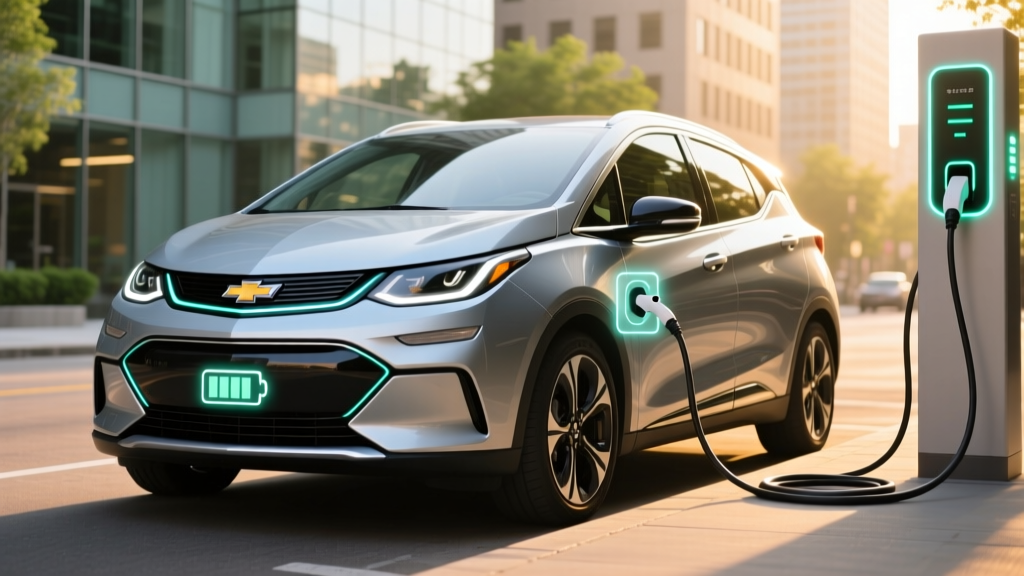
The original Chevy Bolt was discontinued after the 2023 model year, leaving a void in the affordable EV market that no competitor has fully filled. Now, General Motors has brought it back. The 2026 Chevy Bolt EV revival is not merely a carryover with a fresh badge — it rides on an updated Ultium-derived platform, swaps to the North American Charging Standard (NACS) connector, and targets a starting price that undercuts nearly every battery-electric vehicle on sale. For budget-minded EV shoppers who have been waiting on the sidelines, this may be the most consequential affordable EV launch of the decade.
But does the revived Bolt deliver where it counts — real-world range, usable charging speed, and daily practicality? We break down every spec that matters.
2026 Bolt EV Range, Battery, and Efficiency
The 2026 Bolt EV is equipped with a 65 kWh usable lithium iron phosphate (LFP) battery pack — a significant chemistry shift from the previous generation's nickel-manganese-cobalt (NMC) cells. LFP offers superior cycle life, better thermal stability, and lower cost, though it trades some energy density. GM has packaged the pack low and flat to preserve interior volume.
Real-World Expectation: Expect 215–235 miles on highway-heavy trips at 70+ mph. In freezing temperatures (below 32°F), plan for 170–195 miles of usable range. City and suburban driving with regen braking closely matches the EPA sticker.
Efficiency: 120 MPGe combined / 28 kWh per 100 miles
According to fueleconomy.gov, the combined efficiency rating places the Bolt among the most efficient compact EVs sold in the U.S. The LFP chemistry means owners can routinely charge to 100% without the long-term degradation concerns associated with NMC packs — a practical advantage for daily commuters who need the full battery every morning.
| Spec | Value |
|---|---|
| EPA Range (1LT, 17" wheels) | 255 miles |
| Battery Capacity (usable) | 65 kWh |
| Battery Chemistry | LFP (Lithium Iron Phosphate) |
| Efficiency | 120 MPGe / 28 kWh/100 mi |
| Max DC Fast Charge | 150 kW (NACS) |
| 10–80% DC Fast Charge | ~24 minutes |
| Level 2 Home Charging | 11.5 kW (48A) / ~39 mi/hr |
| 0–60 mph | 6.5 seconds |
| Horsepower | 213 hp |
| Drivetrain | FWD (single motor) |
| Base MSRP (1LT) | $28,900 |
| Battery Warranty | 8 years / 100,000 miles |
Charging: NACS Native, Faster Than Before
The single biggest upgrade in the Bolt EV revival is the charging architecture. The outgoing Bolt was notorious for its 55 kW DC fast-charge cap, which made road trips tedious. The 2026 model nearly triples that figure.
| Level | Power | Speed | Use Case |
|---|---|---|---|
| Level 1 (120V) | 1.4 kW | ~5 mi/hr | Overnight emergency top-up |
| Level 2 (240V, 48A) | 11.5 kW | ~39 mi/hr | Home / workplace daily charging |
| DC Fast (NACS) | 150 kW peak | 10–80% in ~24 min | Road trips, public fast charging |
On a 150 kW NACS Supercharger or compatible DC station, the Bolt's charge curve peaks around 150 kW through roughly 40% state of charge, then tapers progressively. The 10–80% session takes approximately 24 minutes — competitive with the Hyundai Kona Electric and Nissan Ariya, though still behind the Hyundai Ioniq 5's 800V architecture. The native NACS port means Bolt owners gain access to Tesla's Supercharger network without an adapter, which is the most reliable and extensive DC network in the U.S.
At home on a 240V Level 2 wall connector, the onboard 11.5 kW charger refills the pack in roughly 6 hours from empty — more than sufficient for overnight replenishment. Note that a 48-amp Level 2 charger requires a dedicated 60-amp circuit; budget $600–$1,500 for professional installation depending on your panel's proximity to the garage, per Chevrolet's home charging guidance.
Performance and Driving Impressions
The 2026 Bolt EV is propelled by a single front-mounted permanent-magnet motor producing 213 horsepower and 236 lb-ft of torque. That translates to a 0–60 mph time of approximately 6.5 seconds — a modest improvement over the previous generation's 200 hp motor and a meaningful step up in low-end responsiveness.
This is a front-wheel-drive commuter, not a performance EV. The instant torque delivery makes it feel brisker than its numbers suggest around town, and one-pedal driving with aggressive regen is standard. The suspension tuning prioritizes ride comfort over sportiness, which is appropriate for the segment. There is no AWD option — if you need all-weather traction, you will rely on winter tires rather than a second motor.
Interior, Cargo, and Technology
GM has updated the cabin with a standard 11.3-inch diagonal touchscreen running the latest GM infotainment OS, wireless Apple CarPlay and Android Auto, and a configurable 10.2-inch digital instrument cluster. The shifter has been replaced with a column-mounted stalk, freeing up console storage.
Passenger Space:
- Front legroom: 42.1 inches
- Rear legroom: 35.6 inches
- Front headroom: 39.7 inches
- Rear headroom: 37.3 inches
Cargo Volume:
- Behind rear seats: 19.8 cu ft
- Rear seats folded: 56.1 cu ft
There is no frunk — the motor and power electronics occupy the front bay. The cargo area is practical for a compact hatchback and handles a week's groceries or two carry-on suitcases with room to spare, but it falls short of the Hyundai Ioniq 5's 27.2 cu ft rear cargo space.
Driver Assistance: Chevrolet's Super Cruise hands-free driving system is available on the 2LT trim for $2,200, covering over 750,000 miles of compatible highways. This is an SAE Level 2 system — you must remain attentive and keep your eyes on the road at all times. It is not self-driving. Standard Chevy Safety Assist includes automatic emergency braking, lane-keeping assist, following distance indicator, and IntelliBeam auto high beams across all trims.
Pricing, Trims, and Federal Tax Credit
The 2026 Bolt EV launches in two trims:
| Trim | MSRP | Destination | Est. After §30D Credit* |
|---|---|---|---|
| 1LT | $28,900 | $1,395 | $22,795 |
| 2LT (incl. Super Cruise avail.) | $33,400 | $1,395 | $27,295 |
*Estimated after $7,500 federal point-of-sale reduction. Actual eligibility depends on IRS §30D requirements. See checklist below.
Under current IRS §30D rules, the Bolt EV is positioned to qualify for the full $7,500 federal tax credit, which can now be transferred to the dealer at the point of sale as an immediate price reduction. However, eligibility is not automatic:
- MSRP Cap: Vehicle MSRP must not exceed $55,000 (sedans/hatchbacks) — Bolt EV qualifies comfortably.
- Buyer Income Cap: Modified AGI must not exceed $150,000 (single), $225,000 (head of household), or $300,000 (joint filers).
- Battery Sourcing: Critical minerals and battery components must meet phased percentage thresholds from U.S. or FTA-partner countries. GM has stated the Bolt EV's LFP cells use supply chains designed to comply, but always verify the specific VIN on fueleconomy.gov before purchasing.
- Point-of-Sale Transfer: You can elect to transfer the credit to the dealer for an upfront price reduction, or claim it on your tax return. Consult a tax professional for your situation.
Who Should Buy the 2026 Chevy Bolt EV?
- You want the lowest-cost new EV with 250+ miles of range
- Your commute is under 80 miles round-trip and you can charge at home
- You want native NACS access to Tesla Superchargers without an adapter
- You prefer LFP chemistry for daily 100% charging without degradation worry
- You need AWD for heavy snow or mountain driving
- You frequently road-trip more than 300 miles in a day (the 150 kW charge rate adds stops)
- You need more than 56 cu ft of maximum cargo volume
- You want 800V ultra-fast charging (see Ioniq 5 or EV6)
The Bolt EV revival is best understood as a commuter-first EV at an unbeatable entry price. For two-car households where one vehicle handles the daily grind and the other covers long trips, the Bolt is almost impossible to beat on value. Single-car households in rural areas or those without home charging access should weigh the trade-offs more carefully.
Pros and Cons
Pros
- Sub-$29K starting MSRP — lowest among 250+ mi EVs
- Native NACS port with Supercharger network access
- LFP battery allows routine 100% charging
- 11.5 kW Level 2 onboard charger is segment-leading for the price
- Available Super Cruise hands-free driving
- Strong efficiency (120 MPGe combined)
Cons
- FWD only — no AWD option
- 150 kW DC peak charge rate trails 800V competitors
- No front trunk (frunk)
- Rear cargo space trails Ioniq 5 and ID.4
- Cold-weather range loss is significant (~25–30%)
- LFP pack is heavier, affecting overall curb weight
Frequently Asked Questions
What is the real-world range of the 2026 Chevy Bolt EV?
The EPA rates it at 255 miles on the 1LT trim. In real-world mixed driving, expect 230–245 miles. Highway-only driving at sustained speeds above 70 mph drops that to roughly 215–235 miles. In sub-freezing winter conditions, plan for 170–195 miles of usable range before needing to charge.
How fast does the 2026 Bolt EV charge?
On a DC fast charger, it peaks at 150 kW and charges from 10–80% in approximately 24 minutes. At home on a Level 2 (240V, 48A) charger, it pulls 11.5 kW and adds roughly 39 miles of range per hour — a full charge from empty takes about 6 hours.
How much does the Bolt EV cost after tax credits?
The 1LT starts at $28,900 plus $1,395 destination. If you qualify for the full $7,500 federal credit via point-of-sale transfer, the effective price drops to approximately $22,795. State and local incentives may reduce the cost further — check your state's energy office for details.
Does the 2026 Bolt EV qualify for the federal EV tax credit?
GM has structured the Bolt EV's battery supply chain to comply with IRS §30D critical-mineral and battery-component requirements. The MSRP is well under the $55,000 cap. However, your personal eligibility depends on income limits ($150K single / $300K joint) and the specific VIN's sourcing compliance. Always verify on fueleconomy.gov before purchase and consult a tax professional.
Is the 2026 Bolt EV worth buying over the Hyundai Kona Electric or Nissan Leaf?
The Bolt EV's combination of sub-$29K pricing, 255-mile range, native NACS charging, and LFP battery chemistry gives it a compelling edge over the Kona Electric (261 mi, CCS, higher starting price) and the aging Nissan Leaf (shorter range, CHAdeMO). If you prioritize lowest entry cost and Supercharger access, the Bolt is the strongest pick in this segment for 2026.
Does the Bolt EV have a frunk?
No. The front compartment houses the motor, inverter, and power electronics. All cargo space is in the rear hatch area (19.8 cu ft behind the rear seats, 56.1 cu ft with seats folded).