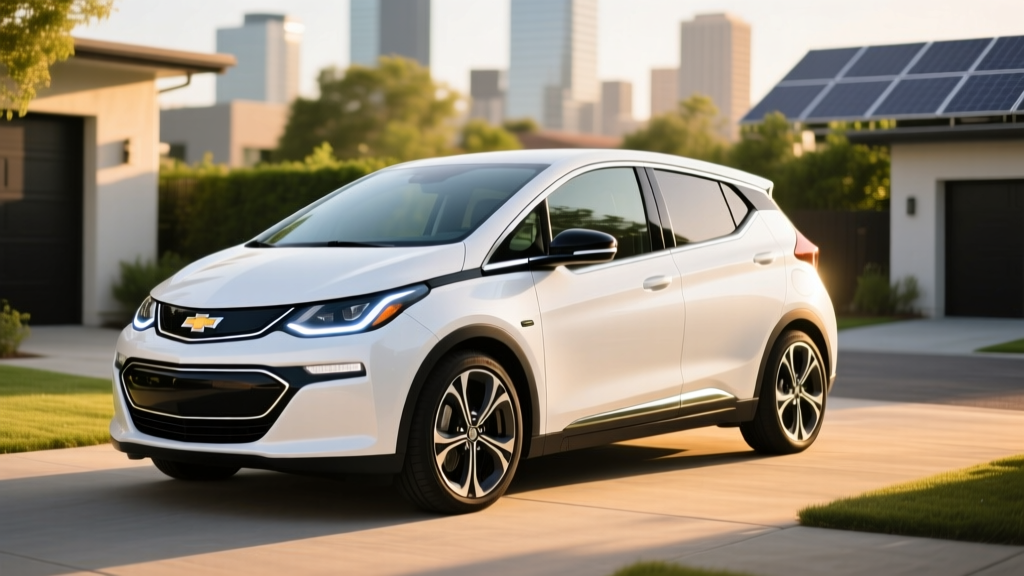
The original Chevrolet Bolt EV was discontinued after the 2023 model year, but General Motors confirmed a next-generation Bolt built on the Ultium platform. For budget-conscious EV shoppers, the central question is straightforward: when can you actually buy one, and what exactly are you getting for the money?
This profile covers everything confirmed and projected for the next-generation Chevy Bolt EV — from the anticipated on-sale timeline to range, charging architecture, pricing, and federal tax credit eligibility under current IRS §30D rules.
When Is the Next-Gen Chevy Bolt Available?
GM first confirmed the next-generation Bolt EV in early 2024, with production targeted at the Orion Assembly plant in Michigan — the same facility that built the original Bolt. Based on GM's public statements and production timeline updates through 2025, the 2026 Chevy Bolt EV is expected to arrive at dealerships in late 2025 or early 2026, likely as a 2026 or 2027 model-year vehicle.
GM has not published a firm on-sale date as of this writing. Pre-orders and configurator access typically open 2–3 months before first deliveries. We'll update this section the moment GM confirms a specific date.
Range, Battery, and Efficiency
The original Bolt EV offered 259 miles of EPA range from a 65 kWh LG-supplied NMC battery. The next-gen Bolt moves to GM's Ultium platform, which supports both NMC (nickel manganese cobalt) and LFP (lithium iron phosphate) chemistries depending on the application.
GM has indicated the new Bolt will use an Ultium battery pack expected in the 65–75 kWh usable range, targeting an EPA range of approximately 250–280 miles. The exact chemistry (NMC vs. LFP) for the Bolt has not been officially confirmed — LFP would reduce cost and improve cycle life at the expense of some energy density, while NMC would maximize range in a compact package.
| Spec | Projected / Confirmed |
|---|---|
| EPA Range (est.) | 250–280 miles |
| Battery Capacity (usable) | ~65–75 kWh |
| Battery Chemistry | Ultium (NMC or LFP TBD) |
| Efficiency (est.) | ~120 MPGe / ~28 kWh/100 mi |
| Drivetrain | FWD (single motor) |
| Horsepower | ~200 hp (est.) |
| 0–60 mph | ~6.5 sec (est.) |
| Base MSRP (est.) | ~$28,000–$32,000 |
| Battery Warranty | 8 yr / 100,000 mi (GM standard) |
Charging Speed: DC Fast and Level 2
The single biggest upgrade on the next-gen Bolt is the charging architecture. The original Bolt was limited to 55 kW DC fast charging — painfully slow by modern standards, taking roughly 45+ minutes for a 10–80% session. GM has confirmed the new Bolt will support significantly faster DC fast charging, though an exact peak kW figure has not been published.
Based on other Ultium-based vehicles in GM's lineup (the Equinox EV peaks around 150 kW, the Blazer EV around 190 kW), industry analysts project the Bolt will support approximately 115–150 kW peak DC charging. At that rate, a 10–80% charge could take roughly 25–35 minutes, depending on the pack size and thermal management.
Critically, GM has confirmed the new Bolt will feature the NACS (North American Charging Standard) connector as standard equipment. This means native access to Tesla's Supercharger network — currently the largest and most reliable DC fast-charging network in the U.S. — without an adapter.
| Level | Power | Miles Added per Hour |
|---|---|---|
| Level 1 (120V) | ~1.4 kW | ~4–5 mi/hr |
| Level 2 (240V, 48A) | ~11.5 kW | ~35–40 mi/hr |
| DC Fast Charge | ~115–150 kW peak | 10–80% in ~25–35 min |
kW vs. kWh refresher: kW (kilowatts) measures the rate of charging — how fast energy flows into the battery. kWh (kilowatt-hours) measures the battery's total energy capacity. Think of kW as the width of the hose and kWh as the size of the tank.
For home Level 2 charging, the Bolt is expected to accept up to 11.5 kW on a 48-amp, 240-volt circuit. That means a full overnight charge from near-empty in about 6–7 hours. Most owners charging from a typical daily commute (30–50 miles driven) will replenish in under 2 hours on Level 2.
Performance and Driving Dynamics
The next-gen Bolt is expected to retain a front-wheel-drive layout with a single electric motor. The original Bolt produced 200 hp and 266 lb-ft of torque, delivering a 6.5-second 0–60 mph time. The Ultium-based successor should match or modestly improve on these figures, with GM likely targeting around 200 hp and a 0–60 time in the 6.0–7.0 second range.
This is a commuter-oriented EV, not a performance car. The Bolt's appeal has always been its torque-rich city driving feel, tight turning radius, and easy maneuverability in urban environments. Expect the same character here: responsive off the line, quiet at highway speeds, and genuinely fun in stop-and-go traffic thanks to one-pedal driving with regenerative braking.
GM has not indicated an AWD or dual-motor variant for the Bolt. If all-wheel drive is a priority, shoppers should look at the Chevy Equinox EV or Hyundai Kona Electric AWD instead.
Pricing, Trims, and Federal Tax Credit
The original Bolt EV's strongest selling point was its price: GM slashed the MSRP to $26,500 for its final 2023 model year, making it the cheapest new EV in America. The next-gen Bolt is expected to target a similar value proposition, with a base MSRP estimated between $28,000 and $32,000 before destination charges.
GM will likely offer multiple trims — potentially an entry 1LT, a better-equipped 2LT, and possibly a sport-oriented RS — with fully loaded pricing reaching approximately $36,000–$38,000.
Federal Tax Credit Eligibility (§30D)
The Bolt's tax credit eligibility depends on several IRS rules that are subject to change. Under current §30D guidelines:
- MSRP cap: The vehicle must have an MSRP at or below $55,000 (cars) — the Bolt clears this easily.
- Buyer income cap: Adjusted gross income must not exceed $150,000 (single), $225,000 (head of household), or $300,000 (joint).
- Battery sourcing: A percentage of critical minerals and battery components must be sourced from the U.S. or free-trade-agreement countries. These thresholds increase annually. This is the wildcard — GM's Ultium battery supply chain has been actively restructured to meet these requirements, but eligibility can shift model year to model year.
- Point-of-sale transfer: Eligible buyers can transfer the credit to the dealer at purchase, reducing the purchase price upfront rather than waiting for a tax refund.
If the Bolt qualifies for the full $7,500 federal credit, the effective price of a ~$29,000 base model drops to approximately $21,500 — extraordinary value. However, always verify current eligibility on IRS.gov before purchasing, as battery-sourcing rules change and can disqualify a previously eligible vehicle.
Interior, Cargo, and Tech
The original Bolt was criticized for its cheap interior plastics and dated infotainment. The Ultium-generation Bolt is expected to adopt GM's newer digital cockpit, likely featuring:
- An 11-inch diagonal infotainment touchscreen with wireless Apple CarPlay and Android Auto
- An 8-inch digital driver instrument cluster
- GM's latest Super Cruise or Enhanced Autopilot-style driver assistance (SAE Level 2 — hands-on or supervised hands-off, not self-driving)
- Available heated front seats, heated steering wheel, and wireless phone charging
Cargo and passenger space should improve modestly over the original Bolt, which offered 16.9 cu ft of cargo volume behind the rear seats and 56.6 cu ft with seats folded. The Ultium platform's flat battery skateboard may enable a slightly longer wheelbase, translating to improved rear legroom (the original's 35.3 inches was tight for adults on longer trips).
Notable drawbacks to watch for: the original Bolt lacked a frunk (front trunk), had no DC fast-charge preconditioning for optimal charging speeds, and used hard plastics throughout. Whether GM addresses these in the new generation will be confirmed at the full vehicle reveal.
Battery Warranty and Longevity
GM's standard EV battery warranty covers 8 years or 100,000 miles (whichever comes first), with a capacity retention threshold of 60% — meaning GM will repair or replace the battery if it degrades below 60% of original capacity within the warranty period. This is industry-standard, matching most competitors.
For context, real-world data from the original Bolt shows most packs retaining 90–95% capacity after 50,000 miles, with degradation slowing significantly after the first year. The Ultium platform's improved thermal management should deliver similar or better longevity. LFP chemistry, if used, would offer even longer cycle life (3,000+ cycles vs. ~1,500–2,000 for NMC) at the trade-off of slightly lower energy density.
Who Should Buy the Next-Gen Bolt?
Choose the Bolt If:
- You want the lowest-cost new EV with 250+ miles of range
- Your driving is primarily commuting and city/suburban
- You want native NACS access to Tesla Superchargers
- You qualify for the $7,500 federal tax credit
- You need a compact hatchback that's easy to park
Look Elsewhere If:
- You need AWD for snow-belt winters
- You regularly tow (the Bolt is not rated for towing)
- You need 300+ miles of range for frequent road trips
- You want premium interior materials or a luxury experience
- You need three-row seating or substantial cargo volume
Key competitors to cross-shop: Hyundai Kona Electric (~$33K, 261-mi range, CCS), Nissan Leaf (if still in production, CHAdeMO), and the Chevy Equinox EV (~$33K, 319-mi range, NACS). The Bolt undercuts all of them on price if the base MSRP lands near $28,000.
Frequently Asked Questions
What is the Chevy Bolt's available date?
GM has not confirmed an exact on-sale date. The next-gen Bolt is expected at dealerships in late 2025 or early 2026 as a 2026 or 2027 model-year vehicle. This article will be updated when GM announces a firm date.
What is the real-world range of the new Bolt?
The EPA rating hasn't been published yet. Based on projected battery size (~65–75 kWh) and efficiency, expect 250–280 miles EPA. Real-world highway range will likely be 230–250 miles, dropping to 180–200 miles in cold weather below freezing.
How fast does the new Bolt charge?
GM has confirmed significantly faster DC charging than the original 55 kW Bolt. Projections suggest 115–150 kW peak, enabling a 10–80% charge in roughly 25–35 minutes. Home Level 2 charging should deliver about 35–40 miles of range per hour at 11.5 kW.
Does the 2026 Chevy Bolt qualify for the $7,500 federal tax credit?
It's likely but not guaranteed. The Bolt's MSRP is well under the $55,000 cap, and most buyers will fall within income limits. The determining factor is battery-sourcing compliance under §30D, which changes annually. Verify current eligibility at IRS.gov before purchasing.
Does the new Bolt use the Tesla NACS charging connector?
Yes. GM has confirmed the next-gen Bolt will feature the NACS connector natively, giving it direct access to Tesla's Supercharger network without an adapter.
Is the Chevy Bolt worth buying vs. the Equinox EV?
If budget is your top priority and you don't need 300+ miles of range or AWD, the Bolt should be the better value. If you want more range (~319 mi), available AWD, and a larger crossover body, the Equinox EV is worth the premium. Both use Ultium batteries and NACS connectors.
Will the new Bolt have a heat pump?
GM has not confirmed this detail. A heat pump would significantly improve cold-weather range and cabin heating efficiency. The original Bolt used resistive heating, which was a notable efficiency drawback in winter. We'll update when specs are finalized.