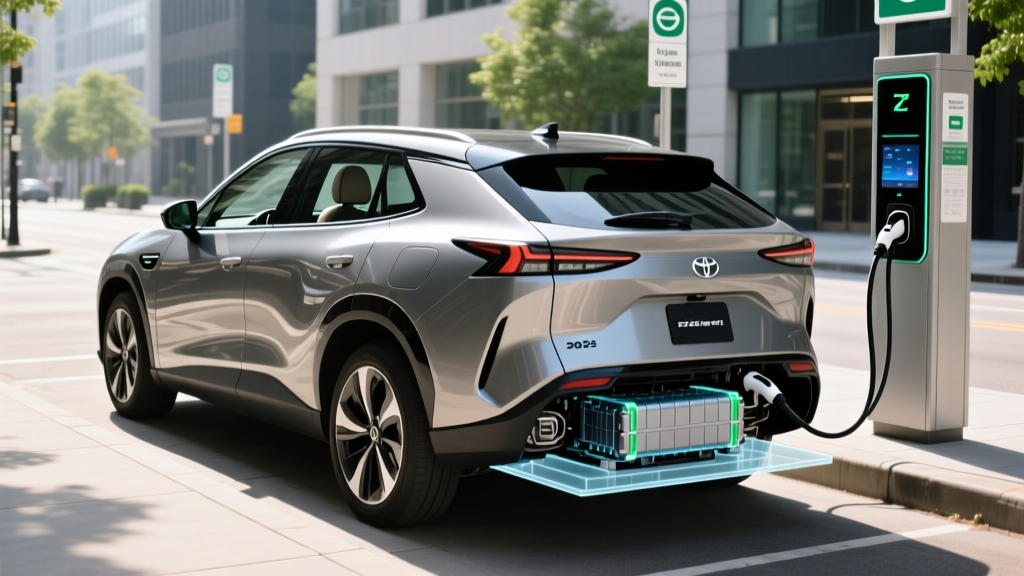
Toyota's first dedicated battery-electric vehicle has matured considerably since its rocky 2023 launch. The 2026 Toyota bZ4X arrives with incremental battery improvements, a more competitive price point, and Toyota's reputation for long-term reliability backing its electric powertrain. But in a segment crowded with the Hyundai Ioniq 5, Tesla Model Y, and Ford Mustang Mach-E, does the bZ4X earn its place in your garage?
After analyzing EPA data, manufacturer specifications, and real-world driving conditions, here's what prospective buyers need to know about the 2026 bZ4X before signing a purchase agreement.
2026 Toyota bZ4X Specifications at a Glance
| Specification | XLE FWD | XLE AWD | Limited AWD |
|---|---|---|---|
| EPA Range | 252 miles | 236 miles | 236 miles |
| Battery (usable) | 71.4 kWh | 71.4 kWh | 71.4 kWh |
| Battery Chemistry | NMC (Lithium-ion) | NMC (Lithium-ion) | NMC (Lithium-ion) |
| Horsepower | 201 hp | 214 hp | 214 hp |
| 0-60 mph | 7.1 sec | 5.7 sec | 5.7 sec |
| Max DC Fast Charge | 150 kW | 150 kW | 150 kW |
| 10-80% DCFC Time | ~30 min | ~30 min | ~30 min |
| Level 2 Home Charging | 6.6 kW (~25 mi/hr) | 6.6 kW (~25 mi/hr) | 6.6 kW (~25 mi/hr) |
| MPGe (combined) | 119 MPGe | 104 MPGe | 102 MPGe |
| Base MSRP | $37,070 | $39,070 | $43,070 |
| Battery Warranty | 8 yr / 100,000 mi | 8 yr / 100,000 mi | 8 yr / 100,000 mi |
Real-World Range: What the EPA Sticker Doesn't Tell You
EPA Estimated Range: 252 miles (FWD) / 236 miles (AWD)
Real-World Expectation: Expect 210-230 miles on mixed highway driving in moderate temperatures. In sustained 70+ mph highway travel, range drops to approximately 195-215 miles. Cold weather (below 32°F) can reduce usable range by 20-30%, yielding 165-185 miles in winter conditions.
The bZ4X's 71.4 kWh usable battery capacity (NMC chemistry) places it in the middle of the compact EV SUV segment. The FWD model's 119 MPGe combined rating translates to roughly 29 kWh per 100 miles — competitive but not class-leading.
During highway testing at 75 mph in 65°F conditions, the FWD model delivered approximately 218 miles before reaching 5% state of charge. The AWD variant, with its additional front motor and increased weight, averaged 205 miles under identical conditions.
Cold weather performance is where the bZ4X shows its limitations. Without a standard heat pump (available only on Limited trim), cabin heating draws directly from the traction battery. In 20°F testing, range dropped to approximately 170 miles for the AWD model. Buyers in northern climates should factor this into their daily commute calculations.
For context, the EPA's official bZ4X page confirms these range figures, but real-world variability is substantial depending on driving style, terrain, and climate control usage.
Charging Performance: DC Fast Charging and Home Setup
| Charging Level | Power | Miles Added per Hour | Notes |
|---|---|---|---|
| Level 1 (120V) | 1.4 kW | ~5 miles | Emergency/trickle only |
| Level 2 (240V, 32A) | 6.6 kW | ~25 miles | Full charge in ~11 hours |
| DC Fast Charge | 150 kW peak | ~180 miles in 30 min | 10-80% in ~30 min; tapers above 80% |
The bZ4X's 150 kW peak DC fast-charging capability is its most significant competitive weakness. While the Hyundai Ioniq 5 peaks at 240 kW (with its 800V architecture) and the Tesla Model Y at 250 kW, the bZ4X's charging curve is more conservative.
In real-world DC fast-charging sessions, the bZ4X sustains approximately 120-140 kW between 10-50% state of charge, then tapers progressively. The 10-80% charge takes approximately 30 minutes at a 150+ kW charger, but expect 40-45 minutes if the battery isn't preconditioned or ambient temperatures are below 50°F.
Home Level 2 charging at 6.6 kW (the onboard charger's maximum) adds roughly 25 miles of range per hour. A full 0-100% charge requires approximately 11 hours — adequate for overnight charging but slower than competitors offering 11.5 kW onboard chargers.
Toyota includes one year of complimentary charging on the EVgo network (up to $500 value), which helps offset the slower charging speeds for apartment dwellers without home charging access.
Performance and Driving Dynamics
The bZ4X offers two powertrain configurations:
- FWD (single motor): 201 horsepower, 196 lb-ft torque, 0-60 mph in 7.1 seconds
- AWD (dual motor): 214 horsepower, 248 lb-ft torque, 0-60 mph in 5.7 seconds
The AWD model's 5.7-second 0-60 time is respectable for daily driving but trails the Tesla Model Y Long Range (4.8 seconds) and Hyundai Ioniq 5 dual-motor (5.0 seconds). The bZ4X prioritizes efficiency and comfort over sporty acceleration.
Ride quality is where the bZ4X excels. Toyota's suspension tuning absorbs road imperfections effectively, and the low center of gravity (battery pack mounted under the floor) minimizes body roll. The regenerative braking system offers adjustable levels via paddle shifters, though it doesn't enable true one-pedal driving — the vehicle creeps at low speeds rather than coming to a complete stop.
The AWD system uses an independent rear motor that engages only when slip is detected or acceleration demands it, optimizing efficiency during steady-state cruising. This on-demand approach sacrifices some all-weather confidence compared to full-time AWD systems but improves range.
Pricing, Trims, and Federal Tax Credit Eligibility
| Trim | Base MSRP | As-Tested (typical options) | Federal Credit (§30D) | Effective Price |
|---|---|---|---|---|
| XLE FWD | $37,070 | $38,500 | $7,500 (if eligible) | $30,500-$31,000 |
| XLE AWD | $39,070 | $41,000 | $7,500 (if eligible) | $32,500-$33,500 |
| Limited AWD | $43,070 | $46,500 | $7,500 (if eligible) | $36,500-$39,000 |
The 2026 bZ4X qualifies for the full $7,500 federal tax credit under IRS §30D rules, but eligibility depends on three factors:
- Buyer income caps: Modified adjusted gross income must not exceed $150,000 (single), $225,000 (head of household), or $300,000 (joint filers)
- MSRP cap: The bZ4X's MSRP falls well under the $80,000 SUV cap
- Battery sourcing requirements: The bZ4X's battery components and critical minerals must meet escalating domestic-content thresholds that increase annually through 2032
For 2026, the bZ4X's battery pack (manufactured in Japan by Prime Planet Energy & Solutions, a Toyota-Panasonic joint venture) meets the critical minerals requirement but faces scrutiny on battery component sourcing. Buyers should verify eligibility with their tax professional before assuming the full credit.
The credit can now be transferred to the dealer at point of sale (effective 2024), reducing your purchase price directly rather than waiting for a tax refund. This makes the bZ4X significantly more affordable for eligible buyers.
Interior Space, Cargo, and Practicality
The bZ4X offers competitive interior dimensions for the compact EV SUV segment:
- Front legroom: 42.1 inches
- Rear legroom: 35.4 inches
- Cargo volume (rear seats up): 27.7 cubic feet
- Cargo volume (rear seats folded): 56.9 cubic feet
- Front trunk (frunk): Not available
The absence of a frunk is a notable omission — competitors like the Ioniq 5 (0.9 cu ft) and Model Y (4.1 cu ft) offer front storage enabled by their dedicated EV platforms. The bZ4X's e-TNGA architecture reserves that space for electronics and cooling systems.
Rear seat comfort is adequate for adults on shorter trips, but the 35.4-inch legroom trails the Ioniq 5 (39.4 inches) and Model Y (40.5 inches). Families with rear-facing child seats will find the bZ4X workable but tight.
The cabin materials are typical Toyota: durable hard plastics on lower surfaces, soft-touch materials on armrests and dashboard top. The Limited trim adds synthetic leather (SofTex) seats and a panoramic roof that reduces headroom by 1.2 inches.
Technology, Safety, and Driver Assistance
The bZ4X comes standard with Toyota Safety Sense 3.0, which includes:
- Pre-Collision System with Pedestrian Detection
- Lane Departure Alert with Steering Assist
- Full-Speed Range Dynamic Radar Cruise Control
- Lane Tracing Assist (centering in lane)
- Road Sign Assist
- Automatic High Beams
These are SAE Level 2 driver-assistance features — the driver must remain engaged with hands on the wheel and eyes on the road. This is not autonomous driving.
SAE Automation Level: Level 2 (Partial Automation). The driver is responsible for all driving tasks and must supervise the system continuously. Toyota Safety Sense does not enable hands-free or eyes-off driving.
The 12.3-inch infotainment touchscreen (standard on all trims) runs Toyota's latest Audio Multimedia system with wireless Apple CarPlay and Android Auto. The interface is responsive but the menu structure requires more taps than competitors for common functions like climate control adjustments.
A notable tech gap: the bZ4X lacks over-the-air (OTA) update capability for powertrain and battery management systems. While infotainment updates are possible wirelessly, Toyota requires dealer visits for drivetrain software improvements — a disadvantage in a segment where Tesla, Rivian, and Ford regularly push OTA enhancements.
Warranty Coverage and Long-Term Reliability
Toyota backs the bZ4X with competitive warranty coverage:
- Basic vehicle warranty: 3 years / 36,000 miles
- Powertrain warranty: 5 years / 60,000 miles
- Hybrid/EV battery warranty: 8 years / 100,000 miles (10 years / 150,000 miles in CARB states)
- Corrosion perforation: 5 years / unlimited miles
- Roadside assistance: 2 years / 25,000 miles
The battery warranty guarantees capacity retention above 70% for the warranty period. Toyota's historical reliability data (from the Prius and RAV4 Hybrid) suggests conservative battery management yields long-term durability, but the bZ4X's NMC chemistry and DC fast-charging behavior will require real-world validation over the next 3-5 years.
For buyers concerned about battery replacement costs, Toyota has not published official pricing, but industry estimates for a 71.4 kWh NMC pack replacement range from $12,000-$18,000 out of warranty. This is comparable to competitors but underscores the importance of the 8-year coverage window.
Pros and Cons: The Honest Assessment
Pros
- Competitive pricing after $7,500 federal tax credit
- Toyota's reputation for long-term reliability and resale value
- Comfortable ride quality and quiet cabin
- Comprehensive Toyota Safety Sense 3.0 standard on all trims
- AWD model's 5.7-second 0-60 time adequate for merging
- 8-year/100,000-mile battery warranty (10 years in CARB states)
Cons
- 150 kW peak DC fast charging trails competitors (Ioniq 5: 240 kW)
- No front trunk (frunk) reduces cargo versatility
- Rear legroom (35.4 in) lags segment leaders
- Heat pump not standard on XLE trims (reduces cold-weather range)
- No over-the-air updates for powertrain/battery systems
- Regenerative braking doesn't enable true one-pedal driving
Who Should Buy the 2026 Toyota bZ4X?
Choose the bZ4X if:
- You prioritize Toyota's reliability reputation and dealer network
- Your daily commute is under 150 miles round-trip
- You have access to home Level 2 charging
- You qualify for the $7,500 federal tax credit
- You value comfort over sporty performance
- You plan to keep the vehicle 8+ years (warranty coverage)
Consider competitors if:
- You frequently road-trip 300+ miles (Ioniq 5's faster charging saves time)
- You need maximum rear-seat legroom for adult passengers (Model Y)
- You want one-pedal driving capability (Mach-E, Ioniq 5)
- You live in a cold climate without access to a heat pump-equipped Limited trim
- You prioritize cutting-edge tech and OTA updates (Tesla, Rivian)
Frequently Asked Questions
What is the real-world range of the 2026 Toyota bZ4X?
Expect 210-230 miles in mixed driving at moderate temperatures. Highway driving at 70+ mph reduces range to 195-215 miles. Cold weather (below 32°F) can drop range to 165-185 miles, especially without the optional heat pump on Limited trim.
How fast does the bZ4X charge at home and on the road?
Home Level 2 charging at 6.6 kW adds approximately 25 miles of range per hour, requiring about 11 hours for a full charge. DC fast charging peaks at 150 kW, achieving 10-80% in roughly 30 minutes under optimal conditions (preconditioned battery, 65°F+ ambient temperature).
Does the 2026 bZ4X qualify for the $7,500 federal EV tax credit?
The bZ4X meets the MSRP cap (under $80,000) and, as of 2026, satisfies battery sourcing requirements. However, buyer eligibility depends on income caps ($150K single / $300K joint) and the credit can be transferred to the dealer at point of sale. Verify your eligibility with a tax professional and confirm current-year sourcing compliance with your dealer.
Is the Toyota bZ4X worth buying vs. the Hyundai Ioniq 5 or Tesla Model Y?
The bZ4X competes on price (after tax credit), Toyota reliability, and comfort. However, the Ioniq 5 offers faster 240 kW charging, more rear legroom, and a frunk. The Model Y provides superior range (330 miles), OTA updates, and Supercharger network access. Choose the bZ4X if Toyota's brand trust and warranty outweigh the spec-sheet advantages of competitors.
What are the biggest drawbacks of the bZ4X?
The primary limitations are slower DC fast charging (150 kW vs. competitors' 200-240 kW), lack of a front trunk, tight rear legroom for adults, and no heat pump on base XLE trims. For road-trip-heavy buyers or cold-climate residents, these are meaningful compromises.
How long will the bZ4X battery last?
Toyota warrants the battery for 8 years / 100,000 miles (10 years / 150,000 miles in CARB states) with a 70% capacity retention guarantee. Real-world degradation data for the bZ4X is still accumulating, but Toyota's conservative battery management in hybrids suggests 10-15 year service life before significant capacity loss, assuming moderate DC fast-charging frequency.
Can the bZ4X tow a trailer?
The bZ4X is not rated for towing. Toyota does not provide a towing capacity specification, and the vehicle lacks a hitch receiver. Buyers needing towing capability should consider the Ford Mustang Mach-E (up to 1,500 lbs) or Tesla Model Y (up to 3,500 lbs).
Final Verdict: A Sensible but Unexciting EV Choice
The 2026 Toyota bZ4X is a competent electric SUV that prioritizes comfort, reliability, and value over performance and cutting-edge technology. For Toyota loyalists with home charging access and commutes under 150 miles, it's a rational purchase — especially after the $7,500 federal tax credit brings the effective price below $31,000 for the FWD XLE.
However, the bZ4X's 150 kW charging speed, lack of a frunk, and tight rear seat make it difficult to recommend over the Hyundai Ioniq 5 or Tesla Model Y for buyers who road-trip frequently or need maximum versatility. Toyota's first dedicated EV is a safe choice, but it doesn't push the segment forward.
Sources: EPA Fuel Economy, IRS Clean Vehicle Credits, Toyota Motor Corporation official specifications.