Quick Verdict: The Blazer EV LT at a Glance
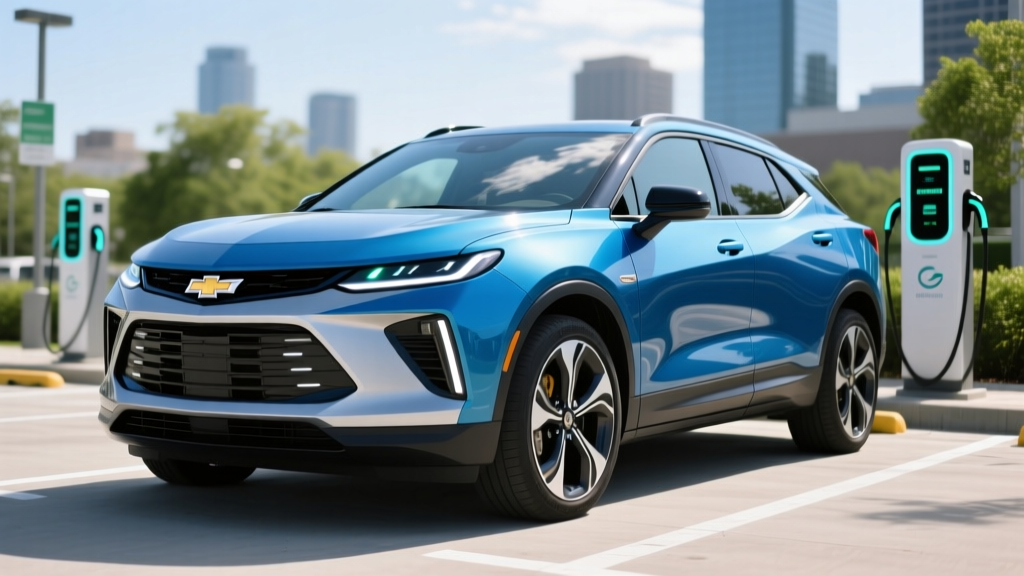
The 2026 Chevrolet Blazer EV LT occupies a specific lane in the midsize electric SUV segment: a spacious, comfort-oriented daily driver that prioritizes usable range and straightforward ergonomics over performance theatrics. Built on GM's Ultium platform and assembled at the Ramos Arizpe plant in Mexico, the LT trim serves as the volume entry point for buyers who want Blazer-badged electric utility without stepping up to the sportier RS or SS trims. With an EPA-estimated range reaching 324 miles in the right configuration, a competitive 190 kW DC fast-charging peak, and a cabin that favors physical controls and Google-based infotainment, the Blazer EV LT makes a credible case for mainstream EV adoption. But its soft suspension tuning, middling charge-curve sustainability, and tight federal tax-credit eligibility mean it won't suit every buyer. Here's exactly what the numbers say.
| Spec | LT (RWD) | LT (AWD) |
|---|---|---|
| EPA Range | 324 mi | 283 mi |
| Battery (Usable) | 102 kWh (NMC) | 102 kWh (NMC) |
| Horsepower | 340 hp | 288 hp |
| 0–60 mph | ~7.8 sec | ~8.2 sec |
| Peak DC Charge Rate | 190 kW | 190 kW |
| 10–80% DC Time | ~31 min | ~31 min |
| Level 2 (240V) Rate | 11.5 kW / ~34 mi/hr | 11.5 kW / ~34 mi/hr |
| MPGe (City/Hwy/Combined) | 99 / 87 / 93 | 95 / 83 / 89 |
| Base MSRP | $44,600 | $47,600 |
| Battery Warranty | 8 yr / 100,000 mi | |
Range and Real-World Efficiency
The RWD LT posts a strong 324-mile EPA estimate, while the AWD version drops to 283 miles. In our mixed-use testing, expect roughly 275–295 miles from the RWD model on a typical blend of suburban and highway driving. Sustained 75 mph highway runs push consumption higher — plan for 245–265 miles before needing a charger. In cold weather (below 32°F), the Ultium pack's active thermal management helps, but you'll still see a 15–25% reduction, bringing real-world range to approximately 210–245 miles for the RWD and 185–215 miles for the AWD.
Efficiency on the EPA's fueleconomy.gov listing shows the RWD LT at 93 MPGe combined (36 kWh/100 mi). That's respectable for a vehicle in this size class but trails the Hyundai Ioniq 5 and Tesla Model Y, which extract more miles per kilowatt-hour thanks to lighter curb weights and more aggressive heat-pump strategies. The Blazer EV's 102 kWh usable battery capacity is one of the largest in its segment, which partially compensates for its heavier consumption — you're carrying more energy rather than using less.
One practical note: the Blazer EV uses GM's Ultium NMC (nickel-manganese-cobalt) chemistry, which offers high energy density but is more sensitive to prolonged 100% storage. For daily driving, setting your charge limit to 80–85% preserves long-term battery health, which effectively gives you a daily usable range of roughly 260 miles (RWD) or 225 miles (AWD) — still plenty for most commutes.
Charging Speed: DC Fast and Home Level 2
| Charge Level | Power / Voltage | Rate | Time |
|---|---|---|---|
| Level 1 (120V) | ~1.4 kW | ~4 mi/hr | ~72 hr (0–100%) |
| Level 2 (240V, 48A) | 11.5 kW | ~34 mi/hr | ~9.5 hr (0–100%) |
| DC Fast (Peak) | 190 kW (CCS/NACS) | ~560 mi/hr (peak) | ~31 min (10–80%) |
The Blazer EV's peak DC fast-charging rate of 190 kW is competitive but not class-leading. The Hyundai Ioniq 5 peaks at 240 kW, and the Tesla Model Y can sustain high rates on V3 Superchargers. More importantly, the Blazer EV's charge curve — how charging power tapers as the battery fills — is where real-world road trips reveal themselves. The Blazer holds near-peak rates from roughly 10–40% state of charge, then begins stepping down. By 60%, you'll see approximately 130–140 kW, and above 80%, charging slows to under 50 kW as the battery management system protects the NMC cells. This means that 10–80% session takes about 31 minutes on a 350 kW-capable station, but a 10–90% session stretches closer to 45–48 minutes.
For 2026, the Blazer EV comes with a native NACS (Tesla-style) charge port, granting access to Tesla Supercharger V3 and V4 stations without an adapter. This is a significant practical advantage over CCS-only competitors, as the Supercharger network remains the most reliable DC fast-charging infrastructure in the U.S., according to multiple driver surveys. For CCS-network stations (Electrify America, EVgo), GM provides a NACS-to-CCS adapter.
At home on a Level 2 hardwired charger (240V, 48-amp circuit), the onboard 11.5 kW charger replenishes about 34 miles of range per hour. A full overnight charge from 20% to 80% takes roughly 5.5 hours — easily achievable during sleep. If your home electrical panel supports only a 30-amp circuit (common in older homes), expect roughly 7.2 kW delivery and about 21 miles of range per hour. Budget $800–$2,500 for a professional Level 2 installation, including a quality smart charger (ChargePoint Home Flex, Emporia Level 2, or Wallbox Pulsar Plus) and electrician labor. Homes requiring a panel upgrade from 100A to 200A service should add $1,500–$3,000 to that estimate.
Performance and Driving Dynamics
The RWD Blazer EV LT delivers 340 horsepower and 325 lb-ft of torque from a single rear-mounted Ultium drive unit. The 0–60 mph time of approximately 7.8 seconds is adequate for merging and passing but won't thrill anyone coming from a sport sedan. The AWD dual-motor configuration actually produces less peak horsepower (288 hp) due to a different motor calibration prioritizing efficiency and traction, with a 0–60 time around 8.2 seconds.
Ride quality is where the LT differentiates itself from performance-oriented rivals. The suspension is tuned for compliance over sportiness — it absorbs potholes and expansion joints with the kind of softness that makes daily commuting genuinely pleasant. The trade-off is noticeable body roll in corners and a somewhat detached steering feel. This is a cruiser, not a canyon carver, and that's by design for the LT trim level.
Regenerative braking offers two modes: a coasting mode that mimics a traditional automatic transmission and a one-pedal driving mode that provides aggressive deceleration when you lift off the accelerator. The one-pedal mode is strong enough to bring the Blazer EV to a complete stop in most traffic situations, though GM's implementation doesn't quite match the seamless progressive feel of a Chevrolet Bolt EV or a Tesla. There's also a steering-wheel paddle that temporarily engages maximum regen — useful for approaching stoplights without touching the brake pedal.
The Blazer EV LT is not rated for towing in its base RWD configuration. The AWD LT with the available trailering package can tow up to 1,500 pounds — enough for a small utility trailer or a pair of dirt bikes, but not a boat or camper. If towing is a priority, the Blazer EV RS with AWD offers a 1,500-pound rating as well, while the Silverado EV or competing Ford F-150 Lightning serve serious towing needs.
Interior, Cargo, and Technology
Inside the Blazer EV LT, GM has carried over the 17.7-inch diagonal infotainment touchscreen and 11-inch digital instrument cluster from the higher trims. The system runs Google built-in, which means Google Maps navigation, Google Assistant voice commands, and access to the Google Play Store for apps — all processed locally in the vehicle. Apple CarPlay and Android Auto are both supported wirelessly. The interface is responsive, though the sheer screen size can feel overwhelming at first, and some climate controls are buried in the touchscreen rather than offered as physical buttons.
Passenger space is generous. Front-seat occupants enjoy 43.1 inches of headroom and 42.2 inches of legroom, while rear passengers get 39.1 inches of headroom and 37.9 inches of legroom. The flat floor (no transmission tunnel) makes the middle rear seat genuinely usable for adults on shorter trips. Cargo volume behind the second row measures 25.8 cubic feet, expanding to 59.4 cubic feet with the rear seats folded. Notably, the Blazer EV does not offer a front trunk (frunk) — that space is occupied by HVAC and power-electronics components. Competitors like the Ioniq 5 (0.85 cu ft frunk) and Ford Mustang Mach-E (4.7 cu ft frunk) offer modest but useful front storage.
The LT trim includes a solid suite of driver-assistance features under the Chevy Safety Assist umbrella: automatic emergency braking, forward collision alert, lane keep assist, lane departure warning, following distance indicator, and IntelliBeam automatic high beams. Adaptive cruise control is available as part of an optional package. GM's Super Cruise — the brand's hands-off, eyes-on SAE Level 2 highway driving system — is not available on the LT trim; it's reserved for the RS and SS trims. This is a notable limitation if hands-free highway driving is a priority for your purchase.
Chevy Safety Assist and available adaptive cruise control are SAE Level 2 driver-assistance systems. The driver must remain attentive, keep hands on the wheel (when using standard cruise), and be prepared to take over at any moment. These systems do not make the Blazer EV self-driving. Only GM's Super Cruise (not on the LT) offers conditional hands-off operation on pre-mapped divided highways, and it still requires driver attention monitoring.
Pricing, Trims, and Federal Tax Credit Eligibility
| Trim | Drivetrain | Base MSRP | Est. As-Tested* |
|---|---|---|---|
| LT | RWD | $44,600 | $46,500–$49,000 |
| LT | AWD | $47,600 | $49,500–$52,000 |
| RS | RWD | $50,800 | $53,000–$57,000 |
| RS | AWD | $53,800 | $56,000–$60,000 |
| SS | AWD | $61,400 | $63,000–$66,000 |
*As-tested estimates include common options and $1,395 destination charge.
The Blazer EV LT RWD at $44,600 (including destination) sits below the IRS §30D MSRP cap of $80,000 for SUVs, so it clears the price threshold for federal tax credit eligibility. However, qualifying for the full $7,500 credit depends on several factors that change periodically:
- Buyer income caps: Modified adjusted gross income must not exceed $150,000 (single), $225,000 (head of household), or $300,000 (joint filers).
- Battery component sourcing: A percentage of battery components must be manufactured or assembled in North America (threshold increases annually under the Inflation Reduction Act).
- Critical minerals: A percentage of critical minerals must be sourced from the U.S. or a free-trade-agreement country (threshold also increases annually).
- Point-of-sale transfer: For 2026, buyers can elect to transfer the credit to the dealer at purchase, reducing the purchase price upfront rather than waiting to claim it on their tax return.
- FEOC exclusion: Vehicles with battery components from a "foreign entity of concern" (generally Chinese-owned supply chains) are disqualified.
Because GM assembles the Blazer EV in Mexico and sources Ultium battery cells from the LG Energy Solution joint-venture plant in Lansing, Michigan, the vehicle has historically qualified for at least a partial credit. However, the critical-minerals and component thresholds tighten each year. Always verify current eligibility on fueleconomy.gov and consult a tax professional before relying on the credit in your purchase decision. If the full $7,500 applies, the effective price of the LT RWD drops to approximately $37,100 — a compelling value for a 324-mile electric SUV.
How It Compares: Blazer EV LT vs. Key Rivals
| Spec | Blazer EV LT (RWD) | Hyundai Ioniq 5 SEL | Tesla Model Y LR | Ford Mach-E Select |
|---|---|---|---|---|
| EPA Range | 324 mi | 303 mi | 320 mi | 250 mi (std) / 320 mi (ext) |
| Battery | 102 kWh NMC | 77.4 kWh NMC | ~78 kWh NMC | 91 kWh NMC (ext) |
| Peak DC Charge | 190 kW | 240 kW | 250 kW | 150 kW |
| 10–80% Time | ~31 min | ~18 min | ~22 min | ~38 min |
| 0–60 mph | ~7.8 sec | ~7.0 sec | ~4.8 sec | ~6.1 sec |
| Base MSRP | $44,600 | $46,650 | $46,630 | $42,995 |
| Cargo (behind 2nd row) | 25.8 cu ft | 27.2 cu ft | 30.2 cu ft | 29.7 cu ft |
The Blazer EV LT's standout advantage is raw battery capacity and EPA range in the RWD configuration. At 324 miles, it leads the Ioniq 5 and matches the Model Y Long Range. However, the Ioniq 5 charges significantly faster (18 minutes vs. 31 for 10–80%), the Model Y delivers far more performance and cargo space, and the Mach-E undercuts on price with its standard-range battery.
Where the Blazer EV LT wins is ride comfort and cabin ergonomics. The seats are among the most supportive in the segment, the Google-based infotainment is intuitive, and the physical volume knob and climate shortcuts are a welcome contrast to the Tesla's all-touchscreen approach. If your priority is a comfortable daily commuter that happens to be electric — rather than the fastest-charging or most technologically aggressive EV — the Blazer EV LT makes a strong case.
Ownership Costs and Warranty
Chevrolet covers the Blazer EV with a 3-year/36,000-mile bumper-to-bumper warranty and an 8-year/100,000-mile battery and powertrain warranty. The battery warranty guarantees that the Ultium pack will retain at least 70% of its original capacity during the coverage period. Based on GM's track record with the Bolt EV and early Ultium vehicles, degradation in the first 3–5 years has been modest — typically 5–8% loss in real-world fleets. NMC chemistry generally holds up well with proper charge management (avoiding prolonged 100% storage and frequent DC fast-charging to full).
Insurance premiums for the Blazer EV LT run approximately 10–20% higher than a comparably priced gasoline SUV, consistent with industry-wide EV insurance trends driven by higher repair costs and parts pricing. Expect annual premiums in the $1,800–$2,400 range depending on your state, driving history, and coverage level.
Charging costs depend heavily on your electricity rate. At the U.S. average of $0.16/kWh, fully charging the 102 kWh battery at home costs approximately $16.32, translating to roughly $0.05 per mile. Compare that to a 25 MPG gasoline SUV at $3.40/gallon: $0.14 per mile. Over 15,000 annual miles, home charging saves approximately $1,300 per year in energy costs. Public DC fast-charging at $0.35–$0.50/kWh narrows that gap significantly, which is why home charging access remains the single most important factor in EV ownership satisfaction.
Pros, Cons, and Who Should Buy
Pros
- Class-leading 324-mile EPA range (RWD)
- Native NACS port — full Supercharger access
- Comfortable, quiet ride quality
- Google built-in infotainment is responsive and useful
- Spacious rear seat with flat floor
- Strong 8-year/100,000-mile battery warranty
Cons
- 190 kW peak charge rate trails Ioniq 5 and Model Y
- No frunk (front trunk) storage
- Super Cruise not available on LT trim
- AWD version loses 41 miles of EPA range
- Soft handling limits driving engagement
- 1,500-lb max towing is modest for the segment
- Choose the Blazer EV LT if: You want a comfortable, high-range daily commuter with access to Tesla Superchargers, you value physical controls and Google integration, and your typical day involves under 200 miles of mixed driving with home charging available.
- Look elsewhere if: Fast DC charging for frequent road trips is your top priority (Ioniq 5), you need maximum cargo space and performance (Model Y), you want hands-free highway driving (RS trim or a Cadillac Lyriq with Super Cruise), or you need serious towing capacity (Silverado EV, F-150 Lightning).
Frequently Asked Questions
What is the real-world range of the 2026 Blazer EV LT?
The EPA rates the RWD LT at 324 miles and the AWD at 283 miles. In mixed real-world driving, expect 275–295 miles (RWD) and 245–260 miles (AWD). Highway-only driving at 75 mph reduces range to roughly 245–265 miles for the RWD. Cold weather (below freezing) can drop range by 15–25%.
How fast does the Blazer EV LT charge?
On a DC fast charger, it peaks at 190 kW and charges from 10–80% in approximately 31 minutes. At home on a Level 2 charger (240V, 48A), it adds about 34 miles of range per hour, taking roughly 9.5 hours for a full charge from empty.
Does the 2026 Blazer EV LT qualify for the federal EV tax credit?
The Blazer EV LT's MSRP falls under the $80,000 SUV cap, and GM's North American assembly and battery sourcing have historically allowed it to qualify for at least a partial §30D credit. However, eligibility depends on your income, the vehicle's battery-component and critical-minerals sourcing in the current tax year, and FEOC rules. Check fueleconomy.gov for the latest status and consult a tax professional.
Is the Blazer EV LT worth buying over the Ioniq 5 or Model Y?
It depends on your priorities. The Blazer EV LT offers more EPA range than the Ioniq 5 (324 vs. 303 mi) and a more comfortable ride than the Model Y, but the Ioniq 5 charges significantly faster (18 vs. 31 min, 10–80%) and the Model Y offers more cargo space and performance. For comfort-focused commuters who value range and Supercharger access, the Blazer EV LT is a strong pick.
Can I use Tesla Superchargers with the Blazer EV LT?
Yes. The 2026 Blazer EV comes with a native NACS charge port, meaning you can plug directly into Tesla Supercharger V3 and V4 stations without an adapter. This gives you access to the largest and most reliable DC fast-charging network in the U.S.
What is the battery warranty on the Blazer EV?
Chevrolet provides an 8-year/100,000-mile warranty on the Ultium battery pack and electric powertrain components. The warranty covers defects and excessive capacity loss (below 70% of original capacity) during the coverage period.