Quick Verdict: The Mach-E Premium AWD Hits the Sweet Spot
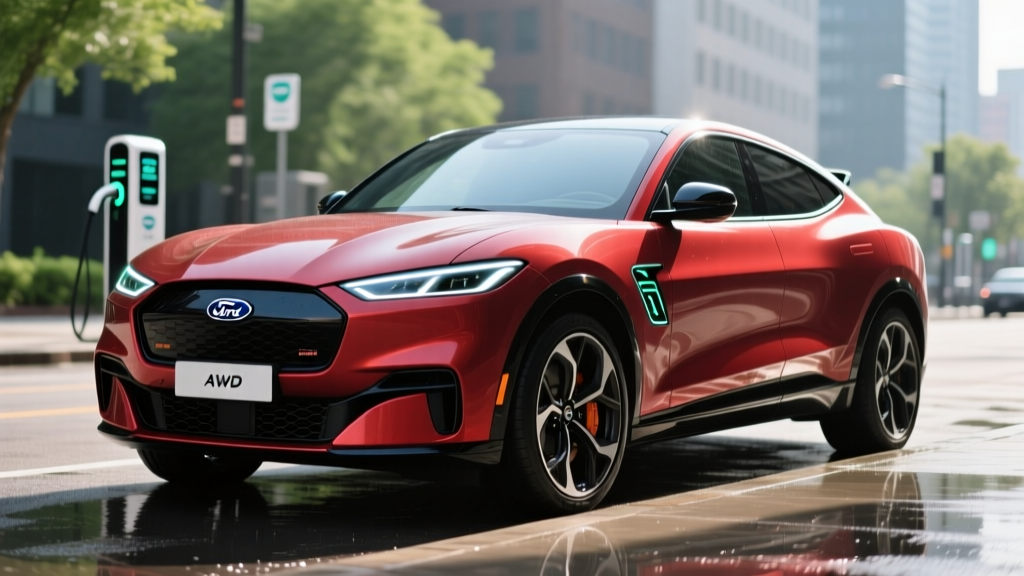
The 2023 Ford Mustang Mach-E Premium AWD with the Extended Range battery occupies a narrow but important lane in the EV market: a dual-motor, all-wheel-drive crossover that delivers genuine performance without sacrificing everyday practicality. With an EPA-estimated 290 miles of range, 346 horsepower, and a starting MSRP around $54,975 (before incentives), it undercuts the Tesla Model Y Long Range on price while matching it on capability. For buyers who want AWD traction, a refined ride, and Ford's dealer network for service, the Premium AWD Extended Range remains one of the most balanced electric crossovers you can find on the used or certified-pre-owned market in 2026.
This review breaks down the exact specs, real-world range behavior, charging performance, and ownership economics you need to evaluate before purchasing.
Range, Battery, and Real-World Efficiency
The 2023 Mach-E Premium AWD is available with two battery packs. The Standard Range uses a 70 kWh (usable) LFP battery good for an EPA-estimated 224 miles. Most Premium AWD buyers opt for the Extended Range pack, which uses a 91 kWh (usable) NMC (nickel-manganese-cobalt) lithium-ion battery rated at 290 miles EPA.
| Specification | Standard Range AWD | Extended Range AWD |
|---|---|---|
| Battery Capacity (usable) | 70 kWh | 91 kWh |
| Chemistry | LFP (Lithium Iron Phosphate) | NMC (Nickel-Manganese-Cobalt) |
| EPA Range | 224 miles | 290 miles |
| EPA Efficiency | 101 MPGe (33 kWh/100mi) | 94 MPGe (36 kWh/100mi) |
| Drivetrain | Dual-motor AWD | Dual-motor AWD |
Charging Speed: DC Fast Charge and Home Level 2
Charging infrastructure access is the top concern for EV buyers, and the Mach-E's charging speeds are adequate but not class-leading. Here is the breakdown by charging level:
| Charging Level | Power / Rate | Speed / Time | Connector |
|---|---|---|---|
| Level 1 (120V household) | ~1.4 kW | ~3 miles per hour | J1772 (adapter included) |
| Level 2 (240V home/public) | 10.5 kW (max onboard) | ~32 miles per hour; 0–100% in ~9 hours | J1772 / CCS1 |
| DC Fast Charge | 150 kW peak | 10–80% in ~45 minutes | CCS1 |
Charging curve reality: The 150 kW peak rate is only sustained between approximately 15% and 45% state of charge. Above 60% SoC, the rate tapers to roughly 80 kW, and above 80% it drops further to around 40 kW. This means a 10–80% session takes about 45 minutes at a properly functioning 150+ kW charger (Electrify America, EVgo, or compatible networks). Plan for 50–55 minutes in real-world conditions accounting for station variability.
NACS adapter note: Ford began providing Tesla Supercharger NACS adapters to Mach-E owners in 2024, enabling access to Tesla's V3 Supercharger network (up to 150 kW via adapter). As of 2026, this significantly expands the Mach-E's road-trip charging options, though the adapter limits peak charge rate compared to vehicles with native NACS ports.
Performance: 0-60, Horsepower, and Driving Dynamics
The Premium AWD with Extended Range produces 346 horsepower and 428 lb-ft of torque from its dual-motor setup. Ford quotes a 0-60 mph time of 5.2 seconds, which is brisk for a family crossover and competitive with the base Tesla Model Y Long Range (5.0 seconds).
| Metric | Mach-E Premium AWD ER | Tesla Model Y LR AWD | Hyundai Ioniq 5 AWD |
|---|---|---|---|
| Horsepower | 346 hp | 384 hp | 320 hp |
| 0-60 mph | 5.2 sec | 5.0 sec | 5.1 sec |
| EPA Range | 290 mi | 330 mi | 256 mi |
| Max DC Charge | 150 kW | 250 kW | 240 kW |
| Base MSRP (2023) | $54,975 | $52,990 | $52,600 |
On the road, the Mach-E distinguishes itself with a ride quality that leans more comfort-oriented than the firmer Model Y. The steering is well-weighted, and the low center of gravity from the under-floor battery pack keeps body roll minimal. Ford's Co-Pilot360 Active 2.0 (available on the Premium trim) offers hands-free driving on pre-mapped divided highways — a Level 2 SAE system that requires eyes-on supervision, not autonomous driving.
Interior, Cargo, and Technology
The Mach-E's cabin is one of its strongest attributes relative to the Tesla Model Y. Materials on the Premium trim include synthetic leather upholstery, a panoramic fixed glass roof, ambient lighting, and a 10.2-inch digital instrument cluster paired with a 15.5-inch vertical touchscreen running Ford's SYNC 4A system.
Cargo and passenger dimensions:
- Front headroom: 40.4 inches | Legroom: 43.3 inches
- Rear headroom: 39.3 inches | Legroom: 38.1 inches
- Cargo behind rear seats: 29.7 cu ft
- Cargo with rear seats folded: 59.7 cu ft
- Front trunk (frunk): 4.7 cu ft (drainable, useful for wet gear)
The rear seat space is adequate for adults on shorter trips but trails the Ioniq 5's more generous rear legroom. The 15.5-inch screen dominates the dash and runs wireless Apple CarPlay and Android Auto. Over-the-air (OTA) updates continue to improve the software — Ford added BlueCruise hands-free highway driving capability via OTA for equipped vehicles.
Notable drawbacks: The Mach-E lacks a rear wiper, which is a real annoyance in rain and snow. The panoramic glass roof has no retractable shade, leading to cabin heat buildup in summer. And the absence of physical climate controls (everything routes through the touchscreen) frustrates some drivers.
Pricing, Tax Credits, and Ownership Costs
The 2023 Mach-E Premium AWD Extended Range carried a base MSRP of approximately $54,975 at launch, with typical as-tested prices reaching $57,000–$60,000 with options like the BlueCruise preparation package, larger wheels, or upgraded paint.
- MSRP cap: Vans/SUVs/pickups must be under $80,000 — the Mach-E qualifies.
- Income cap: Adjusted gross income ≤ $150,000 (single), $225,000 (head of household), $300,000 (joint).
- Battery sourcing: Critical minerals and battery component requirements phased in over 2023–2024; the Mach-E's NMC pack partially met sourcing rules, potentially qualifying for $3,750 or the full $7,500 depending on delivery date and VIN-specific compliance.
- Point-of-sale transfer: Beginning January 1, 2024, buyers can transfer the credit to the dealer for an immediate price reduction (for 2024+ purchases of remaining 2023 inventory).
| Cost Category | Mach-E AWD ER | Gas Equivalent (Eagle/Edge AWD) |
|---|---|---|
| Purchase Price (after $7,500 credit) | ~$47,475 | ~$42,000 |
| Fuel/Energy (5 yrs, 15k mi/yr) | ~$3,800 | ~$9,200 |
| Maintenance (5 yrs) | ~$1,500 | ~$3,800 |
| Insurance (5 yrs avg) | ~$9,500 | ~$7,200 |
| Estimated Depreciation | ~$18,000 | ~$16,500 |
| Total 5-Year Cost | ~$80,275 | ~$78,700 |
The Mach-E's energy and maintenance savings nearly close the gap with a comparable gas crossover over five years. Insurance premiums run 20–30% higher than gas equivalents — get quotes before committing.
Warranty and Battery Longevity
Ford backs the Mach-E with a competitive warranty package:
- Bumper-to-bumper: 3 years / 36,000 miles
- Powertrain: 5 years / 60,000 miles
- High-voltage battery: 8 years / 100,000 miles (retains ≥70% capacity)
- Corrosion perforation: 5 years / unlimited miles
The 8-year/100,000-mile battery warranty with a 70% capacity retention threshold is standard for the industry. Real-world data from early 2021–2022 Mach-E owners suggests NMC Extended Range packs lose approximately 5–8% capacity over the first 60,000 miles, with degradation slowing significantly after the initial break-in period. LFP Standard Range packs tend to show less degradation but start with lower total range. For a 2023 model purchased in 2026 with 30,000–50,000 miles, the battery warranty has roughly 5+ years and 50,000+ miles remaining.
Pros, Cons, and Who Should Buy
✓ Pros
- 290-mile EPA range is practical for most commutes and moderate road trips
- Comfortable, well-damped ride superior to the Tesla Model Y
- Quality interior with large SYNC 4A touchscreen and wireless CarPlay/Android Auto
- BlueCruise hands-free highway driving (Level 2, eyes-on)
- Drainable frunk adds practical utility
- Eligible for up to $7,500 federal tax credit (verify per IRS rules)
- NACS adapter access to Tesla Supercharger network
✗ Cons
- 150 kW peak DC charging lags competitors (Model Y: 250 kW, Ioniq 5: 240 kW)
- No rear wiper — a genuine safety issue in rain/snow
- Panoramic glass roof lacks a shade; cabin gets hot in summer
- Rear seat legroom trails the Ioniq 5 and VW ID.4
- Insurance premiums run higher than gas crossovers
- No physical climate controls — touchscreen dependency
- Real-world highway range closer to 250 miles, not 290
Who Is the Mach-E Premium AWD For?
Best for: Daily commuters with home Level 2 charging who want a comfortable, quiet AWD crossover with 250+ real-world miles. Families who prioritize ride quality and interior materials over maximum cargo space. Drivers in moderate climates who take occasional 200-mile road trips.
Look elsewhere if: You frequently drive 300+ mile highway routes (the 150 kW charging and 250-mile real-world highway range will frustrate). You need maximum rear-seat space (check the Ioniq 5 or Kia EV6). You live in extreme cold and lack garage parking (all EVs lose range, but the Mach-E's heat pump helps only partially).
Frequently Asked Questions
What is the real-world range of the 2023 Mach-E Premium AWD Extended Range?
The EPA rates it at 290 miles combined. Expect approximately 245–260 miles on the highway at 75 mph, 280–300 miles in city driving with regen braking, and 210–230 miles in freezing weather with cabin heat running.
How fast does it charge at a DC fast charger and at home?
DC fast charging peaks at 150 kW, achieving a 10–80% charge in roughly 45 minutes. Home Level 2 charging at 10.5 kW (48-amp circuit) adds about 32 miles per hour, fully recharging the 91 kWh pack in approximately 9 hours overnight.
Does the 2023 Mach-E qualify for the $7,500 federal EV tax credit?
It can, subject to IRS §30D rules. The MSRP is under the $80,000 SUV cap. Buyer income must be ≤$150K single / $300K joint. Battery sourcing requirements determine whether you receive $3,750 or $7,500 — verify with your dealer and IRS.gov before purchase.
Is the Mach-E Premium AWD worth buying over the Tesla Model Y?
It depends on priorities. The Model Y wins on range (330 mi EPA), charging speed (250 kW), and Supercharger network access. The Mach-E wins on ride comfort, interior material quality, dealership service access, and BlueCruise. If you value comfort and don't road-trip frequently, the Mach-E is the better daily driver. If range and charging speed are paramount, the Model Y leads.
What is the battery replacement cost if it fails out of warranty?
Full high-voltage battery replacement for the Extended Range pack is estimated at $15,000–$22,000 depending on labor and parts availability. However, catastrophic failure is rare — most degradation stays within the 70% warranty threshold over the 8-year/100,000-mile coverage period. Individual module replacement (if available) can cost significantly less.
Can the Mach-E tow, and does towing affect range?
The AWD Extended Range is rated to tow up to 2,200 pounds (light utility trailer or small boat). Expect range to drop by 30–50% while towing at highway speeds — plan charging stops accordingly.